




What is on it after a month: dust, hair, textile fibre, skin flakes — organic material, kept humid, in the dark, with air moving through it constantly.
The test: slide a panel out and smell it away from the unit. If it smells like the room does with the AC on, you have finished the diagnosis in two minutes.
2. Because everything you breathe in that room goes through it. A split unit draws the room's entire air volume in through the top grille and pushes it out of the front, turning the room over many times an hour. Every cubic metre passes through the mesh. Nothing else in the bedroom — not the floor, not the curtains, not the wardrobe — has anything close to that degree of contact with the air you are actually breathing.
3. Because what collects on it is organic, not mineral. The catch on a bedroom filter after a month is mostly human and textile: skin flakes, hair, cotton and synthetic fibre from bedding and clothes, plus street dust and cooking residue that drifted in. That is food. Add moisture from the coil and warmth from the room and you have the same process that makes a folded damp cloth smell within a day, running continuously behind a plastic cover.
4. Because a loaded filter also makes everything downstream worse. Airflow drops as the mesh clogs, so the coil runs colder and wetter, and more of the fine dust that used to be caught now bypasses the mesh through gaps and lands on the fins instead. A neglected filter therefore does not merely smell — it accelerates the coil problem that is far more expensive to fix. Washing it monthly is preventive maintenance for the part you cannot reach.
5. And no, a fragrance does not substitute for washing it. Scent is additive. Put a diffuser in a room whose filter smells and the room now has two smells travelling on the same airstream, which reads worse than the original. Wash the mesh, dry it, refit it, air the room. Then a reed diffuser or a Sukoon gives the bedroom a character, which is a genuinely different job.
Made in India, composed by an ISIPCA Versailles-trained perfumer — and a portion of every order supports girl-child education through Nanhi Kali.
How a month of ordinary dust turns into a smell
The interesting part of this question is why a filter smells when the same dust sitting on top of a wardrobe does not. Three conditions have to line up for household dust to become an odour source, and a mesh filter supplies all three simultaneously. First, the material has to be organic — and a bedroom filter's catch is overwhelmingly skin flakes, hair and textile fibre rather than mineral grit. Second, it has to be reliably damp — and the filter is mounted a few centimetres in front of a coil kept below the dew point of the room, in the most humid microclimate in the flat. Third, it has to be left alone — and nobody opens the front cover. Organic, damp and undisturbed is the standard recipe for biofilm anywhere in a house, from the washing-machine gasket to a folded wet cloth. The filter is simply the version of it with a fan attached.
There is a second-order effect that matters more than people realise. As the mesh loads up, airflow through the unit falls. Less air across the coil means the coil runs colder and stays wetter, which increases condensation and makes the fin pack a better environment for growth. At the same time, a clogged mesh pushes more air through whatever gaps exist around its edges, so the fine dust it used to intercept lands directly on the fins. In other words a neglected filter is not just a smell in itself, it is the mechanism that turns a clean coil into a dirty one — and the coil is the expensive part, needing a technician and a jet cleaner rather than a tap and ten minutes. That is the real argument for the monthly wash.
Washing it properly, and knowing what it will not fix
 Step fourFrom ₹749Lift the front cover — it hinges upward on almost every split — and unclip both mesh panels. Rinse under a running tap from the clean side outwards, so the dust layer is pushed off the face it collected on rather than driven deeper into the mesh. Work gently with a soft brush and a little mild soap if the load is heavy, rinse again, then dry them completely in shade before refitting. A damp panel returned into a cold unit is a better home for growth than the dirty one you removed. Monthly through the cooling season; fortnightly if you are on a main road or near construction.
Symptom to cause: is it really the filter?
The filter is the most likely single cause and the cheapest to eliminate, so start there. These rows tell you what to conclude if washing it does not settle the matter.
| What you notice | Most likely cause | How to confirm it | What actually fixes it |
|---|---|---|---|
| Filter is visibly grey and the room smells whenever the AC runs ★ | A loaded mesh filter in the most humid part of the room | Slide a panel out and smell it directly, away from the unit | Wash under a tap from the clean side out, dry fully, refit; repeat monthly |
| Smell improved after the wash but did not go entirely | The filter was part of it; the coil or blower is carrying the rest | Run fan-only with clean filters in and see whether the smell survives | Book a coil jet clean and a blower wheel clean before the season |
| Filters were already clean and it still smells | The source is downstream — coil biofilm, a furred blower or standing water in the pan | Alternate fan-only and cooling; check the outdoor drain pipe is running, not dripping | Coil and blower service; clear the condensate line and check its fall |
| Smell came back within a week of washing | The mesh was refitted damp, or the room is unusually dusty | Check whether the panels were fully dry when they went back in | Dry completely in shade before refitting; move to a fortnightly wash |
| Airflow is noticeably weaker than it used to be | A clogged filter, which also drives dust onto the coil and makes the coil worse | Compare the throw of the air across the room before and after a wash | Monthly washing as preventive maintenance for the part you cannot reach |
| Musty everywhere in the flat, not only in front of the vent | Damp or mould at room level — a health and building issue, not an odour problem | Leave the AC off for a day; check external walls, wardrobe backs and ceiling corners | Find the moisture source and remove the growth. Do not fragrance this. |
| If none of these fit: write the date on a piece of tape inside the front cover each time you wash the filters. It sounds fussy, and it is the only way anyone ever remembers whether it has been four weeks or four months. | |||
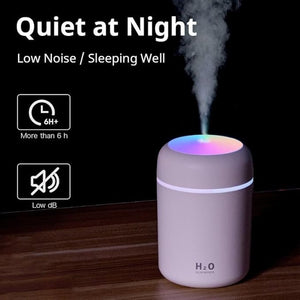
Reeds · always-on roomsFrom ₹749Shop →  Sukoon · when you want a switch₹1,899Shop →
  Hotel Collection · the scentFrom ₹299Shop →
The monthly routine
First, do the wash properly rather than quickly. Cover up, both panels out, rinse under a running tap from the clean side outwards so the dust comes off rather than going in, soft brush and a little mild soap where the load is heavy, rinse again. Then leave them to dry fully in shade — an hour or two in a breezy spot, not in hot direct sun where the plastic frames distort. Refit only when they are properly dry. Put a monthly reminder on your phone for the cooling season and make it fortnightly if you live on a main road or next to construction.
Second, use the wash as a diagnostic and act on what it tells you. If the smell disappears, you are finished and the answer was two minutes of work. If it improves but persists, the filter was a contributor and something downstream is carrying the remainder — run fan-only with the clean filters in, and if it still smells, put the blower wheel on the service list; if fan-only is clean and cooling is not, put the coil on it. Ask for the coil jet clean, the blower clean and the drain flush by name, because a standard service booking means a filter wash and a gas check.
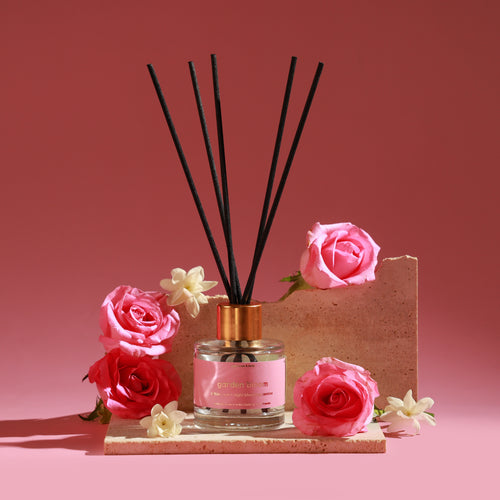
Third, remember the filter never ventilated anything, and then scent the room. Cross-ventilate for ten minutes morning and evening with two openings on opposite sides — a clean filter recirculating stale air is still stale air. Once the mesh is clean, the room is aired and the bedding is being washed weekly, a bedroom is worth giving a character to. A reed diffuser from ₹749 runs on capillary action with no electricity and nothing to switch; use four reeds rather than six in a cooled room, and keep it out of the vent's airflow rather than in it. If you would rather have a switch, the Sukoon at ₹1,899 with three drops of a Hotel Collection scent from ₹299 runs for an hour and stops.
The order that works
This is the rare household problem where the most likely fix costs nothing and takes ten minutes. The purchase is genuinely optional and genuinely fourth.
| Step | What to do | When | Cost |
|---|---|---|---|
| 1. Remove the source | Wash both mesh filters monthly under a tap, dry fully, refit; book coil, blower and drain work if the smell survives | Before anything else | ₹0 |
| 2. Move the air | Cross-ventilate ten minutes twice a day — a clean filter still recirculates and exchanges no outside air | Daily, five to ten minutes | ₹0 |
| 3. Deal with what holds it | Ten minutes of fan-only before shutdown to dry the coil; weekly bedding; fortnightly filters on a dusty road | Weekly to monthly | ₹0 |
| 4. Then the always-on layer ★ | A SOSA reed diffuser — a quiet permanent background in a bedroom that is now genuinely clean — four reeds, away from the vent | 50ml 6-8 weeks · 130ml 14-18 | from ₹749 |
| 5. Or the on-demand layer | Sukoon with a Hotel Collection scent — scent on demand for an hour before bed; roughly 270–320 sq ft of coverage from one machine | Run it when you want it | ₹1,899 |
Versailles
If somebody tells me their clean bedroom smells odd with the AC on, the first thing I ask is when the filters were last washed, and the answer is very often a shrug. It is the cheapest fix in this entire cluster and the one most likely to work, which is an awkward thing for someone who sells home fragrance to keep saying, but there it is. Two panels, a tap, ten minutes.
The detail people get wrong is the drying. A filter washed at nine and clipped back in at nine-fifteen while still damp goes straight into a cold, dark, enclosed space — which is a better environment for growth than the dusty one you just cleaned. Give them an hour or two in shade. And do not leave them in hot sun to hurry it, because the frames warp and then never seat cleanly again.
Once the mesh is clean and the room is being aired, scent it lightly. Air-conditioned bedrooms are sealed, so what you put in does not leave; they are cool, so evaporation from reeds is slow and steady. Four reeds of something quiet, placed away from the airflow, is the whole prescription. A portion of every order funds a girl's classroom through Nanhi Kali.
Frequently asked questions
- My room smells fine until I switch on the AC — six tests that isolate the unit.
- Why does my split AC sometimes smell musty? — coil, blower, pan and drain line.
- A clean bedroom that smells strange with the AC on — what cleaning never reaches.
- Why does my bedroom smell weird when I turn the AC on? — the timing is the diagnosis.
- Brand: the SOSA founder story.
SOSA products & prices (verified August 2026): Hotel Collection water-based ultrasonic diffuser fragrance 15ml ₹299 · 100ml ₹999 · 300ml ₹1,799 · Pack of 7 (15ml, all fragrances) ₹1,799; refills 100ml from ₹999. Seven scents: The Ritz-Carlton-inspired (white tea · bergamot · cedar), Westin-inspired (white tea · aloe · cedar), 1 Hotels-inspired (cedarwood · vetiver · green leaves), The St. Regis-inspired (amber · violet · woods), Shangri-La-inspired (jasmine · green tea · white tea), Four Seasons-inspired (citrus · floral · sandalwood), W Hotels-inspired (citrus · pepper · amber). Diffusers: Boond 300ml ₹899 · Sukoon 500ml ₹1,899 · Megh 6L ₹3,499. Water-based, phthalate-free, composed to IFRA standards for home diffusion; 3–6 drops per tank. Made in India, Pune. The Hotel Collection scents are SOSA's own interpretations inspired by the world's finest hotels; all hotel names are trademarks of their respective owners and are used only to describe the scent style — SOSA is an independent Indian fragrance house, not affiliated with or endorsed by any hotel brand. Prices and availability subject to change — see the live product pages.