




Lots of plants and a balcony? The Shangri-La-inspired Tea Garden.
The trap: the hygge instinct — cinnamon, vanilla, amber, something candle-like. It belongs to a Nordic January, not to a bright flat in Pune.
2. The hygge instinct is the trap. Warm, sweet, candle-shaped scents belong to a Nordic winter ritual, not to the architecture. In a pale, bright room they contradict everything the surfaces are doing, and in an Indian summer they simply read as stuffy.
3. If the room is full of plants: Shangri-La-inspired. Tea Garden — jasmine, green tea and white tea. A Scandinavian scheme with a monstera in every corner and a balcony door open has a living, green quality that this answers precisely.
4. If it leans woody and textured: 1 Hotels-inspired. Forest Suite — cedarwood, vetiver, green leaves. Where there is more timber, more wool and fewer white walls, this holds the room down without making it heavy.
5. Dose to the curtains, or the lack of them. Scandinavian rooms often have bare windows and few textiles, which means less to hold fragrance — 4 to 5 drops rather than 3. Bedrooms with full curtains and a rug want less.
Made in India, composed by an ISIPCA Versailles-trained perfumer — and a portion of every order supports girl-child education through Nanhi Kali.

A style invented to solve a shortage of light — which you may not have
Scandinavian design is often described as simple, which undersells it. Almost every one of its signatures is a solution to a single problem: not enough daylight, for months at a stretch. Pale floors and white walls reflect rather than absorb. Windows are left bare or dressed in something sheer, because a heavy curtain in Stockholm in December is throwing away a resource. Furniture sits low so it does not stand between you and the window. Mirrors are positioned to double what arrives. The entire vocabulary is about light, and light is the register the room speaks in. A fragrance that reads as bright, clear and airy extends that. One that reads as warm, sweet and enclosing argues with it, and people register the argument as the room feeling smaller and stuffier without being able to say why.
There is a second, more specifically Indian point, and it is the one I find people have not considered. Hygge is real, but it is a seasonal ritual layered on top of the architecture — candles and wool and something spiced, in a January where the sun sets at three. Most Indian homes furnished in this style have the opposite problem: abundant, hard, hot light for most of the year, and a living room that reaches thirty-four degrees by mid-afternoon. Importing the winter scent along with the furniture is a category error. Warm air also disperses fragrance faster and pushes sweet, heavy materials forward, so a cinnamon or amber that is comforting in a cold room becomes cloying in a warm one within twenty minutes. Take the architecture, which travels perfectly. Leave the January.
The three decisions in a Scandinavian room
 Hotel CollectionFrom ₹299A bright, south or west-facing flat with white walls and bare glass is a light-flooded room, and it wants Westin-inspired White Tea Serenity — cool, clear, nothing in it that thickens the air. A Scandinavian-styled room that happens to be north-facing, on a low floor, or shaded by the next building is a different proposition: it can take 1 Hotels-inspired Forest Suite, which has more grain and body to it, or The Ritz-Carlton-inspired Quiet Luxury if the room is genuinely dim and you want some warmth without sweetness. The mistake is choosing from the mood board rather than from your own window.
The Scandinavian palette
Judged on whether the scent extends the room's light or fights it. As always, a 15ml at ₹299 tested in your own flat beats any table, including this one — how much sun you get and how many textiles you own will move the answer.
| Scent | Notes | Character | Best for |
|---|---|---|---|
|
Westin-inspired ★ White Tea Serenity |
White tea · aloe · cedar | Cool, clear, weightless — reads as air | Classic bright Scandinavian: white walls, pale floors, bare windows |
|
Shangri-La-inspired Tea Garden |
Jasmine · green tea · white tea | Green-floral, alive, garden-like | Plant-filled Scandinavian rooms and open balcony doors |
|
1 Hotels-inspired Forest Suite |
Cedarwood · vetiver · green leaves | Dry, green, grounded | Woodier, more textured Scandinavian — birch, wool, less white |
|
The Ritz-Carlton-inspired Quiet Luxury |
White tea · bergamot · cedar | Polished, cool, quietly composed | North-facing or shaded rooms that need a little more body |
| Not in this family, for reference: The St. Regis-inspired Old-World Glamour is plush and powdery and closes a bright pale room in — this is the hygge trap in bottled form; Four Seasons-inspired Warm Welcome is gracious but distinctly warm; W Hotels-inspired Lobby Bar is bold and spiced and belongs in a dark room, which this style is designed never to be. See all seven. | |||
Hotel Collection · the matchFrom ₹299Shop →  Sukoon · 270–320 sq ft₹1,899Shop →
 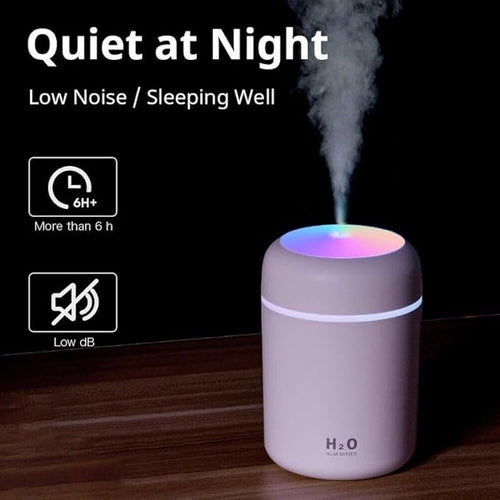 Boond · smaller rooms₹899Shop →
Dose, placement, and a caution worth taking seriously
Set the dose from the textiles rather than the floor plan. A Scandinavian living room with a pale hard floor, bare or sheer-dressed windows and a low sofa has less holding capacity than it looks — 4 to 5 drops in a Sukoon, and expect the scent to thin out within an hour or two of the machine stopping. A Scandinavian bedroom with proper curtains, a wool rug and a fabric headboard is a different room entirely: 3 drops there, and give it a day or two between runs, because those surfaces are storing fragrance and handing it back all night.
Place it about a metre up, a third of the way into the room, and away from the window rather than beside it. That last point is specific to this style: a bright room usually means an open window or a strong draught, and a diffuser standing in it is simply exporting your fragrance to the street. Keep a clear foot around the machine, keep it out of the air conditioner's direct throw, and do not aim the plume at a mirror or a run of glazing, where condensing mist shows immediately and where this style tends to have a great deal of both.
The caution, which matters because the surfaces here are pale and often lightly finished: the mist is water and it settles. On a pale ash or birch-toned console it can raise a bloom or a ring that will not sand out of a factory finish; on stone it leaves spotting. Stand the machine on a tray, a ceramic dish or a slab, wipe around it occasionally, and do not aim it at art, leather or upholstery. Use filtered water in hard-water cities — mineral dust is very visible on white paint and pale wood.
What to buy
The scent is the decision and the machine is only sizing. Most Scandinavian schemes in Indian flats are one open living-dining plus a bedroom, which is two machines rather than one large one. Here is the whole spend.
| Buy | What it is | Best for | Price |
|---|---|---|---|
| Test first ★ | Three 15ml testers — White Tea Serenity, Tea Garden, Forest Suite | Deciding against your own light and walls | 3 × ₹299 = ₹897 |
| The machine | Sukoon 500ml — 270–320 sq ft, remote, timers, 3 × 15ml included | The bright open living-dining | ₹1,899 |
| Bedroom as well | A second Sukoon, run at a lower dose | A curtained bedroom that needs 3 drops, not 5 | 2 × ₹1,899 = ₹3,798 |
| Smaller rooms | Boond 300ml — up to 150 sq ft | A study, a nursery, a compact guest room | ₹899 |
| The one you keep | 300ml of your winner (~₹6/ml), or 100ml at ₹999 | Months of running at 4–5 drops | ₹1,799 |
Versailles
I have a small, unreasonable fondness for the fact that Scandinavian design is essentially an argument with the weather. The pale floors, the bare windows, the low furniture — none of it is decoration. It is all there to make a scarce thing go further.
Which is why I keep asking clients with beautiful pale flats why they are running something warm and sweet in them. The answer is almost always that they read about hygge. But hygge is a ritual, not a building — it is what you do in a Nordic January, and a January is precisely what a flat in Pune or Chennai does not have. Warm air pushes sweet materials forward and makes them cloying much faster than a cold room does.
So take the architecture and skip the season. White Tea Serenity, four or five drops, run morning and evening rather than through the heat. Buy the 15ml at ₹299 first and let your own window decide — it is a far better judge than I am. A portion of every order funds a girl's classroom through Nanhi Kali.
Frequently asked questions
- Best fragrance for a Japandi home — the same warmth, with Japanese restraint added.
- Best fragrance for a minimalist home — when the room has almost nothing in it.
- Best home fragrance for bright airy interiors — more on light-filled rooms.
- Which fragrance matches your interior style? — the full selector.
- Brand: the SOSA founder story.
SOSA products & prices (verified August 2026): Hotel Collection water-based ultrasonic diffuser fragrance 15ml ₹299 · 100ml ₹999 · 300ml ₹1,799 · Pack of 7 (15ml, all fragrances) ₹1,799; refills 100ml from ₹999. Seven scents: The Ritz-Carlton-inspired (white tea · bergamot · cedar), Westin-inspired (white tea · aloe · cedar), 1 Hotels-inspired (cedarwood · vetiver · green leaves), The St. Regis-inspired (amber · violet · woods), Shangri-La-inspired (jasmine · green tea · white tea), Four Seasons-inspired (citrus · floral · sandalwood), W Hotels-inspired (citrus · pepper · amber). Diffusers: Boond 300ml ₹899 · Sukoon 500ml ₹1,899 · Megh 6L ₹3,499. Water-based, phthalate-free, composed to IFRA standards for home diffusion; 3–6 drops per tank. Made in India, Pune. The Hotel Collection scents are SOSA's own interpretations inspired by the world's finest hotels; all hotel names are trademarks of their respective owners and are used only to describe the scent style — SOSA is an independent Indian fragrance house, not affiliated with or endorsed by any hotel brand. Prices and availability subject to change — see the live product pages.