



Set the level for the longest wait present. A ten-minute spectacle collection and a two-hour dilated review share the same air at the same moment, and a room has only one level.
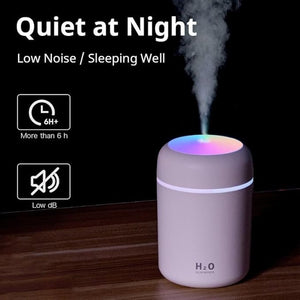
Buy for reversal speed, not for coverage. The most useful property in a mixed caseload is being able to stop the fragrance mid-session without a phone call. Sukoon ₹1,899 has a remote; a reed bottle has to be carried out.
If a paediatric list shares the waiting room, the honest answer for those hours is off. That is a scheduling decision costing nothing, and it is the recommendation I would give most general practices with a mixed book.
2. The floor rule, stated once: design for the least tolerant person who might be in the room, and never attempt to guess who that is. Age does not tell you. Appointment type does not tell you. Nothing on your system tells you. What follows is not caution for its own sake — it is that a level set at the floor needs no prediction to be correct.
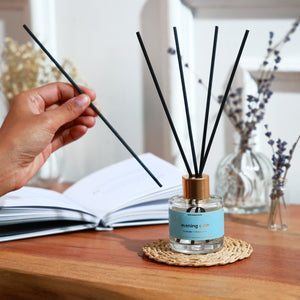
3. Two of the six reeds, one source, arrival zone only. Six is where SOSA calibrates every composition and where the published strength positions are measured, and those positions are on SOSA's own internal scale rather than an industry standard. Two is a deliberate step below the three I would give a single-population clinic, because a mixed book widens the range one level has to serve.
4. A dry composition, because dryness is what stops a room being nameable. Mountain Breeze ₹849 — Himalayan pine, sage and Indian cedar — has no sweetness and no floral weight, and tends to register as "clean and dry" rather than as a material anybody can name.
5. The level belongs to the longest exposure, not the typical one. A mixed book puts a ten-minute collection, a forty-minute refraction and a two-hour dilated workup in the same air at once. Set it for the person still sitting there at the end.
6. Buy for reversal, not for reach. A Sukoon ₹1,899 stops the moment somebody presses the remote; a reed bottle has to be lifted and carried out, and the room then clears on its own schedule. Neither is wrong — knowing which you bought is the point.
7. Everyone on the desk must have authority to switch it off. Not to ask a manager, not to leave a note — to act. A control that requires permission is not a control.
8. If a paediatric list shares the room, run those hours at zero — and nothing here goes past the consultation door. That is a scheduling change costing nothing. No product or setting on this page is described as safe, unsafe or suitable for any patient group, and no claim is made about how anybody at any age perceives or responds to fragrance. Examination rooms, diagnostics, consultation cabins, the procedure suite and post-operative areas take nothing at any level. Composed and made in small batches in Pune, and a portion of every order supports girl-child education through Nanhi Kali.

Part one — why the average is the wrong operation
Almost every enquiry from a practice with a broad book uses the same word: universal. I understand the instinct, and it leads people to buy the wrong thing, because it quietly assumes acceptance behaves like a preference — that it can be pooled, averaged and won on a majority. It does not. Here is what to do instead.
 Sukoon 500ml₹1,899 · remote, 2H/4HThis is the part of a mixed book that genuinely changes the specification, and it has nothing to do with who the patients are. A broad clinic runs several appointment lengths simultaneously through one waiting area. Somebody collecting spectacles is there for eight minutes; a routine refraction, thirty; a dilated fundus examination with a wait either side of the drops, two hours — and that person is in the same air at the same concentration as the eight-minute one. A room has exactly one level and it is not negotiable per chair. So the level belongs to the longest exposure that is routinely present, and everybody else simply gets less of it than the room could have delivered. That is not a compromise, it is the correct design. The commonest failure I see is a practice walking in from the street, deciding it is barely there, and adding a reed — a judgement made at the eight-minute exposure and applied to the two-hour one. Check it properly: have somebody from your team sit in the furthest chair for a full forty minutes, then ask what the room was like at the end.
Part two — every decision has an average answer and a floor answer
Seven decisions, the answer each gets if you design for the typical visitor, the answer it gets at the floor, and what the second genuinely costs. The fourth column exists because the trade is real and I would rather you saw it than discovered it.
| The decision | If you design for the average visitor | If you design to the floor | What the floor answer costs you |
|---|---|---|---|
| Reed count on a 50ml bottle ★ | Six, as supplied and as calibrated | Two, and a bottle that outlives its published 6–8 weeks by an unpublished margin | The room becomes something people register rather than describe. If you wanted character, this is where you give it up |
| Which composition | Whichever the team liked best on the sample | The driest and least nameable one you can live with | Your reception will never be memorable — the intended outcome here, but say it out loud before you buy |
| Where the source stands | Near the entrance, for the first impression | Far end of the zone, turned inward, clear of the AC return, set back from the corridor | The doorway now smells of nothing, which is what a clinical entrance should smell of |
| What level to judge from | Walking in from the street in the morning | The furthest chair, forty minutes in, at your busiest hour | An hour of somebody's time, once a quarter — the cheapest test in this cluster |
| Hours of operation | All opening hours, continuously | Zero during any session that shares the room with a paediatric list | Nothing. A diary change is the one recommendation here that costs no money |
| Who may change the setting | The owner or manager, on request | Anyone on the desk, immediately, without asking | You lose control of your own level, which is the point — a setting nobody may touch is one nobody can correct |
| What to do with one complaint | Note it, because the other twenty said nothing | Treat it as a measurement and lower the level that day | You will lower the room several times before it settles, and it ends lower than planned |
| The honest caveat: every row here describes the arrival zone only — reception and waiting. Examination rooms, diagnostic areas, consultation cabins, the procedure suite and any post-operative area take nothing, in any format, at any level, at any hour, and that is the practice's own clinical judgement rather than a supplier's recommendation. Nothing on this page is medical, clinical, ventilation or regulatory advice. No claim is made, in either direction, about how children, adults or older people perceive, tolerate or respond to fragrance, and no SOSA product or setting is described as safe or unsafe for any patient or staff group. Some people are sensitive to airborne fragrance, which is precisely why the clinical pathway stays fragrance-free and why a fragrance-free seat must genuinely exist somewhere a person would ordinarily sit. A diffuser adds a scent to the air; it does not clean, purify, filter or freshen it, and it removes nothing that is already there. | |||
Mountain Breeze · two of six reeds₹849Shop →  Sukoon · a remote at the desk₹1,899Shop →
 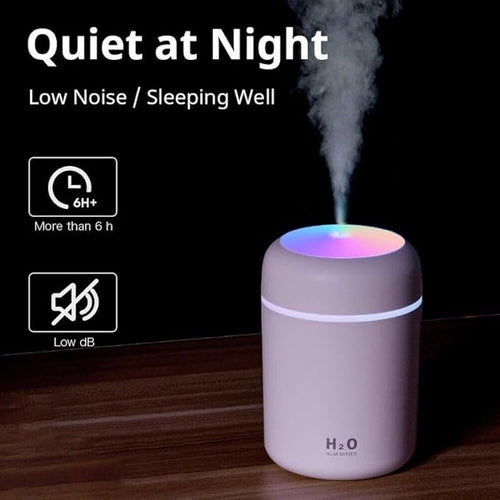 Boond · ends by itself, ~6 hrs a fill₹899Shop →
Part three — the mixed-age practice that should buy nothing
There is a configuration in which I would tell a practice with a broad book to spend nothing at all, and it is common enough that I want it here rather than buried in a footnote. If a paediatric list shares your only waiting room, the honest answer for those sessions is zero — and if paediatric work is a large part of your week rather than an occasional list, the honest answer for the whole room is probably zero as well. The reasoning is not a claim about children and fragrance, which is not mine to make. It is simpler. Designing to the floor depends on the floor being reportable: somebody has to be able to say the room is too much, and somebody has to act on it. Where a portion of the people present cannot reliably report that, and where an accompanying parent may reasonably read any ambient decision as one the practice has taken on their child's behalf, you are running an installation whose central safeguard does not fully apply — and nothing is gained that cleaner surfaces, better light and a queue that moves would not gain. The fuller version is on the children's clinic page, and it lands in the same place: not yet, and here is what to fix first.
The second configuration is geometric and it catches a lot of general practices. One waiting area of under about 150 square feet, sealed and air-conditioned with the front door as the only real opening, holding several appointment types with dwell times up to two hours, and with no second seating area anywhere in the building. That last clause is the one that decides it. A fragrance-free seat is not a gesture and it is not a chair in a corner; it has to be somewhere a person was going to sit anyway, far enough from the source that the difference is real, and reachable without crossing the room or being singled out. In a single small waiting area there is often nowhere that qualifies, because the room is one air volume and a chair four feet from the bottle is not meaningfully different from one eight feet away. If you cannot produce that seat you have not got a design, you have got a hope. Fix the air exchange, look hard at whether a second seating bay is possible, and ask again in a quarter — neither of which is something SOSA sells.
The third case is settled by asking the right people. Your reception staff are in that air eight or nine hours a day against a patient's eight minutes to two hours, and they have the least ability to leave it. If they would rather have nothing, that is a complete answer needing no further justification. Ask properly — not "is this bothering you", which invites a polite no, but "if you could change one thing about this room, what would it be". Ask again a fortnight later, because the first answer is about novelty and the second about living with it. And remember what the room competes with. A practice is judged on competence, and every other signal should stay well behind that one; an arrival zone that smells like a spa reads as a practice trying to be something it is not. The target is considered, never scented.
Part four — the options ranked by how fast you can undo them
Seven options, what each costs to start, how far down its range genuinely goes, how fast whoever is at the desk can stop the emission, and my verdict. The third and fourth columns decide this page.
| Option | Cost to start | How low the range genuinely goes | Time from decision to emission stopped | Verdict for a mixed-age arrival zone |
|---|---|---|---|---|
| One 50ml reed bottle at two of six reeds ★ | ₹749–₹849, and free shipping applies above ₹499 | Very low — two reeds is a deliberate step under the calibrated six, and one is lower still | Seconds to lift the bottle out, then the room clears at your air-exchange rate | The default. Cheapest to start, lowest floor, nothing to install |
| Two 50ml bottles at two reeds each, at opposite ends | ₹749 + ₹849 = ₹1,598 for a mixed pair, or ₹1,498–₹1,598 as a duo set | Lower per point, but total output doubles — this raises the room rather than softening it | Two objects to remove instead of one | L-shaped zones only. In one open room it is more than a mixed book needs |
| One 130ml bottle at two reeds | ₹1,249–₹1,349 | Identical to a 50ml at the same reed count — size buys duration, never reach | Same as any bottle | Worth it only for the reorder interval: 14–18 weeks against 6–8 |
| Boond ₹899 on a light dose | ₹899 + a 15ml Hotel Collection at ₹299 = ₹1,198 | Controlled by drops in the tank, so genuinely low if dosed light. Adds humidity | Immediate at the machine, and it ends by itself after roughly six hours a fill | Reasonable around 150 sq ft. No remote, so somebody must walk to it |
| Sukoon ₹1,899 on its lowest mode | ₹1,899, with three 15ml scents included in the box | Lowest mode plus a light dose is the floor; 16–18 hours on low, and adds humidity | Immediate, from the desk, on the remote — the fastest reversal here | The sized machine for 150–320 sq ft, and reversal is why I would pick it over a bottle in a busy room |
| Megh ₹3,499 | ₹3,499 | Same dosing logic, but ~215 sq ft — less coverage than a Sukoon | Immediate at the machine | A runtime and humidity machine at ~100 hours a fill, never a coverage upgrade |
| Vaayu ₹11,999 | ₹11,999, and 400ml of oil supplied in the box | Adjustable intensity, scheduled run windows, key-lock so a set level stays set | Immediate, but the app or key is the control — governance, not a desk feature | Only past roughly 320 sq ft of connected arrival zone. Under 38 dB is its real clinic argument. Confirm refill supply first |
Versailles
An optometrist in a two-doctor practice sent me a list of five compositions and asked which would work for "everybody from a four-year-old to a ninety-year-old". I sat with it for a day, because the honest reply was that the list was the wrong artefact: any of those five would be fine at a low enough level and none at a high one, which meant the choice he was agonising over was not the one that would decide his room.
What I sent back instead was four questions and no recommendation. How many square feet is the waiting area on its own — not the practice, the waiting area. What is your longest routine wait, measured rather than estimated. Is there anywhere in the building a person could sit that is genuinely away from the reception air. And can the person on your desk switch the thing off at two in the afternoon without ringing you. He answered in a paragraph: a hundred and sixty square feet, ninety minutes on dilation mornings, a small bay by the optical display that nobody used, and no — the desk would definitely have rung him.
He changed the last two answers before he bought anything, which took a fortnight and cost nothing. Then he bought one bottle, ran it at two reeds at the far end, and told me later that the useful sentence had been the one saying he was solving a preference problem when he had a floor problem. Composed and made in small batches in Pune, and a part of every order funds a girl's classroom through Nanhi Kali.
Frequently asked questions
- Should a children's eye clinic use ambient fragrance at all? — the page this one defers to.
- What neutral actually means and a clinic with many senior patients.
- What to do when somebody says it is too strong — the floor rule in operation.
- A signature scent alongside genuine fragrance-free areas.
- Brand: the SOSA founder story.
SOSA range, specifications and prices used in this guide (verified August 2026): Vaayu ₹11,999 — waterless cold-air nebulisation of undiluted fragrance oil; no water, no heat, no added humidity, no white mineral dust. Coverage up to 1000 m³, about 2,000–3,000 sq ft. 400ml refillable tank lasting roughly 90+ days at a mid setting. Bluetooth app plus onboard controls, 1h / 4h / 8h / 24h run windows, day selection, adjustable intensity, auto-stop and key-lock. Under 38 dB. DC 12V / 1A, 5W. Freestanding or wall / HVAC mount. CE, RoHS and SGS certified. SOSA does not currently sell a separate Vaayu cold-air refill oil; the 400ml supplied in the box is the fragrance available at the time of writing, so a practice planning continuous or multi-site use should confirm current refill availability with SOSA before committing. The water-based Hotel Collection is made for ultrasonic machines and must not be used in a Vaayu. Other machines: Boond 300ml ₹899 (~150 sq ft, ultrasonic) · Sukoon 500ml ₹1,899 (270–320 sq ft, 16–18 hours on low, remote and steady/2H/4H timers, three 15ml fragrances included, ultrasonic) · Megh 6L ₹3,499 (~215 sq ft — a runtime and humidity machine that covers less than a Sukoon, never a coverage upgrade) · Safar ₹3,999 (waterless cold diffusion, cordless, 20ml, about 6.9cm, three speeds, 1/2/3-hour auto-off — sold as a car and travel diffuser, personal-scale only; SOSA publishes no coverage figure for it) · Aangan ₹25,999 (HVAC nebulising, ~8,000–10,000 sq ft) · Meenar ₹38,500 (commercial HVAC, 12,000–18,000 sq ft). Water-based Hotel Collection for ultrasonic machines: 15ml ₹299 · 100ml ₹999 · 300ml ₹1,799 · pack of seven ₹1,799; scents are inspired by the atmosphere of well-known hotels — SOSA is an independent Indian brand and is not affiliated with, endorsed by or supplying any hotel group. Reed diffusers ₹749–₹1,349 (50ml 6–8 weeks, 130ml 14–18 weeks, six fibre reeds, no 100ml size; replacement reeds are not sold separately). Reed oil cannot be used in an ultrasonic machine and Hotel Collection oil cannot be used in reeds. SOSA sells no room spray or home spray — every SOSA spray is a car perfume. Nothing in this guide is medical, clinical or safety advice. A fragrance diffuser adds a scent to the air. It does not clean, purify, filter, sanitise or disinfect air, does not remove or neutralise disinfectant, damp or occupancy smells, and has no effect on comfort, anxiety, waiting time, recovery or any clinical outcome. Some people are sensitive to airborne fragrance, which is why this guide recommends that examination rooms, diagnostic areas, consultation cabins, procedure suites and post-operative areas remain fragrance-free, that a fragrance-free seating option always exist, and that a diffuser is never mounted into shared HVAC in a clinical building. Decisions about clinical policy, ventilation standards, infection control and patient suitability rest entirely with the practice and its clinicians. A persistent stale, damp or disinfectant smell is a ventilation, moisture or cleaning problem — SOSA sells no dehumidifier and no air purifier, and fragrance should never be used to cover one. Coverage, runtime and longevity figures are manufacturer specifications and typical ranges, not guarantees, and vary with room volume, ceiling height, air exchange, occupancy and season. SOSA publishes no commercial or bulk pricing, no corporate account, no annual maintenance contract, no installation service, no stated warranty term and no multi-location programme; warranty length, spare parts, servicing and app platform availability are unconfirmed, and larger or multi-site enquiries should go through the contact page before any commitment. Composed and made in small batches in Pune, India. Free shipping above ₹499. A portion of every order supports girl-child education through Nanhi Kali. Prices subject to change — see the live product pages.