
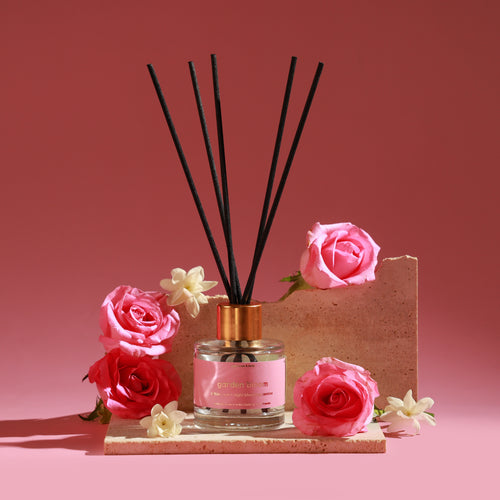
 Garden Bloom ₹799
  Morning Freshness ₹749
 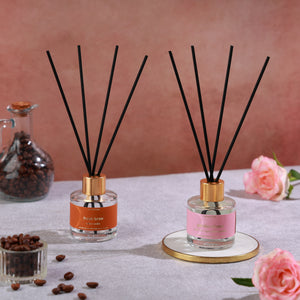 Warmth & Bloom duo ₹1,598
 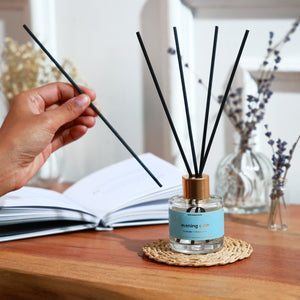 Evening Calm ₹799
  300ml refill ₹2,399
₹5,000 · money is the constraint. Six names at 6 × ₹799 = ₹4,794, or twelve names at 12 × ₹379 = ₹4,548. You choose breadth or format, not both.
₹10,000 · the tier boundary is the constraint. 2 × ₹1,498 = ₹2,996, plus 6 × ₹749 = ₹4,494, plus 5 × ₹449 = ₹2,245, which is ₹9,735 across thirteen names.
₹25,000 · admin is the constraint. 5 × ₹2,498 = ₹12,490, plus 10 × ₹849 = ₹8,490, plus 8 × ₹449 = ₹3,592 is ₹24,572 across twenty-three names — and twenty-three is close to the point where more money stops improving the gifting.
2. Sort into three tiers, not fourteen names. Close family, the obligation list, and the people who work for you. One item per tier. Three items cover a thirteen-name list; eight items cover it worse and cost you a fortnight.
3. At ₹5,000 the constraint is money and the answer is uniformity. Six names at 6 × ₹799 = ₹4,794, or twelve names at 12 × ₹379 = ₹4,548. Trying to grade a ₹5,000 list produces one decent gift and a row of thin ones.
4. At ₹10,000 the constraint is the tier boundary. There is now enough for a real top tier, so the question becomes who is in it. 2 × ₹1,498 = ₹2,996, plus 6 × ₹749 = ₹4,494, plus 5 × ₹449 = ₹2,245 gives ₹9,735 across thirteen names, and getting the "2" right matters more than which scent you pick.
5. At ₹15,000 the constraint is format at the top. This is the rung where a two-bottle duo becomes affordable for four people without the rest of the list suffering: 4 × ₹1,598 = ₹6,392, plus 8 × ₹849 = ₹6,792, plus 4 × ₹449 = ₹1,796, totalling ₹14,980 across sixteen names.
6. At ₹25,000 the constraint stops being money. 5 × ₹2,498 = ₹12,490, plus 10 × ₹849 = ₹8,490, plus 8 × ₹449 = ₹3,592 is ₹24,572 across twenty-three names. Past roughly this point the limit is how many objects one person can decide on, order, carry and hand over — not what they cost.
7. Keep separate lists financially separate. An office list and a family list are two obligations with two conventions. 10 × ₹749 = ₹7,490 and 6 × ₹1,299 = ₹7,794 are two sane decisions; ₹15,284 as a single figure is a number that makes people despair.
8. There is no bulk arrangement waiting for you at any of these rungs. No discount slab, no minimum order quantity, no invoicing arrangement, no branding, no lead time, no hamper and no gift card. Twenty bottles cost twenty times one bottle. If an order is large, ask through the contact page before committing.
Everything is composed and handmade in small batches in Pune, and a portion of every order supports girl-child education through Nanhi Kali.
Part one — a total is three numbers
A person telling me they have ₹15,000 for Diwali has given me roughly a third of the information I need. The total is the least useful of the three numbers that decide a Diwali list, and the other two — how many names, and how those names divide into tiers — determine almost everything about what should end up in the cart. What follows is those three numbers in order, and then the observation this whole guide is built on: that the number which binds you is not the same one at every rung of the ladder.
 Warmth & Bloom duo₹1,598 · 2 × 50mlThree tiers cover almost every Indian Diwali list: close family, the obligation list, and the people who work for you. The obligation list is nearly always the largest of the three and it is the one that must be identical, because several of its members may compare. The top tier is small — three or four names — and is the only place you actually hold enough information to be specific. The third tier begins with cash rather than with a product, because cash is flexible and is what most people in that position would choose; an object alongside it is a courtesy, never a substitute, and never a stand-in for a Diwali bonus. One item per tier is the entire operating instruction. A thirteen-name list bought as three SKUs is one order and one afternoon; the same list as eight SKUs is eight decisions and a car full of things whose labels you must check in a doorway.
Part two — the ladder, ₹5,000 to ₹25,000
Four rungs, each with a worked allocation, the constraint that governs it and the thing it still cannot do. Every figure is arithmetic on our listed prices; none of it is a quotation, and no bulk arrangement, discount or minimum quantity exists behind any line. Nothing outside the SOSA range is priced anywhere on this page, because the argument here is about structure rather than about what any category costs.
| Total | What actually binds you here | A list length it fits | A worked allocation | What it still cannot do |
|---|---|---|---|---|
| ₹5,000 ★ | Money. This is the only rung where it is the real limit | 6 names at reed level, 12 at candle level | 6 × ₹799 = ₹4,794, or 12 × ₹379 = ₹4,548 | Carry a top tier. Grading a ₹5,000 list only thins it |
| ₹10,000 | The tier boundary — who is in the top three, and who is not | 13 names across three tiers | 2 × ₹1,498 = ₹2,996 · 6 × ₹749 = ₹4,494 · 5 × ₹449 = ₹2,245 → ₹9,735 | Put everybody at 130ml. Something has to stay at 50ml |
| ₹15,000 | Format at the top — one bigger bottle, or two smaller ones | 16 names, four of them properly served | 4 × ₹1,598 = ₹6,392 · 8 × ₹849 = ₹6,792 · 4 × ₹449 = ₹1,796 → ₹14,980 | Buy its way out of a list that has grown past twenty |
| ₹25,000 | Admin — deciding, ordering, carrying and handing over | 23 names, which is near the practical ceiling | 5 × ₹2,498 = ₹12,490 · 10 × ₹849 = ₹8,490 · 8 × ₹449 = ₹3,592 → ₹24,572 | Improve the gifting further. More money stops helping here |
| What changes between rungs | Not the products — the decision being made | Each rung adds names or adds duration, rarely both | The SKU count stays at two or three throughout | None of the rungs buys a bulk rate, because none exists |
| The honest caveat: every allocation above assumes the tiers do not meet. A ₹2,498 duo and a ₹449 jar candle in the same room is a visible difference and the fault will be yours rather than the products'. Assume any two people who share an office floor, a building, a duty room or a family lunch will see both gifts, and either level them or separate the handovers. Note also that the third line in each allocation is an object placed alongside cash for the people who work for you — it is not the gift itself, and no figure in this table should be read as a substitute for a Diwali bonus. | ||||
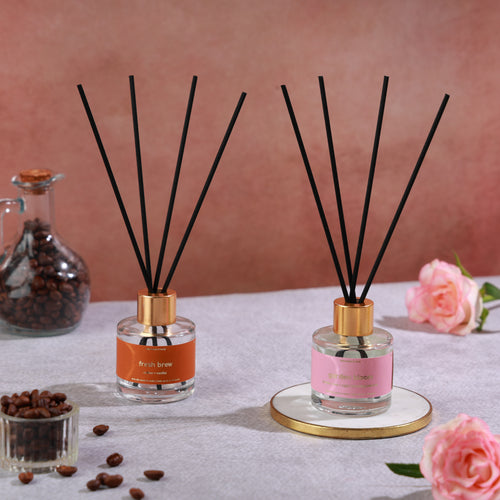
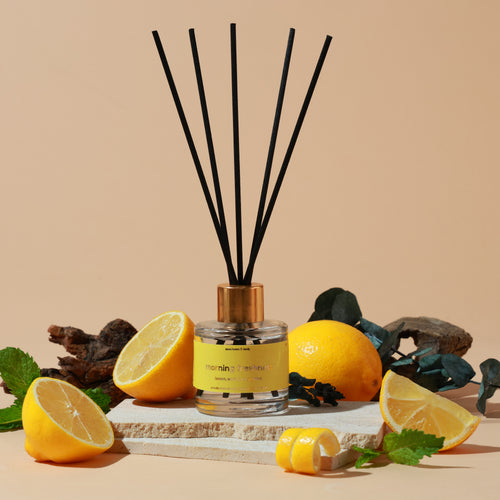 Morning Freshness · the obligation tier₹749Shop →
 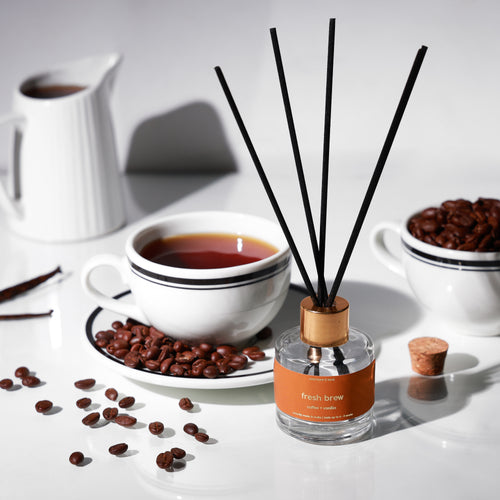 Fresh Brew · the ₹15,000 middle₹849Shop →
  Warmth & Bloom · the top tier₹1,598Shop →
Part three — choosing one or two scents for a whole list
Once the tiers are set, most readers need one scent for the largest group and occasionally a second for the top tier. That is a different selection problem from choosing for yourself: you are not looking for the composition you like best, you are looking for the one with the widest agreement across people whose taste you have never discussed. Breadth of acceptance and quality are not the same axis, and on a list the first one matters far more. The strength figures below are positions on SOSA's own internal scale at six reeds — a house measure, not an industry standard, not a concentration and not a ranking of how good anything is.
| Scent | 50ml / 130ml | What it smells of | Breadth of agreement across a mixed list | Where I would put it |
|---|---|---|---|---|
| Garden Bloom ★ | ₹799 / ₹1,299 | British rose · night-blooming jasmine | Widest. Familiar in almost any Indian home | The obligation tier, at any list length |
| Morning Freshness | ₹749 / ₹1,249 | Malabar lemon · peppermint · Nilgiri eucalyptus | Very wide, and the lowest entry price in the range | Long lists, and homes with a kitchen or bathroom to scent |
| Evening Calm | ₹799 / ₹1,299 | Kashmir lavender · chamomile | Wide, and the softest thing we make | Bedrooms, small flats, and recipients who dislike strong scent |
| Mountain Breeze | ₹849 / ₹1,349 | Himalayan pine · sage · Indian cedar | Narrower — dry and woody, and it can read as cold | People who reject floral or "scented" things outright |
| Fresh Brew | ₹849 / ₹1,349 | Coorg coffee · Kerala vanilla | Narrowest. The strongest and most polarising we make | Someone whose taste you know. Never eight of them blind |
| The honest caveat: if you buy two scents for one household, they should share a note or you get a seam — Mountain Breeze and Morning Freshness meet on green eucalyptus, Fresh Brew and Garden Bloom meet on warmth. And the gaps in this range are worth stating rather than papering over: there is no oud, no musk-forward scent and no aquatic here, so if that is what the person wants, this is not the shelf. One more thing specific to the season — a Diwali home is already at maximum fragrance, with diyas, incense, flowers and a kitchen running all week. A diffuser given at Diwali is for the fortnight afterwards, and it will sit alongside those smells rather than covering or removing any of them. | ||||
Part four — where total budgets go wrong
The commonest failure has nothing to do with the products and everything to do with order of purchase. People buy the top of the list first, because it is the enjoyable part, and then discover that the remaining money has to stretch across the eight or ten names they were least looking forward to. Buy the largest group first. Lock the obligation tier — the six or eight or ten identical items — and only then spend what remains on the top. This inverts the instinct, and it is the most useful procedural change on this page: a shortfall in the obligation tier is visible to several people at once, while a slightly smaller gift at the top is noticed by nobody but you.
The second failure is the seam. A graded list only works while the tiers stay apart, and tiers meet far more often than people plan for: a cousin who works in your office, a neighbour who is also an aunt, a family group where photographs of everything arrive within the hour. Where two tiers genuinely overlap, treat them as one and level upward. It costs the difference on a handful of gifts; leaving the seam exposed costs a conversation still remembered next Diwali. This is also why the third tier — the people who work for you — must be identical across everyone in it: they see each other daily, and the honest starting point there is cash rather than any object.
The third failure is over-buying, and I would rather lose a sale than not name it. Somewhere around twenty names, more money stops improving anyone's Diwali. At ₹25,000 across twenty-three names you are already at the edge of what one person can decide on, order, keep straight and hand over properly, and the next thousand rupees does not buy a better gift — it buys another object to carry. If you find yourself at that rung, the useful question is not what else to add but which four names came onto the list by habit and could come off it without anyone noticing. The fourth failure is quieter: adding two unconnected lists into a single total and then finding the total impossible. 10 × ₹749 = ₹7,490 and 6 × ₹1,299 = ₹7,794 are two ordinary decisions; their sum, seen as one number, is what makes people close the tab for another week.
Part five — what a total budget cannot buy here
This section exists because a guide that only tells you what to purchase is an advertisement wearing a guide's clothing. SOSA publishes no bulk pricing, no discount slab, no minimum order quantity, no invoicing arrangement, no custom branding service and no lead time. No rate appears once your order passes a threshold — twenty bottles cost twenty times one bottle, and every total here is arithmetic on the same listed prices you can see yourself. There is also no gift card, no gift hamper, no gift box and no curated collection; the duos are exactly two bottles and are described that way everywhere. If your order is large enough that you need to discuss it with a person, the route is the contact page, and I would use it before committing rather than after.
Nor can any budget on this page buy a delivery promise. Free shipping above ₹499 is the only logistics fact that exists here, and I am not going to invent a second one to make a gifting page feel more reassuring. Beyond that, a few honest limits on the products. The reed range has no oud, no musk-forward scent and no aquatic; reeds are not sold separately, so a refill is oil only. Reed oil never goes into a machine and the water-based Hotel Collection never goes into a reed bottle. A reed diffuser adds fragrance to a room — it does not clean air, remove a cooking smell or clear diya smoke, and during heavy Diwali cooking the sensible move is ventilation rather than more fragrance. And because the season involves lamps: fragrance oil is flammable, so wherever a bottle stands in a home with diyas lit, it belongs well away from any open flame. That is a handling fact, not a selling point.
Part six — the plan, by total
Seven situations across the ladder, each with the list it fits, the buy, the arithmetic and the honest note. Substitute your own counts — the structure survives the substitution, which is the point of planning by total rather than by person.
| Your total | Names | What I would buy | The arithmetic | The honest note |
|---|---|---|---|---|
| ₹5,000, short list ★ | 6 | Garden Bloom 50ml, identical | 6 × ₹799 = ₹4,794 | Do not grade this. One item, everybody, no exceptions |
| ₹5,000, long list | 12 | Cozy Corner jar candle, identical | 12 × ₹379 = ₹4,548 | Below the reed floor. Works only if all twelve match |
| ₹10,000 | 13, in three tiers | 2 × duo, 6 × ₹749, 5 × ₹449 | ₹2,996 + ₹4,494 + ₹2,245 = ₹9,735 | Getting the top two names right matters more than the scent |
| ₹15,000 | 16 | 4 × ₹1,598 duo, 8 × ₹849, 4 × ₹449 | ₹6,392 + ₹6,792 + ₹1,796 = ₹14,980 | The rung where two bottles reach four people without cost elsewhere |
| ₹25,000 | 23 | 5 × 130ml duo, 10 × ₹849, 8 × ₹449 | ₹12,490 + ₹8,490 + ₹3,592 = ₹24,572 | Near the practical ceiling. Check the list before adding names |
| Two unconnected lists | 10 office, 6 family | One SKU each, never one rate across both | 10 × ₹749 = ₹7,490 · 6 × ₹1,299 = ₹7,794 | Keep them financially separate or the total will paralyse you |
| Any total, and you suspect you are over-buying | Cut to 8 | One bottle each, and stop | 8 × ₹799 = ₹6,392, remainder unspent | Most lists carry four names nobody would miss |
Versailles
I did not set out to write a guide about budgets. I trained as a perfumer and what I care about is what happens in the twenty minutes after a bottle is opened. But the questions that arrive before Diwali are almost never about composition. They are logistics questions wearing the clothes of taste questions — how do I cover fourteen people, how do I not embarrass myself, how do I stop this taking every evening for a fortnight.
What I have learned from reading a few hundred of those messages is that the total is a red herring. The people who find Diwali gifting hardest are not the ones with the smallest budgets; they are the ones with the longest lists and no structure. And the ones who find it easy have almost always done the same three things without being told: divided by the number of names, sorted the names into groups, and bought one thing per group. That is the whole method, and it works identically at ₹5,000 and at ₹25,000.
The part I am most careful about is the top of the ladder, because a page like this could easily push a reader towards spending more. I do not think more is better past a certain point, and I would rather say so on our own site. Twenty-three names is a great deal of gifting; more money after that mostly buys you objects to carry. If you take one thing from this guide, take the instruction to buy the biggest group first and see what is left, rather than the other way round.
Everything we make is composed in Pune in small batches, and a part of every order funds a girl's classroom through Nanhi Kali. What we do not have — bulk rates, hampers, gift cards, delivery promises — is stated as plainly here as what we do.
Frequently asked questions
- ₹5,000 for all my gifting and ₹10,000, split by tier.
- Three tiers on one budget — the worked example this guide's method comes from.
- Should you spend equally on everyone? — the visibility rule behind every seam.
- Five SOSA baskets at ₹10,000 and the budget most households have.
- Brand: the SOSA founder story.
SOSA range & prices used in this guide (verified from the live store, 27 August 2026): Reed diffusers — alcohol-free, phthalate-free, paraben-free, IFRA-compliant compositions on a heat-stable coconut-derived (CCT) carrier, in a refillable glass bottle with six fibre reeds; 50ml lasts 6–8 weeks, 130ml lasts 14–18 weeks. Morning Freshness 50ml ₹749 · 130ml ₹1,249; Garden Bloom ₹799 · ₹1,299; Evening Calm ₹799 · ₹1,299; Fresh Brew ₹849 · ₹1,349; Mountain Breeze ₹849 · ₹1,349. Duo sets: Day & Night ₹1,498, Fresh & Grounded ₹1,548, Warmth & Bloom ₹1,598 (2 × 50ml); ₹2,498–₹2,598 (2 × 130ml). Oil-only refills 300ml ₹2,399 · 500ml ₹3,499 (vessel and reeds not included). The least expensive SOSA reed diffuser is ₹749 — no reed diffuser exists below that price in any size. Below it: scented jar candles from ₹379 (roughly 15–18 hours), Sandalwood or Smoked Oudh jar candle ₹449, wax melts ₹474 (a burner is needed and is not included), ceramic mugs ₹474, ribbed and face mugs and taper candles ₹569, Amber Rose candle ₹599, ceramic trinket dish ₹664, candle two-pack ₹664 (roughly 30–36 hours). Machines: Boond 300ml ₹899 · Sukoon 500ml ₹1,899 · Megh 6L ₹3,499 (~215 sq ft, a runtime and humidity machine rather than a coverage upgrade) · waterless Vaayu ₹11,999 · Safar car and travel diffuser ₹3,999. The water-based Hotel Collection (15ml ₹299 · 100ml ₹999 · 300ml ₹1,799) is a fragrance for an ultrasonic machine, not a standalone gift. SOSA publishes no bulk or corporate gifting terms — there is no discount slab, no minimum order quantity, no stated GST-invoicing arrangement, no custom branding service and no published lead time — and SOSA sells no gift card, gift hamper, gift box or curated gift set. Larger orders should be discussed with SOSA directly through the contact page before committing. Gift wrapping, gift notes, direct-to-recipient shipping and delivery timing are unconfirmed — check at checkout rather than assuming them; no delivery date is promised anywhere in this guide. Per-head and total costs shown are arithmetic on the listed prices, not quotations. Fragrance adds scent to a room; it does not clean air, remove cooking or smoke smells, or change how anyone feels. Fragrance oil is flammable — keep any diffuser away from diyas, candles and open flame. Composed and handmade in small batches in Pune, India; tested through 45°C summer heat and 85% monsoon humidity. Free shipping above ₹499. A portion of every order supports girl-child education through Nanhi Kali. Prices subject to change — see the live product pages.