




The usual culprit: residue. A mop that was too wet leaves a film, and the film is what you smell once the floor is dry.
The fix: a second pass with clean water and a properly wrung mop. Streaks and a changed dry smell are the same problem with two symptoms.
The materials case: Kota stone, marble, old cement grout and wood hold water for hours and release it slowly. Never scent a wet floor, and never put fragrance in mopping water.
2. And the cleaner does not leave all at once. Its lightest, brightest materials go first, within minutes. What is left behind on the surface is the heavier end of the composition, plus surfactants and whatever the water was carrying, and that mixture smells different — usually flatter, sometimes soapy, occasionally faintly sour.
3. Which means the dry smell is usually residue, and residue is the fixable part. If the mop was wet rather than damp, a film dries onto the surface. Streaking and a changed dry smell are the same problem showing two symptoms, which is a useful thing to know.
4. The fix is a second pass with clean water and a properly wrung mop. Empty the bucket, refill with plain water, go over the floor again. It costs four minutes and it removes the film, the streaks and most of the changed smell together.
5. If the dry smell is earthy or mineral rather than soapy, it is the floor itself. Natural stone, cement grout, old mosaic and wood absorb water and release it slowly for hours. Moisture amplifies whatever is already in a porous material, which is why a slightly damp floor can bring up a smell that is completely silent when dry.
6. And never put fragrance in the mopping water or onto a wet floor. It goes where the water goes, which is into the grout and then into the air within the hour. Wait until the surface is dry, ventilate, and scent the room rather than the floor.
A portion of every order supports girl-child education through Nanhi Kali.

Wet and dry are two different olfactory states
It is worth stating the physics before the housework, because it explains a great many things beyond floors — why a garden smells strongest just after rain, why a damp towel is louder than a dry one, why a cellar wall is worse in July. For a molecule to be smelled it has to get into the air, and evaporating water is an extremely efficient way of carrying things there. A drying surface is not a neutral object waiting to be finished with. It is an emitter, working hardest in the first twenty to thirty minutes, and it stops being one only when the last of the water has gone.
How long a floor actually takes to dry, and what it does while it does
Drying time is the whole timetable of this page, because a floor is emitting until it stops. These are the ranges I would work with in an Indian flat, and they stretch considerably in monsoon, when indoor humidity commonly sits at 80 to 95 percent and evaporation slows to a crawl. The last column is when it is reasonable to think about scenting the room at all.
| Surface | Typical dry time with a wrung mop | What it does while drying | Common dry smell | Scent the room from |
|---|---|---|---|---|
| Vitrified or glazed ceramic tile ★ | 10–20 minutes with a draught; 30–40 in still monsoon air | Emits fast and finishes fast. Non-porous, so nothing is stored | Usually nothing, or a faint soapiness if the mop was too wet | Once dry, after 20 minutes of cross-draught |
| Cement grout lines between any tile | 1–3 hours, and longer in wide or old grout | Holds water after the tile faces are dry and releases it slowly | Earthy, mineral, faintly like an old building | Two hours, and brush the grout seasonally |
| Kota stone, granite, marble | 30–90 minutes depending on finish and polish | Absorbs at the surface and releases gradually; pooled water leaves marks | Mineral and cool, sometimes chalky | Once fully dry, and use less water more often |
| Old mosaic or terrazzo | 1–2 hours | Porous joints behave like grout; the aggregate does not | Dusty and slightly cellar-like | Two hours |
| Wood, engineered wood, laminate | Should never be genuinely wet — damp only | Absorbs, swells and holds odour; the worst surface for over-wetting | Musty, and a warning sign if strong | Once dry, and reduce water permanently |
| Bathroom floor with a drain in it | Rarely fully dry at all | Mopping briefly refills the drain trap, then it evaporates again | Sharp or sulphurous means the trap, not the floor | Fix the trap first; a mug of water, free |

Drying times, materials and the second pass
Work backwards from drying time, because everything on this page is downstream of it. A properly wrung mop on a glazed tile floor should leave a surface that is matte within a minute and dry within ten to twenty with any air movement at all; if your floor is glossy for half an hour, you are putting down two or three times as much water as the job needs. That over-wetting is the root of most complaints in this group: it lengthens the emission period, it deposits more residue, it drives water into grout lines that then take hours to give it back, and on stone and wood it does slow structural damage as well. So the first correction is mechanical and free. Wring harder, mop in smaller sections, and let a ceiling fan run while you work — moving air roughly halves drying time on tile and does more for a mopped room than any product. Then the plain-water pass, four minutes, which lifts the film. In monsoon all of these numbers stretch, because when indoor relative humidity is sitting at 80 to 95 percent the air simply cannot accept much more water and a floor that dries in fifteen minutes in January will take an hour in July. That is also the one situation in which opening the windows makes things worse rather than better, since you are importing moisture. On those days use less water, run the exhaust fans and the ceiling fan instead, and accept that the floor is going to be emitting for longer.
Then the specific materials, since a fair number of readers here have a genuine floor problem rather than a cleaning problem. Old cement grout is the reservoir nobody thinks about, and it is worth understanding that mopping over grout does not clean grout. The mop passes across the top of a narrow absorbent channel that has been collecting water, dust and organic material for years, wets it, and moves on. Twice a year, a stiff brush and a mild solution along the lines themselves, worked in and then rinsed with clean water, will do more for how a floor smells when damp than changing cleaner four times. Natural stone wants the opposite of enthusiasm: less water, more frequently, and never left pooled, because pooling both marks the surface and pushes water deeper than it can easily release. Wooden and laminate floors should be damp-mopped only, and a persistent musty smell from one after cleaning is a warning rather than a fragrance question. And in any room with a floor drain, rule out the drain before you conclude anything about the floor — a U-bend's water seal evaporates within two to four weeks of disuse and then the drain vents into the room, which produces a sharp, faintly sulphurous smell that people very reasonably attribute to the tiles they have just been kneeling on. A mug of water down every floor drain, every basin and every unused shower settles it in two minutes for nothing.
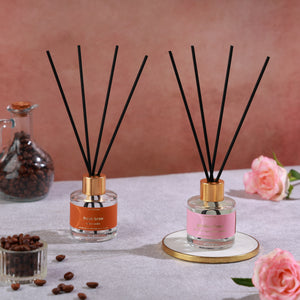
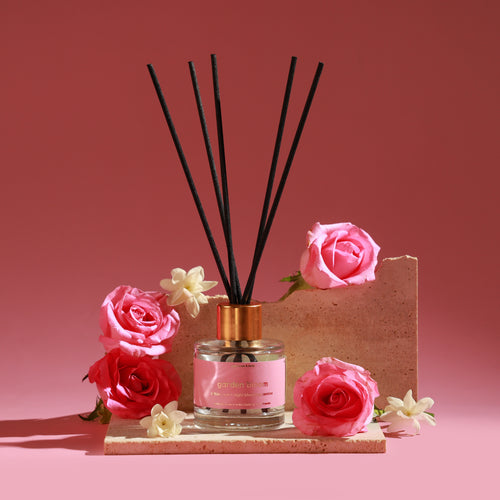
Then fragrance, on the correct side of the drying time, with the constraints stated. Nothing goes into the mopping water. Nothing goes onto a wet floor. And a cool-mist ultrasonic diffuser is the single worst thing to be running in a room whose floor is still drying, because it is adding 30 to 50 millilitres of water an hour to a room that is already handing water back to the air. Wait until the surface is genuinely dry, give the room twenty minutes of cross-ventilation on two openings, and only then think about a level. If your floors are stone or old grout and take a couple of hours, a reed diffuser from ₹749 is the more sensible shape of purchase, because it adds no moisture, needs no plug and holds one level continuously rather than asking you to schedule anything around housework — Morning Freshness at ₹749, Garden Bloom and Evening Calm from ₹799, Fresh Brew and Mountain Breeze from ₹849, 130ml from ₹1,249 and 300ml refills at ₹2,399, with 24 to 72 hours to establish. If you would rather switch something on for an hour once the floor is dry, the Sukoon at ₹1,899 covers 270–320 sq ft, reaches a steady level in about twenty minutes, runs 16–18 hours per fill on low at 30–50 ml/h against 9–12 on high, and comes with three 15ml Hotel Collection scents of your choice at three to six drops per tank; the Boond at ₹899 does the same for one room and the Megh at ₹3,499 for an open-plan flat. Hotel Collection oil is water-based and goes only into those ultrasonic machines — never into a reed, never into the waterless Vaayu at ₹11,999 — and reed oil is undiluted and will clog a 2.4MHz plate. Rinse the tank between scents, never substitute raw essential or carrier oils, and remember that SOSA makes no room or linen spray for the home. The principle: dry the surface, move the air, then scent the room.
The SOSA edit
Four free corrections and then, at the bottom, the products that belong on the dry side of the timetable. The order is the order of the afternoon rather than of a shopping list, and the final row states the one thing readers most often want to do and should not.
| Do this | What it is | When it is the right answer | Price |
|---|---|---|---|
| 1. Wring the mop, then a plain-water pass ★ | A damp mop rather than a wet one, then the same floor again with clean water | First. It removes the film that becomes the dry smell, and the streaks, which are the same problem | ₹0 |
| 2. A mug of water down every floor drain | Refills the U-bend seal, which evaporates in two to four weeks of disuse and then vents into the room | Before blaming the tiles. Sharp or sulphurous is plumbing rather than flooring | ₹0 |
| 3. Air movement while it dries | Ceiling fan on and two openings on opposite walls — except on a wet monsoon day, when fans alone are better | Every time. Moving air roughly halves drying time on tile and shortens the emission period | ₹0 |
| 4. Brush the grout twice a year | A stiff brush and a mild solution along the lines, worked in and rinsed with clean water | If the damp smell is earthy or mineral. Mopping across grout does not clean grout | ₹0 |
| 5. A reed diffuser or the Sukoon | No electricity and no moisture added, one level for months; or a timed level in about twenty minutes | Once the floor is genuinely dry. A reed suits stone floors that take hours; the Sukoon suits tile | from ₹749 / ₹1,899 |
| Never: fragrance in the mopping water | Perfume oil follows the water into grout and porous edges, then into the air within the hour | Said plainly. It can mark stone and wood finishes and leaves nothing behind by lunchtime | — |
Versailles
The reason I like this question is that the answer is not really about cleaning products, and people are always slightly delighted to find that out. Water is a carrier. A drying floor is doing work — it is lifting dissolved material into the room for as long as it takes to dry, and then it stops, and the room hands you a different smell because a different set of molecules is left. The same physics explains why a garden is loudest ten minutes after rain and why a damp towel is so much worse than a dry one. Once you have that idea, half the things a house does stop being mysterious.
The practical half is duller and more useful. Most people mop with far too much water, and most people never do a second pass with clean water, and between them those two habits produce nearly every complaint on this page. Four minutes and a second bucket. If what is left is earthy rather than soapy, it is your grout or your stone, and that is a brush twice a year rather than a purchase. Then, when the floor is properly dry and the room has had a draught through it, put something in the air that you actually chose. Not in the bucket. Never in the bucket, and I say that as somebody whose business would be marginally better off if I stayed quiet about it.
Everything is made and supported from Pune, and a part of every order funds girl-child education through Nanhi Kali. You get a home that smells like somewhere you chose; a girl gets a classroom. That equation has always felt right to me.
Frequently asked questions
- Should I add fragrance to my mopping water — the long answer to the last row of that table.
- Why my house smells of phenyl all day — when the residue is the whole problem.
- Why cleaning makes the smell worse before it gets better — humidity, disturbance and warm water.
- Why the clean smell disappears by evening, and how to make it stay — the pillar for this group.
- Brand: the SOSA founder story.
Facts verified August 2026: Diagnostic facts used in this guide: a closed room accumulates what it cannot exchange, so cross-ventilation needs two openings rather than one; a drain's U-bend water seal evaporates in roughly two to four weeks of disuse and then admits sewer gas, which is corrected by pouring water down the drain; microbial growth in fabric and on surfaces accelerates above about 60% relative humidity, and Indian monsoon indoor humidity commonly runs 80–95%, which is the one situation where ventilating on a wet day can import moisture rather than remove it; an air-conditioner's cold, wet evaporator coil and filter grow biofilm that is blown into the room on start-up; textiles adsorb cooking aerosol and body oils and re-release them for weeks; and olfactory adaptation makes a constant household smell undetectable to its residents within about a fortnight while visitors still perceive it. Timings: a scented candle scents a normal room in roughly 15–20 minutes, a Sukoon ultrasonic diffuser reaches a steady level in about 20 minutes from cold, and a reed diffuser needs roughly 24–72 hours. SOSA products and prices: Sukoon 500ml ₹1,899 (270–320 sq ft, 16–18h on low, 9–12h high, 30–50 ml/h, 2.4MHz cool mist, remote, steady/2H/4H timers, BPA-free, auto shut-off, includes three 15ml Hotel Collection scents of your choice); Boond 300ml ₹899; Megh 6-litre ₹3,499; waterless Vaayu ₹11,999 (up to 1000m³); Aangan ₹25,999. Hotel Collection water-based fragrance 15ml ₹299, 100ml ₹999, 300ml ₹1,799, Pack of 7 at 15ml ₹1,799; dose 3–6 drops per tank. Reed diffusers (separate alcohol-free line): Morning Freshness from ₹749, Garden Bloom and Evening Calm from ₹799, Fresh Brew and Mountain Breeze from ₹849; 130ml from ₹1,249; duos from ₹1,498; 300ml refills ₹2,399. Scented candles: Bookshop 80g ₹379, Amber Rose 130g ₹599 and 220g ₹799, Smoked Oudh 130g ₹449, ceramic jar candles ₹949, Pure Calm wax melt set ₹854. Free shipping above ₹499. SOSA does not make a room or linen spray for the home. The Hotel Collection scents are SOSA's own interpretations; SOSA is not affiliated with or endorsed by any hotel brand. Prices subject to change — see the live product pages.