


The protocol: open everything, run fans outward, refill every trap, inspect with a torch before you touch anything, get the house dry, then reassess.
Fragrance comes after all of that, and only if the smell has genuinely gone.
2. Then the P-traps, all of them, including the ones you forgot exist. Every drain in your home has a U-bend holding a small plug of water, and that water is the only thing standing between your rooms and the sewer line. It works by being there. Over three weeks with nothing running, that plug evaporates — faster in a warm flat, faster still in traps that were already low — and once it is gone the drain is an open pipe. This is extremely common after a long absence and it produces a smell people usually describe as "damp" rather than as "drain", because it arrives mixed with everything else. Run water down every single drain for about thirty seconds: both bathroom floor traps, every basin, the kitchen sink, the utility area, the balcony drain, the guest bathroom nobody uses, the washing-machine standpipe. If a smell persists at one drain after refilling, the seal has failed and that is a plumbing job, not a fragrance job.
3. Then accept that every fabric in the house is holding water. Porous materials sit at equilibrium with the air around them. Leave a house at monsoon humidity for three weeks and the mattresses, sofa cushions, curtains, rugs, bedding, towels, cushion covers and everything folded in a cupboard have all quietly taken on moisture, and are now releasing it and the odour compounds it carries back into the room. This is why the smell often gets briefly worse on the second day: you have started moving air, the fabric is drying, and drying means releasing. Fabric is both the reservoir and the reason the problem takes days rather than hours. It needs airing, sunlight where you can get it, and washing — not scenting.
4. And then plain air stagnation, which is the least serious of the four. A closed flat exchanges roughly 0.2 to 0.5 of its air an hour. Over twenty-one days that is a room breathing its own air with nothing carrying anything away: the slow off-gassing of furniture and finishes, dust, whatever was in the bin, whatever was in the fridge, the trapped air in a front-loading washing machine's gasket, the drip tray under the fridge. Not one of those is dramatic and all of them accumulate. Five to ten minutes of genuine cross-ventilation moves more air than an hour of one open window, and a day of proper through-draught will clear most of this category on its own.
5. So the answer to your actual question is: fragrance last, and only if it is still wanted. Work the protocol. Open, dry, refill, inspect, wash. In a great many houses the musty note is gone within two or three days of that and there is nothing left to add fragrance to except a normal home. At that point fragrance is a genuinely good idea and a completely different decision — a background you choose, rather than an emergency response. If you add it now, you will be doing three things at once: adding a second smell to a damp one, spending money on a problem it cannot touch, and switching off the alarm.
Made in India, composed by an ISIPCA Versailles-trained perfumer — and a portion of every order supports girl-child education through Nanhi Kali.
What three locked weeks actually did to your house
Three things happened simultaneously and they compound. First, the air stopped moving: at 0.2 to 0.5 air changes an hour, a sealed flat effectively recycles its own atmosphere, so everything emitted into it over three weeks stayed in it. Second, the humidity stayed high, because a monsoon city is running high outdoor humidity anyway and a shut house has no mechanism for shedding moisture — no ventilation, no drying, no sunlight through open windows, no fans. Third, and most importantly, high humidity plus still air plus time is the condition under which microbial growth starts on any surface that has something to feed on — dust, skin cells, leather, paper, starch in fabric, the paste behind wallpaper. That is not scaremongering, it is simply what monsoon does to closed rooms, and it is the reason the smell of a reopened house is so specific and so recognisable.
There is a fourth thing, quieter than the others and easy to miss: every water seal in the house has been evaporating the whole time. A P-trap is a small volume of water sitting in a U-bend, and it only exists because somebody keeps topping it up by using the drain. Nobody used your drains for twenty-one days. In the traps you rarely use even in normal life — the guest bathroom floor trap, the utility drain, the balcony outlet — the seal may well have been marginal before you left. A dry trap is an open pipe from your bathroom floor to the building's stack, and what comes up it does not smell like a drain in a clean, obvious way when it arrives mixed with damp fabric and stale air. It smells like "the house smells bad", which is exactly why people reach for a fragrance instead of a bucket of water. Refilling every trap in the house takes about five minutes and it is the highest-yield five minutes in this entire article.
The re-entry protocol
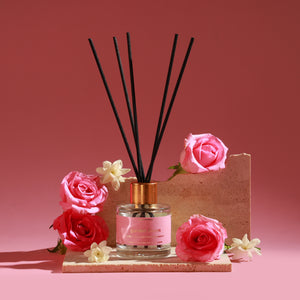
 Step five, not step oneFrom ₹749Open every window and every door, including internal doors, wardrobes, cupboards, the store room and the space under the sink. You want a genuine cross-draught, not one open window — openings on opposite faces of the home. Put a pedestal or table fan in a window blowing outwards, which pulls the whole house's air out behind it rather than pushing humid outside air in. Then walk the flat with a bucket or a jug and run water for about thirty seconds down every drain: both bathrooms' floor traps, all basins, the kitchen sink, the utility, the balcony outlet, the washing-machine standpipe, and the guest bathroom you never use. Do not skip any. If it is raining hard outside, open anyway for a shorter burst and keep the fan running outward — moving air is worth more than the moisture it brings.
Symptom to cause: reading a reopened house
Work down the table in order. The first two rows are not fragrance problems and are the ones to settle before you spend a rupee on anything else. The last row is what you are hoping for.
| What you notice | Most likely cause | How to confirm it | What actually fixes it |
|---|---|---|---|
| Earthy, mushroom-like, strongest near an external wall or wardrobe ★ | Microbial growth — a health issue, not an odour problem | Torch the wall base, behind furniture, ceiling corners, wardrobe backs, leather goods | Find the moisture source and remove the growth properly. Never fragrance this |
| A sewer or septic note near a bathroom or the utility, coming and going | A dry P-trap — three weeks with no water running has evaporated the seal | Run water down every drain for thirty seconds; note whether it goes within an hour | Refill every trap in the house. If one persists, the seal has failed — call a plumber |
| Generalised damp smell, worst in fabric-heavy rooms, no visible cause | Soft furnishings at equilibrium with three weeks of humid air | Press your nose into the mattress, the sofa back and a curtain hem in turn | Wash, air, and get everything into sunlight and moving air; expect several days |
| Flat, closed, slightly sour, improving quickly once the windows open | Simple stagnation — 0.2 to 0.5 air changes an hour for twenty-one days | Cross-ventilate for an hour and re-enter after thirty minutes outside | Keep the through-draught going daily; this one usually clears fastest |
| Smell gets worse on day two after you started airing | Fabric drying — releasing absorbed moisture and odour as it gives it up | Note whether it tracks the drying rather than the weather | Nothing. Keep going. It falls away as the drying completes |
| A sharp, sweetish note from the kitchen | The fridge, its drip tray, the bin underside, or standing water in the washing machine | Open each one and smell at close range; check the fridge drip tray at the back | Empty, wash and dry each. Leave appliance doors open until the interiors are dry |
| If none of these fit: leave the house for at least thirty minutes so your nose resets, come back in, and walk the plan slowly without touching anything. Note the first room that registers and the first surface you instinctively move towards. After three weeks shut, that instinct is usually right, and it is almost always a wall base, a wardrobe, a drain or a mattress. | |||
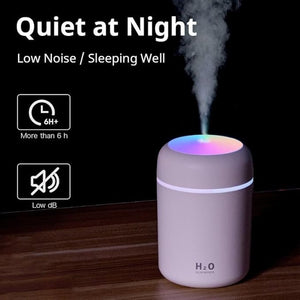
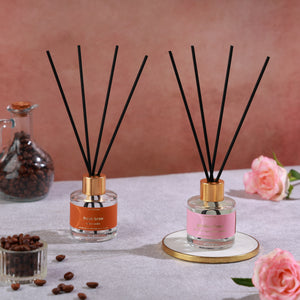
Reeds · always-on roomsFrom ₹749Shop →  Sukoon · when you want a switch₹1,899Shop →
  Hotel Collection · the scentFrom ₹299Shop →
Drying the house properly
Give it three to four days of deliberate drying before you make any judgement at all. The mistake almost everyone makes is deciding on day one whether the problem is solved. It is not solvable on day one, because the moisture is in materials rather than in the air, and materials give it up slowly. Keep every internal door open. Keep a cross-draught running whenever the rain allows, and a fan blowing outward through a window when it does not. Wash everything washable and get the rest into sun and moving air. Stand mattresses on edge. Leave the fridge, the washing machine and every wardrobe open. If you have a dehumidifier or an AC with a dry mode, use it in the worst room with that room shut. Then, on day four, do the honest test: leave the house for thirty minutes and judge the first breath on the way back in.
If the smell is gone at that point, you are finished and this was the good outcome. A normal, dry, ventilated home smells of very little, which is the correct baseline and the thing hotels actually achieve before they add anything. If the smell is still there on day four, do not reach for fragrance — reach for the inspection again. A damp note that survives four days of proper drying is telling you there is a source still supplying water: a leak under a sink, a failed waterproofing layer on a shared bathroom wall, a cracked balcony seal, condensation on a permanently cold wall, growth behind something you did not move. That is a building question and, if it recurs every monsoon, a professional one. It is genuinely not something a diffuser has any relationship with, and I would rather lose the sale than have you spend the next four weeks smelling lavender over a wet wall.
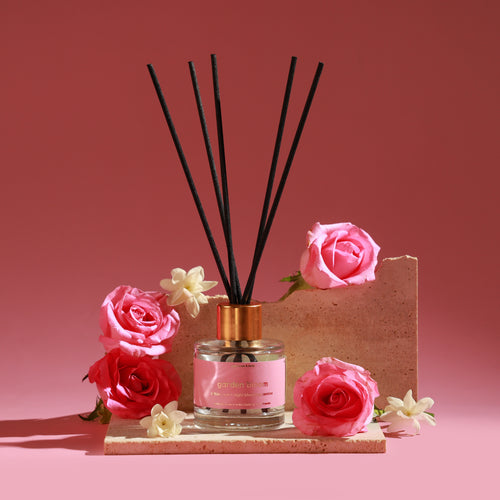
And when it is genuinely dry — then, yes, fragrance, and it is worth doing well. Reopening a house is one of the better moments to set up a proper ambient layer, because you are starting from a neutral baseline you have just earned. For the rooms that should simply always smell settled with nothing to operate — the entrance, the hallway, a bathroom — a reed diffuser runs on capillary action with no electricity: 50ml from ₹749 for 6–8 weeks, 130ml from ₹1,249 for 14–18, six fibre reeds included and the reed count as your volume dial. Six for full strength, four in a bedroom, two or three in a small bathroom. After monsoon I would generally pick something dry and green rather than sweet — Mountain Breeze or Morning Freshness — because a heavy sweet blend in a humid month reads cloying, and humidity raises perceived odour intensity. For a living room where you want scent before people arrive and nothing at 2am, the Sukoon at ₹1,899 with a water-based Hotel Collection scent from ₹299 covers roughly 270–320 sq ft and switches off. One caution specific to your situation: the Sukoon is an ultrasonic diffuser and it adds a little humidity to the room. In a flat you have just spent four days drying, run it briefly rather than continuously, or use reeds until the monsoon is over.
The order, and where fragrance sits
For once the first three steps here are not just cheaper than the fourth — they are the entire answer for most reopened houses. The purchase is optional, and it is the last thing on the list for a reason.
| Step | What to do | When | Cost |
|---|---|---|---|
| 1. Remove the source | Refill every P-trap in the house; inspect with a torch for growth; empty the fridge, bin and washing machine | Before anything else | ₹0 |
| 2. Move the air | Open everything, cross-draught whenever the rain allows, and a fan in a window blowing outwards all day | Daily, five to ten minutes | ₹0 |
| 3. Deal with what holds it | Wash bedding, towels, covers and curtains; stand mattresses on edge; sun everything you can; run a dehumidifier | Weekly to monthly | ₹0 |
| 4. Then the always-on layer ★ | A SOSA reed diffuser — once it is dry — an entrance, hallway or bathroom that should always smell settled, with nothing to operate | 50ml 6-8 weeks · 130ml 14-18 | from ₹749 |
| 5. Or the on-demand layer | Sukoon with a Hotel Collection scent — a living room where you want scent for an evening; run it briefly during monsoon, since it adds humidity | Run it when you want it | ₹1,899 |
Versailles
I want to answer your actual question without hedging: moisture first, and it is not a close call. If you put a diffuser into that house today you will spend money to make the problem harder to diagnose. You will have a damp house that also smells of something else, which everyone who visits will read as a damp house someone has tried to do something about. That is the worst of the available impressions.
The part I feel most strongly about is the inspection, and I will say it plainly because it matters more than any product I sell. A musty, earthy smell in a house that has been shut and humid for three weeks is the standard signature of growth, and growth is a health question. Take a torch and look at wall bases, wardrobe backs, ceiling corners, under sinks and behind furniture on outside walls, before you clean anything, because cleaning erases the evidence that tells you where the water got in. If you find it, that is not an odour to be managed. It is a source to be found and a growth to be removed, and if it is more than a small patch or it comes back, get someone in.
When you have done all of it — traps refilled, house aired, fabric washed and dried, nothing growing — the house will smell of almost nothing, and that is the win. Fragrance from that point is an entirely different and much nicer decision: not a rescue, just a character you have chosen for a home you have got back in order. That is the only version of it I want to sell you. A portion of every order funds a girl's classroom through Nanhi Kali.
Frequently asked questions
- Musty but no visible mould — where to check — the eight places to look with a torch.
- Should I use a reed diffuser for a damp smell? — the honest answer, and when it changes.
- After the dampness is fixed — rebuilding the scent of a dried-out home.
- Away for a weekend, stale on return — why an empty room keeps emitting.
- Brand: the SOSA founder story.
SOSA products & prices (verified August 2026): Hotel Collection water-based ultrasonic diffuser fragrance 15ml ₹299 · 100ml ₹999 · 300ml ₹1,799 · Pack of 7 (15ml, all fragrances) ₹1,799; refills 100ml from ₹999. Seven scents: The Ritz-Carlton-inspired (white tea · bergamot · cedar), Westin-inspired (white tea · aloe · cedar), 1 Hotels-inspired (cedarwood · vetiver · green leaves), The St. Regis-inspired (amber · violet · woods), Shangri-La-inspired (jasmine · green tea · white tea), Four Seasons-inspired (citrus · floral · sandalwood), W Hotels-inspired (citrus · pepper · amber). Diffusers: Boond 300ml ₹899 · Sukoon 500ml ₹1,899 · Megh 6L ₹3,499. Water-based, phthalate-free, composed to IFRA standards for home diffusion; 3–6 drops per tank. Made in India, Pune. The Hotel Collection scents are SOSA's own interpretations inspired by the world's finest hotels; all hotel names are trademarks of their respective owners and are used only to describe the scent style — SOSA is an independent Indian fragrance house, not affiliated with or endorsed by any hotel brand. Prices and availability subject to change — see the live product pages.