

On any session where reception holds pre-operative or immediately post-operative patients, the honest state is zero. Not lowered — off, and off before the first arrival rather than when somebody remembers.
Buy for removability, not for reach. A reed bottle at ₹849 can be carried out of the building the evening before a list by whoever locks up. That is a control that survives staff turnover.
If your list runs most mornings, the arithmetic ends at nothing. A room that must be unscented four days in five is not a scenting project; it is a diary with a bottle in it, and I would rather you spent the money on seating and lighting.
2. When reception holds pre-operative patients, reception is clinical space for those hours. It does not matter that the door says waiting area: on a theatre morning the pathway has temporarily annexed it, and the honest state for those hours is zero.
3. The same applies to the discharge wait. If somebody sits in the arrival zone after a procedure while transport is arranged, that is the same room doing the same borrowed job. Where a practice has a separate discharge bay, that bay takes nothing at any hour, in any format.
4. Removability beats every other property in this caseload. The control you need is not intensity and not coverage; it is the ability to make the room contain nothing, reliably, through somebody who is not you. A ₹849 bottle carried to a cupboard at closing is a more dependable control than a ₹11,999 machine whose schedule nobody has looked at in four months.
5. Two of six reeds, one source, at the end of the arrival zone furthest from the corridor. Six reeds is where SOSA calibrates every composition and where its published strength positions are measured, and those positions sit on SOSA's own internal scale rather than an industry standard. Place the bottle so that the doorway itself smells of nothing.
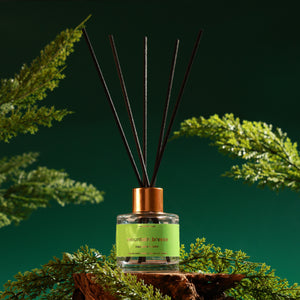
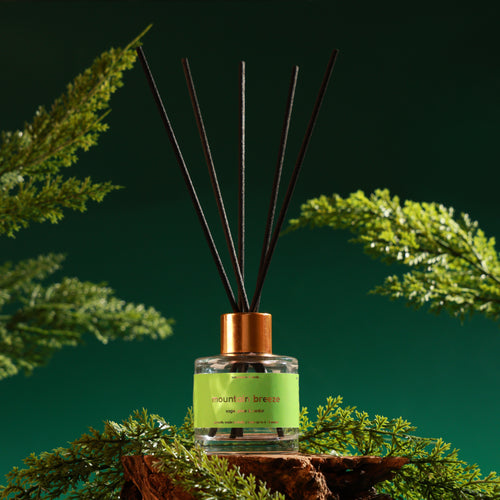
6. A dry composition, because a returning visitor meets the same room repeatedly. Mountain Breeze ₹849 — Himalayan pine, sage and Indian cedar — carries no sweetness, no gourmand warmth and no floral weight.
7. The day-one seat is the condition of the whole design, not a nice idea. There must be somewhere a person can sit, on the route they would take anyway, that the reception air does not reach — and you should be able to point at it on a plan. If you cannot produce that place, you do not yet have a design.
8. Nothing goes past the consultation door, and nothing here is a clinical statement. Biometry, examination rooms, consultation cabins, the operating suite, any post-operative or discharge area and any corridor that connects them take nothing, at any level, at any hour. No product or setting on this page is described as safe, unsafe or suitable for any patient or staff group, and no claim is made about how anybody perceives or responds to fragrance — those judgements belong to the practice and its clinicians. Composed and made in small batches in Pune, and a portion of every order supports girl-child education through Nanhi Kali.
Part one — why the boundary in a cataract practice moves
The rule that governs this whole cluster is simple and it is the reason a fragrance brand is worth listening to in a medical building at all: hospitality space and clinical space are different buildings that happen to share a door. What a cataract practice does — and it is almost the only setting that does it — is make that door move on a weekly cycle. Three consequences follow, and none of them is about scent.
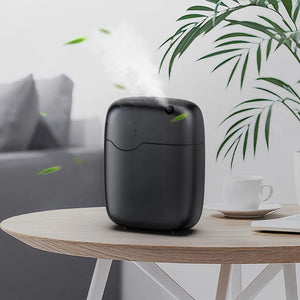
 Vaayu₹11,999 · schedule, key-lockWalk your own building on an operating morning and count where people actually sit. In a great many Indian cataract practices — including well-run, well-staffed, genuinely premium ones — the answer is that people sit in the same reception they sat in for their consultation four weeks earlier, because the alternative is a corridor. At that moment your waiting area is functioning as a pre-operative holding space, and the fact that the floor plan calls it reception does not change what is happening in it. It also explains why scheduling is worth more here than intensity control: the question is never "how strong should it be during a list", it is "how do we guarantee it is not running during a list". A machine that runs only on named days and locks so nobody adjusts it — the Vaayu ₹11,999 is the only one in the range with day selection and a key-lock — solves it by governance. A bottle solves it by being somewhere else. A machine on steady mode solves nothing, because it depends on somebody remembering at seven in the morning on the busiest day of the week.
Part two — the pathway, arrival by arrival
Here is the same building read as a sequence rather than a floor plan. The third column is the one people get wrong, because it changes by session rather than by room, and the fifth column exists so that the decision is not left to whoever happens to be on duty.
| Point in the pathway | Where the person actually waits | What that space is doing that session | Fragrance state | Who decides, and when |
|---|---|---|---|---|
| Day of surgery, arrival and pre-operative wait ★ | Reception and the main waiting area, in most Indian practices | Clinical, regardless of what the plan calls it | Zero, from before the first arrival | Set by the operating list, not by a person — put it on the closing checklist the evening before |
| First consultation and counselling | Main waiting area | Hospitality — a normal outpatient session | The arrival-zone default, at two of six reeds | Standing policy; no daily decision required |
| Biometry and pre-operative workup | Main waiting area, then a sub-wait outside diagnostics | Split — the waiting area is hospitality, the sub-wait is clinical | Default in the waiting area; nothing in the sub-wait, ever | Placement decision, made once on the floor plan |
| Consent and pre-assessment | Consultation cabin, with a short wait outside it | Clinical throughout | Nothing, at any level, in any format | Fixed. Not a variable |
| Immediate post-operative discharge wait | A discharge bay where one exists, otherwise reception | Clinical, and this is the row most practices have not thought about | Zero — and if it is reception, zero for that whole session | Same trigger as the surgery row above |
| Day-one review | Main waiting area, usually early and usually brief | Hospitality by the plan, clinical by the pathway | The practice's call — and this is the row where the fragrance-free seat earns its existence | Decided in advance and written down, so the desk never improvises |
| Later follow-up and refraction | Main waiting area, often a long wait | Hospitality | Default, with the level set for the longest wait present | Standing policy |
| Spectacle collection and optical | Optical display area | Retail, if and only if its air does not reach the clinical corridor | May be slightly warmer than reception — a floor-plan question, not a taste one | Decided once, by walking the air path with the doors as they normally sit |
| The honest caveat: this table is about ambience in an arrival zone and nothing else. It is not clinical, ventilation, infection-control, accreditation or regulatory advice, and where it calls a space clinical it is deferring to the practice's own judgement rather than making one. Diagnostics, examination rooms, consultation cabins, the operating suite, post-operative and discharge areas and their connecting corridors take nothing from SOSA at any level and at any hour. No claim is made, in either direction, about how cataract patients or any other group perceive, tolerate or respond to fragrance, and no SOSA product or setting is described as safe or unsafe for anyone. Some people are sensitive to airborne fragrance, which is exactly why the clinical pathway stays fragrance-free and why a fragrance-free seat must genuinely exist on the route people already take. A diffuser adds a scent to the air; it removes nothing already there. | ||||
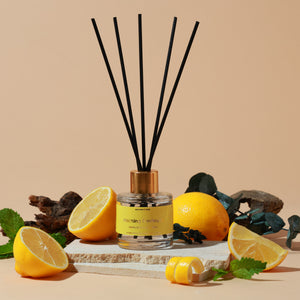
Mountain Breeze · carried out at closing₹849Shop →  Sukoon · 2H/4H timers, remote₹1,899Shop →
 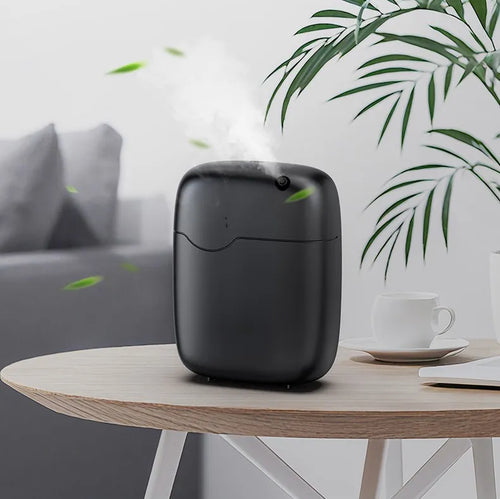 Vaayu · day selection, key-lock₹11,999Shop →
Part three — the cataract practice that should buy nothing
I would rather say this in the middle of the page than bury it at the end, because it applies to a large share of the practices that write to me about exactly this question. If your operating list runs on most working mornings, and pre-operative patients wait in your main reception rather than in a dedicated holding area, then the number of sessions in which fragrance may honestly run is small enough that the whole project stops being worth doing. Work it out rather than feeling it out. Take a normal week, count the sessions, and subtract every one with a list, every one with a discharge wait in reception, and every one where the two overlap. If what remains is two or three afternoons, you are proposing to buy, maintain and defend an installation that is correctly switched off for most of the week. That is not a bad purchase because it is expensive — a bottle is ₹849 — but because an installation that lives in the off state trains everybody to treat the off state as a nuisance.
The second disqualifier is architectural and it decides more cases than the first. You need a seat that the reception air does not reach, on the route people already walk, used routinely by other people for other reasons — and in a single-room reception under about 150 square feet, sealed and air-conditioned with the entrance as the only real opening, that seat usually does not exist. Go and check before you spend anything: put somebody in the chair you have in mind, at your busiest hour, for twenty minutes, and ask whether the difference is real or notional. If it is notional, fix the layout or the air exchange first and revisit the question in a quarter — neither of which is something SOSA sells. The same logic sends a practice whose real complaint is a cleaning smell or a closed, recirculated feel to the ventilation and cleaning protocol instead: fragrance adds a scent to what is already in the air and removes nothing, so layering it over an unresolved smell makes a third smell that is worse than either.
The third case is settled by asking the people who cannot leave the room. Your reception and counselling staff are in that air for eight or nine hours, every day, against a visitor's forty minutes — and in a cataract practice they are also the people who will be running the on-off routine, so they carry both the exposure and the administrative burden. If they would rather have nothing, that is a complete answer needing no further justification. Ask it properly: not "does this bother you", which invites a courteous no, but "if you could change one thing about this room, what would it be" — once, and again a fortnight later. And if the answer comes back about the queue, the chairs, the light or the noise rather than the air, believe it.
Part four — the options ranked by whether the diary can control them
Seven options, and the only question that decides between them: can the operating list govern this source without a human being remembering to act? The third column is where most of the range fails, and I would rather show you that than not.
| Option | Total, with the arithmetic | Can the diary control it without a person acting? | What actually happens on a theatre morning | Verdict for a cataract practice |
|---|---|---|---|---|
| One 50ml bottle at two of six reeds, removed at closing ★ | ₹749–₹849 once, free shipping applies above ₹499 | No — but the action is physical and lands on the closing checklist, which is the most reliable list in any practice | The bottle is in a cupboard, so the room contains nothing. There is no setting to verify | The default. Cheapest, lowest, and its off state is visible from across the room |
| The same bottle left in place on list days | Same ₹749–₹849 | No, and nothing compensates | The room runs scented through a pre-operative wait, which is the one outcome this page exists to prevent | Not acceptable. If you will not move the bottle, do not buy the bottle |
| One 130ml bottle at two reeds | ₹1,249–₹1,349 | Same as any bottle | Same as any bottle, but heavier to carry twice a week | Only for the reorder interval — 14–18 weeks against 6–8. Size buys duration, never reach |
| Boond ₹899 on a light dose | ₹899 + a 15ml Hotel Collection at ₹299 = ₹1,198 | Partly — it ends by itself after roughly six hours a fill, so it fails safe overnight | Depends entirely on whether it was filled the previous day. No schedule, no remote | Workable around 150 sq ft, but somebody must walk to it. Adds humidity |
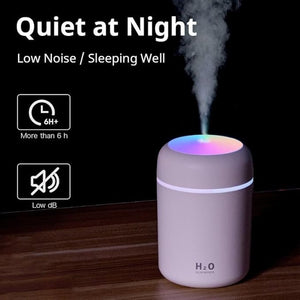
| Sukoon ₹1,899 on 2H or 4H | ₹1,899, with three 15ml scents in the box | Partly — the timers bound a session, but nothing ties them to a day of the week | Someone at the desk must not switch it on. The remote makes stopping instant if they do | The sized machine for a 150–320 sq ft arrival zone that is not theatre-adjacent. 16–18 hours on low, adds humidity |
| Megh ₹3,499 | ₹3,499 | No — and roughly 100 hours of runtime a fill is the opposite of what this caseload wants | It is still running, because it was designed to still be running | A runtime and humidity machine at about 215 sq ft, less coverage than a Sukoon. Never a coverage upgrade, and wrong here |
| Vaayu ₹11,999, freestanding, scheduled | ₹11,999, with 400ml of oil supplied in the box | Yes — 1h/4h/8h/24h run windows, day selection and a key-lock so a set schedule stays set | It does not run, because Thursday was never selected. Under 38 dB, which is the other reason it belongs in a clinic at all | Only past roughly 320 sq ft of connected arrival zone. Freestanding in reception, away from the corridor — never mounted into shared HVAC. Confirm refill supply before committing |
Versailles
A cataract surgeon in a two-theatre practice sent me photographs of his reception and asked which of two compositions would suit it. It is a beautiful room — stone floor, good chairs, a long counter, the sort of space that a supplier looks at and immediately starts specifying. I asked one question back before answering either: on how many mornings a week does that room hold people waiting to go through to theatre.
The answer was four. Which meant that the room in the photographs — the one being specified — existed on Monday afternoon, Wednesday afternoon and Saturday, and on the other four mornings it was doing a different job entirely under the same lights. I wrote back that the composition question was the wrong one and that he had a scheduling question wearing a fragrance costume. He did not entirely like that, and said so, which I respected.
What he did in the end was smaller than what he had planned. One 50ml bottle at two reeds, at the far end of the waiting area away from the corridor, carried into the store cupboard as the last item on the closing checklist on any evening before a list. A bay near the optical display that nobody had ever used became the row where day-one reviews are seated, being off the reception air and on the way to the door anyway. Total spend, ₹849. He said later that the useful sentence had been that his room changes job twice a week and his fragrance had not been told. Composed and made in small batches in Pune, and a part of every order funds a girl's classroom through Nanhi Kali.
Frequently asked questions
- Choosing for a book running from children to senior citizens — the floor rule this page assumes.
- What neutral actually means and a clinic with many senior patients.
- Long multi-test waits — where the level belongs when a visit runs to two hours.
- A signature scent alongside genuine fragrance-free areas — the pillar this family resolves into.
- Brand: the SOSA founder story.
SOSA range, specifications and prices used in this guide (verified August 2026): Vaayu ₹11,999 — waterless cold-air nebulisation of undiluted fragrance oil; no water, no heat, no added humidity, no white mineral dust. Coverage up to 1000 m³, about 2,000–3,000 sq ft. 400ml refillable tank lasting roughly 90+ days at a mid setting. Bluetooth app plus onboard controls, 1h / 4h / 8h / 24h run windows, day selection, adjustable intensity, auto-stop and key-lock. Under 38 dB. DC 12V / 1A, 5W. Freestanding or wall / HVAC mount. CE, RoHS and SGS certified. SOSA does not currently sell a separate Vaayu cold-air refill oil; the 400ml supplied in the box is the fragrance available at the time of writing, so a practice planning continuous or multi-site use should confirm current refill availability with SOSA before committing. The water-based Hotel Collection is made for ultrasonic machines and must not be used in a Vaayu. Other machines: Boond 300ml ₹899 (~150 sq ft, ultrasonic) · Sukoon 500ml ₹1,899 (270–320 sq ft, 16–18 hours on low, remote and steady/2H/4H timers, three 15ml fragrances included, ultrasonic) · Megh 6L ₹3,499 (~215 sq ft — a runtime and humidity machine that covers less than a Sukoon, never a coverage upgrade) · Safar ₹3,999 (waterless cold diffusion, cordless, 20ml, about 6.9cm, three speeds, 1/2/3-hour auto-off — sold as a car and travel diffuser, personal-scale only; SOSA publishes no coverage figure for it) · Aangan ₹25,999 (HVAC nebulising, ~8,000–10,000 sq ft) · Meenar ₹38,500 (commercial HVAC, 12,000–18,000 sq ft). Water-based Hotel Collection for ultrasonic machines: 15ml ₹299 · 100ml ₹999 · 300ml ₹1,799 · pack of seven ₹1,799; scents are inspired by the atmosphere of well-known hotels — SOSA is an independent Indian brand and is not affiliated with, endorsed by or supplying any hotel group. Reed diffusers ₹749–₹1,349 (50ml 6–8 weeks, 130ml 14–18 weeks, six fibre reeds, no 100ml size; replacement reeds are not sold separately). Reed oil cannot be used in an ultrasonic machine and Hotel Collection oil cannot be used in reeds. SOSA sells no room spray or home spray — every SOSA spray is a car perfume. Nothing in this guide is medical, clinical or safety advice. A fragrance diffuser adds a scent to the air. It does not clean, purify, filter, sanitise or disinfect air, does not remove or neutralise disinfectant, damp or occupancy smells, and has no effect on comfort, anxiety, waiting time, recovery or any clinical outcome. Some people are sensitive to airborne fragrance, which is why this guide recommends that examination rooms, diagnostic areas, consultation cabins, procedure suites and post-operative areas remain fragrance-free, that a fragrance-free seating option always exist, and that a diffuser is never mounted into shared HVAC in a clinical building. Decisions about clinical policy, ventilation standards, infection control and patient suitability rest entirely with the practice and its clinicians. A persistent stale, damp or disinfectant smell is a ventilation, moisture or cleaning problem — SOSA sells no dehumidifier and no air purifier, and fragrance should never be used to cover one. Coverage, runtime and longevity figures are manufacturer specifications and typical ranges, not guarantees, and vary with room volume, ceiling height, air exchange, occupancy and season. SOSA publishes no commercial or bulk pricing, no corporate account, no annual maintenance contract, no installation service, no stated warranty term and no multi-location programme; warranty length, spare parts, servicing and app platform availability are unconfirmed, and larger or multi-site enquiries should go through the contact page before any commitment. Composed and made in small batches in Pune, India. Free shipping above ₹499. A portion of every order supports girl-child education through Nanhi Kali. Prices subject to change — see the live product pages.