



The order that fixes it: source, then ventilation, then moisture, then fabric, then cleaning, then airflow, then nose-blindness — and only then fragrance.
The five free fixes that solve most cases: two openings on opposite walls for twenty minutes; a mug of water down every unused drain, since the U-bend seal evaporates in two to four weeks; the washing machine door and drawer left open; the AC filter washed every two to four weeks; and one honest guest asked what the flat smells like.
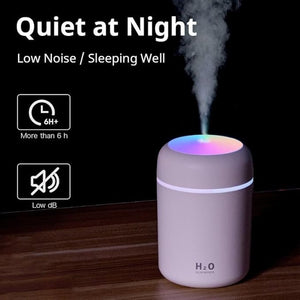
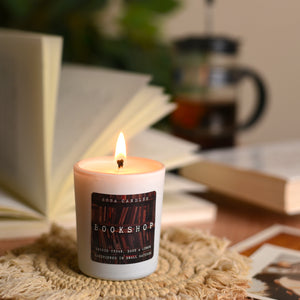
Where fragrance sits: last. It is a finishing layer on air that is already clean and moving, and it removes nothing. A candle for an evening (₹379, 15–20 minutes), a Sukoon on a timer (₹1,899, about 20 minutes), a reed diffuser for a level that holds for months (from ₹749, 24–72 hours to establish). No room spray for the home; no cool-mist machine in a damp room.
2. Decide which of the two you have, because they have different answers. If the flat clears within twenty minutes of genuine cross-ventilation and comes back only after being closed, you have a removal problem. If it survives twenty minutes of two open windows on opposite walls, you have a source, and no amount of airing will settle it.
3. Run the free fixes first, because they solve the majority of cases. Two openings on opposite or adjacent walls for twenty minutes. A mug of water down every floor drain, basin and unused shower, since the U-bend seal evaporates in two to four weeks of disuse and then vents sewer gas. The washing machine door and detergent drawer left open with the gasket wiped dry. The AC filter out and washed every two to four weeks in season. Whatever is washable, washed.
4. Then moisture, because in India it governs everything else. Microbial growth accelerates above roughly 60% relative humidity and monsoon indoor humidity commonly runs 80 to 95 per cent, which is why the same flat is musty in July and fine in January — and it is the one situation where opening windows on a wet day imports the problem rather than removing it.
5. Then accept that you cannot judge the result yourself. Receptors adapt, and within about a fortnight your own home is undetectable to you while every visitor receives it exactly as it is. One honest guest is worth more than any amount of adjusting.
6. Only then, fragrance — and it is a finishing layer rather than a remedy. It removes nothing. Scenting on top of damp, a dry trap, a loaded sofa or a dirty filter gives you two smells instead of one.
A portion of every order supports girl-child education through Nanhi Kali.

Part one — the principle, in one paragraph
Here is the whole of it, and everything else in this guide is an application of it. A home does not contain a smell the way a bottle contains a liquid. It produces smell continuously — from furniture and foam and paint and plastics, from fabric holding weeks of cooking, from drains and bins and fridges, from the people in it — and it removes smell continuously, through gaps and doors and windows and extraction. What you perceive at any moment is the difference between those two rates, and almost every complaint in these hundred articles is one of the two out of balance rather than a hygiene failure. That is genuinely good news, because it means the question worth asking is not what is dirty but which number is wrong. A flat that clears in twenty minutes of cross-ventilation and returns only after being shut has a removal problem, and removal is free. A flat that survives twenty minutes of two open windows on opposite walls has a source, and a source has to be found rather than covered. Those are the two diagnoses. Everything below sorts symptoms into one or the other.
Part two — the master symptom table
This is the centre of the guide. Find the row that matches what you are actually experiencing, run the free test in the third column before you spend anything, and follow the last column to the article that covers it in full. Twenty symptoms, and the fix costs nothing in fourteen of them.
| Symptom | Likely cause | The free test | The fix | Read |
|---|---|---|---|---|
| Stale every morning in the bedroom ★ | Eight hours of accumulation with no air exchange — a closed room stops removing, not producing | Open two windows on opposite walls on waking. Does it clear in twenty minutes? | Cross-ventilation morning and night; bedding pulled back rather than made; sun the mattress | 4310 |
| Stale in an air-conditioned room | No fresh-air exchange at all — a split unit recirculates the same air and cools it | Run the fan with a window open for twenty minutes instead. Better? | The AC is not ventilation. Exchange before and after, filter washed every 2–4 weeks | 4320 |
| Vinegar or old socks in the first minute of the AC | Biofilm on a cold wet evaporator coil and filter, delivered on start-up | Stand at the vent as you switch on. Worst in minute one, then fading? | Filter out and washed every 2–4 weeks in season; the coil needs a service | 4320 |
| Sharp, faintly sulphurous, nobody can place it | A dried-out drain trap — the U-bend seal evaporates in 2–4 weeks of disuse and the drain vents | A mug of water down every floor drain, basin and unused shower. Return in ten minutes | ₹0, and repeat weekly in any bathroom nobody uses. The most under-known cause in this guide | 4360 |
| Sewage, coming and going with no pattern you set | A trap, or the building's stack and shaft on somebody else's schedule | Log the times. Does it follow rain, wind or a neighbour's shower? | Water in every trap first; then a conversation with the society, with your log | 4352 |
| Sour or vinegary laundry, clothes worse after washing | Biofilm in the machine's gasket, drawer and drum | Fold the rubber gasket back and smell inside the fold | Door and drawer left open, gasket wiped dry, a hot maintenance wash empty | 4348 |
| Musty, damp or earthy, worse from June | Humidity — growth accelerates above ~60% RH and monsoon indoor RH runs 80–95% | Is it worse on wet days and better in January? | Dry the room. Fans, dry-hour ventilation, and no cool-mist machine, which adds 30–50 ml of water an hour | 4370 |
| A wall smells but there is no visible water | Seepage in the fabric — plaster carries moisture and smells while staying dry to touch | Worse two days after rain? Is the same room on another floor the same? | A repair, not a purchase. Fragrance on damp gives you two smells | 4370 |
| Cooking still there hours later | Aerosolised oil deposited on soft furnishings, re-releasing for days | Does it return when you sit down on the sofa? | Extraction during and ten minutes after; wash covers, throws and curtains; the kitchen door shut | 4340 |
| Old or rancid oil in the kitchen | An oxidised film on high surfaces and in the chimney filter, not on the floor | Run a finger along the top of the wall cabinet above the hob | Degrease the filter and the high surfaces. Cleaning the floor will not touch it | 4340 |
| Sour towels even after they dry | Drying too slowly — a towel damp since morning is a twelve-hour culture | Does a freshly washed towel stay fine for its first two days? | Spread not folded, dried outside the bathroom, hot wash without softener | 4350 |
| A stale wardrobe | An enclosed volume with no exchange, plus clothes put away not quite dry | Open the doors for an hour, then put your nose inside | Air it, dry clothes fully, leave gaps between garments. Do not perfume the clothes | 4350 |
| Fine standing up, stale when you sit down | The sofa. Fabric is the memory of a room and your nose is now at its level | Sit, and put your nose to the seat back and the cushion underside | Wash covers, vacuum with an upholstery head, two hours of sun on the cushions | 4330 |
| Wonderful after cleaning, bad again by evening | The clean smell was the cleaner evaporating. The source was never removed | Time it. If it fades in two to four hours, you cleaned rather than fixed | Find the source. A floor is almost never the source | 4390 |
| Clean but not fresh — phenyl all day | Cleaner residue in a room with no exchange, which is not the same as fresh air | Open two windows for twenty minutes after mopping and compare | Ventilate after cleaning, not before. Less product, more air | 4390 |
| Paint, or a new flat that still announces itself | Curing rather than drying — a film hardens and off-gasses for days or weeks after it is dry to touch | Is it worse inside a newly painted cupboard than in the room? | Daily cross-ventilation, every cupboard open, a fan across the surfaces. A waiting problem | 4391 |
| New furniture or a new sofa smelling of chemicals | Adhesives in engineered board, foam airing, lacquer — and warm weather raises all of it | Unwrap fully and check again after a week in moving air | Weeks of ventilation, drawers open. If it has not settled in two months, call the shop | 4392 |
| Still smells like the previous tenant | Enclosed volumes a handover clean never opens — cupboard interiors, filters, curtains | Open every cupboard in the flat and put your nose inside each | Wash cupboard interiors, filters and curtains; replace the shower curtain | 4395 |
| Guests comment and you notice nothing | Olfactory adaptation — about a fortnight to become invisible to yourself | Leave for three days and read the first four seconds on returning | Reduce rather than add. Ask one honest guest twice a year | 4380 |
| Fine everywhere except one room | A source inside that room or in the fabric touching it — it has not travelled | Shut the door for two hours, then enter from the corridor and read four seconds | Drain, filter, shared wall, enclosed volumes. No fragrance in there until it is found | 4397 |
| Different in the evening from the morning | Rate: morning is accumulation with removal off, evening is peak production in warmer air | Note which end is worse for three days | Morning end points at exchange; evening end points at cooking, bin, humidity and heat | 4396 |
| You have looked and cannot find it at all | Unknown — so stop searching and start testing one variable at a time | Drains, bin, fridge, machine on day one. Then wait two days and read again | The four-variable hunt, and the ranked suspect list. Move the appliances on day seven | 4399 |

Part three — the fix order, and the free fixes at ₹0
The order is the whole methodology and it is not negotiable, because each step changes what the next one is measuring. Source first. Nothing else matters until you know whether something is producing, because a source outruns every remedy applied downstream of it — and the test is twenty minutes of two open windows on opposite walls: a smell that survives that is being made rather than merely stored. Ventilation second, and as exchange rather than as one window: two openings, twenty minutes, morning and evening, with an internal door propped so the draught has a path, and the enclosed volumes opened periodically because a wardrobe or a store cupboard has no exchange at all. Moisture third, and in India it often deserves to be second: growth accelerates above roughly 60 per cent relative humidity and monsoon indoor humidity commonly sits at 80 to 95, which is the one case where opening up on a wet day imports the problem — ventilate in the dry hours, run fans between, keep wet laundry out of closed rooms, and do not put a cool-mist machine into a room you are drying. Fabric fourth, because textiles are where a room keeps its memory: covers, throws, bedlinen and curtains washed, a sofa vacuumed with an upholstery head, and two hours of sun on a mattress, a rug or a cushion, which does more than any product sold for the purpose. Cleaning fifth rather than first, and aimed at the right surfaces — the bin itself rather than its liner, the fridge drawer and door seal, the washing machine gasket, the chimney filter and the high surfaces above the hob rather than the floor, which is almost never the source. Airflow sixth: extraction on before the oil goes into the pan and for ten minutes after the last dish, a fan moving air across a room rather than only out of it, and a diffuser kept out of a draught and above waist height. Nose-blindness seventh, because by now you cannot judge your own result and need a guest or a three-day absence to tell you whether any of this worked.
Then the free fixes themselves, itemised, because the honest total for most households at the end of this guide is ₹0 and it should be printed rather than implied. Two openings on opposite or adjacent walls for twenty minutes, morning and evening: ₹0. One window is ventilation; two is exchange, and the difference is several complete air changes rather than slow diffusion. A mug of water down every floor drain, basin and unused shower, repeated weekly in any bathroom nobody opens: ₹0 — the U-bend seal evaporates in two to four weeks of disuse and then the drain vents into the room, and this is the single most common cause of the sharp smell nobody can place. The washing machine door and detergent drawer left open between washes with the rubber gasket wiped dry: ₹0. The air-conditioner filter out, washed, dried and replaced every two to four weeks in season: ₹0. Whatever is washable, washed — cushion covers, throws, bedlinen, curtains: ₹0. Exhaust fans on while cooking and for ten minutes afterwards rather than only during: ₹0. The bin liner changed and the bin itself wiped, since the container is usually dirtier than the rubbish: ₹0. The fridge's vegetable drawer, door seal and anything at the back older than a week: ₹0. Two hours of sun on a mattress, a rug or a cushion: ₹0. And one honest guest asked what the flat smells like, because you cannot smell it and they can: ₹0. Ten fixes, no purchase, and between them they close out the majority of the rows in the table above. If a reader leaves this guide having done those ten and bought nothing, the page has worked exactly as intended.
A word, before the last part, on the cases where the honest answer is not a fix at all but a wait or a different trade entirely. A new flat is a waiting problem: paint is dry to the touch in hours and curing for days or weeks, engineered board off-gasses adhesive, foam airs out, and the only thing that shortens any of it is moving air. Nothing sold here changes that timeline and buying early simply buries the evidence. Damp in a wall or a floor is a repair. It is a building fault, it will return every monsoon until it is dealt with, and it is the one category where a fragrance purchase can actively make things worse, because a cool-mist ultrasonic adds 30 to 50 millilitres of water an hour to a room whose problem is water. A smell arriving on somebody else's schedule — a neighbour's shower, a restaurant below, a bin collection, a shaft — is a conversation with a society or a landlord, and the only preparation that helps is a log of times and dates. And a decaying object behind an appliance is an hour with the fridge pulled out, uncommon but real, and the one case where every other remedy in this guide will fail while it remains. I would rather this page named all four plainly than sold into any of them.
Part four — the fragrance layer, and where it honestly belongs
Now the part this is a fragrance company's website for, and the clearest statement of the position anywhere on the site. Fragrance is a finishing layer on air that is already clean and moving. It does not remove a source, it does not dry a room, it does not clean a filter, and it is not a remedy for anything in the table above. What it does is give a room you have already put right a consistent background, and the table below sorts the range by what kind of consistency you actually want.
| Buy | What it is | When it is the right answer | Price |
|---|---|---|---|
| 1. The ten free fixes ★ | Two openings for twenty minutes · water down every trap · machine door open · filter washed · covers washed · extraction ten minutes over · bin wiped · fridge drawer · two hours of sun · one honest guest | First, and for most households last as well. Fourteen of the twenty rows above end here | ₹0 |
| 2. A candle — Bookshop, Amber Rose, Smoked Oudh | Scent in a room in 15–20 minutes. 80g ₹379 at 15–18 hours, 130g ₹599 at 25–30, 220g ₹799 at 40–50, Smoked Oudh 130g ₹449, ceramic jar candle ₹949 | Tonight, in a room already aired. The fastest format here, and the only one shaped like an evening. Attended and put out | from ₹379 |
| 3. Sukoon with Hotel Collection scents | 500ml, 270–320 sq ft, 16–18h on low at 30–50 ml/h, 2.4MHz cool mist, remote, auto shut-off, steady/2H/4H timers, three 15ml scents included. 3–6 drops per tank | For a room you want changed deliberately at the same hour daily. About twenty minutes from cold. Buy it for the timers | ₹1,899 |
| 4. Boond or Megh | 300ml for a single room, or six litres for a genuinely open-plan or double-height flat. Same bottles, same 3–6 drops per tank | The Boond for one bedroom or study; the Megh only when the space has no walls to speak of | ₹899 / ₹3,499 |
| 5. A reed diffuser | Alcohol-free, unplugged, one level for months. Morning Freshness ₹749, Garden Bloom and Evening Calm ₹799, Fresh Brew and Mountain Breeze ₹849; 130ml from ₹1,249, duos from ₹1,498, 300ml refills ₹2,399 | For a hallway, a bathroom or a spare room you never want to think about. 24–72 hours to establish, so never for tonight | from ₹749 |
| 6. The 300ml refill, eventually | About ₹6 per millilitre against roughly ₹20 at 15ml. The Pack of 7 at 15ml is ₹1,799 against ₹2,093 singly | Only for the scent that has already become the smell of the house. Test at ₹299 first, including my recommendations | ₹1,799 |
| Not in the range: a room or linen spray for the home | The sprays SOSA makes are car perfumes, sized for about three cubic metres. A spray is a thirty-minute product in any case | Printed rather than implied. And no cool-mist machine in a damp room — it adds 30–50 ml of water an hour | — |

Versailles
A hundred articles is a long time to spend telling people not to buy things, and I would write them the same way again. The reason is not modesty. It is that fragrance sold as a remedy fails, and it fails publicly, in somebody's living room, in front of their guests. A diffuser running over a dry drain trap gives you sewer gas and jasmine at the same time, and the nose does not average two smells — it reports both, and it reads the second as an attempt to hide the first. That is the single worst impression a home can give, and it is the one this whole category walks people into by selling the finishing layer as the fix.
So here is the position, as plainly as I can put it. Find the source. Change the air. Deal with the water. Wash the fabric. Clean the right surfaces. Move the air. Accept that you cannot smell your own house. And then, if you want to, scent it. By that point the decision is small and pleasant and honest: a candle at ₹379 for an evening, a Sukoon at ₹1,899 for two hours you want changed every day, a reed at ₹749 for a hallway you would rather never think about again. Those are good products and I am glad to sell them into a room that is ready for them. Sold into a room that is not, they are a way of making somebody's problem more expensive, and I have never wanted a customer of that kind.
Everything is made and supported from Pune, and a part of every order funds girl-child education through Nanhi Kali. You get a home that smells like somewhere you chose; a girl gets a classroom. That equation has always felt right to me.
Frequently asked questions
- The bedroom every morning, the air-conditioned room and soft furnishings — the three commonest complaints in the whole cluster.
- Cooking that will not leave, the wardrobe and the bathroom, and five things to check before buying anything — the source-side guides.
- Damp, and why fragrance is the very last step and why the clean smell disappears by evening — the two cases people most often try to buy their way out of.
- Nose-blindness at home and how to track down a source you cannot find — the observer problem, and the method that gets past it.
- What a dried-out drain trap is, how long nose-blindness takes and how long a new-flat smell lasts — three explainers with nothing to sell.
- Why every home has a signature and yours is the one you cannot hear — where a house's smell actually comes from.
- Brand: the SOSA founder story.
Facts verified August 2026: Diagnostic facts used in this guide: a closed room accumulates what it cannot exchange, so cross-ventilation needs two openings rather than one; a drain's U-bend water seal evaporates in roughly two to four weeks of disuse and then admits sewer gas, which is corrected by pouring water down the drain; microbial growth in fabric and on surfaces accelerates above about 60% relative humidity, and Indian monsoon indoor humidity commonly runs 80–95%, which is the one situation where ventilating on a wet day can import moisture rather than remove it; an air-conditioner's cold, wet evaporator coil and filter grow biofilm that is blown into the room on start-up; textiles adsorb cooking aerosol and body oils and re-release them for weeks; and olfactory adaptation makes a constant household smell undetectable to its residents within about a fortnight while visitors still perceive it. Timings: a scented candle scents a normal room in roughly 15–20 minutes, a Sukoon ultrasonic diffuser reaches a steady level in about 20 minutes from cold, and a reed diffuser needs roughly 24–72 hours. SOSA products and prices: Sukoon 500ml ₹1,899 (270–320 sq ft, 16–18h on low, 9–12h high, 30–50 ml/h, 2.4MHz cool mist, remote, steady/2H/4H timers, BPA-free, auto shut-off, includes three 15ml Hotel Collection scents of your choice); Boond 300ml ₹899; Megh 6-litre ₹3,499; waterless Vaayu ₹11,999 (up to 1000m³); Aangan ₹25,999. Hotel Collection water-based fragrance 15ml ₹299, 100ml ₹999, 300ml ₹1,799, Pack of 7 at 15ml ₹1,799; dose 3–6 drops per tank. Reed diffusers (separate alcohol-free line): Morning Freshness from ₹749, Garden Bloom and Evening Calm from ₹799, Fresh Brew and Mountain Breeze from ₹849; 130ml from ₹1,249; duos from ₹1,498; 300ml refills ₹2,399. Scented candles: Bookshop 80g ₹379, Amber Rose 130g ₹599 and 220g ₹799, Smoked Oudh 130g ₹449, ceramic jar candles ₹949, Pure Calm wax melt set ₹854. Free shipping above ₹499. SOSA does not make a room or linen spray for the home. The Hotel Collection scents are SOSA's own interpretations; SOSA is not affiliated with or endorsed by any hotel brand. Prices subject to change — see the live product pages.