

Why Does My House Smell of Phenyl All Day?

Why Does My House Smell of Phenyl All Day?

★ Wonderful at eleven, gone by six · why the clean smell does not last, and what makes it stayCandle ₹379 · reed ₹749 · Boond ₹899 · Sukoon ₹1,899 · free shipping above ₹499A portion funds girl-child education
★ SOSA · find the cause, then scent the room
A cleaning product is a top note with nothing under it. It is meant to leave. What replaces it is the honest question
★ ★ ★ ★ ★
★★★★★
"Phenyl at eleven, nothing at six, and I thought I was doing something wrong. It was just evaporation doing exactly what it does."
Ramya N. Understood the cause
Not a mistake
★★★★★
"Deep clean, then a reed set up the same day. Three days later the flat had a level of its own for the first time."
Sagar B. Reed after cleaning
from ₹749
★★★★★
"Kitchen smelled worse after cleaning. Warm water on old grease releases it. Waiting twenty minutes with the fan on fixed the whole thing."
Nisha P. Free fix · wait and vent
Kitchen
★★★★★
"Was told not to put fragrance in my mopping water and why. Saved my floors and the advice was free."
Ajay M. Told not to
Mopping water
★★★★★
"Clean but not fresh was exactly my problem and I had no words for it. Clean is an absence; fresh is a presence. That sentence sold me nothing and explained everything."
Ipsita R. Clean vs fresh
Understood it
★★★★★
"Sunday clean, then the Sukoon on for an hour. The flat now smells like somewhere rather than like nowhere."
Harleen K. Sukoon ₹1,899
Weekly routine
★★★★★
"Phenyl at eleven, nothing at six, and I thought I was doing something wrong. It was just evaporation doing exactly what it does."
Ramya N. Understood the cause
Not a mistake
★★★★★
"Deep clean, then a reed set up the same day. Three days later the flat had a level of its own for the first time."
Sagar B. Reed after cleaning
from ₹749
★★★★★
"Kitchen smelled worse after cleaning. Warm water on old grease releases it. Waiting twenty minutes with the fan on fixed the whole thing."
Nisha P. Free fix · wait and vent
Kitchen
★★★★★
"Was told not to put fragrance in my mopping water and why. Saved my floors and the advice was free."
Ajay M. Told not to
Mopping water
★★★★★
"Clean but not fresh was exactly my problem and I had no words for it. Clean is an absence; fresh is a presence. That sentence sold me nothing and explained everything."
Ipsita R. Clean vs fresh
Understood it
★★★★★
"Sunday clean, then the Sukoon on for an hour. The flat now smells like somewhere rather than like nowhere."
Harleen K. Sukoon ₹1,899
Weekly routine
Reed diffusers: no electricity, no routine, one level for months · from ₹749 A reed needs 24–72 hours to establish — the right buy for a habit, the wrong one for tonight Air the room first · scent layers on clean air, it never replaces it


Founder Diaries · Home Fragrance · Cleaning & the Smell That Fades
By Sonal Sahani · ISIPCA Versailles 11 min read Updated August 2026
This is the opposite complaint from the one most people arrive with, and it is a very Indian one. Phenyl and pine-type disinfectants are not built like ordinary floor cleaners. They are built around powerful, persistent aromatic materials with a frankly medicinal character, and in a small flat with closed windows they will hang in the air for the better part of a day. There are four ordinary reasons that happens, all of them fixable this week and none of them requiring you to give up the disinfection you actually wanted. What will not help is adding a nice smell on top of it.
Quick answers — read this first
Why it lingers: phenyl is built on strong, persistent phenolic and pine materials that cling to a floor rather than evaporating cleanly. Four things make it worse — too much in the bucket, a large mopped area, no ventilation, and residue left behind because the mop was too wet.

The fix, in order: measure rather than pour; wring the mop until it is damp rather than wet; follow with a plain-water pass; open two windows on opposite walls during and for twenty minutes afterwards.

The part nobody says: phenyl reads as disinfected, not as clean. That is an institutional signal, and disliking it in your own home is a reasonable response rather than fussiness.

Do not scent over it: fragrance on top of phenyl gives you a medicinal smell with a perfume over it. The answer is less phenyl.
The short answer
Short answer: because you are not smelling the air, you are smelling the floor. Phenyl's aromatic materials are persistent and they stay in the residue left behind on the surface, which then releases into a closed room for hours. Reduce the dose, wring the mop properly, follow with a plain-water pass and ventilate during and after.
The four causes, in the order they usually apply: too much concentrate in the bucket — a capful, measured, rather than a free pour; a large floor area mopped in one go in a small flat; no cross ventilation to carry it off; and a mop wet enough to leave a film that goes on releasing all afternoon. Reserve the strong disinfectant for bathrooms and use something milder for daily floors.
And when you want the flat to smell like yours rather than like a stairwell: deal with the phenyl first, then choose a background. Mountain Breeze from ₹849 is Himalayan pine, sage and cedar — pine as a forest rather than as a corridor. Reeds from ₹749 need 24–72 hours; the Sukoon at ₹1,899 reaches a steady level in twenty minutes. Free shipping above ₹499.
Straight answer
Why does the phenyl smell stay in my house all day, and how do I get rid of it?
1. Because phenyl is not composed like an ordinary floor cleaner. It is built on strong, persistent aromatic materials — phenolic and pine-type notes chosen for their disinfectant association and their staying power — and staying power is precisely what you do not want in a two-bedroom flat with the windows shut.

2. And you are mostly smelling the floor rather than the air. If the mop was wet rather than damp, a film of diluted concentrate dries onto the tiles and goes on releasing for hours. The room is not holding the smell; the surface is, and it is topping the room up all afternoon.

3. So measure the dose instead of pouring it. One capful into a full bucket is the instruction on almost every bottle, and almost nobody follows it. Doubling the concentrate does not double the disinfection in any way you can perceive, but it does double what is left behind on the floor.

4. Wring the mop hard, and follow with a plain-water pass. A second run over the same floor with clean water and a properly wrung mop lifts most of the residue, dries faster and removes the streaks at the same time. This is the single change that fixes this complaint for most people.

5. Ventilate during and for twenty minutes after, on two openings rather than one. A closed room does not stop producing smell, it stops removing it. Cross-draught on opposite or adjacent walls is what actually carries a heavy disinfectant off, and it dries the floor faster besides.

6. Then keep the strong bottle for the bathroom and use something milder daily. Most Indian floors are mopped every day and do not need hospital-grade disinfection every day. That one change solves the complaint permanently rather than weekly.

A portion of every order supports girl-child education through Nanhi Kali.
TL;DR: phenyl is built on persistent aromatic materials and most of what you are smelling is residue on the floor rather than scent in the air. Measure a capful rather than pouring, wring the mop until it is damp, follow with a plain-water pass, ventilate on two openings, and keep the strong bottle for bathrooms.
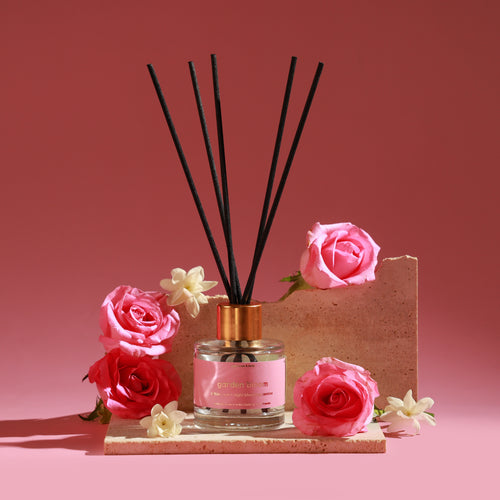
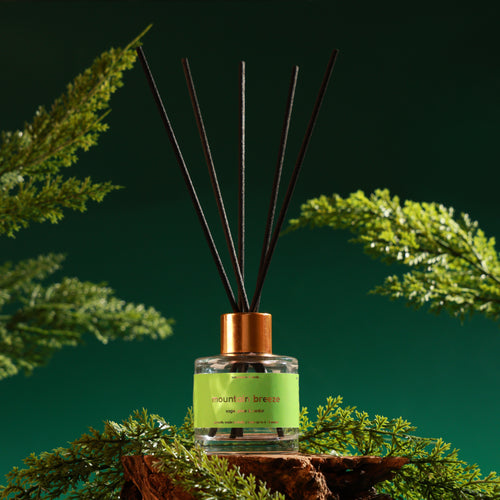
SOSA Mountain Breeze reed diffuser
Pine, done as a forest rather than as a corridor
SOSA Mountain Breeze reed diffuser from ₹849
Himalayan pine, sage and cedar, in the alcohol-free reed line. The interesting thing about this complaint is that most people do not dislike pine — they dislike what pine has come to mean in a stairwell. The same broad family of materials reads completely differently when it is dry, cool and sitting beside sage and cedar rather than sharp, wet and sitting on a disinfectant base. No electricity, no switch, one level held for months, and 24 to 72 hours to establish. ₹849 for the standard size, from ₹1,349 at 130ml, 300ml refills ₹2,399. Set it up once the floor routine is fixed rather than before.

What phenyl actually is, and why it refuses to leave

The word covers a family of products rather than one thing, but the fragrance logic behind all of them is the same. A disinfectant floor cleaner is not sold on smelling pleasant; it is sold on smelling convincing, which is a different brief and calls for different materials. Where an ordinary cleaner uses light, quick, cheerful notes that leave within hours, a phenyl-type product leans on heavier, more persistent aromatic materials with a distinctly medicinal, tarry, pine-adjacent character — because that is the smell an Indian nose has been taught, over three generations, to read as germ-free.

1
THE MATERIAL
Persistence is the feature you are complaining about
So the first thing to accept is that the lingering is not a defect. It is the same property that made the manufacturer choose those materials in the first place, and it is why phenyl behaves so differently from the lemon floor cleaner in the next aisle. Heavier aromatic molecules leave a surface slowly and reluctantly. On a hospital corridor, where the point is to signal to everybody passing through that the place has been disinfected, that is exactly right. In a 700-square-foot flat with the windows shut against dust and the air-conditioning recirculating the same air, it is a great deal of signal for a very small volume. And there is a second half to it that people rarely separate out: you are not really smelling the air, you are smelling the floor. Fragrance in the air disperses and dilutes quite quickly, even in a closed room. What does not disperse is what has dried onto the tiles as a thin film of diluted concentrate, and that film then releases into the room continuously for hours, topping it up faster than the room can clear it. This is why the smell often seems to get stronger in the afternoon rather than weaker, why it is worse close to the ground, and why children and anybody sitting on the floor find it far more oppressive than you do standing up. The reservoir is underneath you.
2
THE SIGNAL
It reads as disinfected rather than as clean, and those are different things
Now the part that gets left out of every practical article on this subject, and it is the part that explains why the complaint has emotional weight. Phenyl does not smell clean. It smells disinfected, and a nose files those two impressions in completely different places. Clean is a domestic idea — laundry, warm cotton, citrus, soap, air that has been through a window. Disinfected is an institutional one, and the institutions it belongs to are hospitals, school corridors, railway waiting rooms and municipal offices. Those associations are not snobbery and they are not imagined; they are learned, and they are extremely stable. So when somebody says their flat smells of phenyl all day, they are frequently not complaining about intensity at all. They are complaining that their home smells like somewhere institutional, at exactly the hours when they want it to smell like somewhere personal. It is entirely reasonable to want the hygiene without the announcement. Most households in this country genuinely do need proper disinfection in a bathroom, near a floor drain, in a kitchen, during monsoon and after illness — and almost none of them need it across every square foot of the sitting room every single morning. Separating those two jobs, rather than doing the strongest possible version of both everywhere, is the whole solution for a large share of readers.
The division of labour I would suggest to almost anybody: the strong bottle for bathrooms, floor drains and the kitchen; something mild and low-fragrance for the rest of the floor, every day. Same hygiene where it matters, a quarter of the smell.
3
THE MISTAKE
Do not put a fragrance on top of it
And then the thing I am asked to endorse and will not. Adding a scent over a room that smells of phenyl does not replace the phenyl. It gives you a medicinal smell with a perfume standing in front of it, which is a worse result than either on its own — and the worse it is, the harder people usually push, so a fortnight later they are running six drops instead of three and the flat smells of disinfectant, jasmine and effort. The nose is very good at separating two simultaneous sources and very bad at ignoring the one it did not like. Worse, the two smells are competing in the same broad territory: many household fragrances are built on pine, citrus and eucalyptus materials, which is precisely the family phenyl is drawing on, so instead of contrast you get an argument. The answer here is less phenyl, not more scent, and I would rather say so on a page that is meant to sell you something. Get the floor routine right — measured dose, wrung mop, plain-water pass, twenty minutes of cross-ventilation — and give it a week. When the room is neutral rather than medicinal, then a background scent has somewhere to sit. At that point a reed diffuser from ₹749 is the sensible shape of purchase, because it holds one modest level for months instead of asking you to make a decision every day, and Mountain Breeze at ₹849 is worth a thought precisely because it takes pine somewhere dry and cool rather than sharp and wet.

The four reasons it is hanging in your flat, and what each one costs to fix

In practice this complaint is nearly always two or three of these at once, which is why changing one thing helps a little and changing all four ends it. The costs are honest: every fix on this table is free, and the only thing you might spend money on is a milder daily cleaner, which is cheaper than the one you are currently using twice as fast as you need to.

The four causes
Why a disinfectant is still in the room at four in the afternoon
Cause What is actually happening The fix Difference it makes Cost
Too much in the bucket ★ A free pour instead of a measured capful. The extra concentrate does not disinfect perceptibly better; it simply leaves more behind to release all day Measure. One capful per full bucket, and use the cap rather than the wrist Immediate, and the largest single change ₹0
A mop that is wet rather than damp A film of diluted concentrate dries onto the floor and becomes a reservoir that keeps topping the room up Wring until the mop is damp; a floor should be dry within minutes, not glossy for half an hour Immediate ₹0
No plain-water second pass Residue stays on the surface, along with the streaks people blame on the tiles Empty the bucket, refill with clean water, and go over the same floor once more Same day ₹0
No ventilation during or after A closed room does not stop producing smell, it stops removing it — and a heavy material needs a draught to leave Two openings on opposite or adjacent walls, during the mopping and for twenty minutes afterwards 20 minutes ₹0
The strong bottle used everywhere, daily Hospital-grade disinfection applied to a sitting room floor that mostly needs dust and footprints removed Strong bottle for bathrooms, floor drains and the kitchen; something mild for the rest, daily Permanent ₹0 or less
Fragrance added on top Two smells instead of one, competing in the same pine and citrus territory Fix the floor first. Then a reed diffuser from ₹749 or the Sukoon at ₹1,899 once the room is neutral After a week from ₹749
Shop this guide
Once the floor routine is fixed, in three products
The SOSA principle
Phenyl does not smell clean. It smells disinfectedand a nose files those two impressions in completely different places.
Clean is domestic: laundry, citrus, soap, air off a window. Disinfected is institutional: corridors, waiting rooms, school stairwells. Wanting the hygiene without the announcement is entirely fair.

Dilution, wringing and the second pass

Take the dose seriously first, because it is the one variable people are casual about and it dominates everything downstream. Almost every phenyl-type concentrate on the Indian market is intended at something in the region of one capful to a full bucket, and almost every household I have asked pours it straight from the neck of the bottle by eye. The eye is generous. Twice the concentrate does not give you twice the disinfection in any way you can perceive at home, because the active chemistry is working at a concentration far below what your nose is registering; what it reliably gives you is twice the residue and twice the afternoon. Use the cap. Then think about area, which is the other half of dose: a 1BHK where the entire floor is mopped in one twenty-minute session is receiving a great deal of product per cubic metre of air, and the same routine in a large house with high ceilings and cross-draughts would go unnoticed. If your flat is small and closed, you are not doing anything wrong — you simply have a much less forgiving room. The correction is to mop in zones rather than all at once where you can, and to keep the strong bottle for the rooms that genuinely need it: bathrooms, the area around floor drains, the kitchen, and any room where somebody has been unwell. A mild, low-fragrance cleaner for the daily pass over the rest is not a compromise on hygiene. It is a recognition that a sitting room floor mostly needs dust, dust and footprints removed.

Then the mechanics, which take one extra bucket and about four minutes. Wring the mop until it is damp rather than wet. A properly mopped floor should look matte and be dry within a few minutes, not sit there glossy for half an hour. Wet mopping leaves a film, the film dries into a reservoir, and the reservoir is what is releasing at four in the afternoon when you have long since put the bucket away. Then do the second pass: empty the bucket, refill it with plain water, and go over the same floor again with a well-wrung mop. That single pass lifts the bulk of the residue, kills the streaking that people usually blame on their tiles, and cuts the lingering smell by more than any of the other changes on this page. Ventilate throughout — two openings on opposite or adjacent walls, because one window is ventilation and two is exchange, and twenty minutes of genuine cross-draught beats an hour of a single window ajar. Keep it open for twenty minutes after you have finished, which also dries the floor faster and therefore shortens the release period at both ends. The exception, and it must be said in this country: on a heavily wet monsoon day, when outdoor humidity is at 80 to 95 percent, opening up imports moisture rather than removing it. On those days run the exhaust fans instead, use less water, and let the ceiling fan do the work of moving air across the floor.

Then fragrance, last, and with two things stated plainly. The first is that nothing SOSA makes will remove a phenyl smell, and I will not imply otherwise — no diffuser, no reed, no candle, and no spray, since SOSA does not make a room or linen spray for the home in any case; the sprays in the range are car perfumes. The residue on the floor is the source, and a source is dealt with by removing it. The second is a timing point that suits this particular complaint unusually well: a reed diffuser needs 24 to 72 hours to establish, which sounds like a drawback and is actually ideal here, because you want the week in between to fix the floor routine anyway. Set the reed up on the day you switch to the milder daily cleaner and both arrive together. Morning Freshness is ₹749 for Malabar lemon, peppermint and eucalyptus, Mountain Breeze is ₹849 for Himalayan pine, sage and cedar, and Evening Calm is ₹799 for Himalayan lavender and chamomile, with 130ml from ₹1,249 and 300ml refills at ₹2,399. If you would rather have something you can switch on for an hour, the Sukoon at ₹1,899 covers 270–320 sq ft, reaches a steady level in about twenty minutes and stops on a 2H timer, with three 15ml Hotel Collection scents included at three to six drops per tank; the Boond at ₹899 is frequently the better machine in a small flat because it puts less into the air per hour. Both are cool-mist and add 30 to 50 millilitres of water an hour, so neither belongs in a bathroom you are trying to dry. Hotel Collection oil is water-based and runs in the Sukoon, Boond and Megh only — not in reeds, not in the waterless Vaayu at ₹11,999 — and reed oil clogs a 2.4MHz plate. And the principle: get the room to neutral before you ask it to be anything.

You are not smelling the air. You are smelling the floor, which is quietly topping the room up all afternoon.
— Sonal Sahani, SOSA

The SOSA edit

In the order I would do it, and the order matters more here than in most of this group because every product decision downstream depends on getting the floor to neutral first. Four free changes, then a background scent, then the row that says what fragrance cannot do.

The SOSA edit
A phenyl-heavy flat, in order
Do this What it is When it is the right answer Price
1. Measure the capful ★ One capful to a full bucket, using the cap rather than the wrist First. Extra concentrate buys no perceptible disinfection and doubles what is left on the floor ₹0
2. Wring the mop, then a plain-water pass A damp mop rather than a wet one, then the same floor again with clean water Always. It lifts the residue, removes the streaks and shortens the release by hours ₹0
3. Two openings, during and twenty minutes after Cross-ventilation on opposite or adjacent walls, plus exhaust fans on a wet monsoon day Every mop. On an 80–95% humidity day use fans rather than open windows ₹0
4. Split the job Strong disinfectant for bathrooms, floor drains and the kitchen; something mild for daily floors Permanently. Most sitting-room floors need dust removed, not hospital-grade chemistry ₹0
5. Mountain Breeze or another reed Himalayan pine, sage and cedar — pine taken somewhere dry and cool. 24–72 hours to establish Once the room is neutral. One modest level for months, with no switch and no daily decision ₹849 / from ₹749
Not the answer: fragrance over phenyl Scent layered on a disinfectant gives you a medicinal smell with a perfume in front of it Said plainly. The two compete in the same pine and citrus territory, so you get an argument rather than a cover
Honest notes for buyers: fragrance is the last step, never the first. It layers on air that is already clean and moving, and it will not remove a source — not damp, not a dry drain trap, not a loaded sofa, not a filter that needs washing. Deal with the cause, change the air, then scent the room. On timing: a candle puts scent into a room in fifteen to twenty minutes and a Sukoon reaches a steady level in about twenty, while a reed diffuser needs a day to three days before it is doing its job — the wrong buy for a deadline and the right buy for a room you want to hold one level for months. SOSA does not make a room or linen spray for the home; the sprays in the range are car perfumes. A cool-mist ultrasonic adds 30–50 ml of water an hour to the air, so it is the wrong machine for a room you are trying to dry out. The Hotel Collection is water-based and runs in the Sukoon, Boond and Megh only — not in reeds and not in the waterless Vaayu. Reed diffusers are a separate alcohol-free line with their own scents. Candles must be attended and put out. The Hotel Collection scents are SOSA's own interpretations inspired by the world's finest hotels; SOSA is an independent Indian fragrance house, not affiliated with or endorsed by any hotel brand. A portion of every order supports girl-child education through Nanhi Kali.
SOSA Boond
A small machine is the right one in a small flat
SOSA Boond ₹899
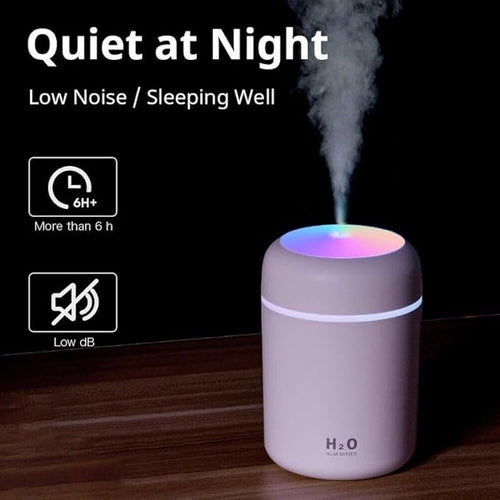
A 300ml ultrasonic diffuser for a bedroom, a study or a compact hall, running the same water-based Hotel Collection scents at the same three to six drops per tank — the dose is per tank rather than per litre, since you are scenting the mist and not the water. In a 1BHK or a 2BHK the usual mistake after a phenyl problem is to overcorrect with a larger machine, when less mist per hour is exactly the specification you want. It adds 30–50 ml of water an hour like any cool-mist unit, so keep it out of a bathroom you are trying to dry. ₹899, and 15ml scents are ₹299.
SS
ISIPCA
Versailles
A note from Sonal

I grew up with phenyl, as most people reading this did, and I have a complicated affection for it. The smell is doing real work — it is a signal, and the signal is trusted, which is worth something. What I have come to think is that the trouble is almost never the product and almost always the quantity and the method. Nobody measures. Everybody pours. The mop goes down soaking wet because a wet floor looks more cleaned than a damp one, and then a film dries onto the tiles and spends the afternoon releasing into a room with the windows shut against the dust. Four minutes and a second bucket of plain water changes the entire experience of the day.

The other half is worth saying out loud, because people are slightly embarrassed to. Disinfected and clean are not the same smell, and a home is allowed to want the second one. A corridor should announce that it has been dealt with. A sitting room at eight in the evening should not. So keep the strong bottle for the places that earn it and let the rest of the floor be ordinary, and once the room is neutral rather than medicinal, give it something you chose. I would not sell you a scent to put over phenyl, and if you write and ask me to I will tell you the same thing I have written here — that the answer is less phenyl rather than more perfume, and that it costs nothing to try first.

Everything is made and supported from Pune, and a part of every order funds girl-child education through Nanhi Kali. You get a home that smells like somewhere you chose; a girl gets a classroom. That equation has always felt right to me.

Frequently asked questions

Why does phenyl smell last so much longer than an ordinary floor cleaner?
Because it is built on heavier, more persistent aromatic materials chosen for their disinfectant association, and because most of what you are smelling is residue dried onto the floor rather than fragrance in the air. The film keeps releasing into the room for hours after the mopping is finished.
How much phenyl should I actually put in a bucket?
Follow the cap on the bottle, which for most concentrates is around one capful to a full bucket. Extra concentrate does not give perceptibly better disinfection at home, because the active chemistry works far below the level your nose registers, but it does leave proportionally more residue behind.
Does a plain-water second pass really make a difference?
It is the single most effective change on this page. Emptying the bucket, refilling with clean water and going over the same floor with a well-wrung mop lifts most of the residue, removes the streaking people blame on their tiles, and cuts the afternoon smell substantially.
Can I add a nice fragrance to cover the phenyl smell?
You can, and it works badly. You end up with a medicinal smell and a perfume standing in front of it, and the two compete because household fragrances often use the same pine, citrus and eucalyptus family that phenyl draws on. Reduce the phenyl instead, then scent a neutral room.
Should I stop using disinfectant altogether?
No. Bathrooms, floor drains, the kitchen and any room where somebody has been unwell genuinely warrant it, particularly during monsoon. What most homes do not need is hospital-grade disinfection across every square foot of floor every single morning. Split the job and the complaint disappears.
Less phenyl, then something you chose
Fix the floor firstthen give the room a level of its own
Mountain Breeze is ₹849 for Himalayan pine, sage and cedar in the alcohol-free reed line, with Morning Freshness from ₹749 and Evening Calm from ₹799; 130ml from ₹1,249 and 300ml refills ₹2,399. Reeds need 24–72 hours to establish. The Sukoon is ₹1,899 for 270–320 sq ft with steady, 2H and 4H timers and three 15ml Hotel Collection scents included, and the Boond is ₹899. Free shipping above ₹499, and a portion of every order supports girl-child education through Nanhi Kali.
Shop reed diffusers → See Mountain Breeze · ₹849
Continue the read
More from SOSA
Editorial standards & sources
About this guide: Written by Sonal Sahani, ISIPCA Versailles-trained founder and perfumer at SOSA Home & Body, on why phenyl and pine-type disinfectants are composed around persistent aromatic materials, why the residue dried onto a floor rather than the air is the real reservoir, the four ordinary causes of a flat that smells medicinal all day, why disinfected and clean are different signals to a nose, and why layering fragrance over a disinfectant produces two smells rather than one.

Facts verified August 2026: Diagnostic facts used in this guide: a closed room accumulates what it cannot exchange, so cross-ventilation needs two openings rather than one; a drain's U-bend water seal evaporates in roughly two to four weeks of disuse and then admits sewer gas, which is corrected by pouring water down the drain; microbial growth in fabric and on surfaces accelerates above about 60% relative humidity, and Indian monsoon indoor humidity commonly runs 80–95%, which is the one situation where ventilating on a wet day can import moisture rather than remove it; an air-conditioner's cold, wet evaporator coil and filter grow biofilm that is blown into the room on start-up; textiles adsorb cooking aerosol and body oils and re-release them for weeks; and olfactory adaptation makes a constant household smell undetectable to its residents within about a fortnight while visitors still perceive it. Timings: a scented candle scents a normal room in roughly 15–20 minutes, a Sukoon ultrasonic diffuser reaches a steady level in about 20 minutes from cold, and a reed diffuser needs roughly 24–72 hours. SOSA products and prices: Sukoon 500ml ₹1,899 (270–320 sq ft, 16–18h on low, 9–12h high, 30–50 ml/h, 2.4MHz cool mist, remote, steady/2H/4H timers, BPA-free, auto shut-off, includes three 15ml Hotel Collection scents of your choice); Boond 300ml ₹899; Megh 6-litre ₹3,499; waterless Vaayu ₹11,999 (up to 1000m³); Aangan ₹25,999. Hotel Collection water-based fragrance 15ml ₹299, 100ml ₹999, 300ml ₹1,799, Pack of 7 at 15ml ₹1,799; dose 3–6 drops per tank. Reed diffusers (separate alcohol-free line): Morning Freshness from ₹749, Garden Bloom and Evening Calm from ₹799, Fresh Brew and Mountain Breeze from ₹849; 130ml from ₹1,249; duos from ₹1,498; 300ml refills ₹2,399. Scented candles: Bookshop 80g ₹379, Amber Rose 130g ₹599 and 220g ₹799, Smoked Oudh 130g ₹449, ceramic jar candles ₹949, Pure Calm wax melt set ₹854. Free shipping above ₹499. SOSA does not make a room or linen spray for the home. The Hotel Collection scents are SOSA's own interpretations; SOSA is not affiliated with or endorsed by any hotel brand. Prices subject to change — see the live product pages.
Retour au blog