

Should I Add Fragrance to My Mopping Water?

Should I Add Fragrance to My Mopping Water?

★ Wonderful at eleven, gone by six · why the clean smell does not last, and what makes it stayCandle ₹379 · reed ₹749 · Boond ₹899 · Sukoon ₹1,899 · free shipping above ₹499A portion funds girl-child education
★ SOSA · find the cause, then scent the room
A cleaning product is a top note with nothing under it. It is meant to leave. What replaces it is the honest question
★ ★ ★ ★ ★
★★★★★
"Phenyl at eleven, nothing at six, and I thought I was doing something wrong. It was just evaporation doing exactly what it does."
Ramya N. Understood the cause
Not a mistake
★★★★★
"Deep clean, then a reed set up the same day. Three days later the flat had a level of its own for the first time."
Sagar B. Reed after cleaning
from ₹749
★★★★★
"Kitchen smelled worse after cleaning. Warm water on old grease releases it. Waiting twenty minutes with the fan on fixed the whole thing."
Nisha P. Free fix · wait and vent
Kitchen
★★★★★
"Was told not to put fragrance in my mopping water and why. Saved my floors and the advice was free."
Ajay M. Told not to
Mopping water
★★★★★
"Clean but not fresh was exactly my problem and I had no words for it. Clean is an absence; fresh is a presence. That sentence sold me nothing and explained everything."
Ipsita R. Clean vs fresh
Understood it
★★★★★
"Sunday clean, then the Sukoon on for an hour. The flat now smells like somewhere rather than like nowhere."
Harleen K. Sukoon ₹1,899
Weekly routine
★★★★★
"Phenyl at eleven, nothing at six, and I thought I was doing something wrong. It was just evaporation doing exactly what it does."
Ramya N. Understood the cause
Not a mistake
★★★★★
"Deep clean, then a reed set up the same day. Three days later the flat had a level of its own for the first time."
Sagar B. Reed after cleaning
from ₹749
★★★★★
"Kitchen smelled worse after cleaning. Warm water on old grease releases it. Waiting twenty minutes with the fan on fixed the whole thing."
Nisha P. Free fix · wait and vent
Kitchen
★★★★★
"Was told not to put fragrance in my mopping water and why. Saved my floors and the advice was free."
Ajay M. Told not to
Mopping water
★★★★★
"Clean but not fresh was exactly my problem and I had no words for it. Clean is an absence; fresh is a presence. That sentence sold me nothing and explained everything."
Ipsita R. Clean vs fresh
Understood it
★★★★★
"Sunday clean, then the Sukoon on for an hour. The flat now smells like somewhere rather than like nowhere."
Harleen K. Sukoon ₹1,899
Weekly routine
Reed diffusers: no electricity, no routine, one level for months · from ₹749 A reed needs 24–72 hours to establish — the right buy for a habit, the wrong one for tonight Air the room first · scent layers on clean air, it never replaces it


Founder Diaries · Home Fragrance · Cleaning & the Smell That Fades
By Sonal Sahani · ISIPCA Versailles 10 min read Updated August 2026
I am asked this several times a month and the answer has never once been yes, so let me give it plainly and then explain it four ways. Do not put Hotel Collection fragrance — or any perfume oil — into your mopping water. It is the wrong physics, it is the wrong chemistry, it is by a wide margin the most expensive way to use a fragrance that exists, and on stone or wood it can leave you with a floor problem instead of a smell problem. What to do instead is at the bottom, it is cheaper, and it works.
Quick answers — read this first
The answer: no.

Reason one, physics: fragrance dissolved in mopping water leaves with the water. You get a strong hour and an empty evening, which is the complaint most people arrived with.

Reason two, chemistry: the Hotel Collection is water-based and composed for a 2.4MHz ultrasonic plate at three to six drops per tank. It is not a surfactant-compatible floor additive, and mixed into a phenyl or a detergent the result is unpredictable.

Reason three, cost: at roughly ₹20 per millilitre, a capful in a bucket is about ₹100 for a couple of hours. Four drops in a tank is about ₹4 for sixteen.

Reason four, residue: oil residue on stone or wood is a real risk and a slip hazard.

Instead: mop with a plain, well-diluted cleaner, ventilate, let the floor dry completely, then scent the air.
The short answer
Short answer: no. A fragrance dissolved in mopping water evaporates with the water, so it gives you a strong hour and nothing by evening — and the Hotel Collection is composed for a 2.4MHz ultrasonic plate at three to six drops per tank rather than as a floor additive.
The arithmetic: a 15ml bottle at ₹299 is roughly ₹20 per millilitre. A capful of about 5ml in a bucket is around ₹100 and is gone by the evening. Four drops in a diffuser tank is about ₹4 and runs 16 to 18 hours on low, which is somewhere near a hundred and fifty times cheaper per hour.
What to do instead: mop with a plain, well-diluted floor cleaner, open two windows, let the floor dry completely, and then put the scent in the air where it belongs — a Bookshop candle at ₹379, the Sukoon at ₹1,899 with three 15ml Hotel Collection scents included, or a reed diffuser from ₹749 for a level that holds for months. Free shipping above ₹499.
Straight answer
Should I add SOSA fragrance oil to my mopping water?
1. No, and the first reason is where the fragrance goes. Anything you dissolve in a bucket of water leaves the floor as that water evaporates, which takes twenty to forty minutes. You get a strong hour and an empty evening, which is very likely the complaint that brought you to this page in the first place.

2. The second reason is what the product is. The Hotel Collection is a water-based fragrance composed for a 2.4MHz ultrasonic plate at three to six drops per tank. It is not a floor additive, it has no cleaning action, it is not formulated to sit in a surfactant solution, and what it does when mixed with a phenyl or a detergent is unpredictable and usually worse than either alone.

3. The third reason is money, and the gap is not close. At ₹299 for 15ml the fragrance is roughly ₹20 per millilitre. A capful of about 5ml into a bucket is around ₹100. Four drops into a diffuser tank is about ₹4 and runs for 16 to 18 hours on low.

4. The fourth reason is your floor. Fragrance oil that does not fully disperse leaves a residue. On glazed tile that is a smear you will re-mop; on marble, kota, granite or any wooden or laminate floor it can dull the finish, attract dust and make the surface slippery.

5. So do it in the right order instead. Mop with a plain, well-diluted floor cleaner at the dose printed on its own bottle, follow with a second bucket of clean water if the floor is porous, open two windows for twenty minutes, and let the floor dry completely.

6. Then scent the air, which is the only place a room fragrance has ever worked. Four drops in a tank, a candle for one evening, or a reed for a level that holds for months. All three cost less per hour than the bucket did.

A portion of every order supports girl-child education through Nanhi Kali.

TL;DR: no. Fragrance dissolved in mopping water leaves with the water, the Hotel Collection is composed for a 2.4MHz ultrasonic plate rather than for a bucket, a capful costs around ₹100 against ₹4 for a full tank, and oil residue on stone or wood is a real risk. Mop plain, ventilate, let it dry, then scent the air.
SOSA Hotel Collection · 15ml
Where three to six drops actually belong
SOSA Hotel Collection · 15ml ₹299
Water-based fragrance for ultrasonic diffusers, at three to six drops per tank — and the dose is per tank rather than per litre, because you are scenting the mist and not the water. That single line is the whole of this page: the fragrance is designed to ride a cool mist into air, not to be diluted a thousandfold in a bucket and wiped across a floor. Seven scents, ₹299 for 15ml, ₹999 for 100ml and ₹1,799 for 300ml at about ₹6 per millilitre, with the Pack of 7 at 15ml at ₹1,799 against ₹2,093 for seven singles. IFRA-standard, phthalate-free and composed in India. Never substitute raw essential or carrier oils, which clog the 2.4MHz plate.

Four reasons, and they are separate reasons

I want to set these out as four rather than as one, because each of them defeats the idea on its own and people tend to argue with whichever one they find least convincing. Even if the cost did not matter, the physics would still make it pointless. Even if the physics worked, the chemistry would still make it a gamble. And even if both worked, there would still be the floor. Take them in order.

1
REASONS ONE AND TWO
It leaves with the water, and it was never formulated for a bucket
Start with where the fragrance goes, because this is the reason that surprises people. When you dissolve a fragrance in mopping water you have made a very dilute solution and then spread it in a thin film across a large cool surface. That film evaporates over the following twenty to forty minutes, and the fragrance materials — which are volatile, that being the only reason you can smell them — leave with it. What remains behind on the tile is whatever was too heavy or too oily to evaporate, which is the part you did not want. So the curve is steep and short: a powerful ten minutes while the floor is wet, a good half hour while it dries, and by evening the room has nothing in it, because there is no reservoir left anywhere to keep supplying the air. That is precisely the disappointment most people were trying to solve when they picked the bottle up, which makes this the rare mistake that produces exactly the problem it was meant to fix. Then the second reason, which is about what the product actually is. The Hotel Collection is a water-based fragrance composed for a 2.4MHz ultrasonic plate: it is built to disperse in a tank of clean water and ride a cool mist at 30 to 50 millilitres an hour into a room, at three to six drops per tank. It contains no surfactant, no cleaning agent and no antimicrobial anything, it makes no cleaning claim, and it was never balanced against the alkalinity of a floor cleaner or the aromatic base of a phenyl. Put it into either and you are running an experiment: the surfactant will take the composition apart unevenly, the heavier materials will separate out and land in streaks, and the smell you end up with is neither the fragrance nor the cleaner but a third thing that is usually worse than both.
2
REASON THREE
About ₹100 in a bucket against about ₹4 in a tank
Now the arithmetic, which I think is the argument that actually changes minds. A 15ml bottle of Hotel Collection is ₹299, which is roughly ₹20 per millilitre. There are about twenty drops to a millilitre, so a single drop costs about a rupee. Four drops in a diffuser tank is therefore about ₹4, and on the Sukoon that tank runs 16 to 18 hours on the low setting at 30 to 50 millilitres an hour. Call it twenty-five paise an hour, which is less than almost anything else you switch on in the house. Now the bucket. A capful is about five millilitres, which is ₹100, and people who do this generally use more than a capful because the effect underwhelms them. That ₹100 gives you a strong hour and a faint second one. On the most generous reading available, that is around ₹40 an hour against twenty-five paise — somewhere between a hundred and two hundred times the cost for a result that is over before dinner. Put another way: a 15ml bottle is three mops, and the same 15ml is seventy-five tank-fills, which is more than a thousand hours of a scented room. Or, in the form I use when somebody tells me they can afford it: the ₹100 you are about to pour into a bucket is four hundred hours in a tank. I have never met anybody who heard that number and carried on. And it is worth saying that your floor cleaner already contains a fragrance, composed by somebody who was specifically briefed to make a wet floor smell of something, at a cost per bucket of a few rupees.
The comparison I would keep if I could keep only one: three mops or a thousand hours. Same bottle, same ₹299, and the only difference is whether the fragrance is put into water you are about to throw away or into air you are about to sit in.
3
REASON FOUR
Residue, and what it does to stone and wood
The last reason is the least discussed and the only one that can cost you real money. Fragrance oils do not dissolve in water so much as disperse in it, and what disperses unevenly lands unevenly. On glazed ceramic or vitrified tile the worst case is mild: a faint film that catches the light, holds footprints, attracts dust and needs re-mopping with plain water, which is an afternoon wasted rather than a disaster. On anything porous it is more serious. Marble, kota, granite, Indian patent stone and unsealed cement all absorb, and an oil that has soaked into stone does not come out with a mop; it darkens in patches and the patches are permanent enough to be worth avoiding. Wood and laminate are worse again, because the finish is the thing you are protecting and oil sits on top of it, dulls it, goes tacky and then collects grit, which is how a floor gets scratched. There is also a plain safety point that nobody makes and that I would rather make: an oily film on a smooth floor is slippery, and a slippery floor in a house with an older parent or a small child is not a fragrance decision, it is a different kind of decision entirely. None of this applies to the product used as intended, because a 2.4MHz plate atomises the fragrance into a mist measured in micrometres and delivers it to the air rather than to the granite. Which is, in the end, the summary of all four reasons: it is a good product being asked to do a job it was not designed for, in a place where it cannot work, at the highest price per hour available, with a downside attached.

What people put in mopping water, and what it does

Everything on this list is something I have been asked about or found in somebody's bucket. Two of the six are fine, one is fine within limits, and three are not — and the one at the bottom is a safety matter rather than a fragrance one. The last column is what I would actually do.

In the bucket
Six things that go into mopping water, and what each one really does
What goes in What happens Verdict What to do instead
Hotel Collection diffuser fragrance ★ Evaporates with the water in twenty to forty minutes; may streak on porous stone; around ₹100 a bucket No. Wrong physics, wrong formulation, and the most expensive hour of fragrance available Four drops in a tank, about ₹4, 16 to 18 hours on low
Raw essential oil Does not disperse in water at all — it floats, then lands in concentrated spots and marks stone and wood No, and it is the worst of the group for floors specifically Nowhere near an ultrasonic either: undiluted oils clog a 2.4MHz plate
Phenyl or a floor disinfectant Works as designed. Built on persistent aromatic materials, which is why it can still be detectable eight hours later Yes, at the dilution printed on its own bottle — and no more than that Follow with a second bucket of plain water if the medicinal note bothers you
Fabric conditioner Leaves a soft polymer film. Smells pleasant for an afternoon, then holds dust, dulls tile and becomes slippery No. It is designed to deposit onto fibre, which is exactly the property you do not want on a floor If you want the note, use it on the curtains and the covers, where it belongs
A capful of your own perfume Alcohol-based, so it flashes off in minutes and takes the composition's top with it. Alcohol on wood finish is its own problem No, and it is a waste of something considerably more expensive than a diffuser bottle The same money in an ultrasonic runs for weeks
Two cleaning products mixed together Unpredictable, and in the specific case of a bleach-based cleaner with an acidic one, genuinely dangerous Never. This is the one row on the page that is a safety rule rather than an opinion One product, one bucket, at its own printed dose. Rinse between products
Shop this guide
Where the drops belong, in three products
The SOSA principle
Three mops, or a thousand hours. Same bottle, same ₹299and the only variable is whether it goes into water you throw away or into air you sit in.
A capful in a bucket is about ₹100 and is over before dinner. Four drops in a tank is about ₹4 and runs sixteen to eighteen hours on low.

The sequence that works, and what it costs

So here is the whole method, and the first half of it is about the mop rather than the fragrance. Use one cleaning product, at the dilution printed on its own bottle, in a bucket of water that is warm rather than hot. More concentrate does not clean better; it leaves more behind, and what it leaves behind is the residue that will be quietly topping up the room's smell for the rest of the day. Wring the mop properly — a mop that is dripping is putting several times more liquid onto the floor than the floor needs, which lengthens the drying time, raises the room's humidity and makes every other smell in the flat temporarily louder. On porous floors, and most Indian homes have one somewhere, follow with a second bucket of plain water and a well-wrung mop, which lifts the residue rather than spreading it. Then open two windows on opposite or adjacent walls and leave them open for twenty minutes while the floor dries, because a drying floor is actively releasing into the room and you want that going outside rather than circulating. Twenty to forty minutes for tile, longer for stone, longer again for grout, which is a narrow absorbent channel that stays damp after the surface looks finished. Do not switch the AC on and shut the place up the moment you stop mopping, which is the single commonest way to trap the whole event indoors. And do not walk on it, which sounds obvious and is the reason grout gets grey.

Then the fragrance, in air, at the hour when it can actually do something. The rule is simple: dry floor, moved air, then scent — in that order and never overlapping. A candle lit while the floor is still wet is competing with a humid room and an evaporating cleaner; the same candle two hours later has a clean floor of air to sit on. A Bookshop candle at ₹379 is 80g, roughly 15 to 18 hours of burn and fifteen to twenty minutes to scent a normal room, and it must be attended and put out; Bookshop with Cozy Corner is ₹664 for around 30 to 36 hours, Amber Rose candle is ₹599 at 130g and ₹799 at 220g, and Smoked Oudh candle is ₹449 for a heavier evening. The Sukoon at ₹1,899 reaches a steady level in about twenty minutes from cold: a 500ml BPA-free tank, 270–320 sq ft, 16–18 hours per fill on low at 30–50 ml/h against 9–12 on high, a 2.4MHz cool-mist plate, a remote, auto shut-off, steady, 2H and 4H timers, and three 15ml Hotel Collection scents of your choice included. Three to six drops per tank, per tank rather than per litre — the Boond at ₹899 takes the same drops in one room and the Megh at ₹3,499 suits an open-plan flat. And if what you wanted from the bucket was a floor-level scent that is simply there without being switched on, that is a reed diffuser from ₹749, which supplies a very small quantity continuously for months and takes 24 to 72 hours to reach level.

Then the constraints, the honest limits and the principle. The two SOSA lines do not cross in either direction: the water-based Hotel Collection runs in the Sukoon, the Boond and the Megh and nowhere else — never in a reed, where a water-based fragrance will not climb the sticks, and never in the waterless Vaayu at ₹11,999, which takes its own undiluted oil. Reed diffusers are a separate alcohol-free line with their own scents. Never put raw essential or carrier oils into an ultrasonic, because they clog the 2.4MHz misting plate, and rinse the tank when you change scent. SOSA makes no room or linen spray for the home — the sprays in the range are car perfumes — and SOSA makes no cleaning product at all, so nothing here is a substitute for the floor cleaner you already own. The larger principle, and the reason this page says no rather than offering a compromise: fragrance is a finishing layer on air that is already clean and moving, and it removes nothing. If the floor still smells wrong once it is dry, the answer is under the floor rather than on it — a drain trap that has run dry and is venting, grout that has been collecting for years, or a leak somewhere behind a skirting. Pouring perfume into the bucket buys you an hour of not thinking about that, at ₹100 an hour, and the thinking still has to happen tomorrow.

A fragrance in mopping water leaves when the water does. You have paid a hundred rupees to perfume an afternoon you were going to spend at home anyway.
— Sonal Sahani, SOSA

The SOSA edit

Four of these six rows are free or are things you already own, because the honest answer to this question is mostly a change of order rather than a purchase. The last row states the two absences plainly: SOSA makes no floor cleaner and no room spray, and neither is coming.

The SOSA edit
Mopping day, in the order that works
Do this What it is When it is the right answer Price
1. One cleaner, its own dilution, a wrung mop ★ No fragrance added, no second product mixed in, and warm rather than hot water Every time. Over-concentration leaves residue, and residue is what keeps re-scenting the room all day ₹0
2. A second bucket of plain water on porous floors A well-wrung rinse pass that lifts residue instead of spreading it On marble, kota, granite, patent stone or anything unsealed. It is also the fix for a phenyl smell that lingers ₹0
3. Two windows, twenty minutes, while it dries Cross-ventilation on opposite or adjacent walls, with the AC left off until the floor is dry Always. A drying floor is emitting, and you want that leaving rather than circulating ₹0
4. Three to six drops in a tank Water-based fragrance for a 2.4MHz ultrasonic plate — per tank rather than per litre Once the floor is dry. About ₹4 a tank against roughly ₹100 a bucket, for sixteen to eighteen hours ₹299
5. A reed or a candle A level held for months with nothing to switch on, or one attended evening at fifteen to twenty minutes The reed if you wanted the scent simply to be there; the candle for a specific evening from ₹749 / ₹379
Not in the range: a floor cleaner, and a room spray SOSA makes no cleaning product of any kind, and no room or linen spray for the home — the sprays are car perfumes Printed rather than implied, because the honest answer to this question needs a product I do not sell
Honest notes for buyers: fragrance is the last step, never the first. It layers on air that is already clean and moving, and it will not remove a source — not damp, not a dry drain trap, not a loaded sofa, not a filter that needs washing. Deal with the cause, change the air, then scent the room. On timing: a candle puts scent into a room in fifteen to twenty minutes and a Sukoon reaches a steady level in about twenty, while a reed diffuser needs a day to three days before it is doing its job — the wrong buy for a deadline and the right buy for a room you want to hold one level for months. SOSA does not make a room or linen spray for the home; the sprays in the range are car perfumes. A cool-mist ultrasonic adds 30–50 ml of water an hour to the air, so it is the wrong machine for a room you are trying to dry out. The Hotel Collection is water-based and runs in the Sukoon, Boond and Megh only — not in reeds and not in the waterless Vaayu. Reed diffusers are a separate alcohol-free line with their own scents. Candles must be attended and put out. The Hotel Collection scents are SOSA's own interpretations inspired by the world's finest hotels; SOSA is an independent Indian fragrance house, not affiliated with or endorsed by any hotel brand. A portion of every order supports girl-child education through Nanhi Kali.
SOSA alcohol-free reed diffusers
The version of this idea that actually works
SOSA alcohol-free reed diffusers from ₹749
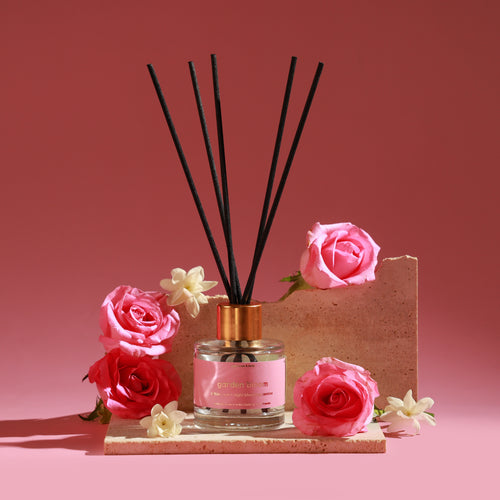
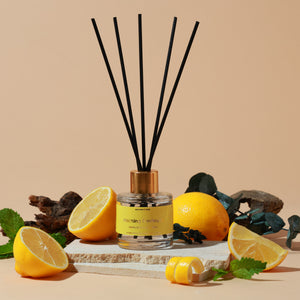
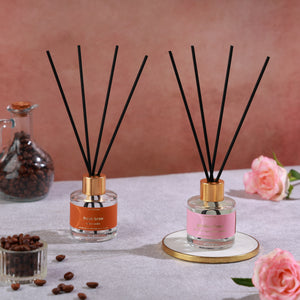
What people are really asking for when they reach for the bottle over the bucket is a floor-level scent that is simply present, without a routine. A reed does that properly: capillary action carrying a very small quantity into the room continuously, for months, with no electricity, no timer and no bucket — and no water evaporating away and taking the fragrance with it. It needs 24 to 72 hours to reach level, so set it up and leave it. Morning Freshness at ₹749 is Malabar lemon, peppermint and eucalyptus, which is the nearest register to a clean floor; Garden Bloom and Evening Calm from ₹799, Fresh Brew and Mountain Breeze from ₹849. 130ml from ₹1,249, 300ml refills ₹2,399.
SS
ISIPCA
Versailles
A note from Sonal

I understand the impulse completely, which is why I have never been short with anybody who asks. You have just mopped, the flat smells wonderful for an hour, and it seems obvious that the way to make that last is to put something better in the bucket. The trouble is that the bucket is the reason it does not last. Everything in that water goes onto a cold floor as a thin film and then evaporates off it within the half hour, taking your fragrance with it. There is nothing left holding anything, which is why the evening is empty. Adding a more expensive ingredient to that arrangement gets you a more expensive version of the same empty evening.

And then there is the price, which I would rather be blunt about than tactful. A capful of my own 15ml bottle is about a hundred rupees, and it will be gone before you have eaten. Four drops of the same bottle in a diffuser tank is about four rupees and runs from breakfast to bedtime. I am not in the business of talking people out of buying fragrance, but I am firmly in the business of talking them out of wasting it, and this is the clearest case of it I know. Mop with whatever you normally mop with, at the dose on its own label. Open two windows. Let the floor dry properly, which takes longer than people think and longer still on grout. Then put four drops in a tank, or light something, or set up a reed and forget about it. The floor is not where a room fragrance lives. The air is.

Everything is made and supported from Pune, and a part of every order funds girl-child education through Nanhi Kali. You get a home that smells like somewhere you chose; a girl gets a classroom. That equation has always felt right to me.

Frequently asked questions

Can I add SOSA Hotel Collection fragrance to my mopping water?
No. It is water-based and composed for a 2.4MHz ultrasonic plate at three to six drops per tank, it evaporates with the mopping water within about half an hour, it can streak on porous stone, and at roughly ₹20 per millilitre a capful in a bucket costs around ₹100 for a couple of hours.
Is it safe to put essential oils in mopping water?
It is the worst option on this page for floors. Undiluted essential oil does not disperse in water — it floats and then lands in concentrated spots, which marks marble, kota, granite, wood and laminate. It also clogs the 2.4MHz plate in an ultrasonic, so it does not belong in the tank either.
Why does my floor smell wonderful for an hour and then nothing?
Because the fragrance was dissolved in water and left with it. A wet floor is a large evaporating surface, and once it is dry there is no reservoir left to keep supplying the air. That short curve is what a floor cleaner is designed for, and it is why scent belongs in the air rather than on the tile.
What is the cheapest way to make my home smell good after mopping?
Four drops of a 15ml bottle into a diffuser tank, which is about ₹4 for 16 to 18 hours on the low setting. Before that, two windows open for twenty minutes while the floor dries costs nothing at all and does more for a closed flat than any product.
Can I mix a fragrance with phenyl or a floor cleaner?
I would not. The fragrance contains no surfactant and was not balanced against an alkaline cleaner or phenyl's aromatic base, so the composition separates unevenly and the result is usually worse than either on its own. And never mix two cleaning products with each other — a bleach-based one with an acidic one is genuinely dangerous.
Not in the bucket. In the air
About ₹100 a bucket, or about ₹4 a tankfor sixteen hours instead of two
The Hotel Collection is ₹299 for 15ml, ₹999 for 100ml and ₹1,799 for 300ml at about ₹6 per millilitre, at three to six drops per tank. The Sukoon is ₹1,899 for 270–320 sq ft with steady, 2H and 4H timers and three 15ml scents of your choice included, the Boond is ₹899, reed diffusers are from ₹749 and a Bookshop candle is ₹379. SOSA makes no floor cleaner and no room spray for the home. Free shipping above ₹499, and a portion of every order supports girl-child education through Nanhi Kali.
Shop the seven scents → See reed diffusers · from ₹749
Continue the read
More from SOSA
Editorial standards & sources
About this guide: Written by Sonal Sahani, ISIPCA Versailles-trained founder and perfumer at SOSA Home & Body, on why fragrance does not belong in mopping water — that a fragrance dissolved in water evaporates with it inside half an hour, that the Hotel Collection is composed for a 2.4MHz ultrasonic plate at three to six drops per tank rather than for a surfactant solution, that a capful in a bucket costs around ₹100 against about ₹4 for a full tank, and that oil residue on stone, wood and laminate is a real and avoidable risk.

Facts verified August 2026: Diagnostic facts used in this guide: a closed room accumulates what it cannot exchange, so cross-ventilation needs two openings rather than one; a drain's U-bend water seal evaporates in roughly two to four weeks of disuse and then admits sewer gas, which is corrected by pouring water down the drain; microbial growth in fabric and on surfaces accelerates above about 60% relative humidity, and Indian monsoon indoor humidity commonly runs 80–95%, which is the one situation where ventilating on a wet day can import moisture rather than remove it; an air-conditioner's cold, wet evaporator coil and filter grow biofilm that is blown into the room on start-up; textiles adsorb cooking aerosol and body oils and re-release them for weeks; and olfactory adaptation makes a constant household smell undetectable to its residents within about a fortnight while visitors still perceive it. Timings: a scented candle scents a normal room in roughly 15–20 minutes, a Sukoon ultrasonic diffuser reaches a steady level in about 20 minutes from cold, and a reed diffuser needs roughly 24–72 hours. SOSA products and prices: Sukoon 500ml ₹1,899 (270–320 sq ft, 16–18h on low, 9–12h high, 30–50 ml/h, 2.4MHz cool mist, remote, steady/2H/4H timers, BPA-free, auto shut-off, includes three 15ml Hotel Collection scents of your choice); Boond 300ml ₹899; Megh 6-litre ₹3,499; waterless Vaayu ₹11,999 (up to 1000m³); Aangan ₹25,999. Hotel Collection water-based fragrance 15ml ₹299, 100ml ₹999, 300ml ₹1,799, Pack of 7 at 15ml ₹1,799; dose 3–6 drops per tank. Reed diffusers (separate alcohol-free line): Morning Freshness from ₹749, Garden Bloom and Evening Calm from ₹799, Fresh Brew and Mountain Breeze from ₹849; 130ml from ₹1,249; duos from ₹1,498; 300ml refills ₹2,399. Scented candles: Bookshop 80g ₹379, Amber Rose 130g ₹599 and 220g ₹799, Smoked Oudh 130g ₹449, ceramic jar candles ₹949, Pure Calm wax melt set ₹854. Free shipping above ₹499. SOSA does not make a room or linen spray for the home. The Hotel Collection scents are SOSA's own interpretations; SOSA is not affiliated with or endorsed by any hotel brand. Prices subject to change — see the live product pages.
Retour au blog