


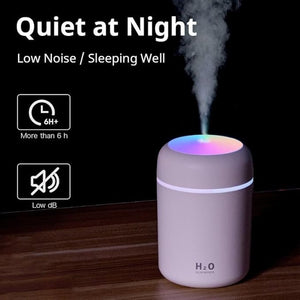
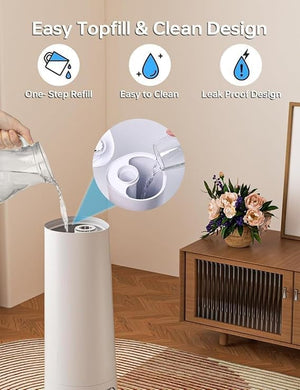
Two, only when: the room has a leg or alcove the machine cannot see into, or it runs longer than roughly 22–24 feet, or the ceiling is double height.
Nothing at all, in: corridors, bathrooms, kitchens and rooms nobody occupies. They borrow scent from the rooms either side, and a machine placed in them mostly scents a doorway.
2. Two when the room has a blind leg. Stand where the machine will stand and look. If there is a dining bay, an alcove, a study nook or a return you cannot see, that part of the room is a separate pocket of air and it will stay thin however much you add to the tank.
3. Two when the room is long. Past roughly 22 to 24 feet of run, one source struggles to reach the far end evenly — not because it is underpowered but because there is nothing carrying fragrance that far. Two moderate sources at either end beat one strong source in the middle.
4. Nothing in the rooms you pass through. Corridors, stairwells, bathrooms, kitchens and unused bedrooms. Nobody stands still in them long enough to register a scent, and they draw fragrance out of the rooms they connect rather than holding any of their own.
5. The second machine does not have to match the first. A Boond at ₹899 makes a better second source than a second Sukoon in most rooms, because you want to fill a pocket rather than double the whole room. One Sukoon plus one Boond is ₹2,798 against ₹3,798 for two Sukoons.
Made in India, composed by an ISIPCA Versailles-trained perfumer — and a portion of every order supports girl-child education through Nanhi Kali.

Why a second machine does not double the room
Picture what a diffuser actually does. An ultrasonic plate breaks water and fragrance into a fine mist, that mist rises for a short distance on its own momentum, and then — because the droplets are heavier than the air around them — it falls, evaporates and hands the fragrance over to whatever air currents the room already has. The visible plume is short, perhaps half a metre. Everything past that point is the room's job, not the machine's. This is why output and reach are almost unrelated. Doubling the amount of fragrance leaving the plate does not push it further; it makes the air near the machine more concentrated and leaves the far end of the room exactly where it was, because the far end was never being supplied by pressure from the machine in the first place.
So the honest way to think about a second unit is as a second point of origin. It is worth having when the room contains somewhere the first machine's air simply does not go — and rooms like that are defined by shape rather than by floor area. A square 250 sq ft bedroom is one pocket of air and needs one machine. A 250 sq ft L-shaped living-dining is two pockets connected by a corner, and a corner is a surprisingly effective brake on diffusion. The same applies to long rooms, to spaces with a projecting wardrobe or a half-wall, and to double-height rooms where the air above head height behaves as a separate layer. In every one of those cases the fix is a second source placed in the pocket the first cannot reach. In every other case, a second machine is a more expensive version of the room you already had.
One, two, or none at all
 SOSA Sukoon₹1,899Bedrooms, studies, nurseries, ordinary rectangular living rooms — all one-machine rooms. A Sukoon is rated for 270–320 sq ft and the typical Indian master bedroom is under 180, so the machine is not being stretched. In a small bedroom or a study of 100–140 sq ft a Boond at ₹899 is the correctly sized answer rather than the cheap one; over-rating a small room does not improve it, it just means running fewer drops and a shorter session. The thing that decides whether one machine feels sufficient is almost never its rating — it is whether it is standing about a metre up, clear of the walls, and out of the fan's path.
Machines per room, room by room
Areas are typical Indian carpet-area figures and vary a great deal by city, so treat them as ranges. The column that matters is the last one — the reason, because it is always shape, occupancy or height rather than square footage on its own.
| Room | Roughly | Machines | Why |
|---|---|---|---|
| Master bedroom ★ | 140–200 sq ft | One Sukoon ₹1,899 | Closed, rectangular, well inside the 270–320 sq ft rating |
| Second bedroom or study | 90–140 sq ft | One Boond ₹899 | Correctly sized rather than cheap — 150 sq ft rating fits |
| Living room, rectangular | 180–280 sq ft | One Sukoon ₹1,899 | One pocket of air, one source |
| Living room with dining leg | 250–400 sq ft | Sukoon + Boond — ₹2,798 | An L is two pockets joined by a corner |
| Long living-dining run | over 22–24 ft | Two Sukoons — ₹3,798 | Nothing carries fragrance the full length from one end |
| Double-height or mezzanine room | any | Two, both placed low | The air above head height is a separate layer |
| Corridor, passage, stairwell | any | Nothing | Transit space — it drains the rooms either side |
| Kitchen | any | Nothing | Cooking wins; use the extractor and scent the room next door |
| Bathroom | any | Nothing | The exhaust removes it as fast as it is made |
| The one to avoid: a Megh at ₹3,499 bought as the answer to a big room. It covers up to 215 sq ft — less than a Sukoon — and its six litres buy 100 hours of runtime, not reach. For a larger room the answer is two sources, not one bigger tank. | |||
Sukoon · the room machine₹1,899Shop → 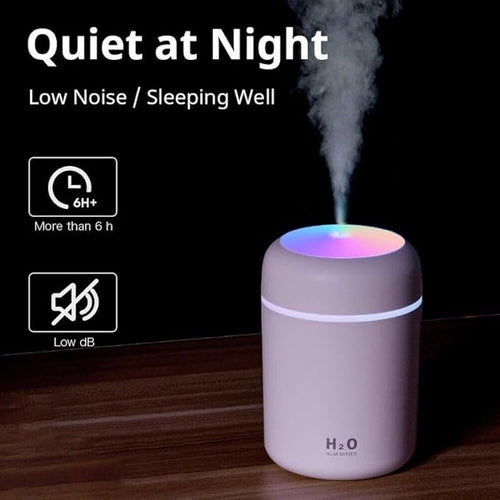 Boond · the second source₹899Shop →
  Hotel Collection · both take itFrom ₹299Shop →
Placing one machine, and placing two
With one machine, put it about a metre off the floor and roughly a third of the way into the room from the door rather than in the far corner. The doorway is where the room's air comes in and where you are standing when you form your impression of the room, and a machine in the dead corner behind the sofa is releasing fragrance into the stillest air in the space. Leave a foot of clear space on every side so the mist disperses instead of condensing on a wall or a curtain, and keep it out of the direct line of a fan or a split AC.
With two machines in one room, the rule reverses: get them as far apart as the room allows, and give each one its own pocket. In an L-shape that means one in each leg, near the inside corner of each rather than at the extreme ends. In a long room it means one at each end, both a metre up. In a double-height space it means both of them low — the fragrance will rise on its own and you have no way of bringing it back down except a ceiling fan on its slowest setting. What you must not do is run two machines side by side, which produces a very strong three feet and changes nothing else about the room.
Dose down when you add a source. The Hotel Collection guidance is three to six drops per tank; with two machines running in the same room, three each is usually right, because the two fields overlap in the middle and the middle is where you are sitting. Run them at the same time rather than alternately — a room takes thirty to forty minutes to settle at a steady level, and staggering the machines simply gives you a moving target. Use filtered water in hard-water cities, rinse the tank when you change scent, and keep both machines on the same fragrance. Two scents in one room is not zoning, it is a blend you did not compose.
What one room costs to do properly
Per-room arithmetic, itemised. The useful thing to notice is that the two-machine answer for an awkward room costs ₹2,798 rather than ₹3,798, because the second source does not need to be as big as the first.
| Setup | What you get | Covers | Total |
|---|---|---|---|
| Small room | Boond ₹899 + one 15ml scent ₹299 | Up to 150 sq ft | ₹1,198 |
| Normal room ★ | Sukoon ₹1,899 — 3 × 15ml scents included | 270–320 sq ft | ₹1,899 |
| L-shaped or long room | Sukoon ₹1,899 + Boond ₹899 | Two pockets, one scent | ₹2,798 |
| Very long or double-height | Two Sukoons at ₹1,899 each, placed apart and low | Up to about 600 sq ft | ₹3,798 |
| Running cost | A 100ml refill from ₹999, or 300ml ₹1,799 (~₹6/ml) | Months at 3 drops | from ₹999 |
Versailles
People ask me this expecting a formula and I keep giving them a question instead: how many separate pockets of air does that room contain? Almost every room in an Indian home contains one, which is why the answer is almost always one machine, and why the rooms that genuinely need two are recognisable by their floor plan rather than their floor area.
The reason I am firm about it is that the second machine in a room is the purchase people regret. It does not make the room smell twice as good; it makes one part of the room stronger and doubles what you spend on fragrance for as long as you own it. I would much rather you moved the first one a metre and turned the fan down, and then decided.
When a room genuinely does need two, make the second one small. A Boond at ₹899 next to a Sukoon at ₹1,899 gives you two starting points for ₹2,798, which is the correct shape of the answer as well as the cheaper one. Same fragrance in both, three drops each. A portion of every order funds a girl's classroom through Nanhi Kali.
Frequently asked questions
- How many square feet does one Sukoon actually cover? — what the rating assumes.
- One big diffuser or two small ones? — why two sources flatten the gradient.
- How to calculate how many diffusers your home needs — the whole-home version of this.
- How to scent a long corridor or passage — and why it is usually a mistake.
- Brand: the SOSA founder story.
SOSA products & prices (verified August 2026): Hotel Collection water-based ultrasonic diffuser fragrance 15ml ₹299 · 100ml ₹999 · 300ml ₹1,799 · Pack of 7 (15ml, all fragrances) ₹1,799; refills 100ml from ₹999. Seven scents: The Ritz-Carlton-inspired (white tea · bergamot · cedar), Westin-inspired (white tea · aloe · cedar), 1 Hotels-inspired (cedarwood · vetiver · green leaves), The St. Regis-inspired (amber · violet · woods), Shangri-La-inspired (jasmine · green tea · white tea), Four Seasons-inspired (citrus · floral · sandalwood), W Hotels-inspired (citrus · pepper · amber). Diffusers: Boond 300ml ₹899 · Sukoon 500ml ₹1,899 · Megh 6L ₹3,499. Water-based, phthalate-free, composed to IFRA standards for home diffusion; 3–6 drops per tank. Made in India, Pune. The Hotel Collection scents are SOSA's own interpretations inspired by the world's finest hotels; all hotel names are trademarks of their respective owners and are used only to describe the scent style — SOSA is an independent Indian fragrance house, not affiliated with or endorsed by any hotel brand. Prices and availability subject to change — see the live product pages.