

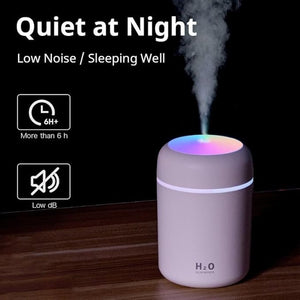
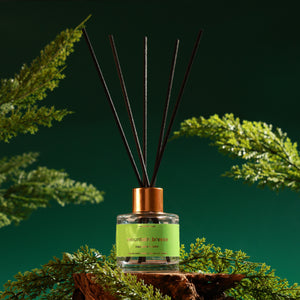
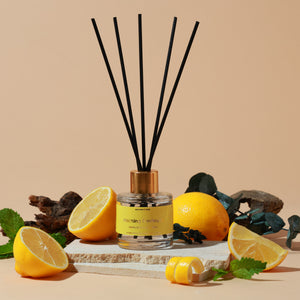
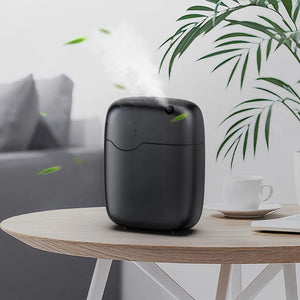
A duty cycle beats a lower number. Sukoon ₹1,899 on 2H or 4H rather than steady, or a Boond ₹899 that ends by itself after roughly six hours a fill. A reed bottle cannot do this — it is constant by design.
The sub-wait bays are clinical, not waiting area. The two chairs outside imaging, the row by the dilation bay, the bench outside the consultation cabin — nothing goes in any of them, at any level.
You cannot judge this room yourself. Your nose stops reporting a steady stimulus, and you were never in the last chair at the end of the longest wait. Send somebody who has been outside the building.
2. The level belongs to that number. A ten-minute collection and a two-and-a-half-hour workup sit in the same air at the same moment, and the room has one level. Set it for the long one; everybody else simply gets less of the room than it could have delivered, which is the correct design rather than a compromise.
3. Prefer a run window to a lower setting. A source that is on continuously through a nine-hour day gives you one lever, and it is a blunt one. A timed cycle changes the shape of the exposure rather than only its height, and that is the control this caseload actually needs. On a Sukoon at ₹1,899 that is the 2H and 4H modes rather than steady.
4. Nothing in any sub-wait. The chairs outside imaging, the dilation bay, the bench outside the consultation cabin and every corridor between them are part of the clinical pathway, whatever they are called on the plan. They take nothing, in any format, at any level, at any hour.
5. One source, at the far end of the main waiting area. Turned inward, clear of the air-conditioning return, set well back from the corridor. In a long-visit clinic the doorway should smell of nothing at all, because the doorway is the one place people are not sitting.
6. Judge from the last chair at the end of the longest wait. Send somebody who has been out of the building, at your busiest hour, and have them sit there for forty minutes before answering. Your own reading of your own room is the least reliable one available, because a nose stops reporting a steady stimulus.
7. Keep the fragrance-free seat away from the flow. On a long visit a person returns to the waiting area repeatedly, so the alternative seat has to be somewhere they can stay for the whole morning — not a chair they are walked to once and then called away from.
8. If the arrival zone is small, sealed and holds two-hour waits, buy nothing yet. Fix air exchange first. No product or setting on this page is described as safe, unsafe or suitable for any patient or staff group, no claim is made about how anybody perceives or responds to fragrance over any length of time, and nothing here is medical, clinical, ventilation or regulatory advice. Composed and made in small batches in Pune, and a portion of every order supports girl-child education through Nanhi Kali.

Part one — a room somebody occupies, not one they pass through
Nearly all ambience advice, mine included when I am not careful, is written for transit. Somebody arrives, forms an impression, is called through. A multi-test ophthalmic visit breaks that model completely, and three specific things follow from it.
 Boond 300ml₹899 · ~6 hrs a fillHere is the part that genuinely changes what you should buy. If your only control is how high the source is set, then across a nine-hour day the room does one thing, continuously, and your single decision has to be correct for every hour of it. A run window is a second, independent control: it changes when the room is doing anything at all, and in a clinic with long occupancy that is worth more than another notch downward. The Sukoon at ₹1,899 does it with 2H and 4H timer modes. The Boond at ₹899 does it accidentally but reliably, by running out of water after roughly six hours and stopping. The Vaayu at ₹11,999 does it properly, with 1h/4h/8h/24h windows, day selection and a key-lock so the setting cannot drift, and at under 38 dB — but it is only sized past roughly 320 sq ft of connected arrival zone, and SOSA does not currently sell a separate Vaayu refill oil, so confirm supply before committing. A reed diffuser cannot do it at all. That is not a flaw; it is what a passive capillary product is.
Part two — one workup, hour by hour, zone by zone
The same two and a half hours, read as a sequence of places rather than as one wait. The fourth column is the one worth arguing about at your next practice meeting.
| Elapsed time in the visit | Where the person is sitting | What that space actually is | What your source should be doing | The error practices make here |
|---|---|---|---|---|
| 70–110 minutes — the dilation wait ★ | Usually back in the main waiting area, sometimes a dedicated bay | Hospitality if it is the main area; clinical if it is a bay off the diagnostics corridor | This is the stretch the level was set for — and a good place for the cycle to be in its off phase | Assuming the longest sub-wait is the one to make the room nicest for. It is the one to make the room quietest for |
| 0–15 minutes — arrival and registration | Standing at the counter, then the nearest free chair | Hospitality | Whatever the run window says; nothing special happens here | Setting the level from this moment, because it is the only one the owner ever experiences |
| 15–40 minutes — vision and refraction | Two chairs outside the refraction room | Clinical seating, not a waiting area | Nothing at all, and no source anywhere on that spur | Adding a bottle here because the corridor looks bare |
| 40–70 minutes — imaging and pressures | Back to the main area, then a bench outside imaging | Split: main area hospitality, bench clinical | Main area only, and check the air path through the open doorway | Ignoring the doorway, so the main-area source reaches the bench anyway |
| 110–140 minutes — waiting for the consultation | Bench outside the consultation cabin | Clinical | Nothing, at any level, at any hour | Treating the last twenty minutes as part of the waiting room because it is busy |
| 140–165 minutes — optical, billing, spectacle order | Optical display and the billing counter | Retail — the one place a slightly warmer level is defensible | Its own decision, made only if that air does not reach the clinical corridor | Scenting optical to hotel intensity, so it carries back down the corridor |
| On leaving | The entrance and porch | Threshold | Nothing. A clinical entrance should smell of nothing at all | Placing the source by the door for a first impression, which is the worst position in the building |
| The honest caveat: the zoning above is offered as ambience guidance for an arrival zone and nothing more; where it calls a space clinical it is deferring to the practice's own judgement rather than making one. It is not clinical, ventilation, infection-control, accreditation or regulatory advice. Examination rooms, diagnostics, consultation cabins, the procedure suite, post-operative areas and every corridor and sub-wait between them take nothing from SOSA, in any format, at any level, at any hour. No claim is made, in either direction, about how anybody perceives, tolerates or responds to fragrance over any length of exposure, and no SOSA product or setting is described as safe or unsafe for any patient or staff group. Some people are sensitive to airborne fragrance, which is why the clinical pathway stays fragrance-free and why a fragrance-free seat must genuinely exist — and on a long visit it must be somewhere a person can remain for the whole morning. A diffuser adds a scent to the air; it removes nothing already in it. | ||||
Sukoon · 2H/4H, not steady₹1,899Shop → 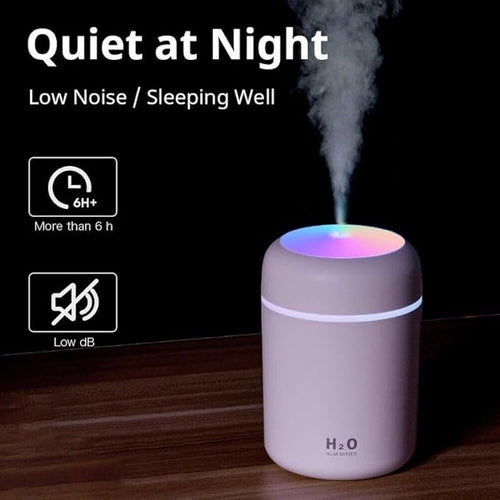 Boond · stops by itself₹899Shop →
 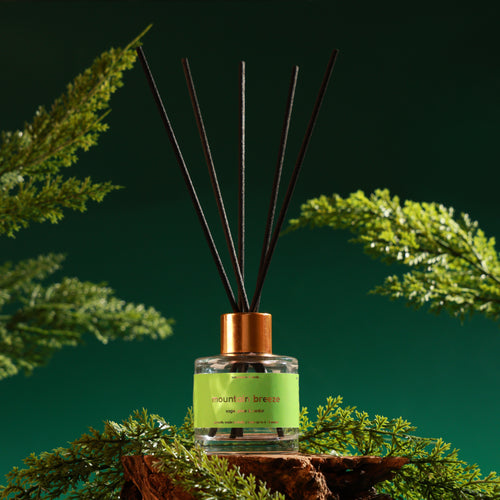 Mountain Breeze · constant, no cycle₹849Shop →
Part three — the long-wait clinic that should spend nothing
There is a configuration where the honest recommendation is to buy nothing, and long-visit practices meet it more often than any other kind. A main waiting area under about 150 square feet, sealed and air-conditioned with the entrance as its only real opening, holding routine waits of two hours or more, is a room whose binding constraint is air exchange rather than fragrance. Adding a scent to an under-ventilated room does not freshen it; it makes it heavier, because fragrance adds to what is already in the air and removes nothing at all. Anyone selling you a diffuser as a solution to a room that feels closed is selling you the wrong product. Look at the air handling first, ask whether the space can take a longer run on fresh air, and revisit the fragrance question in a quarter — neither of which is something SOSA sells.
The second disqualifier is the fragrance-free seat, and long visits raise the bar on it considerably. In a short-visit practice the alternative seat has to work for ten minutes; here it has to work for a whole morning, through four or five returns to the waiting area, without anybody being walked across the room each time. It must be a place, not a gesture — a bay, a row or a side area genuinely off the main air path, on the route people already take, used routinely by other people for other reasons. Test it: sit there for twenty minutes at your busiest hour, because two chairs in one air volume are not two air conditions however far apart they look on a plan. If your building cannot produce such a place, you do not yet have the conditions for scenting the waiting area.
The third case is the people who are there longer than any patient. Your reception and technician staff are in that air for eight or nine hours against even the longest visit's two and a half, and on a workup day they are also the ones moving between the waiting area and the diagnostics corridor all morning. Any decision about level has to work for them first. Ask with an open question — "if you could change one thing about this room, what would it be" — twice, a fortnight apart, because the first answer is about novelty and the second about living with it. If a member of the desk team would rather have nothing, that settles it. And if what comes back is about the queue, the seating or the noise rather than the air, believe it.
Part four — run patterns, and what each does across a long visit
Seven ways of running an arrival zone, with the outlay worked out and the behaviour across a 150-minute occupancy set beside it. The third column is the one this page is really about.
| Run pattern | Outlay, with the arithmetic | What it does across a 150-minute visit | What it asks of the desk | Verdict for a long-visit practice |
|---|---|---|---|---|
| Sukoon on 2H, dosed light, one cycle a session ★ | ₹1,899, with three 15ml scents in the box, so nothing further to buy at the start | The room rises, holds, then falls back on its own for the rest of the visit — a shape rather than a plateau | Press a button once a session, and never leave it on steady | The default for a 150–320 sq ft arrival zone. Adds humidity, so watch it in monsoon |
| The same Sukoon left on steady | Same ₹1,899 | Nine hours of unchanging output, of which your longest visitor receives two and a half | Nothing, which is exactly the problem | The commonest mistake on this page. You paid for the timers; use them |
| Boond ₹899 on a light dose, one fill a day | ₹899 + a 15ml Hotel Collection at ₹299 = ₹1,198 | Roughly six hours, then it stops because the water is gone — a crude cycle that fails to off | One fill in the morning; nobody has to remember to stop it | Good around 150 sq ft. No remote, so somebody must walk to it. Adds humidity |
| One 50ml reed bottle at two of six reeds | ₹749–₹849 once; free shipping applies above ₹499 | Constant. Identical output at minute five and minute one hundred and fifty, with no off switch | Nothing daily; the bottle is carried out when the room must be clear | Honest and cheap, but it is the one format that cannot give you a run window. Know the trade |
| Two bottles at opposite ends of a long room | ₹749 + ₹849 = ₹1,598, or ₹1,498–₹1,598 as a duo set | Doubles total output and evens out distribution — this raises the room rather than softening it | Two objects to manage instead of one | L-shaped zones only. In one open room it is more than a long-wait clinic needs |
| Megh ₹3,499 | ₹3,499 | About 100 hours a fill — the longest continuous run in the range, which is the wrong direction here | Very little, and that is the objection | A runtime and humidity machine at roughly 215 sq ft, less coverage than a Sukoon. Never a coverage upgrade |
| Vaayu ₹11,999, freestanding, on 1h or 4h windows | ₹11,999, with 400ml of oil supplied in the box | Proper scheduled windows with day selection, adjustable intensity and a key-lock, at under 38 dB | Nothing daily — the schedule is the operator, and the key-lock keeps it there | Only past roughly 320 sq ft of connected arrival zone. Freestanding, never into shared HVAC. Confirm refill supply before committing |
Versailles
An optometrist running a busy retina and general practice wrote to ask whether he should move from one bottle to two, because by lunchtime on workup days the reception "did not feel like enough". I asked him one question before answering: on those days, how long is somebody actually in the building. He came back with two hours and forty minutes on average, and a maximum closer to three and a half.
The answer was not two bottles. He was judging the room at the moment he walked back in from lunch — the point at which his own nose was at its most sensitive and the room at its least remarkable — and then applying that judgement to a person who had been sitting in it since half past nine. Doubling the output would have doubled what the longest occupant received in order to fix an impression formed in ten seconds by the one person in the building who is least able to read it.
He did three things instead, none of which cost anything. He moved the bottle to the far end of the waiting area and away from the corridor to diagnostics. He removed the small bottle somebody had put in the bay outside imaging, which nobody had ever formally decided to place there. And he asked a technician who had been out on a delivery run to sit in the last chair for forty minutes and report back. Her answer was that the room was fine and that the noise from the door closer was the thing worth fixing. Composed and made in small batches in Pune, and a part of every order funds a girl's classroom through Nanhi Kali.
Frequently asked questions
- Choosing for a book running from children to senior citizens — the floor rule behind the level here.
- What to do when somebody says it is too strong and a premium cataract practice.
- What neutral actually means in perfumery — the compositional half of this decision.
- A signature scent alongside genuine fragrance-free areas — the pillar this family resolves into.
- Brand: the SOSA founder story.
SOSA range, specifications and prices used in this guide (verified August 2026): Vaayu ₹11,999 — waterless cold-air nebulisation of undiluted fragrance oil; no water, no heat, no added humidity, no white mineral dust. Coverage up to 1000 m³, about 2,000–3,000 sq ft. 400ml refillable tank lasting roughly 90+ days at a mid setting. Bluetooth app plus onboard controls, 1h / 4h / 8h / 24h run windows, day selection, adjustable intensity, auto-stop and key-lock. Under 38 dB. DC 12V / 1A, 5W. Freestanding or wall / HVAC mount. CE, RoHS and SGS certified. SOSA does not currently sell a separate Vaayu cold-air refill oil; the 400ml supplied in the box is the fragrance available at the time of writing, so a practice planning continuous or multi-site use should confirm current refill availability with SOSA before committing. The water-based Hotel Collection is made for ultrasonic machines and must not be used in a Vaayu. Other machines: Boond 300ml ₹899 (~150 sq ft, ultrasonic) · Sukoon 500ml ₹1,899 (270–320 sq ft, 16–18 hours on low, remote and steady/2H/4H timers, three 15ml fragrances included, ultrasonic) · Megh 6L ₹3,499 (~215 sq ft — a runtime and humidity machine that covers less than a Sukoon, never a coverage upgrade) · Safar ₹3,999 (waterless cold diffusion, cordless, 20ml, about 6.9cm, three speeds, 1/2/3-hour auto-off — sold as a car and travel diffuser, personal-scale only; SOSA publishes no coverage figure for it) · Aangan ₹25,999 (HVAC nebulising, ~8,000–10,000 sq ft) · Meenar ₹38,500 (commercial HVAC, 12,000–18,000 sq ft). Water-based Hotel Collection for ultrasonic machines: 15ml ₹299 · 100ml ₹999 · 300ml ₹1,799 · pack of seven ₹1,799; scents are inspired by the atmosphere of well-known hotels — SOSA is an independent Indian brand and is not affiliated with, endorsed by or supplying any hotel group. Reed diffusers ₹749–₹1,349 (50ml 6–8 weeks, 130ml 14–18 weeks, six fibre reeds, no 100ml size; replacement reeds are not sold separately). Reed oil cannot be used in an ultrasonic machine and Hotel Collection oil cannot be used in reeds. SOSA sells no room spray or home spray — every SOSA spray is a car perfume. Nothing in this guide is medical, clinical or safety advice. A fragrance diffuser adds a scent to the air. It does not clean, purify, filter, sanitise or disinfect air, does not remove or neutralise disinfectant, damp or occupancy smells, and has no effect on comfort, anxiety, waiting time, recovery or any clinical outcome. Some people are sensitive to airborne fragrance, which is why this guide recommends that examination rooms, diagnostic areas, consultation cabins, procedure suites and post-operative areas remain fragrance-free, that a fragrance-free seating option always exist, and that a diffuser is never mounted into shared HVAC in a clinical building. Decisions about clinical policy, ventilation standards, infection control and patient suitability rest entirely with the practice and its clinicians. A persistent stale, damp or disinfectant smell is a ventilation, moisture or cleaning problem — SOSA sells no dehumidifier and no air purifier, and fragrance should never be used to cover one. Coverage, runtime and longevity figures are manufacturer specifications and typical ranges, not guarantees, and vary with room volume, ceiling height, air exchange, occupancy and season. SOSA publishes no commercial or bulk pricing, no corporate account, no annual maintenance contract, no installation service, no stated warranty term and no multi-location programme; warranty length, spare parts, servicing and app platform availability are unconfirmed, and larger or multi-site enquiries should go through the contact page before any commitment. Composed and made in small batches in Pune, India. Free shipping above ₹499. A portion of every order supports girl-child education through Nanhi Kali. Prices subject to change — see the live product pages.