


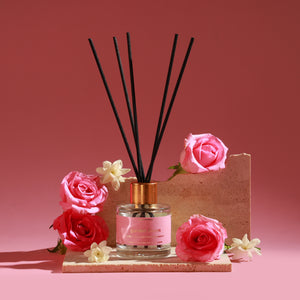

What the AC actually does: cools and dries the same air, over and over, behind a window you have shut so that the cooling is not wasted. Cold, dry and recirculated — three real changes, none of them ventilation.
The hidden variable: a fan is nearly always run with a window or a door open and an AC is not. Much of what you have credited to the fan belongs to the opening.
The fix, at ₹0: two openings on opposite walls for ten minutes before you switch the AC on, and ten minutes after you switch it off. Then run the fan on low alongside the AC and put the thermostat up a degree or two.
2. An air conditioner does change your air, and one of the changes is that there is no new air. A split unit takes the room's own air across a cold coil, drops several degrees and a good deal of moisture out of it, and returns it. It does this behind a shut window, because an open one would waste the cooling. Everything the room is producing stays in the room for the duration.
3. Look at what the window is doing in each case, because that is the real comparison. Almost everybody runs a fan with a door or a window open and almost nobody runs an AC that way. So you have not been comparing a fan with an air conditioner. You have been comparing a ventilated room with a sealed one, and the fan has been taking credit for a window it did not open.
4. The dryness is the third piece, and it is the one people never suspect. An AC removes water — several litres over a night in an Indian summer, into the pipe dripping outside your wall. Very dry air dries the throat and the front of the nose, and a dry nose is a slightly duller nose. Air that reads as flat is a short step from air that reads as stale.
5. So the fix, at ₹0: ten minutes of genuine exchange at each end of the session. Two openings on opposite or adjacent walls before you switch on, and ten minutes again after you switch off. One window is ventilation; two is exchange. Then run the ceiling fan on its lowest speed alongside the AC and put the thermostat up a degree or two — you get the skin effect and the cooling in the same room.
A portion of every order supports girl-child education through Nanhi Kali.

Why moving air feels like new air
Start with the fan, because it is the machine people are most confident they understand and the one they are most wrong about. A ceiling fan has no filter, no coil, no duct to the outside and no effect whatsoever on the temperature, humidity or composition of the air in the room. Every molecule that was in your bedroom before you switched it on is still there afterwards, in the same proportions. What it does is stir. And stirring, it turns out, produces one of the strongest sensations of freshness available indoors, for reasons that have nothing to do with the air being any better than it was.
What each machine actually changes
Six properties of the air in your room, and what a ceiling fan and a split air conditioner each do to them. The first row is the one that settles the question, and it is the row where both machines score the same. Read the last column as what your nose and your skin make of it, which is not always the same as what has actually happened.
| The property | Ceiling or table fan | Split air conditioner | What you actually perceive |
|---|---|---|---|
| New air brought in from outside ★ | None. A fan has no route to the outdoors at all | None. A split unit recirculates the room's own air across a coil | Neither machine ventilates. This is the row that explains the whole question, and both columns say none |
| Air temperature | Unchanged. The room is exactly as warm as it was | Lowered by several degrees, which is the entire point of it | The fan feels cooler than it is; the AC is cooler than it feels once you have got used to it |
| Humidity | Unchanged | Substantially lowered — several litres of water over a night, out through the drain pipe | Dry throat on waking, and a nose that reports slightly less than it would at normal humidity |
| Air speed across your skin | High, and this is the whole of the fan's effect | Low, and often only near the vent | Evaporation from skin reads as cool, and cool reads as fresh. This is the illusion at the centre of the question |
| What happens to a smell already in the room | Distributed evenly. Spread, not removed | Distributed and slightly diluted at the coil, but not removed | The fan can make a localised smell reach you more; the AC can make it arrive in the first minute of start-up |
| What the window is usually doing | Open, or at least ajar, because there is no reason to shut it | Shut, because open cooling is wasted cooling | The real difference between the two rooms, and the one nobody counts |
Three drops · cool dry air₹299Shop →  Sukoon · out of the draught₹1,899Shop →
 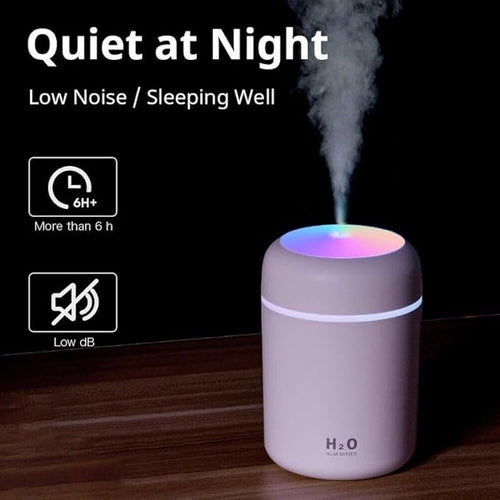 Boond · a second room₹899Shop →
Running both, and where not to stand a diffuser
Start with the free part, in the order it should be done. Ten minutes of two-sided exchange before you switch the air conditioner on, and ten minutes again after you switch it off in the morning. Two openings on opposite or adjacent walls, not one — one window is ventilation and two is exchange, and the difference between them is not small. The pre-session ten minutes matters more than people expect, because you are about to seal the room for eight hours and whatever is in it at the moment you close the door is what you will be breathing at four in the morning. The post-session ten minutes deals with everything the night produced. Then run the ceiling fan on its lowest speed at the same time as the AC, and put the thermostat up a degree or two. This is the single best comfort adjustment in an Indian bedroom and it gets recommended far too rarely: you keep the evaporative effect on your skin that made the fan feel good in the first place, the compressor works less, and the room does not get taken down to a temperature and a dryness that leaves you with a rough throat at seven. If your remote has a dry or dehumidify mode, know what it is doing before you use it overnight — it is a setting for a wet day rather than a default, and in a room that is already dry it will make the flatness worse rather than better.
Then placement, which on this particular page is where most of the practical damage gets done. Never stand a diffuser in the arc of a ceiling fan and never under an air-conditioning vent, and if you take one instruction away from this section, take that one. A cool ultrasonic mist is a fine suspension of water in room-temperature air with no heat behind it to help anything along, and a moving air stream tears it apart selectively: the light, bright, volatile end of a composition is dispersed and gone, and the heavy end is left standing on its own. The result is a scent that reads as thicker, duller and somehow cheaper than it did in the shop, and the owner responds by adding drops, which makes it heavier still. Put the machine at the edge of the room, at waist height or above, on a surface you do not mind wiping, out of the direct path of both machines and away from soft furnishings and books. Cool mist falls rather than rises, so a diffuser on the floor is scenting a rug and a diffuser on a low table is scenting the table. On the dose: three drops in an air-conditioned bedroom rather than four. Cool, dry, slow-moving air is unusually good at carrying a composition — nothing is driving the top off it and nothing is shredding it — so the same bottle reads stronger here than it does in a fan room, and the Hotel Collection is composed at three to six drops per tank with the dose counted per tank rather than per litre.
Then the constraints, the habituation and the principle. Within about a fortnight you will stop being able to smell whatever you have set up in that bedroom, because a nose reports change and discards constants — and the instinct that produces is to add drops, at exactly the moment when every visitor is still receiving the level you originally chose. One honest guest, asked to be truthful rather than polite, is worth more than any amount of adjusting. On the machines: the Sukoon at ₹1,899 gives 16–18 hours per fill on low at 30–50 ml/h against 9–12 on high, with a 2.4MHz plate, a remote, auto shut-off, a BPA-free tank and steady, 2H and 4H timers, and it arrives with three 15ml scents of your choice; the Boond at ₹899 is the 300ml version for a second room and takes the same three drops; the Megh at ₹3,499 with six litres is for genuinely open-plan space and not for a bedroom. The Hotel Collection is water-based and runs in those three machines only — never in a reed diffuser, which is a separate alcohol-free line with its own scents, and never in the waterless Vaayu at ₹11,999, which takes its own undiluted oil. Rinse the tank when you change scent and never put raw essential or carrier oils into an ultrasonic, which clogs the misting plate. And the principle: fragrance is a finishing layer on air that is already clean and moving. It will not exchange your air, and on this page neither will your fan.
The SOSA edit
In the order the work should actually be done, with everything free at the top. The first three rows are the whole answer to the question in the title and none of them costs anything. The last row prints a product we do not make, because a page about air movement is exactly where somebody starts looking for a spray.
| Do this | What it is | Why it comes here in the order | Cost |
|---|---|---|---|
| 1. Ten minutes of exchange at both ends ★ | Two openings on opposite or adjacent walls before you switch on, and again after you switch off | Neither machine brings in outside air. This is the only step on the list that does | ₹0 |
| 2. Fan on low with the AC running | Lowest speed on the ceiling fan, thermostat up a degree or two | You keep the evaporative effect on skin that made the fan feel fresh, without sealing a room at a temperature that dries you out | ₹0 |
| 3. The filter, and the room's own housekeeping | Filter washed in season; the bin, the laundry basket and any damp towel dealt with before the door is shut | A sealed room keeps whatever was in it at the moment you closed it. Start the eight hours with as little as possible | ₹0 |
| 4. Hotel Collection 15ml | Seven water-based scents at three to six drops per tank; three in a cooled room | After the air is moving, not instead of it. Cool dry air carries a composition unusually well | ₹299 |
| 5. Sukoon or Boond | 500ml for 270–320 sq ft with steady, 2H and 4H timers and three 15ml scents included, or 300ml for a smaller room | The timers are the specification that matters in a room you sleep in. Both take the same three drops | ₹1,899 / ₹899 |
| Not in the range: a room spray | SOSA makes no room or linen spray for the home. The sprays we make are car perfumes, formulated and sized for a car | Said here rather than left for you to discover, because a spray is what people reach for when a room feels flat | — |
Versailles
I like this question more than almost any other in this group, because the person asking it has made a real observation and simply has not been given the vocabulary for it. They have noticed that two rooms which ought to be the same are not, and they have described it accurately. The only thing they have got wrong is which of the two is actually fresher, and that is not their fault, because the body genuinely does report moving air as freshness and there is no way to argue with your own skin. I have stood in a great many bedrooms in June with the fan going and thought, this feels lovely, and then opened the door and understood that it had not been lovely at all.
So the correction I would make is small and it changes everything. Stop treating the fan as the fresh option and the air conditioner as the stale one, and start treating both of them as machines that do nothing about air exchange, because that is what they are. Then put twenty minutes of genuine exchange into the day — ten before, ten after — and run them together with the thermostat a degree higher. The room will be cool, it will be comfortable, it will not be bone dry and it will actually have been aired, which is the thing you were looking for all along. Only after that is a fragrance worth buying, and in a cool dry room it is worth less money than you think: three drops, on a timer, of something dry.
Everything is made and supported from Pune, and a part of every order funds girl-child education through Nanhi Kali. You get a home that smells like somewhere you chose; a girl gets a classroom. That equation has always felt right to me.
Frequently asked questions
- Why an AC room smells stale when you wake up — the two causes hiding behind one smell.
- Why the smell comes back every time you close the room — what a shut door actually does.
- Does an ultrasonic diffuser in an air-conditioned room make the air damp? — the honest arithmetic on the dryness this page describes.
- Why your air-conditioned room smells stale, and what actually fixes it — the complete guide to this group.
- Brand: the SOSA founder story.
Facts verified August 2026: Diagnostic facts used in this guide: a closed room accumulates what it cannot exchange, so cross-ventilation needs two openings rather than one; a drain's U-bend water seal evaporates in roughly two to four weeks of disuse and then admits sewer gas, which is corrected by pouring water down the drain; microbial growth in fabric and on surfaces accelerates above about 60% relative humidity, and Indian monsoon indoor humidity commonly runs 80–95%, which is the one situation where ventilating on a wet day can import moisture rather than remove it; an air-conditioner's cold, wet evaporator coil and filter grow biofilm that is blown into the room on start-up; textiles adsorb cooking aerosol and body oils and re-release them for weeks; and olfactory adaptation makes a constant household smell undetectable to its residents within about a fortnight while visitors still perceive it. Timings: a scented candle scents a normal room in roughly 15–20 minutes, a Sukoon ultrasonic diffuser reaches a steady level in about 20 minutes from cold, and a reed diffuser needs roughly 24–72 hours. SOSA products and prices: Sukoon 500ml ₹1,899 (270–320 sq ft, 16–18h on low, 9–12h high, 30–50 ml/h, 2.4MHz cool mist, remote, steady/2H/4H timers, BPA-free, auto shut-off, includes three 15ml Hotel Collection scents of your choice); Boond 300ml ₹899; Megh 6-litre ₹3,499; waterless Vaayu ₹11,999 (up to 1000m³); Aangan ₹25,999. Hotel Collection water-based fragrance 15ml ₹299, 100ml ₹999, 300ml ₹1,799, Pack of 7 at 15ml ₹1,799; dose 3–6 drops per tank. Reed diffusers (separate alcohol-free line): Morning Freshness from ₹749, Garden Bloom and Evening Calm from ₹799, Fresh Brew and Mountain Breeze from ₹849; 130ml from ₹1,249; duos from ₹1,498; 300ml refills ₹2,399. Scented candles: Bookshop 80g ₹379, Amber Rose 130g ₹599 and 220g ₹799, Smoked Oudh 130g ₹449, ceramic jar candles ₹949, Pure Calm wax melt set ₹854. Free shipping above ₹499. SOSA does not make a room or linen spray for the home. The Hotel Collection scents are SOSA's own interpretations; SOSA is not affiliated with or endorsed by any hotel brand. Prices subject to change — see the live product pages.