
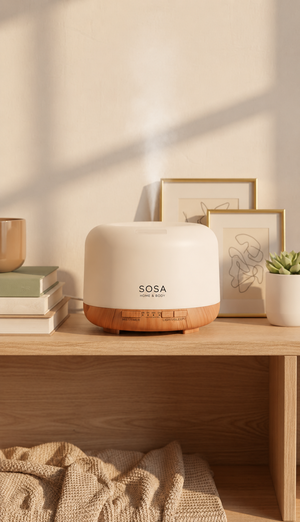




Why the first day is the worst: the piece has been sealed in plastic through manufacture, storage and transport, which traps everything the materials released in that time. The first unwrapping is the most concentrated moment there will ever be, and the trajectory from there is always downward.
How long: strongest in the first few days, much reduced within two to four weeks, largely gone within a couple of months.
The free accelerants: unwrap outdoors or on a balcony if you can, open every drawer and door and leave them open, keep the room ventilated, and give a new mattress a day of air before you put bedding on it.
2. And then all of it is wrapped in plastic for weeks. Furniture is sheeted, bagged or shrink-wrapped through manufacture, warehousing and transport, so everything those materials released in that time has been sitting against the surface with nowhere to go. That is why the smell is sharpest in the first seconds after you cut the wrapping and why it is never that strong again.
3. The trajectory is always downward, and usually faster than people expect. Strongest in the first few days, noticeably reduced within two to four weeks, and largely gone within a couple of months. If it is fading, it is behaving normally. There is nothing to fix.
4. Unwrap outdoors or on a balcony if the piece and the building allow it. Doing the unwrapping in open air rather than in a closed bedroom moves the single most concentrated moment of this whole process outside the flat, which costs nothing and makes a genuine difference to the first week.
5. Then open everything and leave it open. Every drawer pulled out, every door standing back, the wardrobe shutters wedged, the shoe cabinet open — for days rather than an afternoon — with the room cross-ventilated around them.
6. And air a new mattress for a day before bedding goes on it. A mattress is the largest single piece of foam most people own and you will be lying on it for eight hours a night. One day with the windows open and nothing covering it is the cheapest improvement available.
A portion of every order supports girl-child education through Nanhi Kali.

What is actually in a new piece of furniture
It helps enormously to know what you are smelling, partly because the vague version of this worry is far more alarming than the specific one. A typical new wardrobe, bed or chest of drawers is three or four different materials, each releasing something different on its own schedule, and then a plastic wrap that has been holding all of it against the surface since the factory. Named individually they are ordinary and well understood; unnamed and combined they are the thing people describe as a strange chemical smell they cannot place. So here they are, in the order they contribute.
Material by material, with real timings
Different parts of the same piece are on different clocks, which is why furniture seems to almost stop smelling and then surprise you when you open a drawer. The table separates them, with what each one actually is and what shortens it. Timings assume the piece is unwrapped, open and in a ventilated room; the same piece shut in a closed guest bedroom can take two or three times as long.
| Material | Where it is | What it is doing | How long | What helps |
|---|---|---|---|---|
| Engineered board | MDF, particleboard, plywood — wardrobe carcasses, drawer boxes, back panels | Resin adhesive still curing, released from every cut edge and unlaminated interior face | Two to eight weeks, longest in enclosed interiors | Doors and drawers open continuously for days, room cross-ventilated |
| Polyurethane foam | Seat cushions, headboards, chair pads, mattresses | Off-gassing as it airs after being compressed and sealed | Strongest for a few days, much reduced in two to four weeks | Unwrap and leave uncovered; a mattress wants a full day before bedding |
| Lacquer, polish, varnish | Solid wood and veneered surfaces, table tops, bed frames | A coating curing exactly as paint does — dry to the touch, hardening underneath | Two to six weeks, sharpest in the first ten days | Ventilation and warmth; do not cover the surface with cloth or plastic |
| Plastic wrapping | Around all of it, since the factory | Trapping everything the other three released in transit and storage | Ends the moment you cut it — this is the peak | Unwrap outdoors or on a balcony, and take the wrapping out of the flat |
| Fabric and leather covers | Upholstery, headboard fabric, leather finishes | Residual finishing and treatment agents airing off the surface | One to four weeks | Vacuum with an upholstery head, and keep it out of direct sun while it airs |
| The enclosed interior itself | Inside a shut wardrobe or chest of drawers | Everything above, concentrating in a cubic metre of still air — and then transferring onto clothes | Indefinite while the doors stay shut | Open it, empty it, and store nothing inside until it has stopped |

Unwrapping, open drawers, and the wardrobe that blames your clothes
Start with the delivery itself, because there is a twenty-minute window here that decides how the next fortnight goes and almost everybody spends it badly. Unwrap outside the flat if you possibly can — on the balcony, in the corridor, in the service area, in the parking bay — and carry the piece in bare. The wrapping has been holding weeks of accumulated release against the surface, and cutting it indoors puts all of that into one room in one go, usually the bedroom, usually in the evening, usually with the windows shut because the delivery crew has just left. Doing it outdoors costs nothing and removes the single sharpest moment in this entire process from your home. Then take the wrapping out of the flat immediately rather than folding it into the bin. Plastic sheeting that has been in contact with curing lacquer for a month is carrying its own dose and it will sit in your kitchen bin releasing it. Then before anything is arranged or admired, open two windows on opposite or adjacent walls and leave them open for at least twenty minutes with the piece in the room. If the delivery arrives in the middle of a hot afternoon and every instinct says to shut the flat and put the AC on, do the twenty minutes first — a sealed cool room is the slowest possible environment for every material in the previous section, and you will pay for the comfort in weeks rather than hours.
Then the daily version, which is duller and matters more. Open every door and every drawer on the new piece and leave them open for days rather than for an afternoon. This is the instruction people nod at and then quietly ignore because a wardrobe with its shutters wedged back looks like a flat that has not been finished, and I understand the reluctance. But the release rate from engineered board is roughly constant and it is the removal that you control, so a closed cupboard is not curing more slowly for some chemical reason — it is simply keeping everything it produces. Pull the drawers out a few inches so the insides and the undersides can breathe, take the shelves out if they lift, open the back of the shoe cabinet, and run a fan across the front of the whole thing for an hour a day if you have one. And treat the mattress as a separate project. A new mattress arrives compressed or sealed, it is the largest piece of foam in the flat, and unlike a wardrobe you will have your face eight inches from it for eight hours a night. Unwrap it, stand it or lay it uncovered in a ventilated room, and give it a full day before the protector and the bedding go on. One night on the old bed or the sofa is a small price, and it is the difference between a bedroom that smells new for two days and one that smells new for a month.
Then the case that produces most of the confusion in this category, and it is worth flagging because people reliably blame the wrong thing. Put clothes into a new wardrobe in the first fortnight and the wardrobe will hand its smell to the clothes. The mechanism is unremarkable: an enclosed box with several square metres of freshly cut engineered board facing into it builds a concentration that a room never reaches, textiles are absorbent and sit in that concentration for days at a time, and they come out carrying it. What happens next is that a perfectly good shirt smells faintly odd, and the owner concludes there is something wrong with their laundry, their detergent, their washing machine or their drying — and starts rewashing everything, which does not help, because the shirt goes straight back into the box afterwards. The fix is the box, not the clothes. Empty the wardrobe, leave it standing open for a week with the room aired, wash or sun what has already been in there for two hours, and only then restock it. Once the furniture has genuinely settled — and only then — a scent becomes worth having, and this is the one commercial note on the page. A reed diffuser from ₹749 in the alcohol-free line holds one level for months with no electricity and needs 24 to 72 hours to establish. The Sukoon at ₹1,899 reaches a steady level in about twenty minutes, gives 16–18 hours per fill on low at 30–50 ml/h with steady, 2H and 4H timers, and includes three 15ml Hotel Collection scents of your choice; a Boond at ₹899 does one room. What I would not do is put anything inside the wardrobe itself while it is still off-gassing, and the water-based Hotel Collection goes in the Sukoon, Boond and Megh only — at three to six drops per tank, never in a reed, never in the waterless Vaayu — while SOSA makes no room or linen spray for the home at all.
The SOSA edit
In order for somebody who has just had furniture delivered. The first four rows are the whole answer and all of them are free; the fifth is what becomes worth buying once the piece has stopped changing, which for most furniture is somewhere between three weeks and two months after delivery.
| Do | What it is | When it earns its place | Price |
|---|---|---|---|
| 1. Unwrap outside the flat | Cutting the plastic on a balcony, in a corridor or in the parking, and carrying the piece in bare | At delivery. The wrapping holds weeks of accumulated release, and unwrapping is the most concentrated moment there will ever be | ₹0 |
| 2. Open every door and drawer | Shutters wedged back, drawers pulled out, shelves lifted, and left that way for days | Immediately and continuously. Enclosed interiors are where engineered board releases most and clears slowest | ₹0 |
| 3. Cross-ventilate the room | Two openings on opposite or adjacent walls for twenty minutes, twice a day | Every day of the first fortnight, and instead of sealing the room and running the AC around the new piece | ₹0 |
| 4. Air a new mattress for a day | Unwrapped, uncovered, in a ventilated room, before the protector and bedding go on | Before the first night. It is the largest piece of foam you own and the one you spend eight hours against | ₹0 |
| 5. Boond, Sukoon or a reed | 300ml or 500ml ultrasonic with three 15ml scents included, or one level for months with no electricity | Once the furniture has settled. Test a scent at ₹299 for 15ml before committing to a 300ml refill at ₹1,799 | ₹899 / ₹1,899 / from ₹749 |
| Not the answer: scenting inside the wardrobe | Anything fragranced placed in an enclosed box that is still off-gassing | Never in the first weeks. You will fragrance the off-gassing rather than replace it, and your clothes will carry both | — |

Versailles
I get this message most often about wardrobes, and almost always in the same shape: the furniture is lovely, the room smells of chemistry, and is this safe. What I try to do first is take the vagueness out of it, because a nameless chemical smell is far more frightening than three named ordinary ones. It is adhesive in engineered board finishing its cure, foam airing after being compressed, and lacquer hardening on wood — three processes that were always going to happen and were simply held under a plastic sheet until you cut it.
The part I most want people to hear is that the graph only goes downwards, and quickly. The first unwrapping is the strongest this piece will ever smell. Two to four weeks takes most of it, a couple of months takes nearly all of it, and none of that requires anything you can buy. Open the doors, pull the drawers, air the room and give a new mattress a day to itself. And do not put your clothes into a new wardrobe for a fortnight — that is the mistake that turns a furniture problem into a laundry problem, and I have watched people rewash the same shirts three times before anybody thought to blame the cupboard. When it has all settled, come and choose a scent for the room. It will smell of what you chose rather than of what the factory left behind.
Everything is made and supported from Pune, and a part of every order funds girl-child education through Nanhi Kali. You get a home that smells like somewhere you chose; a girl gets a classroom. That equation has always felt right to me.
Frequently asked questions
- Why a new sofa smells of chemicals — the worst combination of these materials, in one object.
- Why a new flat still smells of paint — curing against drying, and why cupboards take longest.
- Why clothes stored for months smell different — what an enclosed cupboard does to textiles over time.
- How long the new-flat smell takes to go away — every source in the flat, with honest durations.
- Brand: the SOSA founder story.
Facts verified August 2026: Diagnostic facts used in this guide: a closed room accumulates what it cannot exchange, so cross-ventilation needs two openings rather than one; a drain's U-bend water seal evaporates in roughly two to four weeks of disuse and then admits sewer gas, which is corrected by pouring water down the drain; microbial growth in fabric and on surfaces accelerates above about 60% relative humidity, and Indian monsoon indoor humidity commonly runs 80–95%, which is the one situation where ventilating on a wet day can import moisture rather than remove it; an air-conditioner's cold, wet evaporator coil and filter grow biofilm that is blown into the room on start-up; textiles adsorb cooking aerosol and body oils and re-release them for weeks; and olfactory adaptation makes a constant household smell undetectable to its residents within about a fortnight while visitors still perceive it. Timings: a scented candle scents a normal room in roughly 15–20 minutes, a Sukoon ultrasonic diffuser reaches a steady level in about 20 minutes from cold, and a reed diffuser needs roughly 24–72 hours. SOSA products and prices: Sukoon 500ml ₹1,899 (270–320 sq ft, 16–18h on low, 9–12h high, 30–50 ml/h, 2.4MHz cool mist, remote, steady/2H/4H timers, BPA-free, auto shut-off, includes three 15ml Hotel Collection scents of your choice); Boond 300ml ₹899; Megh 6-litre ₹3,499; waterless Vaayu ₹11,999 (up to 1000m³); Aangan ₹25,999. Hotel Collection water-based fragrance 15ml ₹299, 100ml ₹999, 300ml ₹1,799, Pack of 7 at 15ml ₹1,799; dose 3–6 drops per tank. Reed diffusers (separate alcohol-free line): Morning Freshness from ₹749, Garden Bloom and Evening Calm from ₹799, Fresh Brew and Mountain Breeze from ₹849; 130ml from ₹1,249; duos from ₹1,498; 300ml refills ₹2,399. Scented candles: Bookshop 80g ₹379, Amber Rose 130g ₹599 and 220g ₹799, Smoked Oudh 130g ₹449, ceramic jar candles ₹949, Pure Calm wax melt set ₹854. Free shipping above ₹499. SOSA does not make a room or linen spray for the home. The Hotel Collection scents are SOSA's own interpretations; SOSA is not affiliated with or endorsed by any hotel brand. Prices subject to change — see the live product pages.