




The second: there is no make-up air path. If the door seals to the floor, the fan is trying to pull air out of a sealed box and its real throughput collapses. Leave the door ajar.
The free fix that beats the fan: a squeegee on the walls and glass removes more water in thirty seconds than the extractor does in ten minutes.
Do not buy: a cool-mist ultrasonic diffuser. It adds 30–50 ml of water an hour to a room you are trying to dry.
2. Because the fan may have nothing to pull. Extraction is an exchange: every cubic metre leaving has to be replaced by a cubic metre coming in. If the door is a close fit with a threshold under it and no undercut, the fan is working against a sealed box, and its real throughput falls far below the number on the box. Leave the door ajar and the same fan does noticeably more.
3. Because it is dirty. A grille furred with lint and blades carrying a felt of dust can halve what a fan actually moves, and this happens gradually enough that nobody notices the day it stopped working. Ten minutes with a screwdriver, a brush and soapy water is the whole repair.
4. Because thirty seconds with a squeegee removes more water than the fan does in ten minutes. The film of water left on tiled walls and a glass shower screen is the single largest reservoir in the room after the towels. Wipe it down into the drain and the fan has a far smaller job to do.
5. And in monsoon, because there is a ceiling on what any fan can achieve. An extractor exchanges inside air for outside air. When outside air is sitting at 90% relative humidity, that exchange helps far less than it does in January, and no amount of running it changes the physics.
6. Do not put a cool-mist ultrasonic diffuser in this room. It adds 30 to 50 millilitres of water an hour to the air, which is the opposite of the job. Once the room is dry, a reed diffuser from ₹749 adds nothing to the air but scent.
A portion of every order supports girl-child education through Nanhi Kali.

Having a fan and using a fan are different things
This is the room where equipment gives people the most false confidence, and I understand why. There is a machine in the ceiling, it makes a noise, and a noise sounds like work being done. But an extractor is not a dehumidifier and it is not a deodoriser. It is a pump that moves a certain volume of air out of a space per hour, and everything about whether your bathroom smells damp comes down to how much air it genuinely moves, for how long, and what it is replacing that air with. Those three questions have six common answers between them, and only one of the six has anything to do with buying a better fan. The rest are habits, dust and a door.
The six reasons a working fan does not work
Every one of these is a bathroom with a functioning extractor in it that still smells damp. The second column is what you would notice, the third is the check, and the fourth is what it costs to put right. Five of the six are free. Work down the list in order rather than skipping to the one that sounds most interesting, because the first row is genuinely the answer most of the time.
| What is wrong | How it shows up | The check | The fix | Cost |
|---|---|---|---|---|
| 1. Switched off too early ★ | Mirror still fogged when you come back in; the room smells of the last shower rather than of nothing | Do you turn it off as you leave, or is it wired to the light | Run it fifteen to twenty minutes after every shower. Leave the light on if they share a switch | ₹0 |
| 2. No make-up air path | The fan sounds normal but the room clears slowly with the door shut and fast with it open | Run it with the door closed, then ajar, and compare how quickly the mirror clears | A 10–15mm undercut on the door, or simply leave it ajar while the fan runs on | ₹0 |
| 3. Dust on grille and blades | Grey felt visible in the grille slots; performance that declined over years rather than overnight | Tissue-paper test at the grille, then take the cover off and look at the blades | Cover washed in soapy water, blades brushed, both dried fully. Twice a year | ₹0 |
| 4. Blocked, kinked or shared duct | Clean fan, correct habits, and still nothing — occasionally somebody else's smell arriving | Tissue paper does not hold at the grille even when the fan and grille are clean | A plumber or electrician to trace the run; a shared shaft is a building matter, not a flat one | Trade call |
| 5. Undersized for the room | Everything above is correct and the mirror is still fogged twenty minutes later | Only after 1 to 4 have been ruled out, never before | The one situation on this page where replacing the fan is the honest answer | New fan |
| 6. Monsoon | The same bathroom is fine in January and damp from June to September regardless of what you do | Compare the room's behaviour across seasons rather than across days | Remove water as liquid: squeegee, towels dried elsewhere, mat hung up rather than left flat | ₹0 |
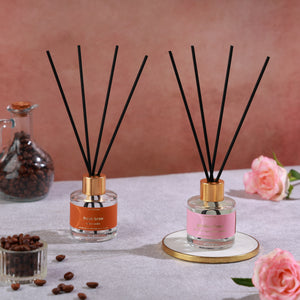
 Adds no water · Morning Freshness₹749Shop →
 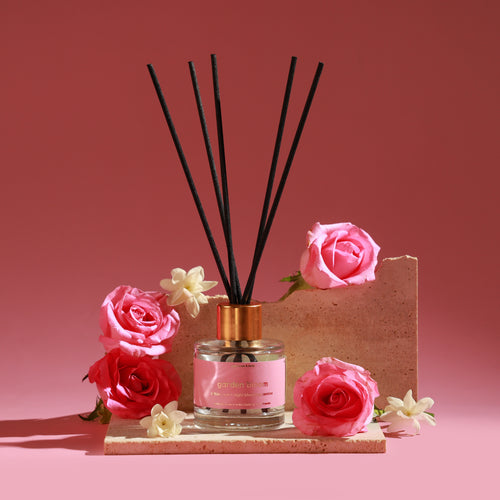 Five scents · no socket neededfrom ₹749Shop →
 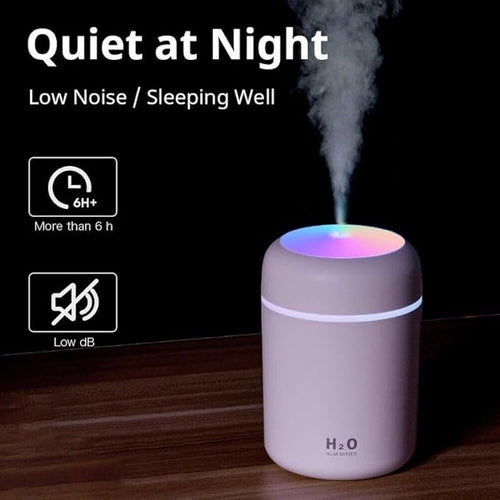 Boond · for the room outside₹899Shop →
The thirty seconds that beat the fan
Start with the squeegee, because it is the piece of advice from this page that people write back about. After a shower, the tiled walls and the glass screen are carrying a continuous film of water, and across the wetted area of an ordinary enclosure that film adds up to a genuinely large quantity — far more than the fan will carry out as vapour in the time you are prepared to leave it running. A rubber squeegee costs very little, lives on a hook inside the enclosure, and takes about thirty seconds to run down the glass and the wall tiles while you are still standing there. Every millilitre it sends down the drain as liquid is a millilitre the fan never has to move as vapour, and the difference in how the room feels an hour later is not subtle. The principle underneath it is the one to take away: in a wet room, removing water as liquid is enormously more efficient than removing it as vapour, and it is the only approach that still works in July when the fan's ceiling has come down. The same logic applies to everything else in the room. Wring the bath mat and hang it over the rail rather than leaving it flat on the floor, where it is a sheet of wet cotton sitting on cold stone with no air under it. Shake out the shower curtain so it hangs open rather than bunched, because a bunched curtain is a set of permanently wet folds. Take towels out of this room to dry if you have anywhere at all to put them, and if you do not, spread them wide rather than folding them in half over a narrow rail.
Then the running order for the fan itself, which is worth setting out as a routine because none of it is intuitive. Switch it on before you start rather than as you get in, so the room is already exchanging when the steam arrives. Leave the door slightly open while you shower if the household allows it, and definitely leave it ajar afterwards. Squeegee before you leave. Then let the fan run for fifteen to twenty minutes with the door ajar and the room empty. That last stretch is the part that does the work, and it is the part everybody skips. Twice a year, take the cover off and wash it. Once, at the beginning, do the tissue-paper test so you know whether you are dealing with a habit problem or a hardware problem, because the two have completely different answers and a great many people spend money on the second when they had the first. And while you are in there, deal with the item this group of articles keeps coming back to: pour a mug of water down the floor drain if it has been unused, because a dry trap produces a smell people very often file under damp when it is nothing of the sort. The full explanation of the trap seal is here, and it takes five minutes to rule in or out. Damp and drain are the two commonest bathroom smells and they are frequently confused, so it is worth being certain which one you are actually chasing before you spend a fortnight on the wrong fix.
Then fragrance, which comes last and comes with one refusal. The machine most people reach for when a bathroom smells damp is a cool-mist ultrasonic diffuser, and in this room it is the wrong purchase. It works by putting 30 to 50 millilitres of water an hour into the air. You would be running an extractor to take water out and a diffuser to put water in, in a space of eight or nine cubic metres, and I would rather lose the sale than sell you that. The Sukoon at ₹1,899 and the Boond at ₹899 are very good machines and they belong in the bedroom or the passage outside, at three drops of the water-based Hotel Collection per tank — the dose is per tank rather than per litre, since you are scenting the mist rather than the water. For the bathroom itself, the formats that add nothing to the air are reeds and candles. A reed diffuser from the separate alcohol-free line — Morning Freshness at ₹749, Garden Bloom and Evening Calm at ₹799, Fresh Brew and Mountain Breeze at ₹849, 130ml from ₹1,249 and 300ml refills at ₹2,399 — needs no socket in a wet room, has nothing to switch on and holds one level for months. Give it 24 to 72 hours before you judge it; it is the wrong buy for a deadline and the right one for a habit. A candle such as the Bookshop candle at ₹379 puts scent into a room in fifteen to twenty minutes and must be attended and put out, which makes it a poor fit for a room you leave. And the rule that governs the whole page: fragrance is a finishing layer on air that is already dry and moving. Scent on top of damp gives you two smells rather than one, and the damp one wins. SOSA does not make a room or linen spray for the home; the sprays in the range are car perfumes.
The SOSA edit
In the order I would actually do it, with the costs printed. The first four rows are free and between them they solve most damp bathrooms in this country. Nothing with a price on it appears until the room is dry, and the last row is the product this page exists partly to talk you out of.
| Do this | What it is | Why it comes here in the order | Cost |
|---|---|---|---|
| 1. Fifteen to twenty minutes of run-on ★ | The fan left running after you leave the room, door ajar | The moisture load peaks after the shower, not during it. This is the single largest free gain available | ₹0 |
| 2. A squeegee and a hung-up mat | Thirty seconds down the glass and wall tiles; the bath mat over the rail rather than on the floor | Water removed as liquid rather than as vapour, which is the only method that still works in July | ₹0 |
| 3. Grille and blades washed | Cover off, soapy water, blades brushed, dried fully, twice a year | Dust builds gradually enough that nobody notices the day the fan stopped moving much air | ₹0 |
| 4. A mug of water down the floor drain | The trap seal topped up, in case what you are smelling is not damp at all | Damp and drain get confused constantly. Five minutes to rule one of them out | ₹0 |
| 5. A reed diffuser · Morning Freshness | Malabar lemon, peppermint and eucalyptus, alcohol-free, no socket, no water added | Only once the room is dry. It adds nothing to the air but scent and holds one level for months | ₹749 |
| Not for this room: a cool-mist ultrasonic | The Sukoon and Boond add 30–50 ml of water an hour to the air | They are good machines in the wrong place. Put one in the bedroom or corridor outside instead | — |
Versailles
I have had this conversation in a lot of flats, and it almost always ends at the light switch. Somebody shows me the fan, tells me it runs every time, and then demonstrates by switching it on, showering in their imagination, and switching it off as they walk out of the room. That is the whole fault, and it is such an ordinary habit that it feels rude to point at it. The steam you can see is not the problem. The problem is the water still sitting on the glass, the tiles, the mat and the towels for the next twenty minutes, and the fan needs to be there while that is happening rather than while you are.
The other thing I would say is that the squeegee is the least glamorous recommendation on this website and the one I am most confident about. Thirty seconds of wiping moves more water out of that room than the extractor manages in ten minutes, and unlike the fan it works just as well on a wet day in August. Once the room has stopped being damp — and you will know, because the mirror clears and walking in stops telling you what happened that morning — then a reed by the basin at ₹749 is a good idea. Not before. A lemon and eucalyptus scent over a bathroom that is still wet gives you a wet bathroom with something citrus in front of it, and everybody who walks in will smell both.
Everything is made and supported from Pune, and a part of every order funds girl-child education through Nanhi Kali. You get a home that smells like somewhere you chose; a girl gets a classroom. That equation has always felt right to me.
Frequently asked questions
- Why your bathroom smells even though you clean it every day — the places a cloth cannot reach.
- Why bath towels make the whole bathroom smell — the largest wet object in the room, and the arithmetic.
- Should I use an ultrasonic diffuser in a room that is already damp? — the same refusal, argued in full.
- Why your bathroom smells, and the five things to check before buying anything — the pillar guide.
- Brand: the SOSA founder story.
Facts verified August 2026: Diagnostic facts used in this guide: a closed room accumulates what it cannot exchange, so cross-ventilation needs two openings rather than one; a drain's U-bend water seal evaporates in roughly two to four weeks of disuse and then admits sewer gas, which is corrected by pouring water down the drain; microbial growth in fabric and on surfaces accelerates above about 60% relative humidity, and Indian monsoon indoor humidity commonly runs 80–95%, which is the one situation where ventilating on a wet day can import moisture rather than remove it; an air-conditioner's cold, wet evaporator coil and filter grow biofilm that is blown into the room on start-up; textiles adsorb cooking aerosol and body oils and re-release them for weeks; and olfactory adaptation makes a constant household smell undetectable to its residents within about a fortnight while visitors still perceive it. Timings: a scented candle scents a normal room in roughly 15–20 minutes, a Sukoon ultrasonic diffuser reaches a steady level in about 20 minutes from cold, and a reed diffuser needs roughly 24–72 hours. SOSA products and prices: Sukoon 500ml ₹1,899 (270–320 sq ft, 16–18h on low, 9–12h high, 30–50 ml/h, 2.4MHz cool mist, remote, steady/2H/4H timers, BPA-free, auto shut-off, includes three 15ml Hotel Collection scents of your choice); Boond 300ml ₹899; Megh 6-litre ₹3,499; waterless Vaayu ₹11,999 (up to 1000m³); Aangan ₹25,999. Hotel Collection water-based fragrance 15ml ₹299, 100ml ₹999, 300ml ₹1,799, Pack of 7 at 15ml ₹1,799; dose 3–6 drops per tank. Reed diffusers (separate alcohol-free line): Morning Freshness from ₹749, Garden Bloom and Evening Calm from ₹799, Fresh Brew and Mountain Breeze from ₹849; 130ml from ₹1,249; duos from ₹1,498; 300ml refills ₹2,399. Scented candles: Bookshop 80g ₹379, Amber Rose 130g ₹599 and 220g ₹799, Smoked Oudh 130g ₹449, ceramic jar candles ₹949, Pure Calm wax melt set ₹854. Free shipping above ₹499. SOSA does not make a room or linen spray for the home. The Hotel Collection scents are SOSA's own interpretations; SOSA is not affiliated with or endorsed by any hotel brand. Prices subject to change — see the live product pages.