


I Have Reed Diffusers in a 3,000 Sq Ft Listing but Buyers Barely Notice Them — What Should I Change?

I Have Reed Diffusers in a 3,000 Sq Ft Listing but Buyers Barely Notice Them — What Should I Change?

★ You are spraying before every viewing · here is what a spray can and cannot doVaayu ₹11,999 · Aangan ₹25,999 · Sukoon ₹1,899 · free shipping above ₹499A portion funds girl-child education
★ SOSA · property viewings & premium presentation
A spray peaks in a minute and is gone in thirty. A reed takes two days to arrive. Neither is built for a scheduled appointment in a large empty flat
★ ★ ★ ★ ★
★★★★★
"Sprayed before every viewing for three years. Strong at the door, gone by the time we reached the bedrooms. That gap was the whole problem and I had never named it."
Kunal Marwah Premium resale, Mumbai
Spray → machine
★★★★★
"Reeds in a 3,000 sq ft flat did nothing and I assumed they were bad reeds. They were the wrong format for the volume."
Sarita Pillai Large apartments, Chennai
Format, not quality
★★★★★
"Asked for a SOSA room spray and was told they do not make one for the home, and why. I respected that more than a sale."
Vivek Sharma Luxury broker, Delhi
Told plainly
★★★★★
"Back-to-back viewings on a Saturday. The machine holds a level for six hours; a spray needed redoing between each one."
Ishita Chaudhary Weekend viewings, Gurgaon
Six viewings, one setting
★★★★★
"Waterless was the deciding factor. No tank to empty, nothing to spill in somebody else's flat, no residue on stone."
Prakash Nambiar Marble interiors, Kochi
Nothing to spill
★★★★★
"I still keep reeds in the two listings that are shown constantly. Different job, and that was explained rather than upsold."
Rhea Kapadia Long-running listings, Pune
Reeds still have a role
★★★★★
"Sprayed before every viewing for three years. Strong at the door, gone by the time we reached the bedrooms. That gap was the whole problem and I had never named it."
Kunal Marwah Premium resale, Mumbai
Spray → machine
★★★★★
"Reeds in a 3,000 sq ft flat did nothing and I assumed they were bad reeds. They were the wrong format for the volume."
Sarita Pillai Large apartments, Chennai
Format, not quality
★★★★★
"Asked for a SOSA room spray and was told they do not make one for the home, and why. I respected that more than a sale."
Vivek Sharma Luxury broker, Delhi
Told plainly
★★★★★
"Back-to-back viewings on a Saturday. The machine holds a level for six hours; a spray needed redoing between each one."
Ishita Chaudhary Weekend viewings, Gurgaon
Six viewings, one setting
★★★★★
"Waterless was the deciding factor. No tank to empty, nothing to spill in somebody else's flat, no residue on stone."
Prakash Nambiar Marble interiors, Kochi
Nothing to spill
★★★★★
"I still keep reeds in the two listings that are shown constantly. Different job, and that was explained rather than upsold."
Rhea Kapadia Long-running listings, Pune
Reeds still have a role
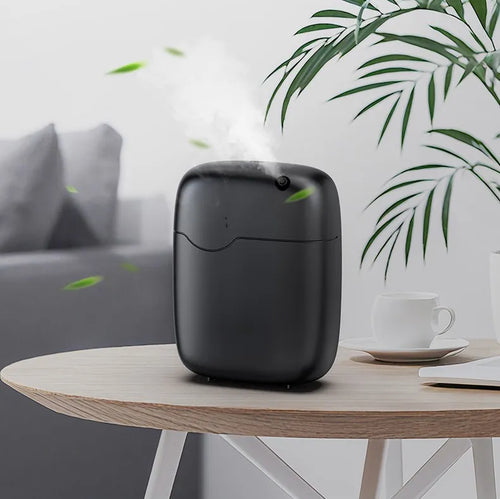
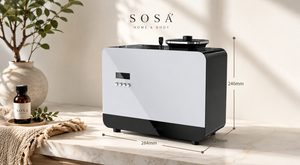
Vaayu: waterless cold-air nebulisation · no water, no heat, no dampness · under 38 dB 1000 m³ (≈2,000–3,000 sq ft) · 400ml tank ≈75 days · app + 1h/4h/8h/24h timers · key-lock 0.9 kg and smaller than a shoebox — one machine can serve a whole portfolio of listings


Founder Diaries · Property Viewings · Sprays, Reeds & Professional Machines
By Sonal Sahani · ISIPCA Versailles 11 min read Updated September 2026
There are five reasons a reed diffuser goes unnoticed in a large flat and only one of them is a reason to buy something more expensive. I would like you to work through the other four first, because they are free to test, three of them are fixed for under ₹900, and the most common of the five has nothing to do with the size of your listing at all. A 3,000 sq ft apartment is about 840 cubic metres of air, which is genuinely a lot to ask of a bottle — but an empty bottle with clogged sticks in it would be going unnoticed in a studio too, and you cannot tell which problem you have from the doorway.
Quick answers — read this first
Check five things, in this order: is the bottle empty; are the reeds saturated and no longer wicking; is it standing in dead air; is it near a vent, a window or a fan; and only then, is the volume simply too large.

The cheap fix, which works more often than you would think: a fresh reed diffuser with new reeds, placed at waist height in moving air, at ₹749 to ₹849. Allow 24 to 72 hours before judging it.

When it is genuinely volume: six bottles at ₹849 is ₹5,094 of passive evaporation and still no adjustment. That is the point at which the Vaayu at ₹11,999, rated to 1000 m³ with an intensity you set, becomes the sensible purchase rather than the extravagant one.
The short answer
Short answer: diagnose before you replace. An exhausted bottle and saturated reeds account for most cases of a diffuser that has quietly stopped working, and both are invisible from across a room. Pick the bottle up, look at the fill line, pull a reed out and see how far up it is wet. If the answer is disappointing, ₹749 to ₹849 buys a fresh one and you have lost nothing.
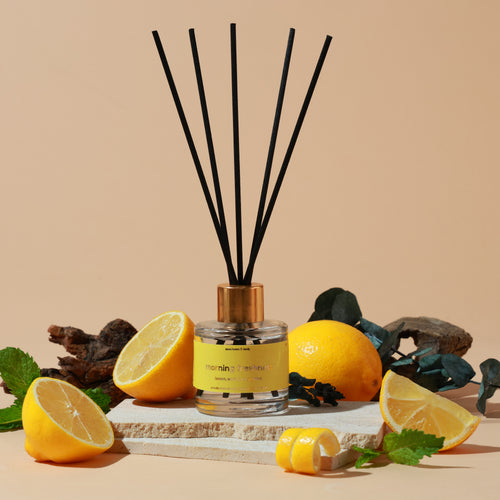
The pick: fresh reeds first — Morning Freshness at ₹749 is the cleanest of the line for an entrance hall and Mountain Breeze at ₹849 is pine, sage and cedar for a property that runs cool. If the flat is genuinely 840 m³ and you need a stated level for a scheduled appointment, the Vaayu at ₹11,999 is the machine, because it is the only product here whose output you can set against the volume.
Shop: reed diffusers from ₹749, with 130ml from ₹1,249 and 300ml refills at ₹2,399. The Vaayu is ₹11,999 for up to 1000 m³, waterless, with a 400ml tank lasting about 75 days, app and timer control, under-38dB running, auto-stop and a key-lock at 0.9 kg. The Sukoon is ₹1,899 for a single furnished room. Free shipping above ₹499.
Straight answer
My reed diffusers are barely noticeable in a 3,000 sq ft listing — what should I actually change?
1. Pick the bottle up and look at it before you conclude anything. A 50ml reed diffuser in a large, airy, frequently opened flat empties considerably faster than a box suggests, because evaporation rises with air movement and with warmth, and a big flat supplies both. Half the diffusers I am asked about turn out to have an inch of liquid left in them.

2. Pull one reed out and see how far up it is wet. If the wet line stops an inch or so above the neck of the bottle, the reed has saturated — the capillary channels have loaded with the heavier, less volatile part of the fragrance and dust from the room, and liquid is no longer climbing to the exposed length. That is a real and very common failure, and flipping them only partly fixes it.

3. Look at where it is standing. A reed diffuser has no fan, so it can only reach the air that comes to it. In a corner, behind a console, inside a shelf recess or below the line of a sofa back, almost nothing moves and the fragrance forms a small pocket around the bottle that a walking buyer never passes through.

4. Then check the opposite problem — too much air rather than none. Directly under a split AC, in the path of a ceiling fan or on a sill by an open window, the lightest and most recognisable part of the composition is stripped continuously as it evaporates, and what is left in the room is the dull heavy end with none of the lift.

5. Only when all four are ruled out is the answer volume, and then it is arithmetic rather than opinion. Six bottles at ₹849 is ₹5,094, still passive, still unadjustable and still needing 24 to 72 hours to establish. At that point the Vaayu at ₹11,999 — waterless, rated to 1000 m³, with an intensity you set and timers that have the flat ready before you arrive — is the cheaper way of thinking about it.

A portion of every order supports girl-child education through Nanhi Kali.

TL;DR: check the reeds before you replace the format. An exhausted bottle, saturated sticks that have stopped wicking, a dead-air corner and a draught account for most cases, and all four are free to diagnose. Fresh reeds placed properly cost ₹749 to ₹849. If that is still not enough, the problem is 840 m³ and no affordable number of bottles solves it.
SOSA reed diffusers · alcohol-free
Before you conclude the format is wrong, rule out the bottle
SOSA reed diffusers · alcohol-free from ₹749
Morning Freshness from ₹749, Garden Bloom and Evening Calm from ₹799, Fresh Brew and Mountain Breeze from ₹849, 130ml from ₹1,249 and 300ml refills at ₹2,399. A reed that has been standing in a listing since March is not a weak reed. It is very often an empty one with clogged sticks in it, and the difference between those two diagnoses is about ₹800 and an afternoon. Alcohol-free, so the liquid climbs the reed rather than flashing off the surface of it, and the line is composed to be lived with rather than to announce itself. Allow 24 to 72 hours from the moment you set it down before you judge what it is doing.

Five reasons, in the order worth checking them

A reed diffuser is a bottle of fragrance with a set of porous sticks in it, and everything that can go wrong with one goes wrong in one of two places: inside the bottle, or in the six feet of air around it. The reason the order matters is money. Two of these cost nothing to check and nothing to fix, one costs ₹749, one costs a change of position, and only the last one costs ₹11,999 — so working from the top down means you never spend the large number to solve a small problem. I would also say, having been asked this a great many times, that the fifth cause is the one people assume first and it is not the one that is usually true.

1
INSIDE THE BOTTLE
Exhausted, or saturated — the two failures you cannot see from the door
Start with the bottle, because it holds the two most common answers and both are invisible at a distance. The first is simple exhaustion. A 50ml reed diffuser is rated on the assumption of a modest, reasonably still room, and a 3,000 sq ft apartment with cross-ventilation, warm afternoons and a door that opens for cleaning staff is not that. Evaporation is driven by exposed surface area, temperature and air movement, and a large flat supplies more of the last two than the box was written for. A bottle you placed in March may well have been finished by June, and because a reed empties gradually rather than suddenly, nobody notices the day it stopped. Lift it. If the liquid is below the shoulder of the bottle it is not a diagnosis, it is an answer. The second failure is more interesting and it is the one that surprises people: the reed itself clogs. A reed works by capillary action, drawing liquid up through thousands of parallel channels in a natural or synthetic fibre. Fragrance is not a single substance but a mixture of materials of very different weights, and the heavier, stickier, least volatile of them travel up the reed and stay there, along with airborne dust from the room. Over weeks those channels narrow. The reed still looks perfectly normal, the bottle still has liquid in it, and the flow to the exposed length has quietly fallen to a trickle. The test takes four seconds: draw a reed out and look at where the wet line stops. On a healthy reed the darkness climbs well up the exposed section. On a saturated one it stops just above the neck. Flipping the reeds turns the loaded end down and puts a clean end into the air, which is why it produces a genuine improvement for two or three days and then fades — you have used up the other half of a component that is no longer being replenished. Flipping is a stopgap. New reeds, which come with a new bottle, are the fix.
2
IN THE AIR AROUND IT
Dead air on one side, a draught on the other, and both look like weakness
Then the room, where the two remaining free diagnoses live and where they are exact opposites of each other. A reed has no motor, which means it cannot push anything anywhere. It can only scent the air that happens to arrive at it, and in a large flat there are whole regions where air does not arrive at all. Behind a sofa back, inside a shelf recess, in the corner of a room with one door and no cross-flow, on a console below the level of the furniture around it — in any of these the fragrance forms a shallow pocket a foot or two across and simply sits there. Stand at the bottle and it smells correct. Stand three steps away and there is nothing, which is exactly the report I get: you can smell it if you go up to it. The free test is a tissue: hold a strip of tissue paper at the height of the bottle and watch it for ten seconds. If it does not stir at all, you have found the problem, and the fix is to move the bottle into the path something actually takes — the line between the front door and the living room, at waist height or a little above, not on the floor and not above head height. The opposite fault produces the same complaint from the other direction. Under a split AC, in the sweep of a ceiling fan, or on a sill with a window open, the air changes so fast that the lightest materials in the composition are carried off the moment they leave the reed. What survives is the heavy end, which is dull, quiet and much less recognisable, so the diffuser reads as weak while actually emptying faster than it should. The test for this one is comparative: smell at the bottle, then at six feet. A large gap in character, rather than in strength, points at a draught. Move it a couple of metres out of the airstream and give it a day.
3
THE FIFTH REASON
Sometimes it really is 840 cubic metres, and then no number of bottles is sensible
And then the honest last cause, which is the one this group of pages has already argued at length and which I am not going to argue again here. Three thousand square feet under a three-metre slab is about 840 cubic metres. A reed's output is fixed by the exposed surface area of its sticks and takes no account of the space it is standing in, so the same bottle that fills a twelve-cubic-metre bathroom to a comfortable level is being asked to do seventy times the work in a flat like yours. If you have replaced the bottle, the reeds are wet to their tips, the tissue moves and there is no vent overhead, and it is still barely perceptible eight feet from the console — then the format is the limit, and no amount of fussing changes that. What matters is what you do with the finding, and this is where I would rather be blunt than flattering. Adding bottles is the intuitive response and it is the expensive one. Six reeds at ₹849 is ₹5,094, which is not far off half the price of a machine, and at the end of it you own six small passive sources that still cannot be turned up for a Saturday of viewings, still need 24 to 72 hours to establish, and still empty at a rate the flat decides rather than one you choose. The Vaayu at ₹11,999 is rated to 1000 m³, sets its own rate, reaches a working level within minutes and a stated level well inside two hours, runs about 75 days on a 400ml tank, weighs 0.9 kg and comes away with you when the property sells. Against ₹5,094 of consumables that stay in a flat you are about to hand over, that is a different kind of purchase rather than merely a larger one.
The honest order of spending, which is the whole of this page: ₹0 to check the four cheap causes, ₹749 to ₹849 to fix three of them, and only then a conversation about ₹11,999. Most readers stop at the second step, and I would rather they did.

The diagnostic table

The five causes with what each one actually looks like in a flat, the test that costs nothing, and what it takes to put right. The first four are ordered by how often I encounter them rather than by how interesting they are. Work down the table and stop at the first one that matches, because more than one can be true at once and fixing the cheapest of them may be all you need.

Diagnose before you replace
Why a reed goes unnoticed in a large flat, and what each cause costs to fix
Cause What you notice The free test The fix Cost
1. Exhausted bottle ★ Faded gradually over weeks; nobody can say when it stopped Lift it and look at the fill line against the shoulder of the bottle Replace it. In a large airy flat expect a shorter life than the box implies ₹749–₹849
2. Saturated reeds Bottle still full, output poor; flipping helps for two days then fades Draw a reed out — the wet line stops just above the neck instead of climbing New reeds, which means a new bottle. Flipping is a stopgap, not a repair ₹749–₹849
3. Dead air Smells correct at the bottle and of nothing three steps away Hold a strip of tissue at bottle height. If it does not stir, that is your answer Move it to the walked line at waist height, out of corners and recesses ₹0
4. Draught or vent Reads thin and unrecognisable, and empties unusually fast Compare the smell at the bottle with the smell at six feet — a change in character, not strength Move it two metres out of the airstream and allow a day ₹0
5. Volume All four above ruled out, fresh bottle, correct position, still imperceptible None. This one is arithmetic: about 840 m³ for 3,000 sq ft under a 3m slab A machine rated to the volume with an intensity you set — the Vaayu, 1000 m³ ₹11,999
Not the fix: more bottles Six reeds at ₹849 is ₹5,094 and still passive, still unadjustable, still 24–72 hours to establish Printed here rather than discovered after the fourth bottle ₹5,094
Shop this guide
What this page actually recommends, in three products
The SOSA principle
A reed that has gone quiet is far more often empty or clogged than outmatched. Four of the five causes cost nothing to find, and three of them cost less than ₹900 to put right.
Lift the bottle. Pull a reed. Hold up a tissue. Check for a vent. Only the fifth answer is a reason to spend eleven thousand rupees, and it is the least common of the five.

What to do this week, and what it costs

Start with the twenty minutes that costs nothing, and do it at the property rather than from memory. Walk in through the front door as a buyer would, stop where the hall becomes the living room, and notice what you notice before you go looking for the diffuser — because that is the only judgement that matters and it is the one you never make. Then find each bottle and run the four checks in order: fill line, wet line on a drawn reed, tissue held at bottle height, and a look upwards for a vent or a fan within two metres. Write down which of the four failed for each bottle. In a 3,000 sq ft flat with three or four diffusers in it you will usually find two different faults in different rooms, which is worth knowing because it means there is no single explanation to argue with. Where the bottle is empty or the reeds are loaded, replace the whole thing rather than topping it up: a new bottle comes with new reeds and the reeds are half of what you are buying. Morning Freshness at ₹749 — Malabar lemon, peppermint and eucalyptus — is the cleanest of the line for an entrance hall. Mountain Breeze at ₹849, Himalayan pine, sage and cedar, suits a property that runs cool and formal. Evening Calm at ₹799 is lavender and chamomile and belongs in a bedroom rather than in the room a buyer walks into. The 130ml sizes from ₹1,249 last proportionately longer in a large flat and are the sensible size here, and 300ml refills are ₹2,399 once you have found the scent the property should keep.

Then the part people get wrong immediately after replacing: the timing and the placement. A reed diffuser needs 24 to 72 hours from the moment you set it down to reach its working level, because the liquid has to climb the full exposed length of every reed before the surface area is doing what it was designed to do. If you set fresh ones out on a Friday evening for a Saturday morning appointment, you will conclude the new bottles are as weak as the old ones, and you will be judging a product that has not started yet. Place them at least two days ahead, and if the viewing is tomorrow, this is not the product for that appointment and I would rather you knew tonight. On placement: waist height or a little above, because the vapour disperses outward and downward and a bottle on the floor is scenting a rug; on the walked line between the front door and the main living space rather than tucked into the corner it looks best in; two metres clear of any air-conditioning outlet, ceiling fan or open window; and away from a surface you would mind a ring on, since reed oil marks polished wood and stone. Distribute rather than concentrate. Two bottles in two rooms do more in a large flat than three bottles on one console, because you are not trying to fill 840 cubic metres from a single point — you are trying to make sure a walking buyer passes through something more than once. And keep one honest habit: note the date on the base of the bottle with a pencil when you place it. It converts the whole of this page's first diagnosis into a glance.

Then the decision at the end of the week, and the arithmetic that should drive it rather than frustration. If fresh, correctly placed, properly established reeds have made a real difference, stop here. You have solved the problem for ₹749 to ₹849 a bottle and there is nothing further to buy, and I would rather sell you that than a machine you did not need. If they have made a difference that is still not enough for a large open plan with a buyer walking a fixed route through it, then the fifth cause is confirmed and the choice is between more passive sources and a different kind of source altogether. Six bottles at ₹849 is ₹5,094 a year or so, repeated; the Vaayu at ₹11,999 is once, and it belongs to your practice rather than to the listing. Waterless cold-air nebulisation means no water goes into a closed flat, which matters if the property is empty or the season is wet; up to 1000 m³ of coverage; adjustable intensity, so the same machine runs gently in a 300 m³ apartment; 1h/4h/8h/24h timers and Bluetooth control so the flat has arrived at its level before you park; under 38 dB, which in an unfurnished property is the difference between invisible and noticeable; 400ml lasting about 75 days; auto-stop and a key-lock; 0.9 kg. Two things that do not change whichever you buy: the free work comes first — a flat that has been shut needs its windows opened and every drain trap flushed before it needs any fragrance at all — and fragrance never goes near a defect. If what you are actually smelling in that 3,000 sq ft flat is damp, a trap or a leak, then the reeds were never the problem and neither is the machine. Find it, fix it or disclose it. Scent a property that is genuinely sound, and treat what you add as presentation, in the same category as the photography and the lighting.

Four of the five reasons a reed goes quiet cost nothing to find. Spend twenty minutes before you spend eleven thousand rupees, because the odds are good that twenty minutes is the whole answer.
— Sonal Sahani, SOSA

The SOSA edit

In spending order for an agent who has reeds in a large listing and is not sure whether the format or the bottle is at fault. The first two rows are free. The row that recommends more bottles is in the table so that its cost is visible next to the alternative rather than discovered one purchase at a time.

The SOSA edit
A 3,000 sq ft listing with underperforming reeds, in spending order
Do this What it is When it is the right step Cost
1. The four free checks ★ Fill line, wet line on a drawn reed, tissue test for dead air, a look up for a vent First, always, and at the property rather than from memory. Twenty minutes ₹0
2. Move the bottle Waist height, on the walked line from the front door, two metres clear of any airstream If the tissue did not move, or if the smell changes character between the bottle and six feet ₹0
3. Fresh reedsMorning Freshness or Mountain Breeze New bottle and new sticks; 130ml from ₹1,249 for a large flat, 300ml refills ₹2,399 If the bottle is low or the reeds have loaded. Place 24–72 hours ahead, never the night before ₹749–₹849
4. Vaayu Waterless nebulisation, up to 1000 m³, adjustable intensity, app and timers, 400ml ≈75 days, 0.9 kg Only once the four checks pass and fresh reeds are still not enough for 840 m³ ₹11,999
5. Sukoon 500ml ultrasonic, 270–320 sq ft, three 15ml scents included, water-based If the real problem is one furnished occupied room rather than the whole flat. Not for a closed or damp property ₹1,899
Not the fix: six more reeds ₹5,094 of passive, unadjustable sources still needing 24–72 hours each to establish Costed here rather than arrived at gradually. It is the expensive answer, not the cheap one ₹5,094
Honest notes for buyers: fragrance is the last step in preparing a property, never the first, and it must never be used to cover a defect. Damp, a leak, drains, smoke or anything structural is a material fact about a property: find it, fix it or disclose it. Scent a listing that is genuinely sound. On the machines: the Vaayu at ₹11,999 is waterless cold-air nebulisation — no water, no heat and no dampness — covering up to 1000m³ or roughly 2,000–3,000 sq ft, with a 400ml tank lasting about 75 days, Bluetooth app control, 1h/4h/8h/24h timers, under-38dB running, auto-stop and a key-lock, at 0.9 kg and smaller than a shoebox, so one machine can serve a whole portfolio. The Aangan at ₹25,999 covers up to 3,000m³ for sales galleries and clubhouses. The ultrasonic Sukoon, Boond and Megh are water-based and add 30–50 ml of water an hour to the air, which makes them the wrong choice for a closed or humid vacant property. A reed diffuser needs 24–72 hours to establish, so it suits a listing shown over months rather than a viewing tomorrow. A candle must be attended and put out, which rules it out of an unoccupied property. SOSA does not make a room spray for the home; the sprays in the range are car perfumes. The Hotel Collection scents are SOSA's own interpretations inspired by the world's finest hotels; SOSA is an independent Indian fragrance house, not affiliated with or endorsed by any hotel brand. A portion of every order supports girl-child education through Nanhi Kali.
SOSA Vaayu · up to 1000 m³
The only product on this page that is told the cubic-metre figure
SOSA Vaayu · up to 1000 m³ ₹11,999
Three thousand square feet under a three-metre slab is roughly 840 cubic metres of air. Six reeds in that flat is ₹5,094 of passive evaporation distributed across six small fixed sources, none of which knows the number 840 and none of which can be adjusted after you have bought it. The Vaayu is rated to 1000 m³ and its intensity is set against the volume you are actually standing in. Waterless cold-air nebulisation, so nothing wet enters a closed flat; 400ml tank running roughly 75 days a fill; Bluetooth app and 1h/4h/8h/24h timers; under 38 dB; auto-stop and key-lock; 0.9 kg; four hotel-inspired scents supplied.
SS
ISIPCA
Versailles
A note from Sonal

I get sent photographs of reed diffusers standing in beautiful, enormous, empty living rooms, usually with a message saying the product is not strong enough. In roughly half of those photographs I can see the problem in the picture: the bottle is nearly empty, or it is sitting in a corner behind a chair, or there is an air-conditioning outlet directly above it. None of those is a fault in the fragrance and none of them is fixed by buying a bigger version of the same thing. I say this at the risk of talking somebody out of an order, because a customer who replaces a bottle and gets a good result trusts the next thing I tell them, and a customer who buys a machine he did not need does not.

The reed line exists for a real job and I am not going to write it down to make a machine look better. A small, silent, unpowered source that reaches its level and then holds it without anybody attending to it is close to the perfect object for a bathroom, a hall or a listing you will still be showing in March. What it cannot do is be told a number. Its output is whatever the exposed surface of its sticks evaporates, and 840 cubic metres is not a number it can hear. So the honest shape of this page is a long free section, a ₹749 recommendation in the middle, and a machine at the end for the minority of readers who genuinely arrive there. Most people stop in the middle, which is where I would want them to stop.

Everything is made and supported from Pune, and a part of every order funds girl-child education through Nanhi Kali. You get a space that smells like somewhere considered; a girl gets a classroom. That equation has always felt right to me.

Frequently asked questions

Why have my reed diffusers stopped being noticeable in a large apartment?
Usually because the bottle has emptied or the reeds have saturated, not because the flat is too big. Lift the bottle and look at the fill line, then draw a reed out and see how far up it is wet. If the wet line stops just above the neck, liquid has stopped climbing and new reeds are the fix.
Does flipping the reeds actually work?
Partly, and briefly. Turning a loaded reed over puts a clean end into the air, so you get two or three days of genuine improvement before the same clogging catches up. It is a stopgap rather than a repair. A fresh bottle at ₹749 to ₹849 comes with new reeds, which is half of what you are buying.
Where should a reed diffuser stand in a 3,000 sq ft flat?
At waist height or a little above, on the line a buyer actually walks between the front door and the main living space, two metres clear of any air-conditioning outlet, ceiling fan or open window, and away from a polished surface you would mind a ring on. Two bottles in two rooms beat three on one console.
Should I just buy more reed diffusers instead of a machine?
Cost it before you decide. Six bottles at ₹849 is ₹5,094, and at the end you own six passive sources that cannot be turned up for a busy Saturday and each need 24 to 72 hours to establish. The Vaayu at ₹11,999 is rated to 1000 m³, sets its own rate and comes away with you when the property sells.
How long before a viewing should I place fresh reeds?
At least 24 hours and ideally 48 to 72, because the liquid has to climb the whole exposed length of every reed before the surface area is doing its job. Setting them out the night before a morning appointment will make new bottles look as weak as the old ones. For a viewing tomorrow, a reed is the wrong product.
Diagnose first, spend second
Lift the bottle before you blame the formatfour of the five causes are free to find
Reed diffusers from ₹749, with Morning Freshness at ₹749, Garden Bloom and Evening Calm from ₹799, Fresh Brew and Mountain Breeze from ₹849, 130ml from ₹1,249 and 300ml refills at ₹2,399; allow 24 to 72 hours to establish. The Vaayu is ₹11,999 — waterless, up to 1000 m³, 400ml lasting about 75 days, Bluetooth app and 1h/4h/8h/24h timers, under 38 dB, auto-stop, key-lock and 0.9 kg. The Sukoon is ₹1,899 for one furnished room. Free shipping above ₹499, and a portion of every order supports girl-child education through Nanhi Kali.
Shop the reed diffusers → See the Vaayu · ₹11,999
Continue the read
More from SOSA
Editorial standards & sources
About this guide: Written by Sonal Sahani, ISIPCA Versailles-trained founder and perfumer at SOSA Home & Body, on how to diagnose an underperforming reed diffuser in a large listing before replacing the format — bottle exhaustion, reed saturation and the loss of capillary flow, dead air, draught stripping, and the arithmetic of 840 cubic metres — with the free tests for each and an honest comparison between six more bottles and one machine.

Facts verified August 2026: Product facts used in this guide. SOSA Vaayu ₹11,999: waterless cold-air nebulising diffuser, atomises undiluted fragrance oil to a dry residue-free nano-mist, coverage up to 1000m³ (approximately 2,000–3,000 sq ft), 400ml refillable tank lasting up to about 75 days per fill, Bluetooth app plus onboard control, 1h/4h/8h/24h timer scheduling, adjustable intensity, under 38 dB, DC 12V/1A at 5W, 165 × 80.5 × 215 mm and 0.9 kg, freestanding or wall/HVAC mounted, auto-stop and key-lock, CE, RoHS and SGS certified, supplied with four hotel-inspired fragrances. SOSA Aangan ₹25,999: HVAC-connected or standalone commercial nebulising diffuser, coverage up to 3,000m³ (roughly 8,000–10,000 sq ft), 800ml reservoir, metal body, programmable schedules, under 42 dB. Ultrasonic machines are water-based and consume 30–50 ml of water an hour: Sukoon ₹1,899 (500ml, 270–320 sq ft, 16–18 hours on low, 3–6 drops per tank, steady/2H/4H timers, three 15ml Hotel Collection scents included), Boond ₹899 (300ml), Megh ₹3,499 (6 litres). Hotel Collection water-based fragrance 15ml ₹299, 100ml ₹999, 300ml ₹1,799, Pack of 7 at 15ml ₹1,799 against ₹2,093 bought singly; the Vaayu and Aangan take their own undiluted oil rather than these water-based bottles. Reed diffusers (separate alcohol-free line) from ₹749, requiring 24–72 hours to reach their working level. Scented candles from ₹379, scenting a room in roughly 15–20 minutes but requiring attendance. Free shipping above ₹499. Timings: a nebulising diffuser reaches a working level within minutes and a stated viewing level well inside two hours. This guide makes no claim that fragrance affects a property's price, offer level or time on market; it is presentation, in the same category as photography, styling and lighting. Fragrance must never be used to conceal a material defect. SOSA is not affiliated with or endorsed by any hotel brand. Prices subject to change — see the live product pages.
ブログに戻る