



Why Does My Carpet Smell Worse During Monsoon?

Why Does My Carpet Smell Worse During Monsoon?

★ The sofa is usually the answer · why a clean room can still smell of six months of dinnersCandle ₹379 · reed ₹749 · Boond ₹899 · Sukoon ₹1,899 · free shipping above ₹499A portion funds girl-child education
★ SOSA · find the cause, then scent the room
Air changes in twenty minutes. Fabric does not. Textiles are where a room keeps its memory, and that is where most of these smells actually live
★ ★ ★ ★ ★
★★★★★
"Standing up it was fine, sitting down it was awful. That single observation told me it was the sofa, and I would never have thought of it."
Gaurav P. Sofa, Bengaluru
Diagnosed by height
★★★★★
"Cushion covers in the machine, throws in the sun, vacuum with the upholstery head. Cost nothing and the living room stopped smelling closed."
Anjali M. Free fix · washed covers
Living room
★★★★★
"Asked whether to spray the sofa. Was told to wash the covers instead, because spraying fabric that already holds a smell gives you both. Obvious once said."
Sanjay R. Told not to spray
Sofa, Delhi
★★★★★
"Curtains. Four years, never washed, right beside an open kitchen. They came out of the machine and the room changed."
Fatima Q. Curtains, Mumbai
Free fix · laundry
★★★★★
"Monsoon made the carpet unbearable and I assumed it was the carpet's fault. It was the humidity. Different problem, different fix."
Vivek S. Carpet, Kochi
Humidity, not dirt
★★★★★
"Once the fabric was dealt with, the reed finally worked. Before that I was scenting a sofa. Now the room holds one level all month."
Divya L. Reed after cleaning
from ₹749
★★★★★
"Standing up it was fine, sitting down it was awful. That single observation told me it was the sofa, and I would never have thought of it."
Gaurav P. Sofa, Bengaluru
Diagnosed by height
★★★★★
"Cushion covers in the machine, throws in the sun, vacuum with the upholstery head. Cost nothing and the living room stopped smelling closed."
Anjali M. Free fix · washed covers
Living room
★★★★★
"Asked whether to spray the sofa. Was told to wash the covers instead, because spraying fabric that already holds a smell gives you both. Obvious once said."
Sanjay R. Told not to spray
Sofa, Delhi
★★★★★
"Curtains. Four years, never washed, right beside an open kitchen. They came out of the machine and the room changed."
Fatima Q. Curtains, Mumbai
Free fix · laundry
★★★★★
"Monsoon made the carpet unbearable and I assumed it was the carpet's fault. It was the humidity. Different problem, different fix."
Vivek S. Carpet, Kochi
Humidity, not dirt
★★★★★
"Once the fabric was dealt with, the reed finally worked. Before that I was scenting a sofa. Now the room holds one level all month."
Divya L. Reed after cleaning
from ₹749
Reed diffusers: no electricity, no routine, one level for months · from ₹749 A reed needs 24–72 hours to establish — the right buy for a habit, the wrong one for tonight Air the room first · scent layers on clean air, it never replaces it


Founder Diaries · Home Fragrance · Sofas, Curtains & Soft Furnishings
By Sonal Sahani · ISIPCA Versailles 11 min read Updated August 2026
Because a carpet in July is doing something it is not doing in January. Indoor relative humidity in an Indian monsoon commonly sits between 80 and 95%, microbial growth in and on fabric accelerates above roughly 60%, and the floor is usually the coldest surface in the room — which means the layer of air trapped between your carpet and the tiles is damper than the air anywhere else in the flat. The consequence is the part nobody expects: the underside is generally worse than the top. You have been cleaning the surface of a problem that is sitting on the other side of it.
Quick answers — read this first
The three things monsoon changes: ambient humidity runs 80–95%, so fibre takes up moisture it cannot release; microbial activity accelerates above about 60% relative humidity; and the floor is the coldest surface in the room, so moisture concentrates at the carpet-to-floor interface.

The part people miss: the underside is usually worse than the top, and it is the side nobody ever looks at.

The free fixes: lift the carpet and air it; run a fan across the bare floor; use the air conditioner's dry mode rather than opening windows on a wet day; vacuum thoroughly, slowly, in two directions; and if it is a rug, get it outside on the first dry day.

What not to buy: a cool-mist ultrasonic adds 30–50 ml of water an hour to the room. It is the wrong machine here until the floor is dry.
The short answer
Short answer: because monsoon does three things at once. Ambient humidity of 80–95% loads the fibre with moisture it cannot release, microbial growth accelerates above about 60% relative humidity, and the floor beneath the carpet is the coldest surface in the room, so moisture concentrates where you cannot see it. The underside is usually worse than the top.
What to do: lift the carpet off the floor and let both it and the tiles get air; run a pedestal or ceiling fan across the bare floor for a few hours; use the AC on dry mode rather than opening windows on a genuinely wet day — this is the one situation where ventilating imports moisture; vacuum slowly and in two directions; and put a rug outside on the first dry, breezy morning.
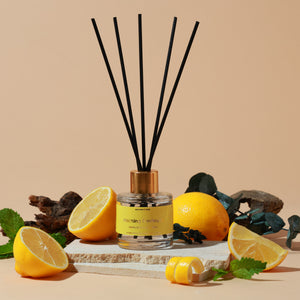
Shop, and note what is not being recommended: a Bookshop candle at ₹379 or Amber Rose candle at ₹599 adds no water to a room, and neither does a reed diffuser from ₹749. The Sukoon at ₹1,899 is excellent in the same room in October and the wrong machine in July, because it puts 30–50 ml of water an hour into the air. Free shipping above ₹499.
Straight answer
Why does my carpet smell worse during the monsoon?
1. Because the fibre is holding water it cannot get rid of. Textile fibres take up moisture from the air until they are in balance with it. At 40% relative humidity that is a small amount. At 85% it is a great deal, and there is nowhere for it to go, because the surrounding air is already nearly saturated. A carpet in monsoon is not damp because something spilled on it. It is damp because the room is.

2. Because above roughly 60% relative humidity, things start growing. That is the threshold at which microbial activity on and in fabric accelerates, and Indian indoor humidity in the monsoon commonly runs 80 to 95%. The earthy, cellar-like note you are smelling is largely the metabolic products of that activity. It is not dirt, and it will not respond to being cleaned as though it were.

3. Because the floor is the coldest surface in the room, and this is the bit that matters. Tile or stone over a concrete slab lags behind the air temperature and stays cool. Warm humid air meeting a cool surface gives up its moisture there. Under a carpet, that happens in a still, dark, unventilated gap a few millimetres thick.

4. So the underside is usually worse than the top, and nobody ever looks at it. Lift a corner and smell the back of the carpet and the floor under it. In a monsoon flat the difference between that and the top surface is often startling, and it tells you immediately that surface cleaning was never going to work.

5. The fixes, at ₹0: lift it, air it, get a fan across the bare floor, vacuum slowly in two directions, and put a rug outside on the first dry morning. On a genuinely wet day, run the air conditioner on dry mode instead of opening the windows — this is the one situation in the whole of this cluster where ventilating makes things worse, because you are importing saturated air.

6. And do not put fragrance over a damp carpet. A scent on top of active dampness is two smells, and the damp one is winning. A cool-mist ultrasonic is worse than neutral here: it adds 30 to 50 millilitres of water an hour to a room you are trying to dry.

A portion of every order supports girl-child education through Nanhi Kali.
TL;DR: monsoon does three things to a carpet at once: 80–95% ambient humidity loads the fibre, microbial growth accelerates above about 60% RH, and the floor is the coldest surface in the room so moisture collects underneath. Lift it, air it, fan the floor, and use dry mode rather than open windows on a wet day. A cool-mist diffuser adds 30–50 ml of water an hour and is the wrong machine until it is dry.
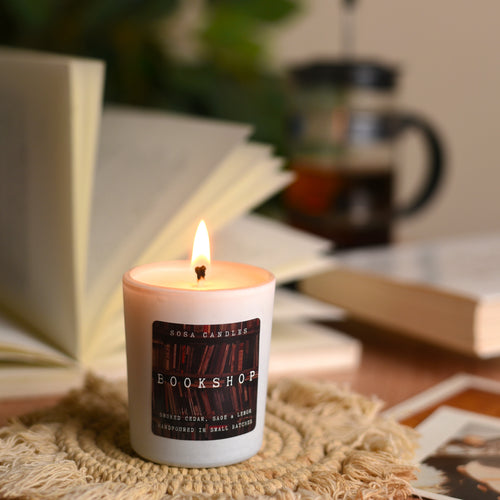
SOSA Bookshop candle
The product for a wet room, because it adds no water to it
SOSA Bookshop candle ₹379 / 80g
An 80g scented jar candle hand-poured in Pune, roughly 15 to 18 hours of burn, scent in the room in fifteen to twenty minutes. A candle is a flame: it adds no moisture to a room and a small amount of warmth, which in a monsoon flat is the correct direction of travel. Neither does a reed diffuser, from ₹749. That single fact is why this page recommends the two cheapest products on the site rather than the dearest, and it is the honest recommendation for a room with a damp carpet in it. Candles must be attended and put out. Amber Rose candle is ₹599 for 130g at roughly 25 to 30 hours if you want a longer burn.

What monsoon actually does to a carpet

The reason this problem feels seasonal and mysterious is that three separate things change at the same time in June and change back in October, and people experience them as one event called monsoon. The fibre takes up water; the biology speeds up; and the temperature difference between the room and the floor puts the wettest air in the house into a gap nobody can see. Separating the three is what makes this fixable, because each one has a different remedy and only one of them has anything to do with cleaning.

1
THE FIBRE
Eighty-five per cent humidity means the carpet is holding water, not hiding dirt
Start with the simple physical fact. Textile fibres are hygroscopic: they exchange moisture with the air around them until the two are in equilibrium, and the amount they hold at equilibrium rises sharply as relative humidity climbs. Wool is the extreme case and can carry a very large fraction of its own weight in water without feeling wet to the hand, which is exactly why a wool rug is the worst offender in a monsoon flat and also why it feels fine when you touch it. Cotton behaves similarly. Even synthetics, which absorb far less into the fibre itself, hold water between the fibres by capillary action in a dense pile. The crucial part is the second half of the exchange: a fibre gives moisture back only when the surrounding air is drier than it is, and in an Indian monsoon the surrounding air is almost never drier than it is. So the carpet takes up water in June and simply holds it, through July and August, with no mechanism available to release it. Now add what is already in the pile — skin cells, food fragments, the organic fraction of household dust, whatever came in on shoes — and you have organic material sitting wet for eight weeks in the dark. That is not a cleaning problem in the ordinary sense. The pile may be perfectly clean by any visual standard and still smell, because what you are smelling is water plus time rather than dirt.
2
THE THRESHOLD
Sixty per cent is where the biology changes gear, and monsoon runs far above it
Then the number that explains the seasonality. Microbial growth on and in textiles accelerates sharply above roughly 60% relative humidity, and Indian indoor humidity in the monsoon commonly sits at 80 to 95%. That is not a marginal excursion above the threshold; it is comfortably into the range where mould and bacteria on organic material get on with their business. What they produce as they do it are volatile compounds, and those compounds are what your nose registers as earthy, cellar-like, faintly mushroom-ish or simply as old. It is worth being clear that this happens long before anything is visible. By the time you can see a bloom on the back of a rug, the smell has been there for weeks; the smell is the early warning and the visible growth is the late one. This is also why the same flat is fine in January. At 45% indoor humidity the fibre is dry, the activity is negligible, and the carpet that was unbearable in July is unremarkable. Nothing about the carpet changed. The air around it did. And it is why the correct response is drying rather than scrubbing: you can wash a carpet in monsoon, and unless you can get it genuinely dry afterwards you will have added several litres of water to the exact object that was already holding too much.
3
THE INTERFACE
The floor is the coldest surface in the room, so the underside is where it collects
Now the part that makes this page worth reading, because it is the piece almost nobody is told. Warm air holds more moisture than cool air, so when humid room air meets a cooler surface it gives up water at that surface. In an Indian flat the coolest surface in the room is very often the floor: tile or stone laid over a concrete slab, with a large thermal mass, lagging behind the air temperature throughout the day and cooler still on a ground floor or above a basement. Under a carpet that gap is a few millimetres of still air, in the dark, with no ventilation at all and no light. It is the single most favourable microclimate in your home for exactly the process described above. So the load concentrates on the back of the carpet, on any underlay or rug pad, and on the floor surface itself — three layers you never inspect, immediately beneath one you clean regularly. Lift a corner in July and smell the back of the carpet, then the floor beneath it. If the two are noticeably worse than the pile you have been vacuuming, you have your answer, and the treatment is air rather than shampoo. A rug pad of dense foam or rubber makes this worse rather than better, because it is a moisture barrier trapping damp against the floor; a woven or open pad allows some exchange. And this is the mechanism behind the thing everybody notices and nobody explains, which is that a rug moved to a new position in October reveals a patch of floor that smells different from the rest of the room.
The test, and it takes fifteen seconds: lift one corner of the carpet in the middle of monsoon and put your nose to the underside and then to the floor. If those are worse than the top, stop cleaning the pile and start drying the gap.

Where the moisture sits, layer by layer

A carpet on a floor is five things stacked, and monsoon affects each of them differently. This is the layer-by-layer version, with what happens to each and what actually helps. Every fix in this table is free and four of the five are about moving air rather than about cleaning anything. Nothing here is a SOSA product, and one row exists specifically to tell you what not to buy this month.

Layer by layer
Where the moisture actually sits under and in a carpet
Layer What monsoon does to it What actually helps When Cost
The floor under the carpet ★ Coldest surface in the room, so humid air gives up moisture at it. Still, dark and unventilated under a carpet Lift the carpet off it entirely for a day. Fan across the bare floor for a few hours, then mop and let it dry completely before anything goes back down Once at the start of monsoon, again mid-season ₹0
The underlay or rug pad Dense foam and rubber pads trap moisture against the floor and hold it there for the season Take it up and air it separately, both faces. Replace a solid rubber pad with a woven or open one if this is an annual problem With every lift ₹0
The backing of the carpet Takes the worst of it — this is the side facing the cold, still, damp gap and the side nobody inspects Hang it over a balcony rail or a line, backing outwards, on any dry breezy day. Two hours does more than an hour of vacuuming First dry day of any week ₹0
The pile Holds moisture at equilibrium with 80–95% room air, with organic material sitting wet inside it Slow, thorough vacuuming in two directions at right angles. Slow is the operative word; speed is why most vacuuming achieves little Weekly in season ₹0
The room air itself Saturated. Opening the windows on a wet day imports more moisture than it removes AC on dry mode, or a fan moving air across the floor. This is the one exception to the open-two-windows rule in this whole cluster Any genuinely wet day ₹0
What not to add this month A cool-mist ultrasonic puts 30–50 ml of water an hour into the room on low, roughly double on high Keep the Sukoon switched off until the floor is dry. A candle at ₹379 or a reed from ₹749 adds no water at all Until October
Shop this guide
What adds no water to the room
The SOSA principle
In monsoon, the underside of a carpet is usually worse than the top. Which means the surface you have been cleaning was never the surface with the problem on it.
Warm humid air gives up its moisture at the coolest surface in the room, and in most Indian flats that is the floor. Under a carpet, the gap where it happens is a few millimetres thick, dark and completely unventilated.

Drying it out, and the machine not to buy yet

Start with air movement, because that is the entire treatment and everything else is secondary. Lift the carpet — properly, not a corner — and get it off the floor. If it is a rug, roll it and carry it out to a balcony, a terrace or a line on the first dry breezy morning, and hang it with the backing facing outwards. Two hours of moving air on the underside is worth more than any amount of work on the pile. If it is fitted and cannot be lifted, pull back what you can along the walls and run a pedestal fan across the exposed floor, or set the ceiling fan high and move furniture off the carpet so air can reach it. Then deal with the floor itself: mop it, and then leave it to dry completely with air moving over it before anything goes back down. The most common mistake at this stage is putting a dry carpet back onto a damp floor, which undoes the entire day's work in about six hours. Then vacuum, and vacuum properly: slowly, in two directions at right angles, with several passes over the areas that get walked on. Speed is the reason most vacuuming does so little — the machine needs time for the airflow to lift material out of a dense pile, and a fast pass takes the surface and leaves the rest. If you can, do the vacuuming after the airing rather than before, when the fibre is at its driest and releases material most easily.

Then the monsoon exception, which contradicts the advice on almost every other page in this cluster and needs stating carefully. Ordinarily the answer to a smell is two openings on opposite walls for twenty minutes. On a genuinely wet day, with the air outside at or near saturation, opening the windows brings in more water than it removes, and in a room you are trying to dry that is the wrong move. What to do instead: run the air conditioner on dry or dehumidify mode, which passes room air over a cold coil, condenses water out of it and sends it down the drain pipe outside your wall — several litres over an afternoon in a Mumbai July. That is genuine moisture removal rather than air exchange, and it is the correct tool for this specific situation. Keep the doors and windows shut while it runs, or you are dehumidifying the city. Then take the twenty minutes of cross-ventilation on the first dry, breezy day instead, which is when it will actually do something, and use the drier hours — usually late morning to mid afternoon between spells — rather than the evening. And check the obvious sources of liquid water while the carpet is up, because a carpet is very good at hiding one: a seeping external wall at floor level, a leaking connection under a nearby washbasin, an AC drain pipe discharging against the building rather than away from it, or a bathroom threshold letting water track out. If any of those is present, everything above is maintenance rather than a cure.

Then the part where I tell you not to buy the most obvious product on the site. A cool-mist ultrasonic diffuser is a machine for putting water into the air. The Sukoon runs at 30 to 50 millilitres an hour on low, which is where 16 to 18 hours per fill from a 500ml tank comes from, and roughly double that on high. In a dry, cooled, sealed room in February that is pleasant and often beneficial. In a monsoon flat with a carpet already holding moisture at 85% ambient humidity, it is the wrong machine, and adding half a litre of water to that room over an evening is working against everything else on this page. I would rather say so here and sell you a ₹379 candle. What adds no water: a flame and a reed. A Bookshop candle at ₹379 is 80g and gives roughly 15 to 18 hours of burn, with scent in the room in fifteen to twenty minutes; Amber Rose candle is ₹599 for 130g at 25 to 30 hours and ₹799 for 220g at 40 to 50; a ceramic jar candle is ₹949. Candles must be attended and put out, and a small amount of warmth in a damp room is the right direction of travel rather than the wrong one. A reed diffuser from ₹749 in the alcohol-free line — Mountain Breeze at ₹849 is Himalayan pine, sage and cedar and suits a room that has just been aired — adds nothing to the humidity either, holds one level for months and needs 24 to 72 hours to establish. And the honest limit on all of it: none of these dries a carpet or removes what is growing in one. Fragrance over active damp gives you two smells and the damp one wins, because it is being continuously produced while the scent is not. Dry the floor, dry the carpet, find the water if there is liquid water, and scent the room in October — when the Sukoon at ₹1,899, with its 270–320 sq ft coverage, steady, 2H and 4H timers and three 15ml Hotel Collection scents included, becomes the right purchase for the same room it was the wrong one for in July.

Fragrance over a damp carpet gives you two smells rather than one. The damp one is still being produced; the scent is not.
— Sonal Sahani, SOSA

The SOSA edit

In order, for a carpeted room in monsoon. Five of the six rows cost nothing, and the sixth exists to tell you which product to leave in the cart until the weather changes.

The SOSA edit
A carpet in monsoon, in order
Step What it is Why it comes here in the order Cost
1. Lift it and air the underside ★ Carpet up, backing outwards on a line or a rail for two hours on a dry breezy morning, floor beneath mopped and dried completely First. The underside and the floor are where the moisture concentrates, and neither responds to anything done to the pile ₹0
2. Move air across the bare floor Pedestal or ceiling fan for a few hours, furniture moved off the carpet area Second. Drying is the treatment. Everything else on this list is maintenance around it ₹0
3. Dry mode rather than open windows AC on dry or dehumidify with the room shut, on any genuinely wet day Third, and it is the one exception to the ventilation rule in this cluster. Wet outdoor air imports moisture ₹0
4. Slow vacuuming, two directions Several passes at right angles, after the airing rather than before Fourth. A fast pass takes the surface and leaves the pile. Slow is the whole technique ₹0
5. A candle or a reed diffuser 80g candle at ₹379 for 15–18 hours, Amber Rose candle at ₹599 for 25–30; or alcohol-free reeds from ₹749 holding one level for months Fifth, and only once the floor is dry. Both add no water to the room, which is the specification that matters here ₹379 / from ₹749
Not this month: the Sukoon or any cool-mist diffuser 30–50 ml of water an hour on low, roughly double on high — excellent in the same room in October Stated plainly rather than sold. A machine that humidifies is the wrong purchase for a room you are drying out ₹1,899, later
Honest notes for buyers: fragrance is the last step, never the first. It layers on air that is already clean and moving, and it will not remove a source — not damp, not a dry drain trap, not a loaded sofa, not a filter that needs washing. Deal with the cause, change the air, then scent the room. On timing: a candle puts scent into a room in fifteen to twenty minutes and a Sukoon reaches a steady level in about twenty, while a reed diffuser needs a day to three days before it is doing its job — the wrong buy for a deadline and the right buy for a room you want to hold one level for months. SOSA does not make a room or linen spray for the home; the sprays in the range are car perfumes. A cool-mist ultrasonic adds 30–50 ml of water an hour to the air, so it is the wrong machine for a room you are trying to dry out. The Hotel Collection is water-based and runs in the Sukoon, Boond and Megh only — not in reeds and not in the waterless Vaayu. Reed diffusers are a separate alcohol-free line with their own scents. Candles must be attended and put out. The Hotel Collection scents are SOSA's own interpretations inspired by the world's finest hotels; SOSA is an independent Indian fragrance house, not affiliated with or endorsed by any hotel brand. A portion of every order supports girl-child education through Nanhi Kali.
SOSA Sukoon
The machine to keep switched off until the floor is dry
SOSA Sukoon ₹1,899
A 500ml tank, 270–320 sq ft, 16–18 hours per fill on low, 2.4MHz cool-mist plate, remote, steady, 2H and 4H timers, three 15ml Hotel Collection scents included. And the number this page is obliged to give you: a cool-mist ultrasonic puts 30 to 50 millilitres of water into the air every hour on low, and roughly double that on high. In a room where the carpet is already holding moisture in July, that is the wrong machine and I would rather say so than take the order. Buy it in October for the same room and it is excellent. Buy it in July for a damp floor and you have paid ₹1,899 to make the problem slightly worse.
SS
ISIPCA
Versailles
A note from Sonal

This is the question that arrives every June, and I have refused more sales in answer to it than to any other. Somebody writes to ask which scent is best for a musty carpet, and the correct reply is that no scent is best for a musty carpet, and that the machine they were about to buy would make the room wetter. A cool-mist diffuser is a humidifier that happens to carry fragrance. Thirty to fifty millilitres an hour is not a rounding error in a room where the floor is already condensing.

The thing I would most like people to do is lift the carpet, because it changes the conversation immediately. Everybody has been cleaning the top of something whose problem is entirely on the bottom of it, and one lifted corner in the middle of July tends to settle the argument faster than anything I can write. Air the back of it, get a fan across the floor, and if the day is genuinely wet, use dry mode instead of opening the windows — which is the only time I will ever tell an Indian household to keep the windows shut. Then, in October, when the flat has dried out and the same carpet is unremarkable again, a diffuser in that room is a fine idea. It is the same product and the same room. The month is the variable.

Everything is made and supported from Pune, and a part of every order funds girl-child education through Nanhi Kali. You get a home that smells like somewhere you chose; a girl gets a classroom. That equation has always felt right to me.

Frequently asked questions

Why is my carpet worse in monsoon when nothing has spilled on it?
Because the room is damp rather than the carpet being dirty. At 80–95% relative humidity the fibre holds moisture and cannot release it into already-saturated air, and microbial activity on the organic material in the pile accelerates above about 60% RH. What you smell is water plus time, not dirt.
Is the underside of a carpet really worse than the top?
Usually, yes. The floor is the coolest surface in most Indian rooms, warm humid air gives up moisture at the coolest surface, and under a carpet that happens in a few millimetres of still, dark, unventilated air. Lift a corner in July and compare the back and the floor with the pile; the difference is normally obvious.
Should I open the windows to dry out a damp room in monsoon?
Not on a genuinely wet day. That is the one exception to the ventilation rule: outdoor air at or near saturation brings in more moisture than it removes. Use the air conditioner on dry mode with the room shut instead, and take your twenty minutes of cross-ventilation on the first dry, breezy day.
Can I use an ultrasonic diffuser in a room with a damp carpet?
Not until it is dry. A cool-mist ultrasonic adds 30 to 50 millilitres of water an hour to the room on low and roughly double on high, which works directly against what you are trying to do. A candle from ₹379 or a reed diffuser from ₹749 adds no water and is the honest recommendation for this month.
Will fragrance help a carpet that already smells musty?
No, and it will make the room harder to read. Damp is being produced continuously while a scent is not, so you end up with both. Dry the floor, air the underside, check for any liquid water source such as a seeping wall or an AC drain, and add scent afterwards.
The monsoon room
Dry it firstand buy the thing that adds no water
The Bookshop candle is ₹379 for 80g at roughly 15–18 hours, Amber Rose is ₹599 for 130g at 25–30 hours and ₹799 for 220g at 40–50, and a ceramic jar candle is ₹949. Alcohol-free reed diffusers are from ₹749 and add nothing to the humidity of a room, holding one level for months after 24 to 72 hours to establish. The Sukoon at ₹1,899 is the right machine for the same room once it is dry. Free shipping above ₹499, and a portion of every order supports girl-child education through Nanhi Kali.
See the candles → See the reed diffusers · from ₹749
Continue the read
More from SOSA
Editorial standards & sources
About this guide: Written by Sonal Sahani, ISIPCA Versailles-trained founder and perfumer at SOSA Home & Body, on the three things an Indian monsoon does to a carpet at once — fibre held at equilibrium with 80–95% humidity, microbial activity accelerating above about 60% relative humidity, and moisture condensing at the floor, which is the coolest surface in the room — why the underside is usually worse than the top, and why a cool-mist ultrasonic that adds 30–50 ml of water an hour is the wrong machine until the room is dry.

Facts verified August 2026: Diagnostic facts used in this guide: a closed room accumulates what it cannot exchange, so cross-ventilation needs two openings rather than one; a drain's U-bend water seal evaporates in roughly two to four weeks of disuse and then admits sewer gas, which is corrected by pouring water down the drain; microbial growth in fabric and on surfaces accelerates above about 60% relative humidity, and Indian monsoon indoor humidity commonly runs 80–95%, which is the one situation where ventilating on a wet day can import moisture rather than remove it; an air-conditioner's cold, wet evaporator coil and filter grow biofilm that is blown into the room on start-up; textiles adsorb cooking aerosol and body oils and re-release them for weeks; and olfactory adaptation makes a constant household smell undetectable to its residents within about a fortnight while visitors still perceive it. Timings: a scented candle scents a normal room in roughly 15–20 minutes, a Sukoon ultrasonic diffuser reaches a steady level in about 20 minutes from cold, and a reed diffuser needs roughly 24–72 hours. SOSA products and prices: Sukoon 500ml ₹1,899 (270–320 sq ft, 16–18h on low, 9–12h high, 30–50 ml/h, 2.4MHz cool mist, remote, steady/2H/4H timers, BPA-free, auto shut-off, includes three 15ml Hotel Collection scents of your choice); Boond 300ml ₹899; Megh 6-litre ₹3,499; waterless Vaayu ₹11,999 (up to 1000m³); Aangan ₹25,999. Hotel Collection water-based fragrance 15ml ₹299, 100ml ₹999, 300ml ₹1,799, Pack of 7 at 15ml ₹1,799; dose 3–6 drops per tank. Reed diffusers (separate alcohol-free line): Morning Freshness from ₹749, Garden Bloom and Evening Calm from ₹799, Fresh Brew and Mountain Breeze from ₹849; 130ml from ₹1,249; duos from ₹1,498; 300ml refills ₹2,399. Scented candles: Bookshop 80g ₹379, Amber Rose 130g ₹599 and 220g ₹799, Smoked Oudh 130g ₹449, ceramic jar candles ₹949, Pure Calm wax melt set ₹854. Free shipping above ₹499. SOSA does not make a room or linen spray for the home. The Hotel Collection scents are SOSA's own interpretations; SOSA is not affiliated with or endorsed by any hotel brand. Prices subject to change — see the live product pages.
Retour au blog

