


The free fourteen: water down every drain trap at T-60m · lidded bins on a schedule rather than when full · the dressing-waste route kept off public corridors · mopping finished before opening · mops dried flat overnight · nothing expired on the noticeboard · a clock the seating can see · the queue display matching who is actually called · chairs facing one way and none broken · no eating at the registration desk · a written air-conditioning set point · staff using the patient toilet once a week · signage at eye height · a named opening checklist rather than the word housekeeping.
Number twenty: a low, unnameable background fragrance in the entrance, reception and corridors only. It is presentation and housekeeping, it makes no clinical claim, and it is last on the list for a reason.
2. Then the ones that are about honesty rather than cleanliness. A queue display that matches who is actually called. Nothing expired on the noticeboard. A clock the back row can see. A tariff card that is current. Each of these is a small promise, and a patient who catches one of them being false will assume the rest of your promises work the same way.
3. Then the ones about the staff, which patients read faster than anything else. Nobody eating at the registration desk. Somebody who greets an arriving patient within about fifteen seconds even if they cannot serve them yet. A written air-conditioning set point so the hall is not being adjusted by whoever is cold.
4. Then the six that cost something, in ascending order. A clock, two door closers, retubing the waiting hall at 4,000K, one absorbent surface, an air-conditioning survey, and a scent machine last.
5. And the test that finds most of them for free: use your own patient toilet once a week, at four in the afternoon, not at nine in the morning. Almost every item on this list is discoverable by a person willing to walk their own building at the hour it is under load.
A portion of every order supports girl-child education through Nanhi Kali.
Why small details carry so much weight in a clinic
A patient sitting in your waiting hall has no way of assessing the things that actually matter about your practice. They cannot audit your autoclave logs, check a consultant's registration, review your biomedical waste manifests or ask whether the analyser was calibrated this month. So they assess the evidence in front of them and treat it as a sample of everything else. That is not naive; it is sound reasoning from the only data available, and it is the reasoning any of us apply when we walk into an unfamiliar building. The consequence for a polyclinic is uncomfortable but useful: a bin without a lid, a notice from 2023 still pinned up and a queue display showing a token number that was called twenty minutes ago are not small failures of housekeeping in the patient's mind. They are a sample. And the good news buried inside that is that the sample is cheap to improve, because most of the items on the list below cost nothing at all.
The twenty, in order, with what each one costs
The whole list on one table, in the order I would work through it, with the third column being what a patient actually infers from that detail and the fourth being what it costs. Fourteen of the twenty are free. The last row is the only one that requires anything from a fragrance house, and it is deliberately at the bottom.
| # | The detail | What a patient infers from it | Cost |
|---|---|---|---|
| 1 ★ | Water down every drain trap at T-60m, including fixtures nobody uses | Nothing, if it is done — and everything about your standards if a dry U-bend is venting the stack into the lobby | ₹0 |
| 2 | Lidded bins everywhere, emptied on a written schedule rather than when full | That waste has a system behind it rather than a person who notices | ₹0 |
| 3 | The dressing-waste and soiled-linen route kept off public corridors | That clinical and public flows are separated, which is a thing patients notice without naming | ₹0 |
| 4 | Mopping finished before the doors open, never at eleven | That the schedule serves the clinic rather than the cleaning contractor | ₹0 |
| 5 | Mops and cloths dried flat overnight instead of left in buckets | Nothing — until the second morning, when it becomes its own smell | ₹0 |
| 6 | The AC drain pan on the maintenance schedule | That the musty ten minutes at start-up was traced rather than covered | In your AMC |
| 7 | Toilets checked at four in the afternoon, with a fan that runs all day | Almost everything. This is the room your standards get judged in | ₹0 to check |
| 8 | A queue display showing the number actually being called | That the information you publish is true. A frozen display converts a wait into a suspicion | ₹0 |
| 9 | A clock the back row can see | That you are not hiding the time. It also stops the repeated walk to the desk | ₹250–₹800 |
| 10 | Nothing expired on the noticeboard | That somebody owns that wall. An old camp poster dates your whole operation | ₹0 |
| 11 | The quoted appointment time means something, or somebody says it does not | That you respect their afternoon. Being told of a delay is worth more than most people assume | ₹0 |
| 12 | Chairs facing one way, none broken, row count honest about peak | That the hall was arranged rather than filled | ₹0 |
| 13 | Signage at eye level, in the languages your patients read | That the building was designed for them and not for the architect | Low |
| 14 | Nobody eating at the registration desk; an arriving patient acknowledged in about fifteen seconds | More than any other single item on this list | ₹0 |
| 15 | Two door closers — the dirty utility, and the fire door held open with an extinguisher | That the separations the building was designed with are still working | ₹1,200 each |
| 16 | Retube the waiting hall at 4,000K instead of 6,500K | That the room looks cared for. Cool daylight tubes make clean furniture look grey | A few thousand ₹ |
| 17 | One absorbent surface, and the television turned down or off | That a conversation at the desk does not carry to the third row | Low, plus authority |
| 18 | Alcohol-free reeds in the admin cabin and records room | That back-of-house is held to the same standard as the front | from ₹749 |
| 19 | An air-conditioning survey: set point in the SOP, filters, return path, peak occupancy | Comfort, which is the variable nobody adapts to over a forty-minute wait | An AMC visit |
| 20 | A low background fragrance in the public zones only | That the place is looked after. Last on the list, and harmful if done before the other nineteen | ₹11,999 |
Vaayu · item twenty₹11,999Shop →  Reeds · item eighteen₹749Shop →
  Westin-inspired · lightest₹299Shop →
Number twenty, and how to run it so it stays invisible
Assume the other nineteen are done, because if they are not then this paragraph is premature and you should go back to item one. The twentieth item is a low, steady, unnameable background in the entrance and lobby, reception and registration, the shared and departmental waiting areas, the corridors between departments, the lift and stair lobbies, administration and the café corner — and nothing anywhere else. Consultation and examination rooms, treatment and procedure rooms, day-care surgery and recovery, dressing rooms, blood- and sample-collection rooms, laboratories, pharmacy dispensing, sterile stores, imaging rooms, oncology day-care and paediatric clinical areas stay fragrance-free, and that list is longer than the first one on purpose. The reasons are operational rather than decorative: a clinician is trained to notice what a room and a patient smell of, people faint in a sample-collection room, aversion to smells during chemotherapy is well known to any oncology nurse, children cannot consent and their parents did not choose it, and a laboratory lead has a contamination conversation they would rather not have. The complete fragrance-free list sets it out in full. Practically, the boundary is held by doors and by placement rather than by intention: put the machine in the reception zone, not in a corridor that dead-ends at the procedure rooms, and keep clinical doors shut, which they should be anyway.
Then the running, which is where most clinics create their own problem. One machine, one intensity, one setting, timers matched to the opening hours, and nobody touching it again. On at T-30m on low in the reception zone, so the level has arrived before the first appointment does rather than climbing while patients sit in it. Off with the last appointment, because a machine running overnight into an empty building is spending oil to scent nobody. And the rule that has to be written into the standard operating procedure in so many words: nobody turns it up at lunchtime because the hall got busy. A busy hall is an occupancy and air-change situation, and adding fragrance to it makes the room worse rather than better. The key-lock on the Vaayu exists precisely because that instruction is difficult to enforce verbally in a building where six people pass the machine every hour. The coverage sum is the other half of getting this right: cubic metres are square feet divided by 10.76 multiplied by ceiling height in metres, and clinical rooms come out of the calculation entirely because they are fragrance-free and their doors are shut. In most polyclinics that removes forty to sixty per cent of the plan area, so a 3,000 sq ft facility is usually sizing for about 1,400 sq ft of public space — roughly 390 m³ at a three-metre ceiling, comfortably inside one Vaayu's 1000m³. A 400ml tank runs about 75 days on a clinic's hours, so the whole operating burden is four refills a year and a named person to do them.
Then the choices and the limits, stated the way I would state them to a procurement lead. The scent brief for a medical facility is the narrowest in this whole programme: clean, dry, quiet, unmemorable as a product, and impossible for anybody to object to. The Westin-inspired White Tea Serenity — white tea, aloe and cedar — is the lightest of the seven and the default here. The Ritz-Carlton-inspired Quiet Luxury is slightly more present, and the 1 Hotels-inspired Forest Suite is the dry one for a floor where a café corner reaches the seating. Nothing floral, nothing sweet, nothing anybody could name as a perfume. The test is not whether a patient likes it; it is whether they can tell you what it is, and the correct answer is that they cannot. On formats: the water-based Hotel Collection bottles at ₹299 for 15ml belong in the ultrasonic Sukoon, Boond and Megh, which hold standing water and add 30 to 50 ml of water an hour to the air — fine for an administrative cabin with a named owner, unsuitable for public clinical property where nobody has been given the daily emptying and drying job. The Vaayu takes its own undiluted oil and arrives with four scents. Candles are not appropriate in a healthcare facility whatsoever, because an open flame is a fire-safety and insurance matter rather than a fragrance choice. And SOSA does not make a room spray; the sprays in the range are car perfumes. The whole of item twenty, then, is one machine, one scent, one setting, four refills a year and a locked lid — which is about as small a commitment as a facilities line can carry, and that modesty is the point.
The SOSA edit
The paid end of the list, in the order I would spend. Everything above ₹0 on the twenty, arranged so that a clinic with a small budget does the valuable things and a clinic with a larger one does them in the right sequence. The last row prints an absence rather than leaving somebody to find it out after ordering.
| Buy | What it is | Where it sits on the twenty | Cost |
|---|---|---|---|
| 1. The free fourteen ★ | Drain traps, bin schedule, linen route, mopping hour, mops dried flat, queue display, noticeboard, chairs, the desk | First, and they are genuinely free. No vendor, no purchase order, no meeting | ₹0 |
| 2. Two door closers and a clock | The dirty utility, the propped fire door, and a clock the back row can see | Second. Under ₹3,000 for the three of them and all three are noticed daily | ₹1,200 each / ₹250 |
| 3. The air-conditioning survey | Set point written into the SOP, filters, return path, an honest count of peak occupancy | Third, and the most valuable paid item here. Comfort is the variable nobody adapts to | An AMC visit |
| 4. Alcohol-free reeds | Admin cabin, records room, a small consultation-suite lobby. 24–72 hours to settle, little reach past a metre | Fourth. Right for a cabin, wrong for a forty-seat hall, and not in a paediatric waiting area | from ₹749 |
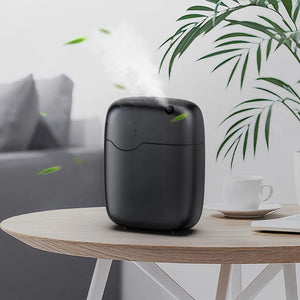
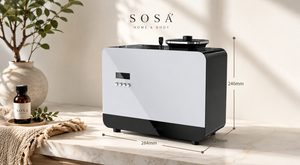
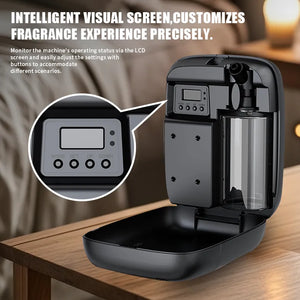
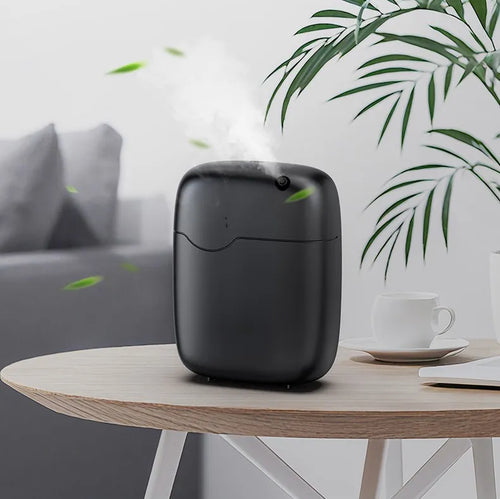
| 5. SOSA Vaayu and a scent nobody can name | Waterless, no standing water tank, up to 1000m³, 400ml ≈75 days, timers, app, under 38 dB, key-lock | Twentieth on the list and last for a reason. Public zones only, one setting, four refills a year | ₹11,999 / ₹299 |
| Not appropriate: candles in a clinic | SOSA makes candles from ₹379 and none of them belongs in a healthcare facility | An open flame is a fire-safety and insurance matter. Said plainly rather than softened | — |
Versailles
The reason I put fragrance twentieth rather than somewhere respectable in the middle is that I have watched what happens when it is placed higher. A polyclinic with a queue display frozen twenty minutes behind reality, a noticeboard advertising a camp from two summers ago and a dry trap in the staff toilet does not have a fragrance problem. It has nineteen problems and a fragrance opportunity, and buying the opportunity first solves none of the nineteen. The patient sitting in the back row is not thinking about any of this consciously. They are simply arriving at a verdict, and they are arriving at it from evidence you controlled.
What I like about this list is that a clinic can act on most of it this week without asking anyone for money. Fourteen free items, one afternoon of walking your own building at the hour it is under load, and a checklist with a person's name against each line rather than the word housekeeping. If you do that and never buy anything from me, the page has done its job. If you do that and then put a low, unnameable background into the public zones and leave it on one setting for a year, you will have a facility that reads as looked after — because it will be.
Everything is made and supported from Pune, and a part of every order funds girl-child education through Nanhi Kali. You get a space that smells like somewhere looked after; a girl gets a classroom. That equation has always felt right to me.
Frequently asked questions
- Does the smell of a clinic affect how patients judge its standards — what is claimable, and what is not.
- Why two similar multi-speciality clinics feel completely different at the door — four differences, three of them free.
- How to stop a clinic waiting area smelling of food, people and disinfectant at once — three sources, and three separate fixes rather than one cover.
- Why a multi-speciality clinic smells of disinfectant all day — usually the mopping hour rather than the product.
- Brand: the SOSA founder story.
Facts verified August 2026: Product facts used in this guide. SOSA Vaayu ₹11,999: waterless cold-air nebulising diffuser, atomises undiluted fragrance oil to a dry residue-free nano-mist with no water reservoir, coverage up to 1000m³ (approximately 2,000–3,000 sq ft), 400ml refillable tank lasting up to about 75 days per fill, Bluetooth app plus onboard control, 1h/4h/8h/24h timer scheduling, adjustable intensity, under 38 dB, DC 12V/1A at 5W, 165 × 80.5 × 215 mm and 0.9 kg, freestanding or wall or HVAC mounted, auto-stop and key-lock, CE, RoHS and SGS certified, supplied with four hotel-inspired fragrances. SOSA Aangan ₹25,999: HVAC-connected or standalone commercial nebulising diffuser, coverage up to 3,000m³ (roughly 8,000–10,000 sq ft), 800ml reservoir, metal body, programmable schedules, under 42 dB. Ultrasonic machines are water-based, hold standing water and consume 30–50 ml of water an hour: Sukoon ₹1,899 (500ml, 270–320 sq ft, 16–18 hours on low, 3–6 drops per tank, steady/2H/4H timers, three 15ml Hotel Collection scents included), Boond ₹899 (300ml), Megh ₹3,499 (6 litres). Hotel Collection water-based fragrance 15ml ₹299, 100ml ₹999, 300ml ₹1,799, Pack of 7 at 15ml ₹1,799 against ₹2,093 bought singly; the Vaayu and Aangan take their own undiluted oil rather than these water-based bottles. Alcohol-free reed diffusers from ₹749, requiring 24–72 hours to reach their working level. Free shipping above ₹499. Coverage arithmetic: cubic metres equal floor area in square feet divided by 10.76 and multiplied by ceiling height in metres, counting only the volumes that are actually scented. This guide makes no medical, therapeutic or clinical claim of any kind for fragrance: a diffuser does not purify, disinfect or clean air, and does not treat, calm or affect any patient or condition. Fragrance is housekeeping and presentation. Clinical areas should be left fragrance-free, and a persistent odour should be traced to its source and corrected rather than covered. SOSA is not affiliated with or endorsed by any hotel brand. Prices subject to change — see the live product pages.