

Consistency: one source, one composition, across the whole connected volume. This is what a hotel does, and what a Vaayu at ₹11,999 does across up to 1000m³.
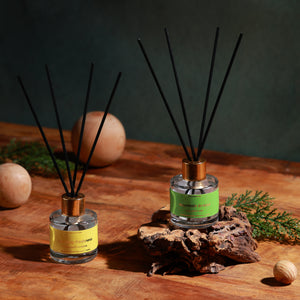
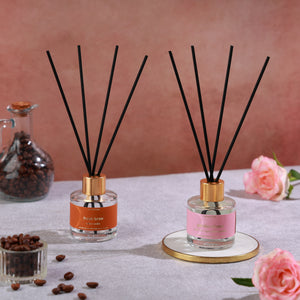
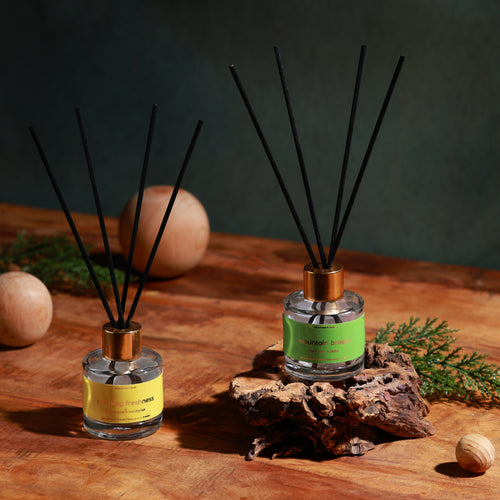
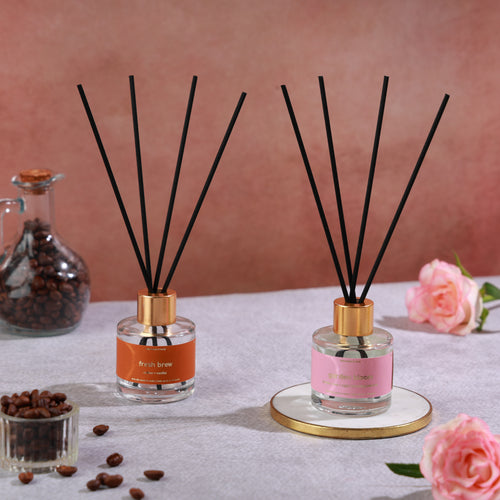
The rule that governs character: two scents in one connected space must share a note or you get a seam where they meet. Mountain Breeze and Morning Freshness meet on green eucalyptus; Fresh Brew and Garden Bloom meet on warmth.
The variable nobody accounts for: your own nose adapts to a constant within minutes. A single identity fades from the resident faster than a changing house does — while guests experience the opposite.
2. Character means several sources and several compositions. Rooms become chapters — Morning Freshness in a bathroom, Mountain Breeze in a study, Fresh Brew where people gather. Only the passive format gives you this affordably, and no single machine can do it at all.
3. The discipline that makes character work is shared notes. Two compositions in one connected space must have something in common. Mountain Breeze and Morning Freshness meet on green eucalyptus; Fresh Brew and Garden Bloom meet on warmth and soft musk. Unrelated scents produce a seam at the join.
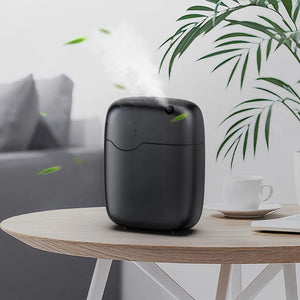
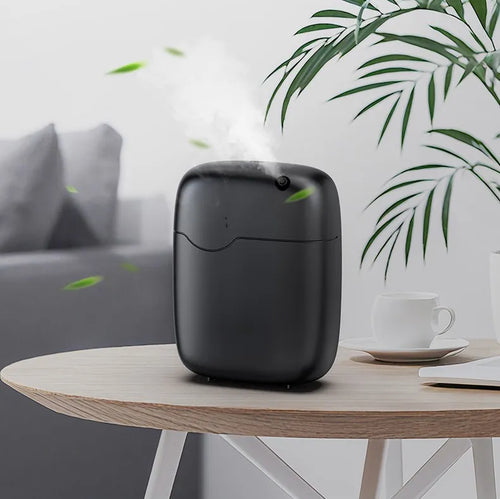
4. Consistency means one composition, held. A Vaayu puts one scent across up to 1000m³ — roughly 2,000 to 3,000 sq ft by ceiling height — from one source, so there is no join anywhere to manage.
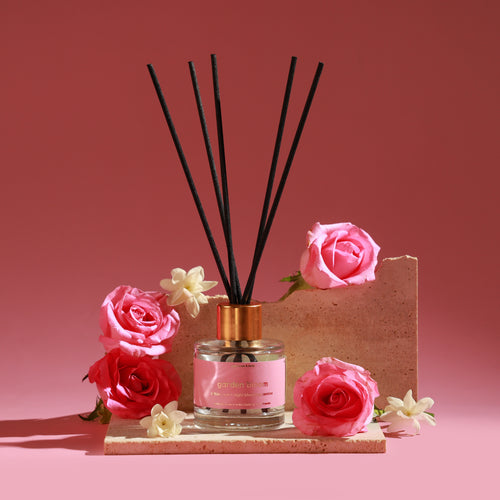
5. There is a cheap version of consistency and almost nobody uses it. Buy the same reed composition for every position. One scent, six bottles, from ₹749 each. It is not as even as a machine and it costs a fraction as much.
6. Know what a single identity does to your own nose. Olfactory adaptation means you stop registering a constant within minutes, and it happens hardest at home. A one-identity house will seem to disappear on you well before it disappears on a visitor. That is not the product failing.
7. And the practical caveat if you go the machine route: the Vaayu ships with 400ml — four Hotel Collection fragrances at 100ml each — and SOSA does not currently sell a separate Vaayu refill oil. The water-based Hotel Collection for ultrasonic machines is not a refill for it. Ask SOSA about supply before committing to a single identity you may not be able to renew.
Our reed fragrances are composed and handmade in small batches in Pune, and a portion of every order supports girl-child education through Nanhi Kali.
Part one — two houses, described properly
I want to describe both before comparing them, because most people have only ever lived in one and assume the other is the same thing done better or worse. It is not. These are two different intentions, and the third card below is the variable that decides which one you will still be happy with in month six.
 Vaayu₹11,999 · 1000m³One composition everywhere, unchanged for months. This is what good hotels do, and the reason they do it is not luxury but repetition: a scent becomes an identity only when it stops being a decision. The effect on a visitor is peculiar and quite powerful — after two or three visits they cannot describe your house's smell, but they recognise it instantly, and they will recognise it years later in a lift somewhere else. A Vaayu delivers this across a connected volume of up to 1000m³ from a single source, so there is no join anywhere and no gradient to manage; a schedule holds it at the same hours every day and the key-lock stops anyone altering it. But note carefully what you are giving up. One identity means one identity: no bright bathroom, no woody study, no seasonal change unless you empty and rinse the machine. It is a commitment, and the four fragrances in the box are chosen at checkout as one of three combos rather than mixed at will.
Part two — how each house behaves, moment by moment
No prices and no specifications in this table. It is the two arrangements set against the moments in which you would actually notice them, because that is the only basis on which this particular decision can honestly be made.
| The moment | Several reeds · the changing house | One machine · the identity house |
|---|---|---|
| Walking through the front door ★ | Whatever the entrance bottle is. The rest of the house is still a surprise | The whole house, at once, exactly as it was yesterday |
| Moving from room to room | A transition at each threshold — the effect people buy this arrangement for | Nothing changes, which is the effect people buy that arrangement for |
| Coming home after a week away | Several small recognitions, room by room, and probably one bottle that has stalled | One recognition, at the door, and it is unmistakably your house |
| A guest's third visit | They remember a room — "the study smells wonderful" | They remember the house, and cannot tell you what of |
| Your own nose after a fortnight | Still noticing, because each threshold resets the adaptation | Largely gone from your awareness. This is normal and not a fault |
| Wanting to change something | Change one bottle for ₹749–₹849 and leave the rest alone | Empty, rinse and refill the machine — a whole-house decision |
| Where the two rooms meet | A seam, unless the compositions share a note. This is the failure mode | No seam anywhere. There is only one composition to collide with |
| A party, on a Friday evening | Add reeds ahead of time and accept a shorter bottle; nothing switches on | Raise the intensity on a timer, then let it drop back overnight |
| Across the seasons | Swap one or two bottles as the weather turns. Cheap and reversible | Deliberately unchanging. Seasonal variation is what you traded away |
| The honest caveat: neither column is the better house — they answer different wishes, and I have watched people be perfectly happy in both. Two practical notes before you pick. First, character is far cheaper to build and far easier to change your mind about; a single identity is the more expensive commitment in every sense. Second, if you commit to an identity built on a machine, know that SOSA does not currently sell a separate Vaayu refill oil — the 400ml in the box is the supply available today, and an identity you cannot renew is not much of an identity. Ask SOSA where refills stand before you build a house around one. | ||
 Character · shared warmth₹1,598Shop →
  Identity, cheaply · one scent repeatedfrom ₹799Shop →
  Identity, evenly · one source₹11,999Shop →
Part three — where each choice goes wrong
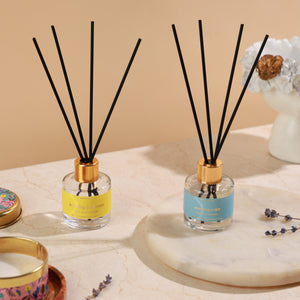
Character fails at the joins, and it fails invisibly until somebody points it out. In a house with real doors — bedrooms, bathrooms, a study — you can put anything anywhere, because a closed door is a wall and there is no overlap to manage. In connected volume, five unrelated compositions do not produce five chapters; they produce a muddle in the middle and five chapters at the edges. The correct way to build character in an open plan is not five scents but a family: two or three compositions that share a thread, so the transitions read as one idea developing. Our Fresh & Grounded pairing does this on a green thread and Warmth & Bloom on a warm one. The Day & Night duo is a different idea again — it pairs by time of day rather than by shared note, so it belongs in two rooms or two moments, not either side of one archway.
Consistency fails differently: it fails by boredom, and by the resident's own nose. Holding one composition for a year is harder than it sounds, and the people who abandon a signature almost never abandon it because it was wrong. They abandon it because they stopped being able to smell it and mistook that for it having stopped working. Adaptation is not the product wearing out, and the correct response is to ask a visitor rather than to change everything. There is also a real aesthetic cost to a single identity that I would not talk anybody out of feeling: some houses should not be uniform. A home with a strong cooking culture, a garden that comes indoors, children, animals and open windows is a house with its own weather, and imposing one flat unchanging scent across it can read as slightly corporate. That is a matter of taste, and taste is allowed to win.
Two boundaries to finish. First, a machine cannot give you character and no amount of money changes that — one tank, one composition. If variety is what you want, several reed diffusers are not the cheap compromise, they are the only product that does the job, and you should buy them without feeling you have settled. Second, an identity built on a machine has a supply condition attached at the moment: the Vaayu ships with 400ml of cold-air oil and SOSA does not currently sell a separate Vaayu refill. The water-based Hotel Collection is a different formulation for ultrasonic machines and cannot stand in. If a house identity is what you are buying, write to SOSA about refill availability first, because the whole point of a signature is that it continues.
Part four — five ways to build either one
Character and consistency are each available at more than one price, and the two middle rows are the ones almost nobody considers. Read the last column before the third.
| The model | How you build it | What it costs | What it feels like | Where it fails |
|---|---|---|---|---|
| Family character ★ | Two or three compositions sharing a note, one per zone | From ₹1,548 as a duo | One idea developing as you walk — variety without a seam | Needs the shared note. Two random scents will not do it |
| Full character | A different composition in every closed room | 5 × ₹749–₹849, or ₹1,249–₹1,349 for 130ml | Rooms as distinct chapters; the most personal arrangement | Only works where doors close. Muddles in open plan |
| Identity by repetition | The same composition in every position, never changed | 6 × ₹799 ≈ ₹4,800 — arithmetic on the 50ml price | A recognisable house, unevenly delivered but unmistakably one thing | Gradients between bottles; the far corners stay quiet |
| Identity by machine | One Vaayu across the connected volume | ₹11,999, up to 1000m³ | Even, hotel-like, scheduled, and identical every single day | No variety at all — and no separate refill oil sold today |
| Hybrid — what most large houses land on | One identity on the connected floor, character behind the doors | ₹11,999 plus bottles from ₹749 | A house that announces itself once, then reveals itself upstairs | You are managing two schemes, and the stair landing is the join |
Versailles
My own house does not have one identity, and I am the person selling the machine that would give it one. There is a coffee-and-vanilla composition in the room where people sit and a cold green one in the bathroom, and I like the moment on the landing where the second becomes the first. That preference is not professional judgement, it is taste, and I mention it only so you know that the expensive answer is not the one I chose for myself.
Where I do reach for consistency is in a space people arrive into. There is something in repetition that variety cannot produce — a hotel's corridors are identical for a reason, and the reason is recognition rather than luxury. If you want a guest to say "your house always smells like this", you cannot get there by keeping five bottles interesting. You get there by choosing one thing and being immovable about it for a year, which is harder than any purchase on this page.
The one warning I will repeat is about your own nose. Nearly every letter I receive about a signature fading is a letter about adaptation rather than about a product, and the answer is to ask somebody who has just walked in rather than to change the whole scheme. And if the signature is going to live in a machine, please write and ask us about refill supply first: there is no separate Vaayu oil on sale from us today, and an identity you cannot renew next year is not an identity. Everything we compose is handmade in small batches in Pune, and a portion of every order funds a girl's classroom through Nanhi Kali.
Frequently asked questions
- Scent machine vs reeds for a villa — the same choice costed in hours rather than in feeling.
- Consistent fragrance across a large villa — hot spots, dead zones and the drift between rooms.
- Cold-air vs reed diffuser — active against passive, scored on eight axes.
- Which SOSA system for your room size — the range mapped to measured spaces.
- Brand: the SOSA founder story.
SOSA Vaayu specifications (verified from the live product page, August 2026): ₹11,999 (the product page displays a rounded ₹12,000). Waterless cold-air nebulisation — pressurised air atomises undiluted fragrance oil into a dry nano-mist; no water, no heat, residue-free. Coverage up to 1000m³, about 2,000–3,000 sq ft. 400ml refillable tank, 90+ days per fill at a mid intensity setting. Bluetooth app plus onboard buttons, 1h / 4h / 8h / 24h timers, adjustable mist intensity, auto-stop and key-lock. Under 38 dB. DC 12V / 1A, 5W. 165 × 80.5 × 215 mm, 0.9 kg, black or white. Freestanding or wall / HVAC mount. CE, RoHS and SGS certified. Ships with four SOSA Hotel Collection fragrances at 100ml each (400ml in total) in one of three combos chosen at checkout. SOSA does not currently sell a separate Vaayu refill oil; the 400ml supplied in the box is the fragrance available at the time of writing, and buyers who need long-term supply should confirm current refill availability with SOSA before purchasing. The cold-air oil supplied with the Vaayu is a different product from the water-based Hotel Collection sold for ultrasonic machines (15ml ₹299 · 100ml ₹999 · 300ml ₹1,799), which must not be used in a Vaayu despite sharing scent names. Other SOSA machines: Boond 300ml ₹899 (~150 sq ft) · Sukoon 500ml ₹1,899 (270–320 sq ft) · Megh 6L ₹3,499 (~215 sq ft — a runtime and humidity machine, not a coverage upgrade) · Aangan ₹25,999 (~8,000–10,000 sq ft) · Meenar ₹38,500 (12,000–18,000 sq ft) · Safar car diffuser ₹3,999. Reed diffusers 50ml ₹749–₹849 (6–8 weeks) · 130ml ₹1,249–₹1,349 (14–18 weeks) · duo sets ₹1,498–₹1,598 · oil-only refills 300ml ₹2,399 / 500ml ₹3,499. Runtime, consumption and coverage figures are manufacturer specifications and vary with intensity setting, run hours, ceiling height, ventilation and season; any per-month or per-day figure in this guide is arithmetic on those specifications, not a measurement. Electricity costs vary by state tariff. No claim is made that scenting affects ratings, reviews, bookings, occupancy, revenue, health, mood or air quality. Free shipping above ₹499. A portion of every order supports girl-child education through Nanhi Kali. Prices subject to change — see the live product pages.