

2. A single cabin has no separate zone to leave unscented. This cluster's zoning doctrine scents reception and waiting areas and leaves consultation rooms alone — a solo practice that is one cabin plus a chair or two in the corridor barely has a reception to scent in the first place, which changes the proportion of the whole decision.
3. Vaayu earns its place once there is a reception, a corridor and more than one room to reach. That is the layout, not the square footage on its own, at which a passive reed's fixed, local reach genuinely stops covering what the practice needs covered, and a controllable, further-reaching source becomes the honest recommendation.
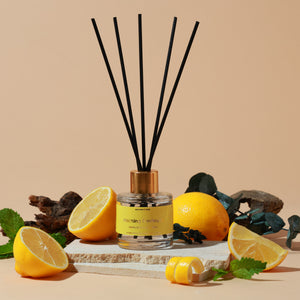
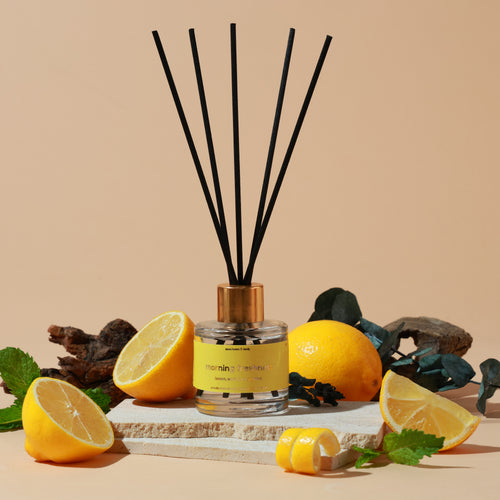
4. A reed at ₹749–₹849 is the proportionate answer below that threshold. It covers a single room convincingly, needs no wiring, no app and no maintenance beyond swapping the bottle every six to eight weeks, and it costs a fraction of a machine built for a floor plan the solo practice does not have.
5. A growth plan changes the answer, not the current headcount. A solo doctor about to add a second cabin or a proper reception is buying for the practice in twelve months, not the practice today, and that is a legitimate reason to choose ahead of the threshold rather than exactly at it.
Below reception-plus-corridor-plus-more-than-one-room, a reed at ₹749–₹849 is the honest answer; above it, Vaayu earns its place on control and reach, not on how many consulting rooms carry a doctor's name on the door.
Why 'solo' is the wrong question
The question a solo doctor is really asking is whether professional scenting is proportionate to the practice's size — and 'solo' is a proxy for size that turns out to be a poor one. A solo doctor can run a genuinely single-room practice with one door and one waiting chair, or a solo doctor can occupy a full floor with a private reception, a corridor and a second consultation room used for procedures. Those are two entirely different scenting decisions wearing the same job title.
The layout, not the headcount, is what determines whether a passive source can cover what needs covering. A single cabin with nothing beyond it has no corridor to lose scent along and no second room competing for the same reach — a reed placed there does the whole job. The moment a reception, a corridor or a second room enters the picture, the practice has a distribution problem a fixed local source was never built to solve, regardless of whether one doctor or five sees patients inside it.
This is why the honest recommendation in this cluster is not 'small clinics use reeds, big clinics use Vaayu' but 'below this specific layout threshold, use a reed; at or above it, Vaayu earns its place.' A solo doctor who happens to sit above that threshold is buying the same machine a five-doctor group practice buys, for the same reasons — and a group practice sharing one small consulting suite with no corridor to speak of is, by this measure, still a reed's job.
The three decisions that set the threshold
 Vaayu₹11,999A single cabin with a waiting chair outside it is one room. A cabin plus a separate reception plus a corridor is three distinct spaces a single point has to reach at once — that room count, not the number of doctors seeing patients inside it, is the real variable.
Comparing footprint against the honest route
Every row is a genuine solo-practice layout — the route follows the layout, not the fact that one doctor runs the practice.
| Layout | What has to be reached | Honest route | What it costs |
| Single cabin, one or two chairs outside it, no separate reception | One room only | Reed, placed at the cabin | ₹749–₹849 |
| Cabin plus a small reception, still effectively one zone | One connected zone, no corridor | Sukoon, placed within that zone | ₹1,899 |
| Reception, a corridor, and a second room or procedure cabin | Three distinct spaces from one point | Vaayu, wall or duct mounted | ₹11,999 |
| Single cabin today, a second cabin or proper reception signed for next year | One room now, more within twelve months | Vaayu, bought ahead of the threshold on a genuine growth plan | ₹11,999 |
| The number of doctors on the premises does not appear in this table — room count and layout are the only inputs that change the answer. | |||
 Vaayu · reception, corridor, more than one room₹11,999Shop →
  Sukoon · one connected zone₹1,899Shop → Morning Freshness · a single cabin₹749Shop →
Keeping a small practice's scent proportionate
A genuinely single-cabin practice barely has a reception to scent in the first place, so the zoning question that occupies larger clinics — which rooms to scent, which to leave alone — mostly does not arise. The one honest rule that still applies is the same one this cluster holds to everywhere: the consulting cabin itself stays unscented, and whatever waiting space exists outside it is where a reed, if used, belongs.
Where a solo practice does have a small reception separate from the cabin, keep intensity low enough that it is noticed on arrival and forgotten within a minute — the same standard this cluster applies to a reception ten times the size. A small space concentrates scent faster than a large one, so a solo practice needs less product, not more, to reach the same result.
If the practice is scaling up — adding a cabin, building a proper reception, taking on a second doctor — revisit the layout each time it changes rather than assuming the original reed placement still covers the new floor plan. The threshold in this post is not fixed to the practice's identity on the day it opened; it moves as the rooms do.
What to buy, at each stage
Every route below is sized to the rooms a solo or small practice actually has to cover, not to how many doctors work inside them.
| Route | Practice stage | Why | What it costs |
| Vaayu, wall or duct mounted | Reception, a corridor and a second room or procedure cabin | The only route in the range that reaches three distinct spaces from one point | ₹11,999 |
| Vaayu, bought ahead of a signed expansion | A single cabin today with a second room or proper reception confirmed within the year | Buying for the practice about to exist, not the one standing today | ₹11,999 |
| Sukoon, placed within the zone | Cabin plus a small, connected reception with no corridor | Proportionate coverage for one genuinely open zone | ₹1,899 |
| Reed, placed at the cabin | A genuinely single-room practice with a chair or two outside it | The right-sized answer below the threshold, at a fraction of the cost | ₹749–₹849 |
| Avoid: a ₹11,999 machine for a single cabin with nothing else to cover | Any single-room practice with no near-term growth plan | Reach the practice cannot use is not a better outcome, only a more expensive one | — |
I turn down more solo-doctor enquiries for Vaayu than I take up, and I say so plainly on the call. If a doctor describes one cabin, a couple of chairs in the corridor and nothing else, I tell them a reed at ₹749 does that job completely, and I would rather sell that today and see them again when the practice has grown into something more.
The conversation changes the moment a doctor describes a reception separate from the cabin, a corridor connecting two rooms, or a second consultation space used for procedures. At that point the practice has a distribution problem no reed can solve regardless of how many doctors it employs, and Vaayu is the honest recommendation — not because the practice has become impressive, but because the layout has grown past what a passive source can cover.
The solo doctors I trust most on this decision are the ones who tell me exactly what they have today, including the version of the practice that is not flattering — one room, one desk, one small waiting area. That honesty is what lets me recommend the right thing, and it is usually the cheaper thing.
Questions solo practitioners ask about scenting
- Reed Diffusers, Room Sprays or Professional Scenting: What Makes Financial Sense for a Premium Clinic? — the cost-over-time comparison behind this same threshold.
- When Does an Orthopaedic Clinic Need an Active Waterless Scent Machine Like SOSA Vaayu? — the layout signals that decide when a passive reed stops being enough.
- How Do I Scent a 300 Sq Ft Orthopaedic Clinic? — a worked example just below the threshold this post describes.
- My Waiting Room Is Small — Do I Need a Scent Machine or Would a Reed Diffuser Be Enough? — the same proportionate-answer question asked from the waiting-room side.
- Brand: the SOSA founder story.
SOSA products & prices (verified September 2026): Reed diffusers 50ml ₹749–₹849 (to 150 sq ft, 6–8 weeks at six reeds) · 130ml ₹1,249–₹1,349 (above 150 sq ft, 14–18 weeks) · reed refill 300ml ₹2,399. Ultrasonic: Boond ₹899 (~150 sq ft) · Sukoon ₹1,899 (270–320 sq ft, ships with three 15ml Hotel Collection fragrances) · Megh ₹3,499 (6L tank, ~100 hrs runtime, ~215 sq ft — a runtime machine, not a coverage upgrade). Waterless cold-air: Safar ₹3,999 (no published coverage figure) · Vaayu ₹11,999 (up to 1000 m³, roughly 2,000–3,000 sq ft; 400ml tank lasting about 90+ days; app and onboard control, 1h/4h/8h/24h run windows, adjustable intensity, key-lock, under 38 dB, freestanding or wall/HVAC mount, 5W, CE/RoHS/SGS) · Aangan ₹25,999 (8,000–10,000 sq ft). Hotel Collection water-based fragrance 15ml ₹299 · 100ml ₹999 · 300ml ₹1,799 is for ultrasonic machines; reed oil and Hotel Collection are not interchangeable. Reed diffusers are alcohol-free, phthalate-free, paraben-free, IFRA-compliant and low VOC, handmade in small batches in Pune. Every purchase funds a girl's education through Nanhi Kali. Prices and availability subject to change — see the live product pages.