



Diyas, Mithai, Cooking and Incense Are All Going at Once — Should I Even Add Home Fragrance?

Diyas, Mithai, Cooking and Incense Are All Going at Once — Should I Even Add Home Fragrance?

★ Diwali with a full house · cooking, diyas, incense and eight peopleCandle ₹379 · reed ₹749 · Boond ₹899 · Sukoon ₹1,899 · free shipping above ₹499A portion funds girl-child education
★ SOSA · when people are coming over
During Diwali your home already has plenty of smells doing plenty of work. The question is not what to add — it is where there is any room left
★ ★ ★ ★ ★
★★★★★
"Eight of us in a 2BHK for a week. The honest advice was to use less than normal, not more, because the house was already full of mithai and incense."
Nalini P. Diwali, 8 guests
Less than normal
★★★★★
"Diyas, cooking and agarbatti all going at once. Told me to leave the living room alone and only scent the bedrooms. Completely right."
Rohit A. Diwali, Mumbai
Bedrooms only
★★★★★
"Guest room had been shut for months and relatives arrived the next day. Aired it all day, changed everything, then a candle an hour before. Fine."
Sunita M. Overnight prep
Air all day
★★★★★
"The entrance is where it matters during Diwali — people are in and out constantly. One thing by the door did more than four things inside."
Karan J. Diwali entrance, Delhi
The door only
★★★★★
"We cook triple during Diwali week. Extractor and windows carried it; the fragrance just stopped the living room feeling like a kitchen."
Lata S. Diwali cooking, Pune
Airflow led
★★★★★
"Wanted festive without being overpowering in a small flat. Warm and low, in one room, was the answer rather than everywhere at once."
Vikas T. Small home, Diwali
One room, warm
★★★★★
"Eight of us in a 2BHK for a week. The honest advice was to use less than normal, not more, because the house was already full of mithai and incense."
Nalini P. Diwali, 8 guests
Less than normal
★★★★★
"Diyas, cooking and agarbatti all going at once. Told me to leave the living room alone and only scent the bedrooms. Completely right."
Rohit A. Diwali, Mumbai
Bedrooms only
★★★★★
"Guest room had been shut for months and relatives arrived the next day. Aired it all day, changed everything, then a candle an hour before. Fine."
Sunita M. Overnight prep
Air all day
★★★★★
"The entrance is where it matters during Diwali — people are in and out constantly. One thing by the door did more than four things inside."
Karan J. Diwali entrance, Delhi
The door only
★★★★★
"We cook triple during Diwali week. Extractor and windows carried it; the fragrance just stopped the living room feeling like a kitchen."
Lata S. Diwali cooking, Pune
Airflow led
★★★★★
"Wanted festive without being overpowering in a small flat. Warm and low, in one room, was the answer rather than everywhere at once."
Vikas T. Small home, Diwali
One room, warm
Candle: scent in the room in 15–20 minutes · Sukoon: about 20 minutes from cold A reed diffuser needs 24–72 hours — the wrong buy when guests arrive tonight Ventilate first · fragrance is the finishing layer, never the cover-up


Founder Diaries · Home Fragrance · Diwali
By Sonal Sahani · ISIPCA Versailles 11 min read Updated August 2026
On the day itself the honest answer is no, and I would rather say so than sell you something you will not enjoy. By the evening of Diwali your home already has four strong scent sources running at once — the oil and cotton of the diyas, the ghee and sugar of the food, the agarbatti at the puja, and whatever the crackers outside are putting through the windows — and three of those mean something to the people standing in the room. A fifth source does not add atmosphere to that. It adds confusion, and it competes with the only three smells in the house that anybody there is going to remember. There is also a plainer point, which is that a manufactured fragrance sitting on top of an aarti is simply the wrong note. Where fragrance belongs during Diwali is the days around it, and that is a genuinely useful answer rather than a polite way of saying no.
Quick answers — read this first
On the day itself: no diffuser. Four scent sources are already running — diyas, food, agarbatti and the air coming in from outside — and three of them carry meaning. A fifth reads as confusion rather than as atmosphere.

Where it belongs instead: the bedrooms guests are sleeping in, the bathroom, and the hall in the mornings before the cooking starts. Those rooms are unfestive, hard-working and genuinely improved by a background scent.

And the week after: once the diyas are put away and the house is being put back together, a clean or warm background is exactly right. The Sukoon at ₹1,899 with three 15ml Hotel Collection scents included covers all of it.
The short answer
Short answer: no, not on the night. The house already has diyas, food and incense running, and those three are the smells the evening is actually made of. Adding a diffuser to that is not layering, it is crowding, and a manufactured scent over an aarti is the wrong note in a way that has nothing to do with product quality.
Where the fragrance goes instead: the guest bedrooms, which are unfestive rooms people sleep in for eight hours; the bathroom, which is in constant use and improved by a reed diffuser from ₹749; the hall in the mornings before cooking starts; and the week afterwards, when the house is being put back together.
Shop: the Sukoon at ₹1,899 covers 270–320 sq ft with steady, 2H and 4H timers and includes three 15ml Hotel Collection scents of your choice; extra scents are ₹299 for 15ml, ₹999 for 100ml and ₹1,799 for 300ml at about ₹6 per millilitre. Reed diffusers from ₹749 need 24–72 hours, so set them up before the week begins. Free shipping above ₹499.
Straight answer
Should I add home fragrance on Diwali night when the diyas, food and incense are all going?
1. On the night itself, no. Switch nothing on. Four scent sources are already running and three of them are load-bearing: the diyas, the food and the agarbatti. A diffuser is a fifth voice in a room that already has more than it can carry, and the result is not richness. It is a smell nobody can name.

2. The reason is not modesty about the product, it is how a nose works. Distinct smells arriving together do not layer, they mask each other, and the ones that survive are the heaviest rather than the best. On Diwali night the heaviest are the incense and the ghee, and they will simply absorb whatever you add.

3. There is also a plainer objection, and it is worth stating. A manufactured fragrance sitting on top of an aarti is the wrong note. The puja has its own smell, it is chosen, and putting a hotel scent over it does not improve it — it flattens it into background. I would rather say that than take the order.

4. Where fragrance genuinely belongs is the rooms the festival is not happening in. The bedrooms guests are sleeping in, the bathroom that is in use from six to eleven, and the hall in the mornings before the cooking starts. Those rooms are working hard and nothing in them is festive.

5. And the week afterwards, which is when most people actually want this. Once the diyas are packed away and the house is being put back together, a clean background scent is exactly right and there is nothing left for it to compete with.

6. So the honest sequence is: nothing on the night, a reed diffuser from ₹749 in the bathroom set up days ahead, and the Sukoon at ₹1,899 for the mornings and for the week after. That is the whole recommendation and it is deliberately smaller than the question implies.

A portion of every order supports girl-child education through Nanhi Kali.

TL;DR: on the night itself, no — the diyas, the food and the agarbatti are three strong sources that already mean something, and a fourth manufactured one only crowds them. Put the fragrance in the rooms the festival is not happening in, and in the week afterwards.
SOSA reed diffusers
The room the festival is not happening in
SOSA reed diffusers from ₹749
A bathroom during Diwali week is used from six in the morning until eleven at night by everybody in the house, and absolutely nothing about it is festive. It is the clearest case in the whole festival for a background scent, and it is also the room where nobody will ever manage a machine — which is exactly what an alcohol-free reed is for: no electricity, no switch, no routine, months of steady output. Morning Freshness at ₹749 for 50ml is Malabar lemon, peppermint and eucalyptus. Evening Calm and Garden Bloom are ₹799, Mountain Breeze and Fresh Brew ₹849, 130ml from ₹1,249, duos from ₹1,498, 300ml refills ₹2,399. Set it up several days before the week begins — a reed takes 24 to 72 hours to reach its level.

The four sources already running

It is worth counting them, because the count is the argument. On the evening of Diwali a normal Indian home has oil lamps burning in several rooms, a kitchen that has been producing sweets and fried food since morning, agarbatti or dhoop at the puja, and windows that are letting in whatever the street is doing — and that is before anybody has lit a candle or plugged anything in. Three of those four are not background noise. The diyas are the smell of the festival for most people who grew up with it, the food is the reason half the family travelled, and the incense is part of a ritual somebody chose deliberately. The fourth, the street, is the only one that is genuinely intrusive, and it is also the only one you cannot do anything about. Into that, the question is whether a fifth source improves matters. It does not, and the reason is mechanical rather than sentimental.

1
THE MECHANISM
Distinct smells arriving together do not layer, they mask
There is a persistent idea that home fragrance works like a mixing desk, where every source you add contributes its part and the result is fuller. That is not how olfaction behaves at these concentrations. When several strong and unrelated smells arrive at the same time, the nose does not resolve them into a composition — it either picks the most prominent and suppresses the rest, or it fails to separate them at all and reports something vague and slightly unpleasant that nobody can name. Perfumery gets layering to work by controlling the relationship between materials: what is on top, what is underneath, what is present at what strength, all decided in advance. Four independent sources in four parts of a house, at unknown and constantly changing strengths, with people walking between them, is not layering. It is four things happening. And on Diwali night the two heaviest sources by a distance are the incense and the ghee, both of which are dense, persistent and entirely capable of absorbing anything a diffuser is producing across the room. So the practical outcome of switching a machine on that evening is not a richer room. It is ₹299 of fragrance that nobody detects, in a room that is now very slightly harder to read. The exception people raise is the entrance, where guests are arriving and leaving all evening and the front door is genuinely a separate small zone with its own air — that is a real argument and a different page, and even there the honest version is one thing by the door rather than four things through the house.
2
THE OTHER OBJECTION
A manufactured scent over an aarti is the wrong note
I want to make this point separately, because it is not a technical one and I think it matters more than the technical one. The smell of a puja is chosen. Somebody selected that agarbatti, lit those lamps and arranged that thali, and the smell that results is part of the thing being done rather than decoration around it. Putting a commercial fragrance over that — a white tea, a cedar, an amber, however well made — does not enhance it. It reframes it as background, which is precisely the opposite of what an aarti is. I have watched people do this with the best intentions, usually because guests are coming and they want the house to feel finished, and the result is always slightly off in a way they can feel but cannot locate. It is also, commercially, the moment I would least like my product to be present. A fragrance house selling into the fifteen minutes of an aarti is trying to occupy a space that is not for sale, and I would rather be the brand that says so than the one that runs a festive campaign timed to that exact hour. Nothing in the Hotel Collection was composed to sit under a diya, and none of it needs to. The collection is white tea, cedar, vetiver, amber, violet, jasmine, sandalwood and pepper — good in a hall on a Tuesday, and not required at a puja.
3
THE REAL PLACE
The rooms the festival is not happening in, and the week after
None of this means fragrance has no place during Diwali. It means the place is not where the marketing puts it. Think about which rooms in your house are working hardest that week and receiving no festive attention whatsoever: the bedrooms your relatives are sleeping in, the bathroom that is in use for seventeen hours a day, and the hall at seven in the morning before anyone has started cooking. Nothing in those rooms is celebratory. They are simply overloaded, and they are exactly where a background scent does its ordinary, useful job of making a space feel looked after. A reed diffuser from ₹749 in the bathroom, set up several days before the week starts because a reed needs 24 to 72 hours to reach its level. A Sukoon at ₹1,899 in the hall for two hours in the morning, on three drops, while the house is quiet and there is nothing to compete with. Guest bedrooms aired rather than scented, or a very light reed installed days early. And then the week afterwards, which is when most people actually want this and which nobody sells into. The diyas are packed away, the mithai is finished, the house is being cleaned and put back together, the curtains have come down and gone up again, and there is a stretch of days when the flat smells of nothing in particular and feels faintly flat after all that. That is when a clean or a warm background scent is genuinely welcome and has the room entirely to itself. It is the most honest commercial moment in the whole festival and it happens to be the one that is really used.
The single question I would ask before switching anything on during Diwali: is this room part of the festival, or is it a room that is simply working hard this week? If it is the first, leave it alone. If it is the second, it is exactly what a background scent is for.

Where the fragrance actually belongs

The four sources already running on Diwali night, and then the four places a background scent is genuinely useful. The point of putting them in one table is that the second half is not a consolation prize — those rooms and hours are where almost all the real usage in a festival week happens, and they are the ones nobody writes about.

Diwali, honestly divided
What is already running, and where there is any room left
Where What is happening Add fragrance? Why
The hall, Diwali night ★ Diyas, food, agarbatti and the street, all at once No — switch nothing on Three of those four mean something. A fifth source does not layer with them, it is absorbed by the heaviest two and adds nothing but vagueness
The puja itself Chosen incense, oil lamps, a thali No, and not for technical reasons The smell is part of what is being done rather than decoration around it. A commercial fragrance over it reframes it as background
The bathroom, all week Seventeen hours of use by eight people, no festive content at all Yes — a reed, set up days early The clearest case in the festival. It has to work unattended and nobody will manage a machine in there. From ₹749, needs 24–72 hours
Guest bedrooms Relatives sleeping eight hours behind a closed door Barely — air them instead A washed set of bedding and a day of open windows beats a scent nobody chose. If you want something, a light reed installed a week ahead
The hall, 7 to 9 am Nothing yet. The quietest, best-aired two hours of a Diwali day Yes — three drops, 2H timer The one window in the day when a scent has the room to itself, and it will still be quietly there in the afternoon
The week afterwards Diyas away, house being cleaned and put back together Yes, and properly Nothing left to compete with, a flat that feels slightly blank after the festival, and the moment the scent is actually enjoyed
Shop this guide
What Diwali fragrance is actually for
The SOSA principle
Four strong smells arriving together do not become one richer smell. The heaviest two absorb the rest, and what is left is something nobody in the room can name.
On Diwali night the heaviest two are the agarbatti and the ghee. Anything you add is being spent into them, which is why the honest answer on the night is to add nothing.

The mornings, the bedrooms, and the week after

If you take one thing from this page, make it the timing rather than the product. The two hours between about seven and nine in the morning are the only stretch of a Diwali day when a scent has a room to itself, and they are worth more than any evening you could choose. The diyas are out, the kitchen has not started, the house is at its quietest, and the flat has just had its best air of the day if you have cross-ventilated. Three drops of the Hotel Collection in the Sukoon at ₹1,899, on the 2H timer, in the hall, and then leave it entirely alone for the rest of the day. The Sukoon reaches a steady level in about twenty minutes from cold and gives 16 to 18 hours per fill on low at 30 to 50 ml/h, with a 2.4MHz cool-mist plate, a remote, auto shut-off and steady, 2H and 4H timers, and it arrives with three 15ml scents of your choice, so the whole festival is covered without a further order. The dose is per tank rather than per litre — you are scenting the mist, not the water — so a 300ml Boond at ₹899 takes exactly the same three drops. Three, not four, and not five: during the festival week the house is fuller and its air turnover is worse, and a morning dose that is even slightly high will still be sitting there at six in the evening when the diyas are lit and you specifically wanted it gone.

Then the bathroom and the bedrooms, which between them account for most of the honest usage in a festival week. The bathroom takes a reed diffuser from ₹749, and the reason is entirely practical: it has to work for seventeen hours a day, unattended, in a room where nobody has the attention to spare for a device. No electricity, no switch, no timer, months of output, and it costs less than one evening's sweets. The only thing to get right is when you buy it — a reed needs 24 to 72 hours for the oil to travel the reeds and the room to reach equilibrium, so it goes in the week before rather than on the day, and if you have left it late a candle at ₹379 or twenty minutes of a machine will bridge the gap. Guest bedrooms are the opposite case: I would air them rather than scent them. A relative sleeping eight hours behind a shut door cannot get away from a fragrance they did not choose, and a room with washed bedding and a day of open windows reads as more considered than a scented one. If you want something there, a light reed installed a week ahead at three or four sticks rather than the full set is the version I would defend. And placement, briefly, because it is the same everywhere: waist height or above, at the edge of the room rather than in a doorway, away from a fan or an air-conditioning vent and away from soft furnishings you cannot wash. Cool mist falls rather than rises, and a machine standing in a doorway is scenting a corridor where everything in the flat already meets.

Then the week after, which is the part of this page I would most like people to remember. The days following Diwali are when a house is at its most receptive to a background scent and at its least interesting-looking: the lamps are packed, the guests have gone, the curtains have been washed and rehung, the floors have been done, and the flat smells clean in the specific way that means it smells of almost nothing. That blankness is why people describe a freshly cleaned house as feeling slightly unfinished, and it is the exact condition a home fragrance was designed for — clean, moving air with nothing left to compete with. This is also when the warmer bottles become correct again, having been the wrong choice all week: the St. Regis-inspired amber and violet, or the Four Seasons-inspired citrus and sandalwood, both ₹299 at 15ml. On the constraints, stated once: the Hotel Collection is water-based and runs in the Sukoon, Boond and Megh only, never in a reed diffuser and never in the waterless Vaayu at ₹11,999, which takes its own undiluted oil. Reeds are a separate alcohol-free line with their own scents. Never put raw essential or carrier oils into an ultrasonic, which clogs the 2.4MHz plate, and rinse the tank when changing scent. Candles must be attended and put out, which during a week when there are already open flames in every room is worth saying twice. And the principle: a home fragrance is for the hours when a house has nothing else to say. Diwali night is not one of those hours, and the fortnight around it is made almost entirely of them.

A fragrance house selling into the fifteen minutes of an aarti is trying to occupy a space that is not for sale. I would rather be the brand that says so.
— Sonal Sahani, SOSA

The SOSA edit

In buying order for the festival as a whole rather than for the night itself, since the night itself needs nothing. The first row is a decision rather than a purchase and it is first because it is the one this page exists to make. The rows below it are where the fragrance genuinely earns its place.

The SOSA edit
Diwali fragrance, in the order it actually matters
Buy What it is When it earns its place Price
1. Nothing, on the night ★ Diyas, food and agarbatti already running, and three of the four sources mean something Switch nothing on. A fifth source is absorbed by the heaviest two and leaves the room harder to read, not richer Free
2. One reed diffuser Alcohol-free, unattended, no electricity. Morning Freshness ₹749, Evening Calm and Garden Bloom ₹799, Mountain Breeze and Fresh Brew ₹849 The bathroom, bought the week before. Seventeen hours of use a day and nothing festive about it. Needs 24–72 hours to reach its level from ₹749
3. Sukoon + its three included scents 500ml, 270–320 sq ft, 16–18h on low, steady/2H/4H timers, three 15ml scents of your choice The hall for two hours in the morning at three drops, and then every day of the week after the festival ₹1,899
4. A warm 15ml scent — for afterwards The St. Regis-inspired amber and violet, or the Four Seasons-inspired citrus and sandalwood The week after, when the frying has stopped and warmth is welcome again. Wrong during the cooking, right once it ends ₹299
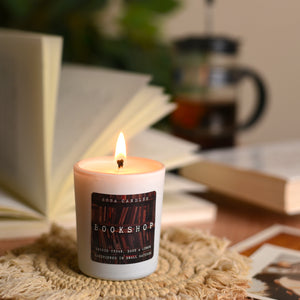
5. A candle, used carefully Bookshop 80g, roughly 15–18 hours, scent in a room in 15–20 minutes Only for a bedroom before a guest arrives, and never left burning. During a week with open flames in every room, that instruction matters more than usual ₹379
Not on the night: a diffuser at the puja The one placement I would talk anybody out of Printed rather than implied. The smell of an aarti is part of what is being done, and a commercial scent over it flattens it into background
Honest notes for buyers: fragrance is the last step, not the first — it layers on air that is already clean and moving, and it will not cover cooking, damp or a room that has been shut for weeks. Timing matters as much as product: a candle scents a room in fifteen to twenty minutes and a Sukoon in about twenty, which is why both work when people are arriving tonight, while a reed diffuser needs a day to three days before it is doing its job properly — it is the wrong buy for a deadline and the right buy for a room you want to hold a steady scent for months. SOSA does not make a room spray for the home; the sprays in the range are formulated and sized for a car. The Hotel Collection is water-based and runs in the Sukoon, Boond and Megh only — not in reeds, and not in the waterless Vaayu. Reed diffusers are a separate alcohol-free line with their own scents. Candles must be attended and put out before guests leave a room unattended. The Hotel Collection scents are SOSA's own interpretations inspired by the world's finest hotels; SOSA is an independent Indian fragrance house, not affiliated with or endorsed by any hotel brand. A portion of every order supports girl-child education through Nanhi Kali.
SOSA Sukoon
For the mornings, and for the week afterwards
SOSA Sukoon ₹1,899
500ml BPA-free tank, 270–320 sq ft, 16–18 hours per fill on low at 30–50 ml/h, 2.4MHz cool mist, remote, auto shut-off, steady, 2H and 4H timers, and three 15ml Hotel Collection scents of your choice included. The two hours that matter during Diwali are the morning ones, before the first cooking session and while the house is still quiet — and then the whole of the week afterwards, when the diyas are put away and there is nothing left for a scent to compete with. That is a machine used at two specific times rather than left running, which is also how it lasts and how you carry on liking it.
SS
ISIPCA
Versailles
A note from Sonal

This is the page in the group I most wanted to write, because October is the month my inbox and everybody else's fills up with festive fragrance and almost none of it is honest about what a house actually smells like on the night. It smells of oil lamps, of ghee, of agarbatti and of somebody's crackers coming through the window, and that combination is not a problem waiting for a product. It is the smell of the evening. I sell diffusers for a living and I still think the correct thing to do on Diwali night is to leave them switched off, and I would rather write that down than run a campaign pretending otherwise.

What I do believe in is the rest of the fortnight. The bathroom that eight people are sharing, the hall at seven in the morning before the kitchen starts, the guest room that has been shut since June, and above all the strange flat week afterwards when the lamps are packed away and the house has been cleaned to within an inch of its life and feels curiously blank. That is when a scent is genuinely wanted, and it is also, as it happens, when people use one. So the recommendation is a reed in the bathroom bought early, a machine in the hall for two hours each morning, and the whole thing switched off on the day the diyas come out. That is a smaller sale than the season is supposed to produce, and it is the one I can stand behind.

Everything is made and supported from Pune, and a part of every order funds girl-child education through Nanhi Kali. You get a home that smells like somewhere you chose; a girl gets a classroom. That equation has always felt right to me.

Frequently asked questions

Should I use a diffuser on Diwali night?
No. The house already has diyas, food and agarbatti running, and those are the smells the evening is made of. A fourth manufactured source does not layer with them — the heaviest two absorb it — so you spend fragrance on something nobody detects and make the room slightly harder to read.
Does home fragrance layer with incense?
Not in the way people hope. Perfumery layering works because the relationship between materials is decided in advance; four independent sources at unknown strengths in different rooms is not layering. Dense materials like dhoop and browning ghee dominate, and everything lighter is simply absorbed into them.
Where should I put home fragrance during Diwali if not the living room?
The bathroom, which is in use for seventeen hours a day and has nothing festive about it — a reed diffuser from ₹749, set up several days early. The hall between seven and nine in the morning, before the cooking starts, at three drops on a 2H timer. And the whole week after the festival.
Is it disrespectful to use home fragrance near a puja?
I would not put it that strongly, but I do think it is the wrong note. The smell of a puja is chosen and is part of what is being done rather than decoration around it, and a commercial fragrance over it reframes it as background. Leave that room and that hour alone.
When is the best time to use home fragrance during Diwali week?
Mornings, and the week afterwards. Between seven and nine the house is quiet, the kitchen has not started and the air is at its best, so a scent has the room to itself. After the festival, with the lamps packed and the house cleaned, there is nothing left to compete with at all.
Diwali, answered honestly
Nothing on the nightand rather a lot in the fortnight around it
The Sukoon is ₹1,899 with a 500ml tank for 270–320 sq ft, 16–18 hours per fill on low, steady, 2H and 4H timers and three 15ml Hotel Collection scents of your choice included — enough for the mornings during the festival and the whole week afterwards. Extra scents are ₹299 for 15ml, ₹999 for 100ml and ₹1,799 for 300ml at about ₹6 per millilitre. Reed diffusers from ₹749 need 24–72 hours to reach their level, so buy one before the week starts. Free shipping above ₹499.
Reed diffusers · from ₹749 See the Sukoon · ₹1,899
Continue the read
More from SOSA
Editorial standards & sources
About this guide: Written by Sonal Sahani, ISIPCA Versailles-trained founder and perfumer at SOSA Home & Body, on why adding home fragrance on Diwali night is usually the wrong decision: the four scent sources already running and why three of them carry meaning, why several strong smells arriving together mask rather than layer, why a manufactured scent over an aarti is the wrong note, and where fragrance genuinely belongs during the festival — the bathroom, the mornings, the guest rooms and the week afterwards.

Facts verified August 2026: Timings in this guide: a scented candle puts noticeable fragrance into a normal room in roughly 15–20 minutes; a Sukoon ultrasonic diffuser reaches a steady level in about 20 minutes from cold; a reed diffuser needs roughly 24–72 hours for the oil to travel the reeds and the room to settle, so it is not a same-day solution. SOSA products and prices: Sukoon 500ml ultrasonic diffuser ₹1,899 (270–320 sq ft, 16–18h on low, 9–12h high, 30–50 ml/h, 2.4MHz cool mist, 7-colour LED, remote, steady/2H/4H timers, BPA-free, auto shut-off, includes three 15ml Hotel Collection scents of your choice); Boond 300ml ₹899; Megh 6-litre ₹3,499; waterless Vaayu ₹11,999 (up to 1000m³); Aangan ₹25,999; Meenar ₹38,500. Hotel Collection water-based fragrance 15ml ₹299, 100ml ₹999, 300ml ₹1,799, Pack of 7 at 15ml ₹1,799 / 100ml ₹5,999 / 300ml ₹10,799; dose 3–6 drops per tank. Reed diffusers (separate alcohol-free line): Morning Freshness from ₹749, Garden Bloom and Evening Calm from ₹799, Fresh Brew and Mountain Breeze from ₹849; 130ml from ₹1,249; duos from ₹1,498; 300ml refills ₹2,399. Scented candles: Bookshop 80g ₹379 (~15–18 hours), Bookshop + Cozy Corner ₹664 (~30–36 hours), Amber Rose 130g ₹599 (~25–30 hours) and 220g ₹799 (~40–50 hours), ceramic jar candles ₹949, Pure Calm wax melt set ₹854. Free shipping above ₹499. SOSA does not make a room or linen spray for the home — the sprays in the range are car perfumes. The Hotel Collection scents are SOSA's own interpretations; SOSA is not affiliated with or endorsed by any hotel brand. Prices subject to change — see the live product pages.
Retour au blog

