



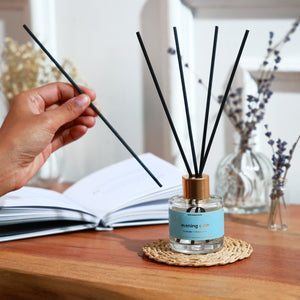

The replacement has to pass five tests: it must not spoil, it must not assume a diet, it must survive the journey home, it must need nothing else bought to work, and it must not be an ornament somebody now has to display.
What passes: a 50ml reed diffuser at ₹749, a jar candle at ₹379, an Everyday Beautiful Mug at ₹474. What fails: wax melts at ₹474, because they need a burner that may not exist in the home they reach.
Buy one thing, buy it as many times as you need. 6 × ₹749 = ₹4,494 for six people. 10 × ₹379 = ₹3,790 for ten. One decision, not ten, which is the same thing the box of sweets was giving you.
2. Understand what sweets were actually doing for you. They required no decision. That is their whole function and it is a genuine one — a list of eight people and a fortnight is a real constraint. Any replacement has to be equally effortless, which means one item bought eight times, not eight items chosen individually.
3. The five tests. Does it spoil. Does it assume a diet. Does it survive a journey home on a bus, a share auto or a local train. Does it need a second purchase to be usable. Does it have to be displayed. A box of sweets fails the first three; a decorative showpiece fails the last; wax melts at ₹474 fail the fourth because they need a burner.
4. The three things I would actually send. An Everyday Beautiful Mug at ₹474, because it is used on ordinary days and assumes nothing at all. A jar candle at ₹379, roughly 15–18 hours, complete on its own. A 50ml reed diffuser at ₹749, which runs 6–8 weeks and needs nothing done to it.
5. Show yourself the arithmetic before you commit. 6 × ₹749 = ₹4,494. 10 × ₹379 = ₹3,790. 14 × ₹474 = ₹6,636. Per-head figures always feel smaller than they are, and the multiplication is the only honest way to see the total.
6. Buy identically. People who work in the same building compare what they were given, and there is no version of that comparison that ends well when the gifts differ. Identical is not laziness here; it is the fairest available arrangement and it is also the fastest.
7. Do not assume anything about the home it goes to. Not the size of it, not who lives in it, not what is eaten there, not what is observed there. This is the strongest single argument for a sealed, non-edible, non-decorative object: it works without you needing to know any of that.
Everything is composed and handmade in small batches in Pune, and a portion of every order supports girl-child education through Nanhi Kali.

Part one — why sweets became the default
It is worth being fair to the box of sweets before dismantling it, because the reasons it won are good reasons and any replacement has to beat them on their own terms. The sweets default is a decision-elimination device. It removes size, taste, colour, fit, research and the risk of looking odd, and it is available within walking distance of wherever you are standing. If you have ten names and a fortnight, that is not laziness — it is a rational response to a genuine constraint. The problem is that every single one of those advantages accrues to the person buying, and none of them to the person receiving.
 Cozy Corner₹379 · jar candleHanding food to somebody is an assertion about what they eat, and it is an assertion you are almost never in a position to make. Health, habit, observance, allergy, what somebody's mother in the same house can and cannot have — none of it is your business and none of it is visible to you. The person receiving it also cannot tell you, because declining food from an employer at Diwali is not a comfortable thing to do. So the box is accepted, thanked for, carried home, and its fate is nobody's business afterwards. A sealed non-edible object removes the entire question. A ₹379 jar candle, a ₹474 mug or a ₹749 diffuser requires you to know nothing about anybody's household in order to be usable in it.
Part two — the five tests, scored
Here are the five tests applied across the three formats that matter, with the default in the middle column so the comparison is honest rather than rhetorical. No price appears for the sweets column and none will — the case against it is not that it costs too much or too little, and a more expensive box does not pass any of these tests better than a cheaper one.
| The test | What it actually asks | A box of sweets | Jar candle ₹379 | 50ml reed diffuser ₹749 |
|---|---|---|---|---|
| Spoilage ★ | Is there a clock on it from the moment it is handed over | Yes, and a short one | No — sealed wax, no deadline | No — sealed oil, 6–8 weeks once opened, by choice |
| Dietary assumption | Do you have to know what is eaten in that home | Yes, and you do not know | None at all | None at all |
| The journey home | Can it be carried on a bus without difficulty | Bulky, and it must stay upright | Small, flat, sealed | Light, but it is glass — give it in a bag |
| Second purchase | Does anything else have to be bought for it to work | No | No — nothing but a match | No — six reeds are in the box |
| Display obligation | Does the recipient have to keep it out where you can see it | No — this is its real strength | No, and it finishes in 15–18 hours of use | No, and it finishes in 6–8 weeks |
| What it asks of the home | The one condition each format still carries | That somebody there eats it, soon | That somebody there lights candles | A flat surface out of reach of children and pets |
| The honest caveat: sweets are not wrong for everybody, and I am not going to pretend otherwise to sell a candle. If you have given the same family the same thing for eleven years and it is welcomed, that is a tradition and it has value that no scoring table captures. The case above is against sweets as a default applied to a list of people whose homes you do not know. It is not a case against a considered gift to a household you know well, and it is certainly not an argument that the people receiving them should be grateful for something else instead. | ||||
Everyday Mug · assumes nothing₹474Shop →  Cozy Corner · sealed and complete₹379Shop →
 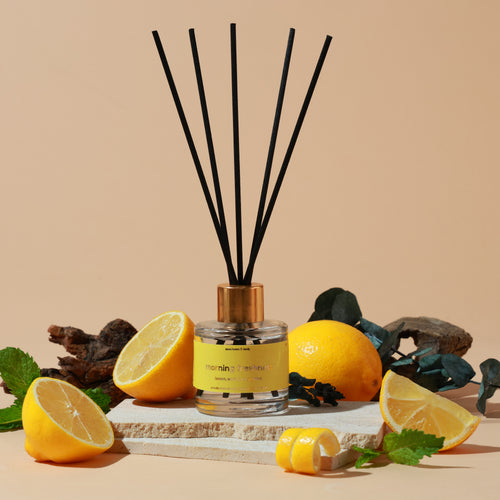 Morning Freshness · 6–8 weeks₹749Shop →
Part three — where the replacement also fails
A page like this can turn smug very quickly, so let me set out where my own recommendations fall down. The first is the wax melt. At ₹474 it looks like an obvious peer of the mug and the candle, and it is not, because it does not work without a burner. Give it to somebody who does not own one and you have handed over a sealed packet and a shopping task, which is precisely the failure mode this whole page exists to avoid. The same logic rules out the 15ml Hotel Collection at ₹299, which is a refill for an ultrasonic machine and is only a gift for somebody you have seen owning one. Anything that requires a second purchase is disqualified here, and it does not matter how attractive it is.
The second failure is the candle in the wrong home. A candle needs somebody who lights candles, a heat-safe surface to stand on and enough supervision that it is not left burning near a curtain or within reach of a small child. In a one-room home where the floor is where the family sits, an open flame is not a neutral object. I would rather you gave a mug there. The same caution applies to a reed diffuser from the other direction: it is a bottle of flammable fragrance oil, so it must be kept away from diyas and lamps, it wants a tray because the oil marks wood and stone, and it needs to sit somewhere a child or a pet cannot reach it. Those are handling facts, not selling points, and in some homes they are enough to make it the wrong choice.
The third failure is the one that matters most and has nothing to do with product. None of this replaces cash, and none of it replaces a bonus. If the money is the thing that is expected — and for people who work in your home it usually is — then an object arriving instead of it is a downgrade dressed as thoughtfulness, and everybody involved will understand exactly what has happened. The order is cash first, in an envelope, given directly and unaccompanied by any speech about it, and then a small physical thing afterwards if you want the gesture to feel like more than a transaction. That second part is a genuine and decent instinct. It is only decent when the first part has already happened.
Part four — what I would send, by list length
The list length changes the answer more than the budget does, because past a certain number the cost of deciding overtakes the cost of the gift. The arithmetic is shown in every row so you can see the total rather than the per-head figure, which is always the more comfortable of the two numbers to look at.
| How many people | What I would send | The arithmetic | What could still go wrong |
|---|---|---|---|
| Six people who work in the same building ★ | One Morning Freshness 50ml each, identical | 6 × ₹749 = ₹4,494 | They will compare. Identical is what makes that harmless |
| Ten people, tighter budget | Cozy Corner jar candles, all the same scent | 10 × ₹379 = ₹3,790 | Only works in homes where somebody lights candles |
| Fourteen people, no information about any home | Everyday Beautiful Mugs | 14 × ₹474 = ₹6,636 | Ceramic — give it boxed, and it wants a bag for the journey |
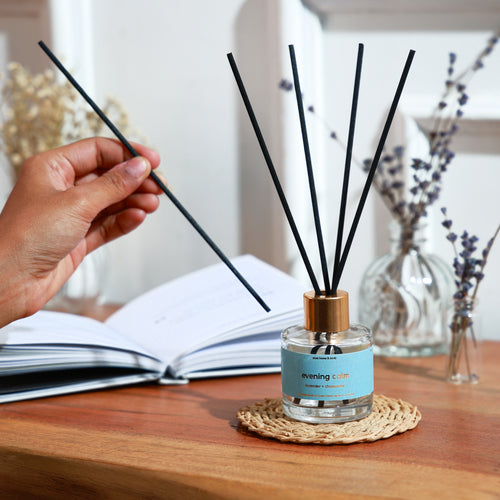
| Three people you know well and have gifted for years | Evening Calm 50ml — the softest in the range | 3 × ₹799 = ₹2,397 | Some households simply do not want fragrance. Ask, if you can |
| One person, and you want to mark it properly | Cash, then a Day & Night duo, two 50ml bottles | ₹1,498 on top of the cash | Do not do this where others will see it and count |
| A mixed list — some homes known, some not | The same item for everyone regardless | Whichever of the totals above fits | Splitting the list is where fairness problems start |
Versailles
I grew up in a house that gave sweets to everybody who worked in it, every year, without a moment's reflection, and I do not think anybody involved was doing anything wrong. It was the convention and conventions are how people manage large obligations without exhausting themselves. What changed my mind was a very ordinary conversation in which somebody mentioned, without any complaint attached, that four boxes had arrived in her house that week and none of them had been opened.
That is not a story about ingratitude. It is a story about a category reaching saturation. Everyone applied the same sensible logic at the same time and the result was a stack of identical things with a short clock on all of them. The useful question was never what is a better gift. It was what does this gift ask of the person receiving it — storage, a deadline, a dietary question they cannot say no to, and a journey home holding it.
I sell fragrance, so I am obviously not a neutral party. What I can do is tell you where my own products fail: a candle is wrong in a home with a small child and no clear surface, a wax melt is useless without a burner, and a diffuser is a bottle of flammable oil that needs to sit somewhere sensible. And none of it, ever, comes before the envelope. Made in Pune in small batches, and a part of every order funds a girl's classroom through Nanhi Kali.
Frequently asked questions
- Cash or a gift? — the honest answer, and why cash comes first.
- What to give your house help and whether a reed diffuser suits household staff.
- Your child's teachers — the appropriateness ceiling, and the school policy to check first.
- The guide to the people you owe a gift — the whole obligation list, tier by tier.
- Brand: the SOSA founder story.
SOSA range & prices used in this guide (verified from the live store, 27 August 2026): Reed diffusers — alcohol-free, phthalate-free, paraben-free, IFRA-compliant compositions on a heat-stable coconut-derived (CCT) carrier, in a refillable glass bottle with six fibre reeds; 50ml lasts 6–8 weeks, 130ml lasts 14–18 weeks. Morning Freshness 50ml ₹749 · 130ml ₹1,249; Garden Bloom ₹799 · ₹1,299; Evening Calm ₹799 · ₹1,299; Fresh Brew ₹849 · ₹1,349; Mountain Breeze ₹849 · ₹1,349. Duo sets: Day & Night ₹1,498, Fresh & Grounded ₹1,548, Warmth & Bloom ₹1,598 (2 × 50ml); ₹2,498–₹2,598 (2 × 130ml). Oil-only refills 300ml ₹2,399 · 500ml ₹3,499 (vessel and reeds not included). The least expensive SOSA reed diffuser is ₹749 — no reed diffuser exists below that price in any size. Below it: scented jar candles from ₹379 (roughly 15–18 hours), Sandalwood or Smoked Oudh jar candle ₹449, wax melts ₹474 (a burner is needed and is not included), ceramic mugs ₹474, ribbed and face mugs and taper candles ₹569, Amber Rose candle ₹599, ceramic trinket dish ₹664, candle two-pack ₹664 (roughly 30–36 hours). Machines: Boond 300ml ₹899 · Sukoon 500ml ₹1,899 · Megh 6L ₹3,499 (~215 sq ft, a runtime and humidity machine rather than a coverage upgrade) · waterless Vaayu ₹11,999 · Safar car and travel diffuser ₹3,999. The water-based Hotel Collection (15ml ₹299 · 100ml ₹999 · 300ml ₹1,799) is a fragrance for an ultrasonic machine, not a standalone gift. SOSA publishes no bulk or corporate gifting terms — there is no discount slab, no minimum order quantity, no stated GST-invoicing arrangement, no custom branding service and no published lead time — and SOSA sells no gift card, gift hamper, gift box or curated gift set. Larger orders should be discussed with SOSA directly through the contact page before committing. Gift wrapping, gift notes, direct-to-recipient shipping and delivery timing are unconfirmed — check at checkout rather than assuming them; no delivery date is promised anywhere in this guide. Per-head and total costs shown are arithmetic on the listed prices, not quotations. Fragrance adds scent to a room; it does not clean air, remove cooking or smoke smells, or change how anyone feels. Fragrance oil is flammable — keep any diffuser away from diyas, candles and open flame. Composed and handmade in small batches in Pune, India; tested through 45°C summer heat and 85% monsoon humidity. Free shipping above ₹499. A portion of every order supports girl-child education through Nanhi Kali. Prices subject to change — see the live product pages.