



The tell: a monsoon problem affects the whole flat at once. A hidden source affects one room and gets stronger as you approach it.
The fix: lower the humidity — dry-spell cross-ventilation, an AC or dehumidifier run deliberately, no indoor drying, air moving inside cupboards. Fragrance comes after, not instead.
2. Because every porous material comes into balance with that air. Cotton, wool, foam, paper, cardboard, untreated wood, plaster and leather all exchange moisture with the air around them until they reach equilibrium. In a dry month they sit dry. In monsoon they sit damp — not wet to the touch, but measurably heavier and chemically different. Damp fibre releases a different set of volatile compounds from dry fibre, and it releases them faster.
3. Because damp materials start growing things. This is the part that matters. Mould and bacteria need moisture, a food source and time. The food source is already everywhere: dust, skin flakes, textile finishes, paper sizing. The moisture arrives with the season. Musty is the smell of microbial metabolism, not the smell of water. That is why it takes a week or two to appear and does not vanish the moment a dry day arrives.
4. Because nothing indoors is drying properly. Evaporation depends on the difference between the moisture in a wet thing and the moisture already in the air. When the air is nearly full, that difference collapses. Towels stay damp all day. Bathmats never finish. Washing hung indoors takes two days instead of four hours and puts every litre of that water into your rooms while it tries.
5. And fragrance cannot touch any of this. Scent is additive. Put it into damp air and you get a perfumed damp smell, which most people find more unpleasant than the honest version. Lower the humidity, remove any growth you find, get the soft materials properly dry — then add a reed diffuser or a Sukoon as the finishing layer.
Made in India, composed by an ISIPCA Versailles-trained perfumer — and a portion of every order supports girl-child education through Nanhi Kali.

What sustained humidity actually does to a flat
There is a useful distinction between absolute humidity — how much water vapour is genuinely in the air — and relative humidity, which is how close that air is to holding all it can at its current temperature. Musty homes are a relative humidity story. Warm air can hold a lot of water; when monsoon air arrives warm and nearly full, relative humidity indoors settles somewhere in the seventies or eighties and simply stays there, day after day. Nothing in the flat is being given a chance to dry. That is a completely different situation from a leak or a spill, which is local and finite. This is ambient and continuous, and it is why every room reports the same complaint in the same week.
The consequence is biological rather than chemical. Mould spores are already present in the air of every home in every city; they are not an invasion, they are background. What they lack, most of the year, is water. Give a surface enough sustained moisture and the spores that land on it begin to grow, using the dust, skin cells, starch and fibre finishes that are already there as food. The volatile compounds that growth releases are what your nose reads as musty, earthy, cellar-like. This is why a musty flat is a health question before it is an odour question. A perfume placed over it changes nothing about the growth, and it takes away the signal that was telling you where to look.
Where the water actually is in a monsoon flat
 Step fourFrom ₹749Buy a hygrometer. They cost a few hundred rupees and they end the argument immediately. Put one in the room that smells worst and read it morning and evening for three days. If it reads above 70% consistently, you have an ambient humidity problem and no amount of cleaning will change it. The counter-intuitive part: in monsoon, opening the windows all day can make a flat damper, not drier, because you are importing wet air. Ventilate hard during the dry hours between spells, and close up while it is actually raining.
Symptom to cause: reading a monsoon flat
The point of this table is to separate ambient humidity, which is seasonal and manageable, from a building fault or actual growth, which is neither. The confirmation column is what tells them apart.
| What you notice | Most likely cause | How to confirm it | What actually fixes it |
|---|---|---|---|
| Every room turns musty in the same week of June ★ | Ambient relative humidity — the whole flat is above 70% | A hygrometer in two different rooms reading the same high number | Dry-spell ventilation, an AC or dehumidifier run deliberately, no indoor drying |
| One room is much worse than the rest | A local source — a leak, a blocked weep hole, a cold external wall | Walk the room slowly at nose height and at floor level; the smell should intensify | Find the water. A wall that is wet in dry weather too is a building fault |
| Clothes smell musty within a day of being clean | Fabric never fully dried, then stored in a damp cupboard | Smell a garment straight off the line and again after a night in the wardrobe | Finish drying properly before storing; leave wardrobe doors open on dry days |
| Smell is strongest low down, near skirting | Floor-level moisture — slab, rising damp, or something stored on the floor | Tape a square of plastic sheet to the floor overnight and check underneath | Lift storage off the floor; if the sheet is wet underneath, call a damp specialist |
| Dark speckling on a wall, ceiling corner or grout | Mould growth — a health issue, not an odour | Look behind furniture on external walls and at the top corners of shaded rooms | Find the moisture source, remove the growth properly, ventilate. Never fragrance this. |
| Sharp sewer note that appears only in the rains | A drain seal — heavy rain can push sewer gas past a weak trap | Run water down every floor drain, then check whether the smell returns | A plumbing job, not a fragrance one. Keep traps topped up weekly |
| If none of these fit: take the hygrometer reading seriously. If the flat is genuinely below 60% relative humidity and still smells musty, the cause is a specific wet object or a building fault rather than the season, and it will not go away in October. | |||
Reeds · always-on roomsFrom ₹749Shop →  Sukoon · when you want a switch₹1,899Shop →
  Hotel Collection · the scentFrom ₹299Shop →
Drying a flat that is surrounded by wet air
First, stop adding water. This is free and it is the biggest single lever in a small flat. Move the washing off the indoor rack — a covered balcony with a fan pointed at it beats a bedroom rack every time, and during a heavy spell a dryer or a laundry service genuinely pays for itself in comfort. Run the kitchen extractor whenever anything is boiling. Shut the bathroom door during and after a shower and let the exhaust run for a quarter of an hour rather than switching it off with the light. Squeegee the shower walls. Dry mops and cloths hanging and open, never folded.
Second, ventilate against the weather rather than with it. Monsoon ventilation is a timing exercise. When it is actually raining, opening everything up imports saturated air and makes the flat worse. When the rain pauses and the sun comes through, open two openings on opposite sides and let ten minutes of genuine cross-draught move the whole volume — a closed flat exchanges only about 0.2–0.5 of its air an hour, while a cross-ventilated one manages 3–8. In between, use the machines you already own: an air conditioner removes water from the air whenever it runs, and a dehumidifier does it more efficiently in an unconditioned room. Both need the door closed to work.
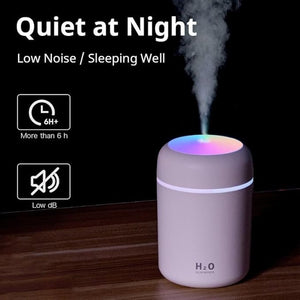
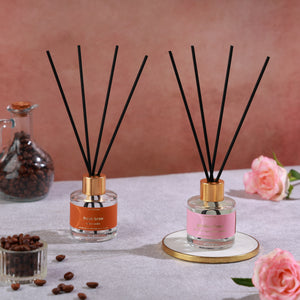
Third, get inside the enclosed spaces. Wardrobes, storage under the bed, the cabinet under the sink and the back of the sofa are the places where air never moves and growth starts first. Open wardrobe doors on dry days, do not pack cotton tight, lift boxes off the floor, and pull furniture a few inches off external walls so air can pass behind. Fourth, and only once the hygrometer has come down and everything is dry, add fragrance. Now a scent has clean, dry air to sit in. A reed diffuser from ₹749 runs continuously on capillary action for a hall or an entrance; the Sukoon at ₹1,899 with a Hotel Collection scent from ₹299 gives you a switch for a living room. Neither is a moisture control device, and neither is sold as one.
What to do, in order
Steps one to three are what actually change a musty flat, and they cost nothing but attention. The fourth is the purchase, and it belongs at the end of the monsoon rather than the middle of it.
| Step | What to do | When | Cost |
|---|---|---|---|
| 1. Remove the source | Stop adding water — no indoor drying, extractor while cooking, exhaust running after every shower | Before anything else | ₹0 |
| 2. Move the air | Cross-ventilate in the dry gaps between spells; close up while it rains; run the AC or a dehumidifier with the door shut | Daily, five to ten minutes | ₹0 |
| 3. Deal with what holds it | Open wardrobes on dry days, pull furniture off external walls, lift storage off the floor, dry every soft thing properly | Weekly to monthly | ₹0 |
| 4. Then the always-on layer ★ | A SOSA reed diffuser — a settled background for a hall or entrance once the flat is dry again, with nothing to switch or plug in | 50ml 6-8 weeks · 130ml 14-18 | from ₹749 |
| 5. Or the on-demand layer | Sukoon with a Hotel Collection scent — scent on demand in a living room in the post-monsoon months; covers roughly 270–320 sq ft | Run it when you want it | ₹1,899 |
Versailles
I have spent enough monsoons in a coastal flat to know what the last week of June smells like. The honest thing to tell you is that this is a weather problem with a biology problem inside it, and the most useful thing you can buy in June is a hygrometer, not a diffuser. A few hundred rupees, and you stop guessing.
People write to us in monsoon asking which scent is strongest, because they want something that will win against the damp. Nothing wins against damp. Fragrance is additive — it puts molecules in and takes none out — so a strong scent over a musty room produces a strong musty room. And if there is growth on a wall behind a wardrobe, covering the smell means you stop looking for it, which is the genuinely bad outcome. Mould is a health issue. Find the water, remove the growth, and get advice if a wall stays wet in dry weather.
When October comes and the flat has dried out, that is the moment home fragrance is worth having, because the contrast is enormous and the air is finally neutral enough to hold a character. I would put something clean and a little green in a hall then — Mountain Breeze or Morning Freshness — rather than anything sweet, because sweetness over a memory of damp reads oddly. A portion of every order funds a girl's classroom through Nanhi Kali.
Frequently asked questions
- Musty smell but no visible mould — where to check — the search method, room by room.
- Drying clothes indoors during monsoon — the litres you are adding to your own air.
- Should I use a reed diffuser for a damp smell? — the honest answer, which is not yet.
- After the dampness is fixed — how to get the home smelling good again.
- Brand: the SOSA founder story.
SOSA products & prices (verified August 2026): Hotel Collection water-based ultrasonic diffuser fragrance 15ml ₹299 · 100ml ₹999 · 300ml ₹1,799 · Pack of 7 (15ml, all fragrances) ₹1,799; refills 100ml from ₹999. Seven scents: The Ritz-Carlton-inspired (white tea · bergamot · cedar), Westin-inspired (white tea · aloe · cedar), 1 Hotels-inspired (cedarwood · vetiver · green leaves), The St. Regis-inspired (amber · violet · woods), Shangri-La-inspired (jasmine · green tea · white tea), Four Seasons-inspired (citrus · floral · sandalwood), W Hotels-inspired (citrus · pepper · amber). Diffusers: Boond 300ml ₹899 · Sukoon 500ml ₹1,899 · Megh 6L ₹3,499. Water-based, phthalate-free, composed to IFRA standards for home diffusion; 3–6 drops per tank. Made in India, Pune. The Hotel Collection scents are SOSA's own interpretations inspired by the world's finest hotels; all hotel names are trademarks of their respective owners and are used only to describe the scent style — SOSA is an independent Indian fragrance house, not affiliated with or endorsed by any hotel brand. Prices and availability subject to change — see the live product pages.