




What accumulates: moisture and carbon dioxide from breathing, skin lipids oxidising on the pillowcase, and whatever the unit itself is contributing from a wet coil.
The fix: ten minutes of cross-ventilation on waking, bedding washed weekly, the AC filter washed monthly. Then, and only then, fragrance.
2. Because a shut bedroom is close to airtight in practice. Even without an AC, a closed Indian flat sits at roughly 0.2 to 0.5 air changes an hour, meaning it takes two to five hours to replace the air once. Two windows open on opposite walls takes that to 3–8 changes an hour. The gap between those two numbers is the entire difference between a room that smells lived-in and one that smells closed, and no appliance closes it.
3. Because the load in the room is genuinely high. Two adults sleeping for eight hours put out a steady stream of carbon dioxide and a surprising amount of water vapour through breath and skin. Skin lipids transfer to the pillowcase and oxidise. Hair products, night creams, yesterday's clothes on the chair — all of it is quietly volatilising into a room with nowhere for the air to go. Not one bit of that is dirt, which is why cleaning the floor makes no difference to it.
4. Because the AC may be adding a note of its own. The evaporator coil sits below dew point while it runs, which means it is wet all night, and a wet dusty coil grows biofilm. If what you smell in the morning is specifically musty or sock-like rather than simply flat and closed, the unit is contributing. The tell is that it gets stronger when the compressor cycles on, not weaker.
5. And you are the last person who can judge it. Olfactory adaptation is essentially complete within twenty minutes, and you were in there for nine hours. Your morning nose is not reporting the room accurately. Go out, stay out for thirty minutes, come back and judge the first breath. That is the only honest measurement you have and it costs nothing.
Made in India, composed by an ISIPCA Versailles-trained perfumer — and a portion of every order supports girl-child education through Nanhi Kali.

Cooling is not airing, and the confusion costs you every night
The reason this question is so common is that an air conditioner feels like ventilation. There is air moving, there is a draught, the room is measurably more comfortable, and comfort reads as freshness. But the movement is a closed loop. Warm room air is drawn in through the top of the indoor unit, passed over the evaporator coil where it loses heat and some moisture, and pushed back out of the louvres at the front. The outdoor unit is dumping heat, not exchanging air. The volume of outside air introduced by a domestic split AC is, for practical purposes, nil. So the room gets cooler and drier and no less stale.
There is a second, subtler effect that makes the morning worse than the night. Cold air suppresses volatility — molecules evaporate and travel less readily at 19°C than at 30°C — so while the room is cold, you perceive less of what is in it. As the unit shuts off and the room warms up towards morning, everything that has been sitting in the bedding, the mattress and the air becomes easier to smell at exactly the moment you wake up. The room did not suddenly get worse at 6am. It got warm enough for you to notice what had been accumulating since 10pm. This is also why the same room usually smells fine by mid-morning: the door has been opened, the load has dispersed, and your nose has adapted anyway.
What actually builds up over nine hours
 Step fourFrom ₹749This is the largest single contributor and the cheapest to fix. Two sleeping adults exhale a continuous stream of carbon dioxide and water vapour for eight hours into a volume of air that is being turned over roughly a fifth to a half of once per hour. Carbon dioxide itself has no smell, but rising levels track exactly with the stuffiness people describe, because whatever else is being emitted is concentrating on the same curve. Ten minutes of genuine cross-ventilation on waking displaces more air than the whole night of cooling. Two openings on opposite sides, not one window cracked open.
Symptom to cause: reading a cooled bedroom
The useful distinction here is between a smell that is simply flat and closed, and one that has a definite damp or sour character. The first is air exchange. The second usually has a wet source.
| What you notice | Most likely cause | How to confirm it | What actually fixes it |
|---|---|---|---|
| Flat, closed, no particular character; clears when you open up ★ | Air-change rate — nine hours of occupancy in a room the AC never ventilated | Cross-ventilate ten minutes, leave for thirty, judge the first breath back in | Ten minutes of cross-ventilation on waking and again at night |
| Worse the moment the compressor cycles on | Biofilm on the wet evaporator coil being pushed out by the blower | Run fan-only for two minutes, then cooling for two, and compare | Wash the filters; book a coil service; fan-dry the coil before shutdown |
| Concentrated in the bed itself rather than the room | Bedding holding and re-releasing skin lipids and overnight moisture | Compare your pillow with a fresh one from the cupboard at close range | Weekly sheets, monthly protectors, throw the duvet back instead of making the bed |
| Worse on humid nights, better on dry ones | Humidity raising perceived odour and slowing everything drying out | Compare a rainy week with a dry one in the same room | Let the AC run in dry mode for part of the night; never dry clothes in the room |
| Fine at night, obvious only in the last hour before waking | The room warming as the unit cycles down, making what was there easier to smell | Note the temperature when it becomes obvious — it usually tracks the warming | Air on waking; deal with the bedding, which is what the warmth is revealing |
| Earthy or cellar-like, with dark speckling on a wall or the ceiling | Mould from condensation or a leak — a health issue, not an odour problem | Check behind furniture on external walls and above and behind the indoor unit | Find the moisture source and remove the growth. Do not fragrance this. |
| If none of these fit: sleep one night with the AC off and the window open, and one night with the AC on and everything shut, and compare the two mornings. Two nights of data will tell you whether you are dealing with the room, the bed or the machine. | |||
Reeds · always-on roomsFrom ₹749Shop →  Sukoon · when you want a switch₹1,899Shop →
  Hotel Collection · the scentFrom ₹299Shop →
The morning routine that actually works
First, air the room before you do anything else. On waking, open a window and the bedroom door, and if possible a window in the room beyond it, so air has an entry and an exit. Ten minutes is enough. If your building faces a busy road or the monsoon is against you, put a fan in the window blowing outwards, which pulls the room's air out behind it rather than pushing street air in. This one habit does more for a cooled bedroom than every product on this page put together, and it is free.
Second, stop trapping the night in the bedding. Throw the duvet right back and leave the bed open while you air the room — a bed made at 6.30am seals the previous night's moisture into the fabric until evening. Wash sheets and pillowcases weekly, pillow protectors monthly, and get the mattress into direct sunlight when the weather and your balcony allow, because UV and heat drive off absorbed volatiles faster than airing in shade. Deal with the chair pile too: worn clothes are a fabric reservoir like any other.
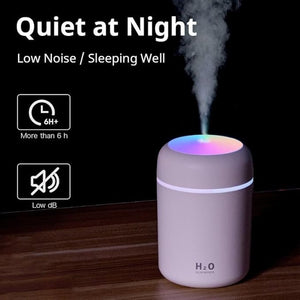
Third, service the machine, then add the scent. Wash the AC filters monthly under a tap, dry them completely, refit. Run fan-only for the last ten minutes before shutdown so the coil dries. Book a coil clean before the season rather than during it. Once the room is aired, the bed is clean and the unit is not contributing, a bedroom is worth scenting — lightly. A reed diffuser from ₹749 gives a steady background with nothing to operate, and in a cooled sealed room four reeds is the right setting rather than six, because nothing is being flushed out. If you would rather it were not running while you sleep, the Sukoon at ₹1,899 with three drops of a Hotel Collection scent from ₹299 gives you an hour before bed and then silence.
What to do, in order
The first three steps are a Sunday morning and a habit change. The fourth is the only purchase, and it works properly only once the first three are in place.
| Step | What to do | When | Cost |
|---|---|---|---|
| 1. Remove the source | Wash the AC filters, check the drain is running outside, look for damp behind and above the indoor unit | Before anything else | ₹0 |
| 2. Move the air | Ten minutes of cross-ventilation on waking and again before bed — the AC exchanges no air at all | Daily, five to ten minutes | ₹0 |
| 3. Deal with what holds it | Weekly bedding, monthly pillow protectors, duvet thrown back instead of the bed made, mattress aired in sunlight | Weekly to monthly | ₹0 |
| 4. Then the always-on layer ★ | A SOSA reed diffuser — a quiet overnight background in a cooled bedroom — four reeds rather than six, off the vent's airflow | 50ml 6-8 weeks · 130ml 14-18 | from ₹749 |
| 5. Or the on-demand layer | Sukoon with a Hotel Collection scent — an hour of scent before bed and none while you sleep; three drops is plenty in a sealed cooled room | Run it when you want it | ₹1,899 |
Versailles
I get asked which scent is best for a bedroom that smells stale in the morning, and the honest answer is that the scent is not the variable that matters. Ten minutes with two windows open does more than anything I sell. I would rather you did that first and bought nothing, than bought a diffuser and kept the room shut, because the second version does not work and you would reasonably blame the bottle.
The bedding surprises people more than the ventilation. A double bed is the largest single area of absorbent fabric in most flats, in contact with two bodies for eight hours a night. It holds and gives back. Wash it weekly, and stop making it the moment you get up — leave it open while you air the room and you will notice the difference within a week, before you have spent anything.
When you do get to fragrance, use less than you think in an air-conditioned room. It is sealed and it is cool: cool air slows evaporation from the reeds, but a sealed room lets whatever does evaporate build up rather than escape, and a bedroom you wake up in should never smell of a decision someone made. Four reeds, something quiet, placed away from the vent. A portion of every order funds a girl's classroom through Nanhi Kali.
Frequently asked questions
- Why does my bedroom smell weird when I turn the AC on? — the timing is the diagnosis.
- Eight hours of sleeping with the AC on — occupancy load in a sealed room.
- Can a dirty AC filter make a clean bedroom smell bad? — a month of dust becoming a smell.
- The AC bedroom closed all night — the wider stale-room diagnosis.
- Brand: the SOSA founder story.
SOSA products & prices (verified August 2026): Hotel Collection water-based ultrasonic diffuser fragrance 15ml ₹299 · 100ml ₹999 · 300ml ₹1,799 · Pack of 7 (15ml, all fragrances) ₹1,799; refills 100ml from ₹999. Seven scents: The Ritz-Carlton-inspired (white tea · bergamot · cedar), Westin-inspired (white tea · aloe · cedar), 1 Hotels-inspired (cedarwood · vetiver · green leaves), The St. Regis-inspired (amber · violet · woods), Shangri-La-inspired (jasmine · green tea · white tea), Four Seasons-inspired (citrus · floral · sandalwood), W Hotels-inspired (citrus · pepper · amber). Diffusers: Boond 300ml ₹899 · Sukoon 500ml ₹1,899 · Megh 6L ₹3,499. Water-based, phthalate-free, composed to IFRA standards for home diffusion; 3–6 drops per tank. Made in India, Pune. The Hotel Collection scents are SOSA's own interpretations inspired by the world's finest hotels; all hotel names are trademarks of their respective owners and are used only to describe the scent style — SOSA is an independent Indian fragrance house, not affiliated with or endorsed by any hotel brand. Prices and availability subject to change — see the live product pages.