



Relatives Are Staying With Us for Diwali — How Do I Keep a Busy 2BHK Smelling Fresh?

Relatives Are Staying With Us for Diwali — How Do I Keep a Busy 2BHK Smelling Fresh?

★ Diwali with a full house · cooking, diyas, incense and eight peopleCandle ₹379 · reed ₹749 · Boond ₹899 · Sukoon ₹1,899 · free shipping above ₹499A portion funds girl-child education
★ SOSA · when people are coming over
During Diwali your home already has plenty of smells doing plenty of work. The question is not what to add — it is where there is any room left
★ ★ ★ ★ ★
★★★★★
"Eight of us in a 2BHK for a week. The honest advice was to use less than normal, not more, because the house was already full of mithai and incense."
Nalini P. Diwali, 8 guests
Less than normal
★★★★★
"Diyas, cooking and agarbatti all going at once. Told me to leave the living room alone and only scent the bedrooms. Completely right."
Rohit A. Diwali, Mumbai
Bedrooms only
★★★★★
"Guest room had been shut for months and relatives arrived the next day. Aired it all day, changed everything, then a candle an hour before. Fine."
Sunita M. Overnight prep
Air all day
★★★★★
"The entrance is where it matters during Diwali — people are in and out constantly. One thing by the door did more than four things inside."
Karan J. Diwali entrance, Delhi
The door only
★★★★★
"We cook triple during Diwali week. Extractor and windows carried it; the fragrance just stopped the living room feeling like a kitchen."
Lata S. Diwali cooking, Pune
Airflow led
★★★★★
"Wanted festive without being overpowering in a small flat. Warm and low, in one room, was the answer rather than everywhere at once."
Vikas T. Small home, Diwali
One room, warm
★★★★★
"Eight of us in a 2BHK for a week. The honest advice was to use less than normal, not more, because the house was already full of mithai and incense."
Nalini P. Diwali, 8 guests
Less than normal
★★★★★
"Diyas, cooking and agarbatti all going at once. Told me to leave the living room alone and only scent the bedrooms. Completely right."
Rohit A. Diwali, Mumbai
Bedrooms only
★★★★★
"Guest room had been shut for months and relatives arrived the next day. Aired it all day, changed everything, then a candle an hour before. Fine."
Sunita M. Overnight prep
Air all day
★★★★★
"The entrance is where it matters during Diwali — people are in and out constantly. One thing by the door did more than four things inside."
Karan J. Diwali entrance, Delhi
The door only
★★★★★
"We cook triple during Diwali week. Extractor and windows carried it; the fragrance just stopped the living room feeling like a kitchen."
Lata S. Diwali cooking, Pune
Airflow led
★★★★★
"Wanted festive without being overpowering in a small flat. Warm and low, in one room, was the answer rather than everywhere at once."
Vikas T. Small home, Diwali
One room, warm
Candle: scent in the room in 15–20 minutes · Sukoon: about 20 minutes from cold A reed diffuser needs 24–72 hours — the wrong buy when guests arrive tonight Ventilate first · fragrance is the finishing layer, never the cover-up


Founder Diaries · Home Fragrance · Diwali
By Sonal Sahani · ISIPCA Versailles 11 min read Updated August 2026
The flat is the size it was last week. What has changed is the throughput. Nine or ten people in a 2BHK produce roughly three times the washing, three times the bin and three times the bathroom use of the three who normally live there, inside a building that was planned around the three. A busy home does not start smelling tired because it is short of fragrance; it starts smelling tired because the small clearing jobs that used to happen without anyone thinking about them are now queued behind guests, meals and a puja. So the answer for this week is a routine short enough to survive being busy, and then a scent layer that is deliberately lighter than your usual — three drops of the Hotel Collection, common areas only, in the morning.
Quick answers — read this first
The diagnosis: a full house is a load problem, not a smell problem. Ten people bring more bin, more damp towels, more cooking and far more door-opening into a flat sized for three.

The five minutes: bin out every night rather than every second night, kitchen aired after each cooking session, bathroom exhaust run for twenty minutes after the last shower, and one cross-flow between two openings on opposite walls first thing in the morning before anybody is up.

The fragrance: less than you normally use, not more. Three drops in the Sukoon at ₹1,899, common areas only, run in the morning rather than at dinner. Ten people already bring their own scent into the room and the air turnover collapses when a house is full.
The short answer
Short answer: deal with the load first — bin out nightly, kitchen aired after every cooking session, bathroom exhaust run after the last shower, and a morning cross-ventilation before the house wakes. Then scent the common areas only, at three drops rather than your usual four or five, because a full house needs less fragrance than an empty one.
The pick: the Sukoon at ₹1,899 in the hall, run for two hours in the morning on the 2H timer with three drops of the Ritz-Carlton-inspired Quiet Luxury or the 1 Hotels-inspired Forest Suite at ₹299 for 15ml. A reed diffuser from ₹749 in the bathroom, where nobody will manage a machine. Nothing in the kitchen at all.
Shop: the Sukoon is ₹1,899 with a 500ml tank for 270–320 sq ft, 16–18 hours per fill on low, steady, 2H and 4H timers and three 15ml scents of your choice included. Hotel Collection scents are ₹299 for 15ml, ₹999 for 100ml and ₹1,799 for 300ml at about ₹6 per millilitre. Reed diffusers start at ₹749 and need 24–72 hours to reach their level. Free shipping above ₹499.
Straight answer
How do I keep a busy 2BHK smelling fresh when relatives are staying for Diwali?
1. Take the bin out every night, not every second night. This is the single highest-value thing on the list and it costs nothing. A kitchen bin that used to hold two days of a small household now fills in eight hours, and warm October rubbish with mithai wrappers and vegetable peel in it turns in one night. Most of what people describe as a house smelling tired during a festival week is a bin that has been left one cycle too long.

2. Air the kitchen after every cooking session rather than once at the end of the day. Extraction on before the pan is hot, left running for ten minutes after the gas goes off, and the kitchen window open for those same ten minutes. During Diwali there may be four cooking sessions in a day instead of two, and the clearing has to happen at the same rate as the cooking or it accumulates.

3. Run the bathroom exhaust for twenty minutes after the last shower of the morning. With eight or nine people the bathroom never gets a dry hour. A bathroom that stays damp from seven in the morning until eleven at night is the second most common source of a stale flat during a full week, and no fragrance sitting on top of it will read as anything but fragrance sitting on top of it.

4. Cross-ventilate once, early, before anyone is up. Two openings on opposite walls, twenty minutes, ideally between six and seven when the outdoor air is at its coolest and cleanest of the day. This is the only window in a Diwali day when the house is quiet enough to actually change its air, and it resets everything the night put into it.

5. Only then the fragrance, and use less of it than usual. Three drops in the Sukoon at ₹1,899 rather than the four or five you would use for an empty flat, common areas only, run in the morning while the house is filling rather than at dinner when it is at its busiest. A reed diffuser from ₹749 goes in the bathroom because it works unattended and nobody is going to manage a machine in there.

A portion of every order supports girl-child education through Nanhi Kali.

TL;DR: a full house is a load problem, so fix the load first — bin out nightly, kitchen aired after every session, bathroom exhaust run for twenty minutes, one early cross-flow — and then use less fragrance than normal: three drops in the Sukoon at ₹1,899, common areas only, in the morning rather than at dinner.
SOSA Sukoon
One machine for the room everybody passes through
SOSA Sukoon ₹1,899
A 500ml BPA-free tank rated for 270–320 sq ft, 16–18 hours per fill on low at 30–50 ml/h against 9–12 on high, a 2.4MHz cool-mist plate, a remote, auto shut-off and steady, 2H and 4H timers. During a week when the house is full, the timer is the specification that matters and the coverage figure is the one that misleads. You want two hours in the morning and nothing after that, and a machine that stops on its own is the only way that happens in a house with ten people in it. Three 15ml Hotel Collection scents of your choice come with it, which is the whole common-area answer in one purchase.

A full house is a load problem before it is a smell problem

I get a version of this question every October and the wording is almost always about smell. The situation underneath it almost never is. Nothing about your flat has become dirtier; it has become busier, and a home has a clearing rate the way a drain has a flow rate. For most of the year the clearing rate of a 2BHK comfortably exceeds what three people put into it, so the small jobs happen late, irregularly and without much thought, and the house still smells fine. Put ten people into the same volume for six days, add four cooking sessions a day, a puja, a front door that opens forty times and a bathroom with no dry hour in it, and the load crosses the clearing rate. What you notice is a smell. What has actually happened is arithmetic.

1
THE ARITHMETIC
What genuinely changes when three people become ten
It is worth being specific about this, because the specifics tell you exactly where to spend your five minutes. The bin is the first thing to go. A kitchen bin sized for a small household holds about two days of ordinary waste; with a full house and festival cooking it fills in eight hours, and it fills with the worst possible contents — vegetable trimmings, milk-solid residue from mithai, oil-soaked paper and fruit skins, in late-October warmth. That bin turns overnight rather than over two days, and the smell it produces is the one people most often mistake for a general staleness in the flat. The second thing is textiles. Ten people generate towels, and a towel in a shared bathroom is used four times instead of once and then hung somewhere that does not dry. Bedding is in use every night in rooms that are normally shut. The washing machine runs daily and something is always drying indoors, which in a flat with the windows closed for a puja is a slow, steady moisture source. The third is air turnover itself, and this is the one nobody expects. A house full of people has less effective ventilation, not more. Windows get closed because somebody is sleeping in the hall, because a diya is lit, because the neighbours' crackers are loud, because it is cold at six in the morning. The doors between rooms stay shut for privacy. Every internal door that closes cuts a flat into a smaller box with more people breathing in it, and the flat that used to change its air twice a day now changes it once, badly, at whatever hour somebody remembers to open a window.
2
THE ROUTINE
Five minutes that survive being busy, and where they go
So the routine has to be short enough that you will still do it on the fourth day, when you are tired and there are people in every room. Five minutes is the honest budget. Ninety seconds of it goes on the bin, every night, without exception — tied, out, new liner in. Do it after the last plate is washed rather than in the morning, because eight hours of an October night is what turns it. Sixty seconds goes on the bathroom: exhaust fan on and left running for twenty minutes after the last shower of the morning, the shower screen or curtain pulled open rather than bunched, and wet towels moved out to a balcony or a rail with air round it rather than left folded on a rack. Sixty seconds goes on the kitchen after each cooking session, which mostly means switching extraction on before the pan gets hot and leaving it on for ten minutes after the gas is off, with the kitchen window open for those ten minutes and the kitchen door shut so the extraction has somewhere to pull from. And the last ninety seconds is the one that pays for the other three and a half: a genuine cross-flow first thing in the morning, before anyone is up. Two openings on opposite walls of the flat, both fully open, for twenty minutes, somewhere between six and seven. You are not standing there for twenty minutes; you open them, make tea, and close them. Between six and seven is the only hour in a Diwali day when the house is empty of activity, the outdoor air is at its cleanest, and no one will ask you to shut the window. That single flow does more for how the flat reads at eight in the evening than anything you could buy.
3
THE FRAGRANCE
A full house needs less scent, not more
Now the part that surprises people, and it is the reason this page exists rather than a shopping list. The instinct when the house is full is to add fragrance, and the correct move is to subtract it. Two things are happening at once. The first is that ten people bring their own scent with them — perfume, hair oil, soap, the clothes they travelled in, whatever they cooked at home before they left. That is not a criticism, it is simply a fact about a crowded room, and it is a great deal of information for a nose to process before your diffuser has said a word. The second is that air turnover in a full flat collapses at exactly the moment output would be highest, so a dose that read as pleasant in an empty room in September accumulates in a closed one in October rather than clearing. Put those together and the same three drops that were invisible last month are conspicuous this week. So: three drops rather than four or five, one machine rather than three, common areas only, and the morning rather than the evening. Morning matters because that is when the flat is at its emptiest and its most ventilated, when the scent has nothing to argue with, and when it will still be quietly present at four in the afternoon without having been added to. Evening is when the cooking, the guests and the diyas are all at their peak, and it is precisely the hour to leave alone.
The test that settles the dose in a house with ten people in it: step outside your own front door for two full minutes, then walk back in. If you notice the fragrance before you notice the room, take a drop out. Your own nose stopped being a witness on day two.

The five minutes, ranked by what they buy you

Everything below is free and takes seconds, and it is ordered by how much difference it makes in a flat with a full house in it rather than by how virtuous it sounds. The fragrance row is at the bottom deliberately. It is the finishing layer on air that is already moving, and in the week the house is fullest it is also the smallest of the five jobs.

Diwali week, a full flat
The five minutes a day, in order of what they actually fix
The job When How long What it fixes Cost
Bin out ★ Every night, after the last plate 90 seconds The single biggest source in a festival week — mithai residue, peel and oiled paper turning overnight in October warmth Free
Morning cross-flow Between six and seven, before anyone is up 20 minutes, unattended The whole flat's overnight air, in the only quiet hour of the day. Two openings on opposite walls, both fully open Free
Kitchen aired after each session Every time the gas goes off 10 minutes Stops four cooking sessions accumulating into one smell by evening. Extraction on early, window open, kitchen door shut Free
Bathroom exhaust After the last shower of the morning 20 minutes The room with no dry hour in it. Towels moved to air, screen pulled open rather than bunched Free
Damp textiles moved Whenever you notice one 30 seconds Indoor drying with the windows shut is a steady moisture source, and moisture is what makes a busy flat read as tired Free
Three drops in the hall Morning, 2H timer, common areas only Set once Nothing. It is the finishing layer on the four rows above, and it is the last thing to do rather than the first ₹1,899 + ₹299
Shop this guide
The full-house setup, in three products
The SOSA principle
A house with ten people in it has less ventilation than the same house with three. Every door somebody closes for privacy is a smaller box with more breathing in it.
Which is why the dose comes down during a festival week rather than up, and why the twenty minutes before anyone is awake is worth more than anything you can plug in.

Three drops, the hall, and the morning

Start with the number, because it is lower than you expect. The Hotel Collection is composed at three to six drops per tank, and a flat with relatives staying in it takes three. Not because the rooms have shrunk, but because the air in them is moving less and carrying more. The dose is per tank rather than per litre — you are scenting the mist, not the water — so a 300ml Boond at ₹899 takes exactly the same three drops as a 500ml Sukoon at ₹1,899. The bigger machine buys hours and coverage, never intensity, and that is the correction I make by email more often than any other. The Sukoon gives 16 to 18 hours per fill on low at 30 to 50 ml/h against 9 to 12 on high, with a 2.4MHz cool-mist plate, a remote, a BPA-free tank, auto shut-off and steady, 2H and 4H timers, and it arrives with three 15ml scents of your choice. During this particular week the 2H timer is the feature you bought it for. Set it in the morning, let it stop by itself, and do not touch it again — a machine running all day in a full flat is how a pleasant scent becomes a heavy one by Thursday. If the flat is genuinely open-plan or double-height, the Megh at ₹3,499 with a six-litre tank is the honest answer rather than a small machine worked hard, and the waterless Vaayu at ₹11,999 covers up to 1000m³ for a house rather than a flat.

Then placement and sequence, which for a busy home means choosing one room and leaving the rest alone. Put the machine in the hall or the main sitting room, at waist height or above, at the edge of the room rather than in a doorway, and out of the path of a fan or an air-conditioning vent. Cool mist falls rather than rises, so a diffuser on the floor is scenting a rug and a pair of ankles. A doorway is the worst position in a full house because the draught strips the light top off a composition and leaves the heavy end standing on its own, which reads as thicker without the dose having changed. Keep it away from soft furnishings you cannot wash, and if somebody is sleeping in that room, run it before they go to bed rather than while they are in it. The sequence around the day is the other half. Air the flat first, then start the machine — twenty minutes of cross-flow followed by two hours of low output, in that order, is a completely different result from two hours of output into air that has not moved since midnight. And keep the kitchen out of it entirely. There is no version of this where fragrance and four cooking sessions share a room usefully; the kitchen gets extraction and an open window, and that is its whole allocation. The one place I would add a second product is the bathroom, and it should be a reed diffuser from ₹749 rather than anything with a switch, because it works unattended for months and nobody in a full house has the attention to spare for a machine in there. Buy it days ahead: a reed needs 24 to 72 hours before it is doing its job, so it is the wrong purchase on the morning the relatives arrive and the right one the week before.

Then the two things that will trip you up, and the principle underneath the whole page. The first is that by the third day you will not be able to smell your own flat at all. A nose reports change and discards constants, and after seventy-two hours of the same background you are simply not a witness any more. The instinct that produces is to add drops, and in a week when the house is full that is exactly the wrong direction. Ask one guest, and ask them to be truthful rather than polite — a relative who has just walked in from outside is worth more than any amount of adjusting. The second is that fragrance does not fix a source, and during a festival week the sources are numerous and obvious. A bin left one night too long, a bathroom that has not dried since Tuesday, a bag of damp travel clothes in a guest room, a drain that has stopped being flushed because nobody is using that basin — put scent on top of any of those and you have made a worse smell, not a better one, because now there are two. On the constraints: the Hotel Collection is water-based and runs in the Sukoon, the Boond and the Megh only. It does not go into a reed diffuser, which is a separate alcohol-free line with its own scents, and it does not go into the waterless Vaayu. Never put raw essential or carrier oils into an ultrasonic, which clogs the 2.4MHz plate, and rinse the tank when you change scent. The principle: during a week when the house is full of people, fragrance is not what makes the flat feel looked after. Clearing is. The scent is the last two per cent, and it only reads as the last two per cent if the other ninety-eight has happened.

A flat with relatives in it does not need more fragrance than usual. It needs the bin taken out on time, and then rather less fragrance than usual.
— Sonal Sahani, SOSA

The SOSA edit

In buying order for a 2BHK with relatives staying for the festival week. The first row is free and it is first for a reason. The last row is the purchase I would talk most people out of, because during this particular week it is the one that makes the flat worse rather than better.

The SOSA edit
A busy 2BHK during Diwali week, in buying order
Buy What it is When it earns its place Price
1. The five minutes ★ Bin out nightly, morning cross-flow, kitchen aired after each session, bathroom exhaust run First, every day, before anything is bought. It is the difference between a house that smells looked after and one that does not Free
2. Sukoon + 15ml scent 500ml for 270–320 sq ft, 16–18h on low, steady/2H/4H timers, three 15ml scents included One machine in the hall, three drops, two hours in the morning. Common areas only ₹1,899
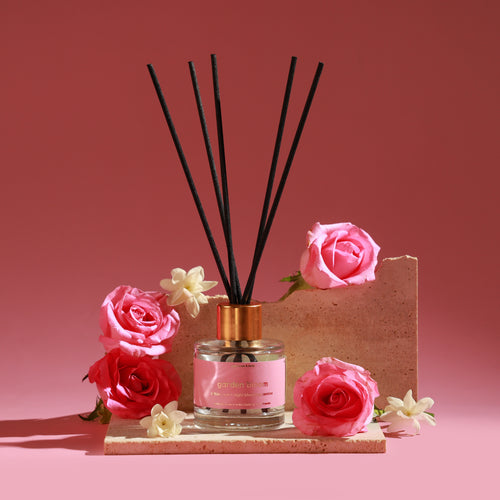
3. One reed diffuser Alcohol-free, unattended, no electricity, no routine. Morning Freshness is lemon, peppermint and eucalyptus In the bathroom, bought the week before. Needs 24–72 hours to reach its level, so not the morning they arrive from ₹749
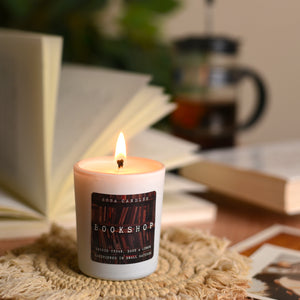
4. A candle if they are already at the door Bookshop 80g, roughly 15–18 hours of burn, scent in the room in 15–20 minutes Only if there is no time for anything else. Must be attended and put out — a house full of relatives is not the place to forget one ₹379
5. 300ml refill About ₹6 per millilitre against roughly ₹20 at 15ml Later, and only for the scent that has already become the smell of your house rather than the one that sounded best ₹1,799
Do not buy: a second and third machine One diffuser per room is the instinct and it is wrong here In a full flat with the doors shut, three machines produce three scents meeting in a corridor. One, in the hall, at three drops
Honest notes for buyers: fragrance is the last step, not the first — it layers on air that is already clean and moving, and it will not cover cooking, damp or a room that has been shut for weeks. Timing matters as much as product: a candle scents a room in fifteen to twenty minutes and a Sukoon in about twenty, which is why both work when people are arriving tonight, while a reed diffuser needs a day to three days before it is doing its job properly — it is the wrong buy for a deadline and the right buy for a room you want to hold a steady scent for months. SOSA does not make a room spray for the home; the sprays in the range are formulated and sized for a car. The Hotel Collection is water-based and runs in the Sukoon, Boond and Megh only — not in reeds, and not in the waterless Vaayu. Reed diffusers are a separate alcohol-free line with their own scents. Candles must be attended and put out before guests leave a room unattended. The Hotel Collection scents are SOSA's own interpretations inspired by the world's finest hotels; SOSA is an independent Indian fragrance house, not affiliated with or endorsed by any hotel brand. A portion of every order supports girl-child education through Nanhi Kali.
SOSA reed diffusers
For the one room nobody has time to manage
SOSA reed diffusers from ₹749
Alcohol-free, no electricity, no switch and no routine — which during a festival week is the entire argument. A bathroom in a full house is in use from six in the morning to eleven at night and nobody is going to walk in there to start a machine. The honest caveat is timing: a reed needs 24 to 72 hours before it is working properly, so it is a purchase for the week before Diwali rather than the morning of. Morning Freshness at ₹749 for 50ml is Malabar lemon, peppermint and eucalyptus, which is the register a bathroom actually wants. 130ml from ₹1,249, duos from ₹1,498, 300ml refills ₹2,399.
SS
ISIPCA
Versailles
A note from Sonal

I have spent a lot of Octobers in flats with too many people in them, including my own, and the thing that strikes me every year is how quickly a home stops being a home and starts being a small hotel with no staff. Nobody is doing anything wrong. There is simply more going in than can come out, and the first place it shows is the air. That is why I will not answer this question with a product, and why I get faintly irritable when I see it answered that way. If your bin is a day old and your bathroom has not dried since morning, no bottle on this site is going to help you, and one that appears to help is only helping you not notice.

What I would actually do, in my own flat, with nine people in it: bin out every night while the kettle boils, windows open on opposite walls for twenty minutes at half past six while nobody can object, and one machine in the hall on three drops with a two-hour timer in the morning. That is it. Less fragrance than I use in an ordinary week, in fewer rooms, at a quieter hour. The house then smells of a house where somebody has been up early, which is a much better thing for a guest to walk into than a house that smells of a decision. If you want one more thing, put a reed in the bathroom the week before they come and forget about it. That room will thank you more than the hall will.

Everything is made and supported from Pune, and a part of every order funds girl-child education through Nanhi Kali. You get a home that smells like somewhere you chose; a girl gets a classroom. That equation has always felt right to me.

Frequently asked questions

Should I use more home fragrance when the house is full of guests?
No — use less. Ten people bring their own scent into a room, and a full flat has poorer air turnover than an empty one because doors and windows stay shut. Three drops in one machine in the common area is right for a busy week, against the four or five you might use in an empty flat.
What is the single most useful thing I can do during a festival week?
Take the kitchen bin out every night rather than every second night. Festival waste is mithai residue, oiled paper and vegetable peel in October warmth, and it turns in about eight hours. It is free, it takes ninety seconds, and it fixes more than any product.
When should I run the diffuser if relatives are staying?
In the morning, on the 2H timer, after you have cross-ventilated. The flat is emptiest and best-aired then, the scent has nothing to compete with, and it will still be quietly present in the afternoon. Evening is when cooking, guests and diyas are all at their peak, and it is the hour to leave alone.
Can I put a reed diffuser in the guest room the day they arrive?
It will not do much. A reed diffuser needs 24 to 72 hours for the oil to travel the reeds and the room to reach its level, so it is the wrong buy for a deadline. Buy it a week ahead, or use a candle at ₹379 or the Sukoon, both of which put scent into a room in about twenty minutes.
How many diffusers do I need for a 2BHK with eight or nine people in it?
One, in the hall. A Sukoon at ₹1,899 covers 270–320 sq ft, which is most of a 2BHK's common area. Three machines in a flat with the internal doors shut produce three different scents meeting in a corridor, which is worse than one machine and considerably more expensive.
Diwali, with the house full
Fix the load firstthen use less fragrance than usual
The Sukoon is ₹1,899 with a 500ml tank for 270–320 sq ft, 16–18 hours per fill on low, steady, 2H and 4H timers and three 15ml Hotel Collection scents of your choice included. Additional scents are ₹299 for 15ml, ₹999 for 100ml and ₹1,799 for 300ml at about ₹6 per millilitre. Reed diffusers start at ₹749 and need 24–72 hours to reach their level, so buy them the week before. Free shipping above ₹499, and a portion of every order supports girl-child education through Nanhi Kali.
See the Sukoon · ₹1,899 Shop reed diffusers →
Continue the read
More from SOSA
Editorial standards & sources
About this guide: Written by Sonal Sahani, ISIPCA Versailles-trained founder and perfumer at SOSA Home & Body, on why a 2BHK with relatives staying in it is a load problem rather than a smell problem, which five minutes of daily clearing actually hold a busy flat together during a festival week, why a full house has worse air turnover than an empty one, and why the correct move when the house is fullest is to reduce the fragrance dose rather than raise it.

Facts verified August 2026: Timings in this guide: a scented candle puts noticeable fragrance into a normal room in roughly 15–20 minutes; a Sukoon ultrasonic diffuser reaches a steady level in about 20 minutes from cold; a reed diffuser needs roughly 24–72 hours for the oil to travel the reeds and the room to settle, so it is not a same-day solution. SOSA products and prices: Sukoon 500ml ultrasonic diffuser ₹1,899 (270–320 sq ft, 16–18h on low, 9–12h high, 30–50 ml/h, 2.4MHz cool mist, 7-colour LED, remote, steady/2H/4H timers, BPA-free, auto shut-off, includes three 15ml Hotel Collection scents of your choice); Boond 300ml ₹899; Megh 6-litre ₹3,499; waterless Vaayu ₹11,999 (up to 1000m³); Aangan ₹25,999; Meenar ₹38,500. Hotel Collection water-based fragrance 15ml ₹299, 100ml ₹999, 300ml ₹1,799, Pack of 7 at 15ml ₹1,799 / 100ml ₹5,999 / 300ml ₹10,799; dose 3–6 drops per tank. Reed diffusers (separate alcohol-free line): Morning Freshness from ₹749, Garden Bloom and Evening Calm from ₹799, Fresh Brew and Mountain Breeze from ₹849; 130ml from ₹1,249; duos from ₹1,498; 300ml refills ₹2,399. Scented candles: Bookshop 80g ₹379 (~15–18 hours), Bookshop + Cozy Corner ₹664 (~30–36 hours), Amber Rose 130g ₹599 (~25–30 hours) and 220g ₹799 (~40–50 hours), ceramic jar candles ₹949, Pure Calm wax melt set ₹854. Free shipping above ₹499. SOSA does not make a room or linen spray for the home — the sprays in the range are car perfumes. The Hotel Collection scents are SOSA's own interpretations; SOSA is not affiliated with or endorsed by any hotel brand. Prices subject to change — see the live product pages.
Zurück zum Blog