




Timescales: room air, hours. Soft furnishings and stored contents, days to a fortnight. Plaster and masonry, weeks to months.
Fragrance: after, not during — and not a cool-mist diffuser, which adds 30–50 ml of water an hour. A candle or an alcohol-free reed adds none.
2. Then use the air-conditioner in dry mode, one to three hours a day. Every split unit sold in India has it, marked with a water-drop icon, and it runs the compressor with a low fan speed specifically to condense moisture out rather than to cool the room. The water leaves through the drain line. This is the most powerful free lever most flats have, and it works on a cool wet day as well as a hot one.
3. Then time your ventilation instead of running it continuously. Exchange only helps when the air outside holds less water than the air inside. In monsoon that is usually the warmest, brightest part of the afternoon — not the cool early morning, when outdoor air is closest to saturation. Twenty minutes then beats four hours at the wrong time.
4. Then move the interior air with fans. A fan removes no water at all, but condensation happens where still air meets a cold surface, and stirring the room means no corner sits undisturbed against cool plaster.
5. Then stop putting water in. No laundry dried indoors, which is the largest single avoidable input at several litres per load. Lids on pots. The extractor on for ten minutes after a shower and the bathroom door shut while it runs.
6. Then open everything closed. Wardrobes, kitchen cabinets, the space under the bed, suitcases, storage boxes. Each is a small pocket of air that never joins the drying you are doing in the room.
7. Desiccants last, and only where the six above cannot reach. Calcium chloride tubs and silica gel are useful in a sealed wardrobe or a shoe cupboard and close to pointless in an open room.
A portion of every order supports girl-child education through Nanhi Kali.

The three steps that do most of the work
There are seven steps in this method and they are not equal. If you did only the first three you would get perhaps eighty per cent of the result, and the remaining four are there because the last twenty per cent is where the smell usually lives. The order matters more than the completeness: stopping an active source before doing anything else is not a formality, and running an air-conditioner in the wrong mode for three hours is a wasted afternoon. So the three that carry the method are worth taking slowly, and the rest can be done in an evening once you understand why each is on the list.
Then inside, and methodically. Feel the walls with the back of your hand, low and high, and compare the same wall in two places — a cold patch that is cold when the rest of the wall is not has water in it. Look under every sink for a slow drip, at the base of the toilet cistern, at the flexible connectors, at the washing-machine inlet. Look at the wall you share with a neighbour's bathroom, which is the most common seepage path in Indian flats and the one nobody looks at because it is inside a cupboard. Check the window reveals and sills, where driving rain gets in through a failed seal. Turn every tap in the house off and watch the water meter for fifteen minutes; movement means a concealed leak. If you find something, none of the six steps below are the answer — a plumber is. If you find nothing, you have earned the right to treat this as a humidity problem and the method will work.
Dry mode — the water-drop icon, sometimes labelled Dehumidify or Dry — changes the balance deliberately. It runs the compressor in longer, gentler cycles with the indoor fan at low speed, so the air spends more time in contact with the cold coil and less heat is removed from the room. The result is a room that gets noticeably less cold and considerably less humid, which is precisely what you want on a twenty-six degree monsoon afternoon when cooling is unnecessary and drying is the entire point. It also uses less electricity than cooling mode, because the compressor is not being asked to fight a large temperature difference. Run it one to three hours a day with the doors and windows of that room shut — this is the one part of the method where sealing the room is correct — and check the outdoor drain pipe afterwards. If it has been dripping, the machine has been working. Two things to get right: clean the filter first, because a clogged filter cripples airflow across the coil and a dirty coil is itself a source of the smell you are chasing; and treat this as a daily routine for a fortnight rather than a single heroic session.
So how do you know when. The reliable indicator is temperature, because relative humidity falls as air warms even when the actual quantity of water in it has not changed at all. Outdoor air is closest to saturation when it is coolest — around dawn, and after rain — and furthest from it at the warmest part of the day. So the driest hour is usually mid to late afternoon on a bright break between showers, not the cool early morning that instinct suggests and that most households actually use. A ₹300 hygrometer used outdoors for a day will show you this directly, and the pattern is consistent enough that after a week you will simply know. Then ventilate properly rather than gesturally: two openings on opposite or adjacent walls for twenty minutes, so that air genuinely crosses the flat, with the internal doors open and a fan helping it along. One window ajar for four hours moves less air than two windows open for twenty minutes, and in monsoon the four hours are far more likely to be spent at the wrong time of day.
The seven steps, with what each actually does and how long it takes
The point of the table is the third and fourth columns. Every step here is either free or nearly so, and the honest timescales are the part that stops people abandoning the method in week one — a flat does not dry in an afternoon, and the fact that it has not is not evidence that you are doing it wrong.
| Step | What it does | How long before it shows | Cost |
|---|---|---|---|
| 1. Stop any active water source ★ | Removes the input. A leak, seepage, a blocked drain or ground water arriving faster than you can remove it | Immediate as a decision, weeks for the wall to recover afterwards | ₹0, or a plumber |
| 2. AC in dry mode, 1–3 hours daily | Condenses water out of the room air on a coil below the dew point and sends it out through the drain line — roughly a litre an hour while running | Room air within an hour. Contents and fabric over one to two weeks of daily use | ₹0 (electricity) |
| 3. Ventilate at the driest hour | Exchanges indoor air for drier outdoor air. Twenty minutes, two openings on opposite walls, mid-afternoon on a bright break | Same day for the closed-room smell; cumulative for everything else | ₹0 |
| 4. Fans moving interior air | Removes no water, but prevents still air sitting against cold plaster, which is where condensation and growth begin | Two to three days for corner and cupboard smells | ₹0 |
| 5. Stop adding water indoors | Laundry dried outdoors, lids on pots, extractor running ten minutes after a shower with the door shut | Immediate reduction in load; a week to feel it | ₹0 |
| 6. Open every enclosed space | Lets wardrobes, cabinets, suitcases and under-bed storage share the drier air of the room instead of holding their own | Three to ten days, and the stored contents are usually the last thing to come right | ₹0 |
| 7. Desiccants where nothing reaches | Calcium chloride tubs or reusable silica gel in sealed cupboards, cases and shoe racks | A week, in a genuinely enclosed space. Close to nothing in an open room | ₹200–₹600 |
Steps one to seven cost ₹0—Shop →  Morning Freshness · at the end₹749Shop →
 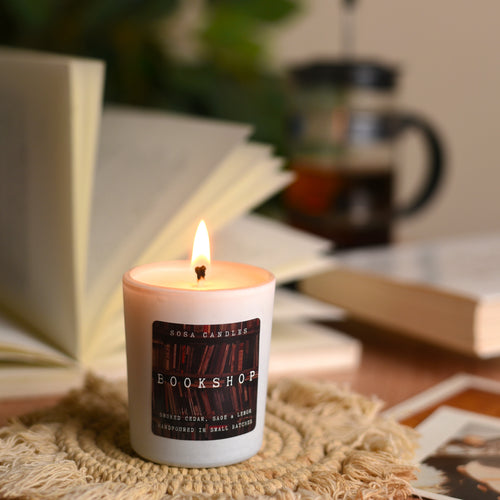 Candle · the first dry evening₹379Shop →
The rest of the method, and how to know when you have finished
Steps four to seven are quick to describe and easy to underrate, and between them they account for most of the smell that survives the first three. Fans first: a ceiling fan on low overnight, or a pedestal fan pointed at the wall behind the wardrobe for an hour, removes no water from the flat whatsoever and still solves problems. The reason is that condensation is a surface event. Air holds its moisture happily until it touches something cold enough to take it, and the places that goes wrong are the places air does not move — behind furniture pushed flat against an external wall, in the corner of a room, inside a cupboard, under a bed. Stir the room and those pockets stop existing. Then stop adding water, which is where the single largest avoidable input hides: drying laundry indoors. A washing-machine load holds one to three litres of water after spinning, and every millilitre of it evaporates into the flat if you hang it in a bedroom. In a wet week that is more moisture than every other domestic source combined. Dry it on a covered balcony, dry it in a room with dry mode running and the door shut, or dry it in the machine if it has a dryer — but not on a rack in the room you are trying to rescue. Lids on pots while cooking, the extractor on for ten minutes after a shower with the bathroom door closed rather than open, and no bucket of water left standing. Then open everything: wardrobes, kitchen cabinets, the shoe cupboard, suitcases, storage boxes, the space under the bed. Each of those is a small volume of air that has been quietly sitting at a higher humidity than the room for months, and none of your work reaches it while the door is shut. This is also the step that finds the forgotten item — the towel put away not quite dry, the trainers, the bag with something in it — which is very often the actual source rather than a contributor to it.
Then desiccants, which are last for a reason and are worth being honest about. A tub of calcium chloride or a tray of silica gel in an open room is theatre. The volume of air in a bedroom is far larger than any passive absorber can meaningfully influence, and the moisture arriving from the walls, the air exchange and the household exceeds what a few hundred grams of salt can take up. In a genuinely sealed space they are excellent: a wardrobe with the doors shut, a suitcase, a glazed bookcase, a shoe cupboard, a cabinet under a sink. In those you are dealing with a few hundred litres of air rather than eighty thousand, and a desiccant can hold that below the threshold where things start growing. Buy the reusable colour-changing silica gel rather than the disposable tubs if you want the cheaper long game — it goes into a low oven, comes out dry and blue, and does it again. And now the timescales, stated plainly because this is where people give up. Room air comes right within hours of the first proper dry-mode session. Soft furnishings, curtains, mattresses and stored clothes take days to a fortnight of consistent daily effort. Plaster and masonry take weeks to months, because a wall dries at something like twenty-five millimetres a month and there is nothing you can do from inside to hurry it. That last figure is the one worth internalising: if the smell is coming from a wall that has genuinely been wet, you are looking at a season and not a weekend, and any product promising otherwise is not being straight with you.
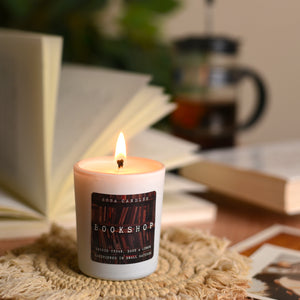
So when are you finished, and what belongs after. The finish line is a number: a hygrometer reading consistently under sixty per cent in the room that was smelling, held for a week rather than achieved for an afternoon. Under sixty, microbial growth slows sharply; under fifty is comfortably dry. Buy the hygrometer at around ₹300 at the start rather than the end, because it is also what tells you which of these seven steps is actually doing anything in your particular flat. And then, only then, fragrance. Not a cool-mist ultrasonic while any of this is going on: the Sukoon, the Boond and the Megh emit 30 to 50 millilitres of water an hour by design, which is the opposite of every step above, and running one in week two of a drying programme is genuinely working against yourself. They are good machines for October. What belongs at the end of a fortnight like this is a format that adds nothing: a Bookshop candle at ₹379 for eighty grams and roughly fifteen to eighteen hours of burn, warm and ready in fifteen to twenty minutes, or an alcohol-free reed diffuser from ₹749 that holds one level for months with no socket and no routine, given 24 to 72 hours to establish. SOSA makes no room or linen spray for the home, and I would not recommend one here if we did. The flat has to be dry before a scent means anything, because a scent on a dry flat is a choice and a scent on a damp one is a cover story.
The SOSA edit
The whole of the method, priced. Six of the seven steps cost nothing, the seventh costs a few hundred rupees at a hardware shop, and the only rows with our name on them are at the bottom where they belong.
| Do this | What it is | Why it comes here in the order | Cost |
|---|---|---|---|
| 1. Stop the water ★ | An hour of looking: outside walls after rain, under every sink, the shared bathroom wall, the water meter with all taps off | First, always. Every step below is futile while water is still arriving, and finding a leak in August rather than December saves a wall | ₹0 |
| 2. AC dry mode, daily | The water-drop setting on the split unit you already own, run 1–3 hours with the room shut and the filter clean | Second, and it is the answer to the question in the title. Roughly a litre an hour condensed out and sent down the drain line | ₹0 |
| 3. Timed ventilation and fans | Twenty minutes, two openings on opposite walls, mid-afternoon on a bright break; then fans moving interior air | Third. Exchange helps only when outdoor air is drier, and air movement stops still pockets forming at cold surfaces | ₹0 |
| 4. Stop adding water; open everything | Laundry off the indoor rack, lids on pots, extractor after showers; wardrobes, cabinets, cases and under-bed storage opened | Fourth. The largest avoidable input and the last places your drying reaches, and where the forgotten damp item is usually found | ₹0 |
| 5. A hygrometer | A ₹300 digital display of temperature and relative humidity, from anywhere. Not a SOSA product | It tells you which steps are working and when you have finished. Under 60 per cent held for a week is the finish line | ~₹300 |
| 6. A candle or an alcohol-free reed | Bookshop 80g ₹379 for 15–18 hours; Amber Rose ₹599 and ₹799; reeds from ₹749 holding one level for months | Last, once the number is down. Neither adds any water, and a scent on a dry flat is a choice rather than a cover story | ₹379 / from ₹749 |
| Not during: cool-mist diffusers | The Sukoon ₹1,899, Boond ₹899 and Megh ₹3,499 emit 30–50 ml of water an hour by design | Every step above removes water; this adds it. Good machines, wrong fortnight. Switch one on when the reading is under 60 | — |
Versailles
The dry-mode button is the piece of advice I have given more often than any other, and the reaction is consistently the same — a pause, and then some version of I have had that machine for six years. It is genuinely the closest thing to free money in this whole subject: a machine already installed, already paid for, drawing less power than it does when cooling, quietly removing a litre of water an hour from a room and sending it out of a pipe you have watched drip a thousand times without thinking about where the water came from. I did not know it either until a service engineer in Pune explained it to me while cleaning a filter, which is a reminder that most useful domestic knowledge travels by accident.
The other half of why I wanted this page written is the timescale, because the internet is full of twenty-four-hour fixes for damp and they are all either wrong or selling something. Air is quick. Fabric is a week or two. Masonry is a season, at roughly twenty-five millimetres a month, and no amount of wanting it faster changes the number. People give up in week one because they expected week one to work, and then they buy a fragrance product to make the interim bearable, and the interim becomes permanent. So do the seven steps, buy the ₹300 hygrometer so that you can watch the number move rather than guessing, and keep going. When it reads fifty-five for a week, light something. That evening is worth waiting for, and buying a candle before it arrives spoils both the candle and the evening.
Everything is made and supported from Pune, and a part of every order funds girl-child education through Nanhi Kali. You get a home that smells like somewhere you chose; a girl gets a classroom. That equation has always felt right to me.
Frequently asked questions
- Should I use an ultrasonic diffuser in a room that is already damp — why not to run one during any of this.
- What humidity level makes a house start smelling musty — the number this method is trying to reach.
- Why my ground-floor flat smells damper than the upper floors — when the method needs building-level help.
- Why your home smells damp, and why fragrance is the very last step — the pillar guide for this group.
- Brand: the SOSA founder story.
Facts verified August 2026: Diagnostic facts used in this guide: a closed room accumulates what it cannot exchange, so cross-ventilation needs two openings rather than one; a drain's U-bend water seal evaporates in roughly two to four weeks of disuse and then admits sewer gas, which is corrected by pouring water down the drain; microbial growth in fabric and on surfaces accelerates above about 60% relative humidity, and Indian monsoon indoor humidity commonly runs 80–95%, which is the one situation where ventilating on a wet day can import moisture rather than remove it; an air-conditioner's cold, wet evaporator coil and filter grow biofilm that is blown into the room on start-up; textiles adsorb cooking aerosol and body oils and re-release them for weeks; and olfactory adaptation makes a constant household smell undetectable to its residents within about a fortnight while visitors still perceive it. Timings: a scented candle scents a normal room in roughly 15–20 minutes, a Sukoon ultrasonic diffuser reaches a steady level in about 20 minutes from cold, and a reed diffuser needs roughly 24–72 hours. SOSA products and prices: Sukoon 500ml ₹1,899 (270–320 sq ft, 16–18h on low, 9–12h high, 30–50 ml/h, 2.4MHz cool mist, remote, steady/2H/4H timers, BPA-free, auto shut-off, includes three 15ml Hotel Collection scents of your choice); Boond 300ml ₹899; Megh 6-litre ₹3,499; waterless Vaayu ₹11,999 (up to 1000m³); Aangan ₹25,999. Hotel Collection water-based fragrance 15ml ₹299, 100ml ₹999, 300ml ₹1,799, Pack of 7 at 15ml ₹1,799; dose 3–6 drops per tank. Reed diffusers (separate alcohol-free line): Morning Freshness from ₹749, Garden Bloom and Evening Calm from ₹799, Fresh Brew and Mountain Breeze from ₹849; 130ml from ₹1,249; duos from ₹1,498; 300ml refills ₹2,399. Scented candles: Bookshop 80g ₹379, Amber Rose 130g ₹599 and 220g ₹799, Smoked Oudh 130g ₹449, ceramic jar candles ₹949, Pure Calm wax melt set ₹854. Free shipping above ₹499. SOSA does not make a room or linen spray for the home. The Hotel Collection scents are SOSA's own interpretations; SOSA is not affiliated with or endorsed by any hotel brand. Prices subject to change — see the live product pages.