Founder Diaries · Office Secret Santa · Curated Shortlists & Corporate Supply
By Sonal Sahani · ISIPCA Versailles 13 min read Updated November 2026
Yes, and I think it is the single most useful thing an organiser can do. A company does not have to choose between a free-for-all and buying everybody the same thing. It can publish a curated shortlist — six to ten items, all at or under the cap, all pre-checked against the obvious ways an office gift goes wrong — and let every employee order their own from it. That solves the hardest problem in the whole exercise once, at the organisational level, instead of forty people solving it badly in private: the problem being that half the people in any draw do not know the person whose name they pulled and have no safe way to guess. A shortlist removes the guessing without removing the choosing, which is the part that makes it still feel like a gift. Below are the three ways to actually run it, what belongs on a company list and what does not, the admin that decides whether it works, and — stated once, because this is my own site — what SOSA can do if you want a bulk or multi-address order rather than forty separate ones.
Quick answers — read this first
The answer: yes. A curated shortlist of six to ten items at or under the cap, circulated with the draw, with everybody ordering their own. It solves the I-do-not-know-them problem once instead of forty times.
Three models. One: shortlist plus a shared link, everybody orders and pays for their own — least admin, no company money, and the gift still comes from a person. Two: one bulk order to one office address, distributed internally — one invoice, one delivery, and it needs everybody present on the day. Three: multi-address, where each item ships to the recipient's own address — the only model that works for a hybrid or remote team, and it needs addresses collected with the draw.
What belongs on a company list: things that go in a room or a car rather than on a person. Candles from ₹379, car perfumes from ₹449, reed diffusers from ₹749, a 15ml diffuser fragrance at ₹299. Alcohol-free matters for some colleagues, and reeds are.
What does not: personal perfume for a recipient whose taste is unknown, anything edible, anything alcoholic, and anything so narrow that four people end up giving the same thing.
On timing: Metro addresses usually see two to four working days, and the rest of India longer. A Secret Santa exchange tomorrow morning is not a delivery problem any online order can solve, and no page here will pretend otherwise: if it is tomorrow, buy locally, or tell the organiser you will hand it over on the Monday.
The short answer
Short answer: yes. A company can publish a curated fragrance shortlist for Secret Santa rather than leaving employees to work it out individually, and it is the most useful intervention an organiser can make. Six to ten items at or under the cap, chosen so that none of them requires knowing the recipient's taste, circulated with the draw email. Employees pick from the list and order their own, which keeps the gift personal while removing the guesswork.
The three models, and what each one suits: a shortlist with a shared link and everybody ordering their own, which needs no company money and no central liability; one bulk order to a single office address that HR distributes, which is one invoice and one delivery but needs everybody in the office on the day; and a multi-address order where each item ships to the recipient's own home, which is the only workable model for a hybrid or remote team and requires addresses collected at the time of the draw.
What belongs on a company shortlist: gifts for a room or a car rather than for a body. Scented candles from Rs 379, car perfumes from Rs 449, alcohol-free reed diffusers from Rs 749, and a 15ml diffuser fragrance at Rs 299 for colleagues who own a diffuser. Leave personal perfume off unless the recipient's taste is known. Free shipping above Rs 499, and delivery is two to four working days to metro addresses and longer elsewhere, so set the order-by date a week ahead.
Straight answer
Can a company give employees a curated set of fragrance gift options for Secret Santa?
1. Yes, and the reason it works is that it solves the problem once rather than forty times. The commonest sentence in the emails I get about office gifting is some version of I do not know them. On a floor where half the team joined this year, that is not an individual failing — it is a structural fact about the draw, and no amount of browsing fixes it. A shortlist fixes it at the level where it can be fixed. The organiser does the thinking about what is safe for a near-stranger once, publishes six to ten options at or under the cap, and every employee then makes a real choice inside a safe set. The gift still comes from a person, which matters, and nobody has to guess a colleague's taste in fragrance.
2. What a shortlist actually is: six to ten items, all under the cap, all pre-checked. The test for inclusion is simple and worth stating in the email so people understand why the list looks the way it does. Does it go in a room or a car rather than on a person. Could the recipient be any gender and any age. Does it work without knowing their taste. Is it under the cap including delivery. Is it something they can quietly not use without anybody noticing. A candle at ₹379 passes all five. A personal perfume passes none of them.
3. Model one — a shortlist and a shared link, everybody orders their own. This is the version I would start with for almost any office. HR publishes the list with the draw email, each person buys their own gift, each person pays for it. No company money moves, no central liability, no invoice, no distribution problem, and no finance conversation. The organiser's only job is the list and the order-by date. The weakness is that forty separate orders means forty separate delivery charges where an order falls under the free-shipping threshold, which is one more reason the cap should sit above ₹499.
4. Model two — one bulk order to one address, distributed internally. The company places a single order, everything arrives at the office, and HR hands the parcels out at the exchange. One invoice, one delivery, one tracking number, and the lowest total admin of the three. It needs two things to be true: the company is paying, and everybody is physically in the office on the day. It also loses a little of the point, because the giver has not chosen anything — so the version that works best is a bulk order where each giver has nominated which shortlist item goes to their recipient.
5. Model three — multi-address, each item to its own recipient. One order, paid centrally, with each item shipped to the recipient's own address. This is the only model that genuinely works for a hybrid or remote team, and it is the one that needs preparation: collect a delivery address from every participant at the same time as the draw, and never afterwards, because a colleague being asked for their address after their name was drawn knows exactly who drew them.
Making the draw work when nobody knows each other covers the rest of that admin.
6. Where SOSA fits, stated plainly and once. Any of the three works with my range at the normal retail prices and the normal free-shipping threshold above ₹499, with no arrangement needed at all — a shortlist is just a set of product links. If you want a single bulk order to one office address, or one order split across several home addresses, that can be arranged by
WhatsApp and the practical limits are delivery time and stock rather than quantity. I will tell you if your date is not achievable rather than take the order, which is the only commitment on this page that matters.
7. And the two models I would avoid. A mandatory single product, which turns a gift exchange into a uniform distribution and is better described as a company gift. And a list so narrow that four people independently pick the same item, which produces a visibly repetitive exchange — six to ten options is the range that avoids both.
8. On timing, which decides everything else. Metro addresses usually see two to four working days, and the rest of India longer. A Secret Santa exchange tomorrow morning is not a delivery problem any online order can solve, and no page here will pretend otherwise: if it is tomorrow, buy locally, or tell the organiser you will hand it over on the Monday.
TL;DR: yes. Publish six to ten items at or under the cap, all of them things that go in a room or a car rather than on a person, and let everybody order their own. That is model one and it needs no company money. Model two is one bulk order to the office, which needs everybody present. Model three is multi-address for a remote team, which needs addresses collected at the draw. SOSA can support bulk or multi-address orders by WhatsApp; a shortlist on its own needs no arrangement at all.

What a curated company shortlist is actually selecting from
SOSA Home & Body range from ₹299
A shortlist is not a catalogue; it is a filter.
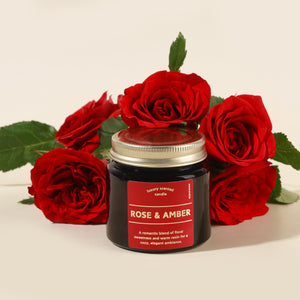
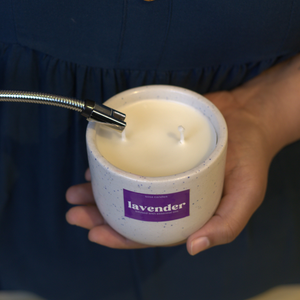
The test for every row is whether the gift goes in a room or a car rather than on a person, whether it works for any gender and any age, and whether it works without knowing the recipient's taste. Candles from ₹379 pass. Car perfumes from ₹449 pass. Alcohol-free reed diffusers from ₹749 pass, and are the best of the three for a colleague working from home. The
Hotel Collection fragrance at ₹299 passes only for somebody who already owns a diffuser. Personal perfume does not pass unless the recipient's taste is known. Free shipping above ₹499.
The three models, and what each one suits
The reason to be concrete about the model rather than just the list is that the three options differ in who pays, who orders, where it ships and what happens if somebody is not in the office on the day — and organisers usually discover those differences in the last week. Model one asks nothing of finance and nothing of logistics, which is why I would default to it. Model two is the least total work but assumes the company is paying and everybody is present. Model three is the only one that works for a team spread across cities, and it has to be set up at the draw rather than at the end. All three sit on the same shortlist, so the list is the part worth getting right first: if the options are safe and under the cap, any of the three mechanisms will deliver a decent exchange, and if the options are wrong, none of them will.
1
MODEL ONE
A shortlist and a shared link — everybody orders their own
The lightest version and the one I would start with. HR circulates six to ten product links with the draw email, each person picks one for their recipient, each person pays for their own, and the parcels either go to the office or to a home address. No company money moves, there is no invoice, no procurement conversation and no distribution on the day beyond people handing over a parcel. The organiser's entire job is the list, the cap and the order-by date. What makes this version work better than a free-for-all is not restriction, it is cover: somebody who drew a name they do not recognise can pick from a list that an organiser has already vetted, and does not have to privately worry about whether a candle is too impersonal or a perfume too personal. Two practical notes. Put the price next to every item, because a list without prices makes people click six links to find out what is inside the cap. And keep an eye on the free-shipping threshold: above ₹499 delivery is free on my site, so a ₹500 cap means forty people pay no delivery, and a ₹400 cap means forty people pay it separately. That is the kind of detail a shortlist should be designed around rather than discovered through.
Gift ideas HR can share with employees is the paste-ready version of this.
2
MODELS TWO AND THREE
One bulk order to the office, or one order split across home addresses
Model two: the company places a single order, everything arrives at one office address, and the parcels are handed out at the exchange. One invoice, one delivery, one tracking number, and far less chasing in the final week — which is the real cost of model one. It assumes the company is funding the exchange and that everybody is in the office that day, and the better variant has each giver nominating which shortlist item goes to their recipient rather than HR choosing for everybody, because a gift nobody chose is a distribution rather than a gift. Model three: one order, paid centrally, with each item shipped to its recipient's own address. This is the only model that works for a hybrid or remote team, and it lives or dies on one piece of admin: collect a delivery address from every participant at the same time as the draw. Afterwards is too late, because asking a colleague for their address after their name has been drawn identifies you. Collect them all up front, keep them with the organiser rather than circulating them, and use them only for this. On both models the date is the constraint rather than the quantity: delivery runs two to four working days to metro addresses and longer elsewhere, and a multi-address order to eight cities will not all land on the same morning, so build in a week. If a company is paying, finance will want a GST invoice in the company's name and will have its own view on how employee gifts are treated internally — that is a question for them rather than for me, and worth asking before the order rather than after it.
3
WHAT TO LEAVE OFF
The rows that cause the problems a shortlist exists to prevent
A company shortlist should not include a personal perfume for recipients whose taste is unknown, and that single rule removes most of the risk. An attar or a spray goes on a person. It is taste-specific and intimate, and a miss is visible, because the recipient then has to wear it or not wear it in front of the colleagues who watched them open it. My own attars are very good and very good value —
Adaa attar at ₹379,
Ameeri attar at ₹385,
Mastani attar at ₹389,
Nawaab attar at ₹399 in 3ml — and I would still leave them off a general company list, or include them with the condition written next to them: for a colleague who has told the office they collect perfume. The same applies to the alcohol sprays from ₹599 such as
Khayaal and
Samundar, and to
Recreation and
Bespoke Signature Perfume, which are made to a brief and belong to a conversation rather than to a draw. Then the four categorical exclusions, which are worth stating as categories rather than as products: nothing edible, because allergies and observances exist and you will not know which apply to whom; nothing alcoholic, which is not worth the one conversation it causes in a mixed office; nothing the recipient has to display at their desk, which obliges them to show a gift from somebody they did not choose; and nothing that needs exchanging or returning, which turns a gift into an errand. One more, less obvious: be careful with candles where colleagues live in hostels or shared accommodation with a no-flame rule, and offer the
Pure Calm wax melt set at ₹854 or a
reed diffuser as the alternative. Some people react badly to fragrance, and an office is exactly where you will not know. That is one more argument for a reed diffuser over a personal perfume: a reed goes home with them and gets placed, or not, in a room of their choosing. Nobody has to wear anything, and nobody has to explain why they are not wearing it.
The sentence to put above the list: every option here works without knowing anything about the recipient's taste, so pick on what you do know — whether they drive, whether they work from home, whether they have just moved — and not on what you are guessing.
The models compared, and the two to avoid
Eight ways a company can handle the supply side, with who pays and what each one actually costs the organiser. The first row is the one I would default to for most offices and the last two are the ones that look efficient and are not.
Pick a model
How a company can supply Secret Santa options, from lightest to worst
| Model |
How it works |
What it suits |
What it costs the organiser |
| 1. Shortlist plus a shared link ★ |
Six to ten vetted items at or under the cap, circulated with the draw. Everybody orders and pays for their own |
Almost any office, and especially a floor where half the team has half-met |
An hour once. No company money, no invoice, no distribution |
| 2. Bulk order to one office address |
The company places one order with each giver's nomination; HR hands the parcels out on the day |
A company-funded exchange where everybody is in the office that day |
One order and one distribution. The least total work of the three |
| 3. Multi-address, one order |
One central order, each item shipped to its recipient's own address |
A hybrid or remote team spread across cities |
Addresses collected at the draw, and a week of delivery headroom |
| 4. A wishlist from each employee |
Everybody names two or three things they would like; the giver picks one |
Small teams, and anybody uneasy about choosing for a stranger |
Low, and it removes the surprise, which some teams mind and some do not |
| 5. Shortlist with a stated floor and ceiling |
The list spans a range — ₹379 to ₹949 — and nobody is comparing |
Mixed-seniority floors where a single number will be hard on somebody |
Nothing extra, and it defuses the cap problem. The cap question
|
| 6. No list at all |
A cap, a date and forty people guessing privately |
A small team where everybody genuinely knows everybody |
Nothing up front and a lot afterwards, in gifts nobody wanted |
| 7. One mandatory product for everybody |
The company buys forty of the same thing and calls it an exchange |
Nothing. This is a company gift, and is better described as one |
Low, and it removes the only part people enjoy |
| 8. A list of three items |
So narrow that four people independently pick the same thing |
Nothing. Six to ten options is the range that avoids repetition |
Low, and visibly repetitive on the day |
Shop this guide
The three categories that belong on any company shortlist
The SOSA principle
A shortlist does not take the choice away from employees. It takes the guessing away. The organiser decides once what is safe for somebody you barely know, and forty people then choose inside that — which is the only version of this exercise where nobody is quietly anxious.
Six to ten options, all under the cap, all for a room or a car rather than a body. Prices next to every row. An order-by date a week ahead, and an opt-out in the first email.
What belongs on the list, and the admin that decides whether it works
Start with the filter rather than the products, because the filter is the part an organiser can defend in a meeting. Five questions, and a row has to pass all five: does it go in a room or a car rather than on a person; does it work for any gender and any age; does it work without knowing the recipient's taste; is it inside the cap including delivery; and can the recipient quietly not use it without anybody noticing. That last one is the test people leave out and it is the one that matters most in an office, because the worst outcome of a gift exchange is not an unwanted object — it is a colleague who feels obliged to display, wear or consume something in front of the people who gave it to them. A candle passes all five. A car perfume passes all five for anybody with a car. A reed diffuser passes all five and is the only one of the three that is genuinely useful rather than merely safe, because it goes into a room and runs by itself. A personal perfume fails three of the five. A desk ornament fails the last one. Food fails the second and the fifth. Write the five questions above the list in the email and the list explains itself.
Then the admin, which is where these exchanges actually fail. Four things, and none of them is the cap: the order-by date, the addresses, the exclusions and the opt-out. On the date: delivery is two to four working days to metro addresses and longer elsewhere, so an order-by date a clear week before the exchange is the difference between forty parcels arriving and eleven people apologising, and it should be in the same sentence as the cap with the reason attached. On addresses: collect one from every participant at the time of the draw, keep them with the organiser, and use them only for this — the moment anybody is remote or hybrid, the gift has to ship to a home, and asking afterwards identifies the giver. On exclusions: state them as categories rather than as products, which is shorter and harder to argue with. Nothing edible, nothing alcoholic, nothing that goes on somebody's body, nothing they must display, nothing that needs returning. On the opt-out: one sentence in the first email that requires no explanation from anybody. A person for whom the cap is difficult this December, or who reacts badly to fragrance, or who would simply rather not, needs a route out that does not involve a conversation. The full running order for organising it has the rest.
And then my own part in this, which I will state once and leave. A shortlist built from my range needs no arrangement with me at all — it is a set of product links at the normal retail prices, with free shipping above ₹499, and you can assemble it in ten minutes from the candles, car perfumes and reed diffusers. If you want one bulk order delivered to a single office address, or one order split across several home addresses for a team that is not in one place, that can be arranged by WhatsApp, and the real constraints are delivery time and stock rather than quantity. Two things I would say before anybody writes in. The first is that I will tell you if your date is not achievable rather than take the order — two to four working days to metro addresses and longer elsewhere means a Friday exchange needs a decision by the previous Friday, and a multi-address order to eight cities will not land on one morning. The second is that none of this requires a relationship with my company. The useful thing on this page is the filter and the admin, both of which work with any seller, and the complete office fragrance gift guide is the version with the products laid out if that is what you came for. If a company is paying, ask finance for the GST invoice requirement before the order rather than after it.
A shortlist is not a restriction on employees. It is the organiser doing the hard thinking once, so that forty people do not each have to do it badly and alone.
— Sonal Sahani, SOSA
The SOSA edit
A worked shortlist an organiser can paste, with the price, the reason it passes the filter and the condition where there is one. Five rows that belong on a company list and one that does not. Swap in any seller you like; the structure is the useful part.
The SOSA edit
A shortlist an organiser can paste, with the reason for each row
| Item |
What it is |
Why it belongs on a company list |
Price |
| 1. Bookshop candle ★ |
Hand-poured scented candle, 80g |
Goes in a room, not on a person. No taste guess, no gender guess, and the cheapest thing here that still reads as a gift |
₹379 |
| 2. Smoked Oudh candle
|
Hand-poured scented candle, 130g, warmer and smokier |
The heavier candle option, so a list of ten is not five versions of the same thing |
₹449 |
| 3. A car perfume from the car perfume range
|
Spray and hanging formats — Jasmine ₹449, Sandalwood ₹479, Lemon ₹499, Oud car perfume ₹509 |
A real daily object for anybody who drives in. The only fact you need is whether they have a car |
₹449–₹509 |
| 4. Hotel Collection fragrance, 15ml |
Water-based fragrance for an ultrasonic diffuser |
A refill they will use, with the condition stated: only for colleagues who already own a diffuser |
₹299 |
| 5. Morning Freshness reed diffuser
|
Alcohol-free reed diffuser, 24 to 72 hours to reach its working level |
The safest and most useful row on any list, and the reason to have a cap above ₹750 |
₹749 |
| Not on a company list |
A personal perfume or attar for a recipient whose fragrance taste nobody knows |
It goes on a person, so a miss is visible and the recipient has to wear it or visibly not wear it |
— |
Honest notes for organisers: a company shortlist works because every row on it passes the same filter — it goes in a room or a car rather than on a person, it suits any gender and any age, it needs no knowledge of the recipient's taste, it sits inside the cap including delivery, and it can be quietly not used without anybody noticing. Beyond that, the honest rule for an office Secret Santa is that a gift for somebody you barely know belongs in a room or a car, not on their body. A
reed diffuser from ₹749, a candle from ₹379 or a car perfume from ₹449 carries no taste guess, no gender guess and no intimacy, and cannot be wrong on them. An attar from ₹379 is a lovely gift for somebody whose fragrance taste you actually know, and the wrong gift for a near-stranger. SOSA makes four attars —
Adaa attar at ₹379,
Ameeri attar at ₹385,
Mastani attar at ₹389 and
Nawaab attar at ₹399 in 3ml, rising to about ₹1,149 to ₹1,199 at 12ml — and a separate line of alcohol sprays from ₹599, which are perfumes rather than attars. Reeds are alcohol-free and take 24 to 72 hours to reach their working level, so say so on the card. Candles scent a room in roughly 15 to 20 minutes and must be attended. SOSA does not make a room spray for the home; the sprays in the range are car perfumes. Free shipping above ₹499. Delivery takes two to four working days to metro addresses and longer elsewhere, so an exchange tomorrow is not something an online order can rescue. A portion of every order supports girl-child education through Nanhi Kali.

The row to put on a shortlist if the cap reaches ₹749
SOSA Morning Freshness reed diffuser ₹749
Of everything that could go on a company shortlist, this is the row I would argue hardest for.
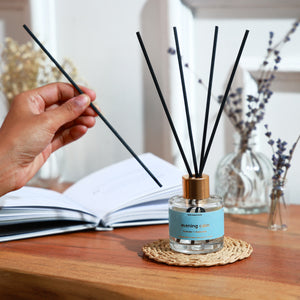
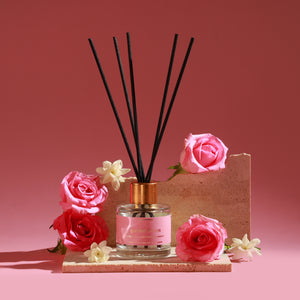
Morning Freshness reed diffuser at ₹749 is alcohol-free, goes into a room rather than onto a person, needs 24 to 72 hours to reach its working level and then runs by itself for weeks with nothing to switch on, refill daily or attend. It carries no taste guess, no gender guess and no intimacy, and for a colleague who works from home it sits in the room they cannot leave.
Garden Bloom reed diffuser and
Evening Calm reed diffuser are ₹799,
Fresh Brew reed diffuser and
Mountain Breeze reed diffuser are ₹849. Free shipping above ₹499, and it is the one row that justifies a cap above ₹750.
A note from Sonal
The first time somebody asked me for this, I misread the question. An HR lead in Chennai asked whether I could put together options for a floor of sixty, and I sent a bulk quotation — which was not what he wanted at all. What he wanted was a list he could paste into an email without it reading like an advertisement, so that sixty people would stop asking him what to buy. He did not need my company involved in the transaction. He needed somebody to have already decided what was safe for a colleague you have met twice, so that he was not adjudicating sixty private anxieties in December.
I have thought about that exchange a lot, because it is the clearest example I have of a business being asked for judgement rather than for goods. The judgement is the valuable part and it costs nothing: for somebody you barely know, the gift belongs in a room or a car rather than on their body, and once you accept that, the whole category collapses into four or five safe options. I will happily quote a bulk or multi-address order, and several companies place one every December. But the honest position is that the list is the useful thing and the list works with any seller, which is why this page is mostly a filter and a piece of admin rather than a catalogue.
The one promise I will make about the commercial side is the dull one: if your date cannot be met, I will say so rather than take the order, because a parcel that arrives after the party is worth nothing to anybody. Everything is made and supported from Pune, and a part of every order funds girl-child education through Nanhi Kali. Somebody gets a gift that was actually thought about; a girl gets a classroom. That equation has always felt right to me.
Frequently asked questions
Can a company give employees a set of fragrance gift options for Secret Santa?
Yes, and it is the most useful thing an organiser can do. Publish six to ten vetted items at or under the cap with the draw email and let each employee order their own. It solves the problem of people not knowing their recipient once, at the organisational level, rather than forty times in private, and it keeps the choosing with the giver so the gift still feels personal.
How does a curated Secret Santa shortlist actually work?
Three models. One: the shortlist plus a shared link, with everybody ordering and paying for their own — no company money, no invoice, no distribution. Two: one bulk order to a single office address that HR hands out on the day, which needs the company to be paying and everybody to be present. Three: a multi-address order where each item ships to the recipient's own address, which is the only model that works for a remote or hybrid team.
What should be on a company Secret Santa fragrance shortlist?
Things that go in a room or a car rather than on a person. Scented candles from Rs 379, car perfumes from Rs 449, alcohol-free reed diffusers from Rs 749, and a 15ml diffuser fragrance at Rs 299 for colleagues who already own a diffuser. Leave personal perfume and attars off a general list, or include them with the condition written next to them: only for somebody who has told the office they collect fragrance.
Can SOSA handle a bulk or multi-address order for an office?
Yes. A bulk order to one office address or one order split across several home addresses can be arranged over WhatsApp, and the practical constraints are delivery time and stock rather than quantity. If the date cannot be met we will say so rather than take the order. A shortlist built from the range needs no arrangement at all, since it is simply a set of product links at the normal retail prices with free shipping above Rs 499.
When should a company place a bulk Secret Santa order?
A clear week before the exchange, and earlier if people are spread across cities. Delivery is typically two to four working days to metro addresses and longer elsewhere, and a multi-address order to eight cities will not all land on the same morning. If the exchange is tomorrow, no online order can rescue it and the right advice is to buy locally or hand the gifts over the following week.
The list is the useful part
Six to ten options, all for a room or a car — and nobody has to guess a colleague's taste
A shortlist built from this range needs no arrangement: candles from ₹379, car perfumes from ₹449, alcohol-free reed diffusers from ₹749 and a 15ml diffuser fragrance at ₹299, with free shipping above ₹499. For one bulk order to an office address, or one order split across several home addresses, message us and we will tell you whether your date is achievable — delivery is two to four working days to metro addresses and longer elsewhere. A portion of every order supports girl-child education through Nanhi Kali.
See the full range · from ₹299 Ask about a bulk or multi-address order
Continue the read
More from SOSA
Editorial standards & sources
Prices and product facts used in this guide, verified November 2026. Attars (alcohol-free roll-on perfume oils, 3ml/6ml/12ml): Adaa Rs 379/669/1,149, Ameeri Rs 385/679/1,165, Mastani Rs 389/685/1,179, Nawaab Rs 399/699/1,199, and the Ameeri plus Nawaab plus Mastani trio from Rs 1,055. SOSA perfumes (alcohol sprays, 10ml/50ml/100ml) from Rs 599, including Khayaal, Samundar, Bahaar, Chashni, Zaffran and Tabac Noir; these are perfumes, not attars. Recreation from Rs 599 and Bespoke Signature Perfume from Rs 1,499. Alcohol-free reed diffusers: Morning Freshness from Rs 749, Garden Bloom and Evening Calm from Rs 799, Fresh Brew and Mountain Breeze from Rs 849, the Warmth and Bloom duo Rs 1,598; a reed diffuser takes 24 to 72 hours to reach its working level. Scented candles from Rs 379, Smoked Oudh Rs 449, Amber Rose Rs 599, ceramic jar Rs 949; a candle scents a room in roughly 15 to 20 minutes and must be attended. Car perfumes from Rs 449 in spray and hanging formats, combos from Rs 899. Ultrasonic diffusers: Boond Rs 899, Sukoon Rs 1,899, Megh Rs 3,499. Safar waterless car diffuser Rs 3,999. Hotel Collection fragrance 15ml Rs 299, 100ml Rs 999, 300ml Rs 1,799. Free shipping above Rs 499. Delivery is typically two to four working days to metro addresses and longer elsewhere, so a same-day or next-day exchange cannot be met by an online order. This guide makes no claim that a fragrance changes anybody's mood, health or performance. Prices subject to change - see the live product pages.


 Candles · the default rowfrom ₹379Shop →
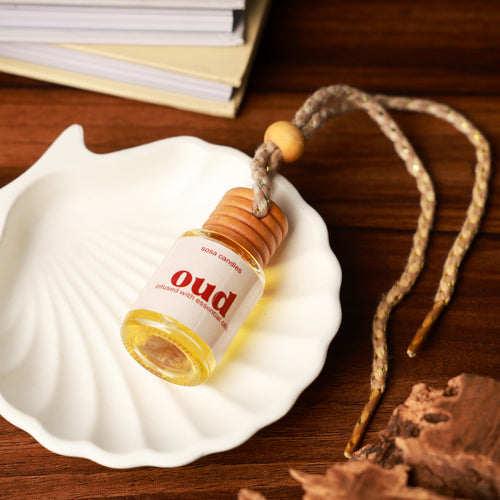 Car perfumes · for driversfrom ₹449Shop →
 Reeds · the safest of the threefrom ₹749Shop →