



Why it feels like the closing did it: you are not smelling a different source. You are measuring the same source at a higher concentration, and you only take a reading when you walk back in.
The consequence for fragrance: a closed room accumulates what you add to it too. That is why an over-scented sealed room feels heavy, and why the dose should go down in a small closed space rather than up.
The free fixes: two openings on opposite walls for twenty minutes; a mug of water down the drain in any bathroom the room has and nobody uses; the door wedged open whenever the room is empty.
2. What closing the door changed is the removal. An open room is continuously exchanging its air with somewhere else, so the concentration of anything in it stays low. Shut it and that removal goes to nearly zero, while production carries on unchanged.
3. So concentration is production multiplied by time. Two hours of accumulation gives you a faint version. Eight hours gives you the one people describe as a wall. The same room, the same source, a different number of hours.
4. It feels like the closing caused it because entering is when you take a reading. You are not meeting a new smell. You are meeting the same one at a level it has been climbing towards while nobody was in there to notice.
5. The fixes are exchange, not cover. Two openings on opposite walls for twenty minutes; the door left open whenever the room is empty; a mug of water down the drain in any attached bathroom nobody uses.
6. And the part almost nobody is told: fragrance accumulates in a closed room too. Which is why an over-scented sealed room feels heavy, and why the dose in a small closed space should go down rather than up. Three drops, on a timer that stops.
A portion of every order supports girl-child education through Nanhi Kali.

Production, removal, and the arithmetic of a shut door
This is the principle sitting underneath half of the questions in this cluster, and it is worth having explicitly rather than as an intuition. Every room is running two processes at once: it is generating airborne material continuously, from a very large number of small sources, and it is losing that material to somewhere else at a rate set by how much air moves in and out. What you smell is the balance between the two. Close the door and the window and you have not touched the first process at all. You have reduced the second one to leakage around a frame. Everything else on this page is a consequence of that single asymmetry, including the advice about how much fragrance to use, which surprises people every time.
Every closed room in the house, and how long it has been closed
The same arithmetic, applied to the six rooms people actually ask about, sorted by how long each one typically stays shut. The third column is what is doing the producing in that particular room and the fourth is the exchange that resets it. Notice that the fix is the same in every row and only the schedule changes, which is what tells you it is one principle rather than six problems.
| The room | Typically closed for | What is producing while it is shut | The exchange that resets it |
|---|---|---|---|
| A bedroom overnight ★ | Eight hours, nightly | Two people, mattress and pillows, cupboard, paint, and whatever the curtains took from the kitchen | Two openings for ten minutes before bed and ten on waking · ₹0 |
| A study or home office | Nine or ten hours, with someone in it the whole time | One person, electronics warming dust, food eaten at the desk, and no reason ever to open the door | Ten minutes of cross-draught at lunch, and the door open when you leave · ₹0 |
| A guest room | Weeks, opened only when someone arrives | Very little, slowly, with nothing at all removing it. Plus an attached bathroom with a drying drain trap | Twenty minutes weekly, and a mug of water down the drain · ₹0 |
| A store room or box room | Months | Cardboard, paper, old textiles, and anything stored damp before it went in | Door and window open on a dry day; get the stored fabric into sunlight · ₹0 |
| A bathroom nobody uses | Two to four weeks is all it takes | The U-bend seal evaporates and the drain begins venting into the room continuously | A mug of water down every drain and basin, fortnightly · ₹0 |
| A whole flat, locked for a holiday | One to three weeks | All of the above at once, with every trap in the flat drying at the same time | Windows at both ends on arrival, then the drains, before you unpack · ₹0 |

Why the dose goes down, and the timer that makes it possible
Start with the free half, because in most of these rooms it is the whole answer. Twenty minutes with two openings on opposite or adjacent walls, and the emphasis is on two: a single open window is ventilation and a pair is exchange, and the difference between them is not marginal. One opening relies on slow drift; two create a path, and the room's whole volume goes out and is replaced several times over. For a bedroom, ten minutes at each end of the night. For a study, ten minutes at lunch and the door left open when you finish work, so the room spends the evening connected to the rest of the flat rather than sealed for another sixteen hours. For a guest room, twenty minutes once a week rather than a heroic effort on the day somebody arrives, since a room aired an hour before a guest walks in is still a room that has accumulated for a month. And in any room with an attached bathroom that is rarely used, a mug of water down the floor drain and the basin, because the U-bend seal evaporates within two to four weeks of disuse and then the drain vents into the room continuously — which, in a closed room, is production with no removal at all. That combination is the commonest cause of a smell people describe as coming back whenever the room is shut, and it costs a mug of water.
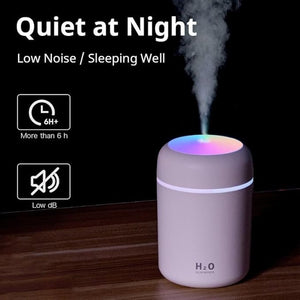
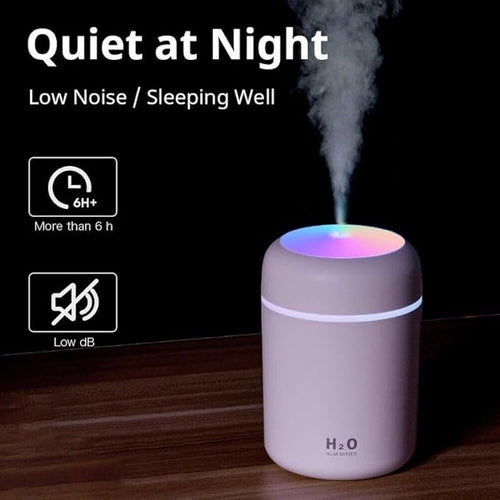
Then the dose, and this is where this page departs from the way home fragrance is normally sold. The Hotel Collection is composed at three to six drops per tank, and in a small sealed room you want three. Not because the scent is strong but because the room has no way of shedding what you put into it, so the level you set climbs rather than settling. The dose is per tank rather than per litre, since you are scenting the mist and not the water, so a 300ml Boond at ₹899 takes exactly the same three drops as a 500ml Sukoon at ₹1,899 — the larger machine buys hours and coverage, never intensity, and in a closed room the smaller one is often the better instrument because it delivers less per hour. Then the specification that actually matters here: a timer that stops. The Sukoon gives steady, 2H and 4H settings, 16 to 18 hours per fill on low at 30 to 50 ml/h against 9 to 12 on high, a 2.4MHz cool-mist plate, a remote, auto shut-off, a BPA-free tank and three 15ml scents of your choice. In a sealed room, the 2H timer is the difference between a scent that reaches a pleasant level and one that keeps climbing for six hours while your nose quietly stops reporting it. Run it before you use the room rather than throughout, place it at waist height or above and away from any air-conditioning blast, and let it stop before you stop noticing it.
Then habituation, the constraints and the principle. You will lose the ability to smell your own closed room within about a fortnight, and in this specific case the consequence is worse than usual, because the accumulation argument and the adaptation argument point in opposite directions: the room is holding more than you think while you are perceiving less than there is. That is the mechanism behind every over-scented small flat I have ever walked into, and the correction is not a dose adjustment by nose but one honest person asked to tell you the truth on arrival. On the constraints: a cool-mist ultrasonic adds 30 to 50 millilitres of water an hour to the air, which in a closed damp room is the wrong direction entirely, so if the room is sealed and already feels clammy, dry it before you scent it. The Hotel Collection is water-based and runs in the Sukoon, Boond and Megh only, never in a reed diffuser, which is a separate alcohol-free line with its own scents, and never in the waterless Vaayu at ₹11,999. SOSA does not make a room or linen spray for the home. And the principle: fragrance does not remove anything. In a closed room in particular, it adds — which is the strongest argument I know for dealing with the source first, and the reason a diffuser that stops is a better product than one that does not.
The SOSA edit
In the order that follows from the arithmetic: exchange first, sources second, and fragrance last and at a lower dose than you would use in an open room. The last row is the honest limit of what any of this can do for a room that is sealed because it has to be.
| Buy or do | What it is | Why it sits where it does | Cost |
|---|---|---|---|
| 1. Two openings, twenty minutes ★ | Cross-ventilation on opposite or adjacent walls — one window is ventilation, two is exchange | First, because it restores the only removal mechanism the room has. Nothing purchasable replaces it | ₹0 |
| 2. A mug of water down the drain | Every floor drain, basin and unused shower in or beside the room, fortnightly | The U-bend seal evaporates in two to four weeks of disuse, and then the drain vents continuously | ₹0 |
| 3. The door open when the room is empty | A study left open at six, a guest room not sealed between visits | It converts sixteen hours of accumulation into sixteen hours of exchange, for nothing | ₹0 |
| 4. Hotel Collection 15ml | Seven water-based scents at three to six drops per tank. Three in a sealed room, not four | Once the room is exchanging. The dose goes down here, which is the opposite of what most people do | ₹299 |
| 5. Sukoon or Boond | 500ml with steady, 2H and 4H timers and three scents included, or 300ml delivering less per hour | Bought for the timer, not the coverage. In a closed room, a scent that stops is the product | ₹1,899 / ₹899 |
| Not the answer: more drops | The instinct a sealed room produces, reinforced by your own nose adapting to it | Printed rather than implied. A closed room accumulates fragrance exactly as it accumulates everything else | — |
Versailles
This is the idea I would keep if I were allowed to keep only one from this whole cluster, because it explains so many separate complaints with one sentence. A closed room is not a room that makes a smell. It is a room that has stopped taking one away. I have watched people search a guest bedroom for a source that does not exist, pull up a rug, blame a wardrobe, take apart a bed — when the only unusual thing about the room was that it had been shut for five weeks. Nothing in there was working any harder than the same objects in the sitting room. They simply had nowhere to send anything.
The part I care about commercially is the second half, and it is the reason this page exists at all. If the arithmetic is true, it is true of my products as well, and it would be dishonest to explain accumulation for six paragraphs and then recommend more drops in a sealed room. So the advice is three rather than four, on a timer, in a room that has been aired first. I lose a little fragrance volume that way and I gain something I value more, which is people who still like the scent they chose after six months. Nearly every complaint I get about something being too strong turns out to be a small closed room running a normal dose for far too long, and nearly every one of them is solved by the 2H timer rather than by changing the bottle.
Everything is made and supported from Pune, and a part of every order funds girl-child education through Nanhi Kali. You get a home that smells like somewhere you chose; a girl gets a classroom. That equation has always felt right to me.
Frequently asked questions
- Why an AC room smells stale when you wake up — this principle and a machine problem, stacked in one bedroom.
- Why a guest room smells musty even though it is perfectly clean — the extreme case: weeks of accumulation and no source at all.
- Why a study smells closed even though you sit in it all day — the same arithmetic, with your own nose adapting inside it.
- Am I using too much home fragrance without realising it? — where the accumulation argument and nose-blindness meet.
- Brand: the SOSA founder story.
Facts verified August 2026: Diagnostic facts used in this guide: a closed room accumulates what it cannot exchange, so cross-ventilation needs two openings rather than one; a drain's U-bend water seal evaporates in roughly two to four weeks of disuse and then admits sewer gas, which is corrected by pouring water down the drain; microbial growth in fabric and on surfaces accelerates above about 60% relative humidity, and Indian monsoon indoor humidity commonly runs 80–95%, which is the one situation where ventilating on a wet day can import moisture rather than remove it; an air-conditioner's cold, wet evaporator coil and filter grow biofilm that is blown into the room on start-up; textiles adsorb cooking aerosol and body oils and re-release them for weeks; and olfactory adaptation makes a constant household smell undetectable to its residents within about a fortnight while visitors still perceive it. Timings: a scented candle scents a normal room in roughly 15–20 minutes, a Sukoon ultrasonic diffuser reaches a steady level in about 20 minutes from cold, and a reed diffuser needs roughly 24–72 hours. SOSA products and prices: Sukoon 500ml ₹1,899 (270–320 sq ft, 16–18h on low, 9–12h high, 30–50 ml/h, 2.4MHz cool mist, remote, steady/2H/4H timers, BPA-free, auto shut-off, includes three 15ml Hotel Collection scents of your choice); Boond 300ml ₹899; Megh 6-litre ₹3,499; waterless Vaayu ₹11,999 (up to 1000m³); Aangan ₹25,999. Hotel Collection water-based fragrance 15ml ₹299, 100ml ₹999, 300ml ₹1,799, Pack of 7 at 15ml ₹1,799; dose 3–6 drops per tank. Reed diffusers (separate alcohol-free line): Morning Freshness from ₹749, Garden Bloom and Evening Calm from ₹799, Fresh Brew and Mountain Breeze from ₹849; 130ml from ₹1,249; duos from ₹1,498; 300ml refills ₹2,399. Scented candles: Bookshop 80g ₹379, Amber Rose 130g ₹599 and 220g ₹799, Smoked Oudh 130g ₹449, ceramic jar candles ₹949, Pure Calm wax melt set ₹854. Free shipping above ₹499. SOSA does not make a room or linen spray for the home. The Hotel Collection scents are SOSA's own interpretations; SOSA is not affiliated with or endorsed by any hotel brand. Prices subject to change — see the live product pages.