



The fix, five minutes, ₹0: a mug or two of water down every floor drain, basin, shower and unused WC, and flush every toilet twice. The smell starts going within minutes.
The pre-departure version, which is the useful one: do exactly the same before you leave, and for a trip longer than three weeks add a teaspoon of cooking oil on top of the water in each floor drain. The oil film sits on the surface and slows evaporation considerably.
Then, and only then: windows open on opposite walls for twenty minutes, laundry on, and a scent afterwards rather than instead.
2. Two weeks is the window, not an unlucky coincidence. A seal loses roughly a millimetre or two a day in warm dry air. Two to four weeks is the normal range, and a shallow floor-drain trap that starts with less water in it goes first.
3. Which is why the guest bathroom is always worse than the main one. It was already part way through the process before you left, because nothing had run into it for weeks. The main bathroom starts the clock full; the spare one starts it half empty.
4. The fix is a jug of water and five minutes. A mug or two into every floor drain, every basin, every shower and every unused WC, and flush each toilet twice. The barrier is physically restored while you are standing there, and the room begins clearing within minutes.
5. Then air the flat properly before you scent it. Two windows on opposite walls for twenty minutes, the washing machine run empty and hot with the door left open afterwards, the fridge drawer and the bins dealt with.
6. And before the next trip, do the drains on the way out. For anything longer than three weeks, add a teaspoon of cooking oil on top of the water in each floor gully — it forms a film on the surface and slows evaporation considerably.
A portion of every order supports girl-child education through Nanhi Kali.

What actually happened while you were away
Nothing happened, which is the entire point. The smell that met you at the door was not created by anything that went on in your absence — it was admitted, because a barrier that depends on being topped up was not topped up. A home in use refills its own drain seals dozens of times a day without anybody thinking about it: every hand wash, every shower, every flush, every time the floor is swilled. Take the residents out for a fortnight and all of that stops at once, while evaporation carries on at exactly the same rate it always did. That is the whole mechanism, and it explains almost everything about the pattern people report — including the two details that puzzle them most, which are why summer is so much worse than monsoon and why the spare bathroom is always the bad one.
The returning-home list, in order
Everything a fortnight of absence does to a flat, what it smells like, and what it costs to correct. The first row is the answer for the sharp, sulphurous, unmistakable smell this page is about, and the rest of the list is what else has been accumulating while you were gone. All of it is free except the last row.
| What | What happened while you were away | What it smells like | The fix | Cost |
|---|---|---|---|---|
| Every drain, gully and unused WC ★ | The water seal evaporated at a millimetre or two a day and the waste pipe is now open into the room | Sharp, faintly sulphurous, hard to place, strongest low down and in the rooms nobody uses | A mug or two of water into each, and flush every toilet twice | ₹0 |
| Two windows on opposite walls | A closed flat does not stop producing smell, it stops removing it. Everything that off-gasses has been accumulating | Flat, stale, slightly warm, noticeable in the first thirty seconds and then not at all | Twenty minutes of genuine cross-draught. One window is ventilation; two is exchange | ₹0 |
| The washing machine | The drum, the gasket and the drawer have been sitting damp and sealed for a fortnight | Sour, faintly like old cloth, worst when you open the door | An empty hot cycle, wipe the gasket dry, then leave the door and drawer open | ₹0 |
| Fridge and bins | The vegetable drawer, the door seal and anything left at the back have had two weeks | Obvious the moment you open the door, and it transfers to the kitchen air | Empty the drawer, wipe the seal, change the liner and wash the bin itself | ₹0 |
| Towels, bedlinen and the bath mat | Textiles have been sitting in still air absorbing whatever the flat was producing | Musty rather than sharp, and it comes back the moment you use them | Wash what is washable and hang the rest in the sun for two hours | ₹0 |
| Then fragrance, last | Nothing. This is the finishing layer, and it belongs on air that has already been changed | It should not be doing any covering at all by the time it goes on | Hotel Collection at ₹299 in a Sukoon, about twenty minutes from cold | ₹299 |
Morning Freshness · the habit₹749Shop →  Hotel Collection · 15ml₹299Shop →
 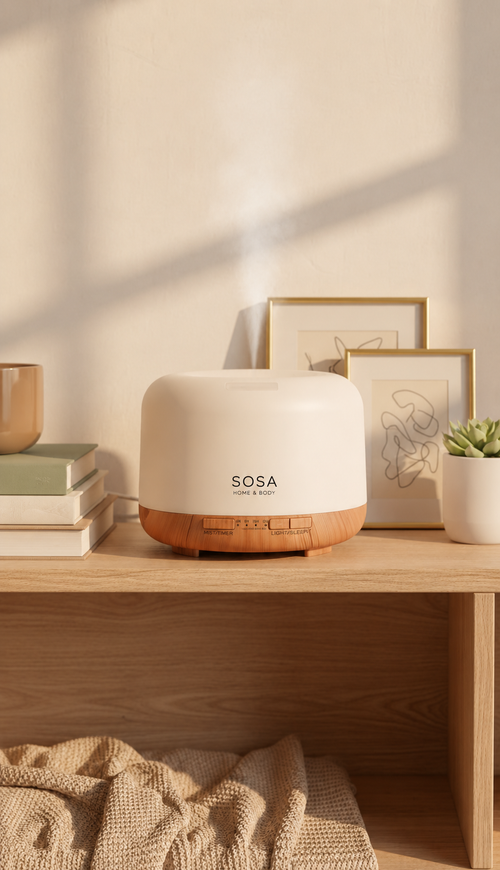 Sukoon · twenty minutes from cold₹1,899Shop →
The version you do before you leave
This is the part worth remembering, because it is the difference between arriving home to a flat that smells of nothing and arriving home to five minutes of work at the end of a long journey. Do the drains on the way out. The evening before you travel, or on the morning itself, pour a jug of water into every floor gully, basin, shower and WC in the property, and flush every toilet twice so the pan seal is full. That starts every trap at its maximum depth rather than wherever daily use happened to leave it, which on its own buys you an extra week or more. Then, for anything longer than about three weeks, add roughly a teaspoon of ordinary cooking oil on top of the water in each floor drain. Oil is less dense than water and does not mix with it, so it spreads into a thin film across the surface and dramatically slows the rate at which the water underneath can leave. This is an old plumbers' trick rather than a product, it costs nothing, and it is genuinely effective — a treated floor gully will still be holding a seal after two months in conditions where an untreated one would be dry in three weeks. Do not put oil down a basin or a kitchen sink, where it will end up on the pipe walls and cause you a different problem; floor gullies and unused shower drains only. And while you are at it, run the washing machine empty and hot, leave its door and detergent drawer open, empty the fridge drawer, take the bins out, and leave the bathroom and bedroom doors open so the flat is one connected volume rather than four sealed ones. That is the whole pre-departure routine and it takes about fifteen minutes.
Then the return itself, and the order matters more than people expect. Drains first, windows second, laundry third, fragrance fourth, and not in any other sequence. Drains first because it is the commonest cause and because the correction is instant — you want the source shut off before you start moving air around, or you will simply be distributing it. Windows second: two openings on opposite or adjacent walls for twenty minutes, which produces a genuine exchange rather than the slow drift you get from one window ajar. If the flat has been shut through a monsoon fortnight and everything feels clammy, open up on a dry bright hour rather than during rain, because ventilating into ninety per cent humidity imports moisture and can leave you worse off than before. Laundry third, because textiles are where a closed flat stores its memory and they will keep re-releasing it into freshly changed air for days. And fragrance fourth, which is to say afterwards, and as a finish rather than as a treatment. The reason is simple: a scent added to unchanged air in a flat that has been shut for two weeks will read as a smell on top of a smell, and you will notice the underlying staleness more rather than less, because your nose has just returned from a fortnight elsewhere and is temporarily very good at detecting your own home.
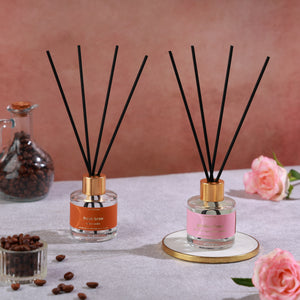
Which brings me to the one advantage of coming back from holiday, and it is worth using while it lasts. You have about half an hour of clean perception. Olfactory adaptation makes a constant household smell undetectable to its residents within roughly a fortnight, and a fortnight away resets it completely — so the person walking through the door tonight is, briefly, the honest guest that this whole cluster keeps telling you to find. Use it. Walk through every room in the first three minutes with the bags still in the hallway, and write down what each one actually smells of. That list is more accurate than anything you will be able to produce a week later, and it will tell you which room has a real problem and which was simply shut. Then deal with the causes, and after that decide on scent. On format: if you want the flat to have a consistent background from tomorrow, the Hotel Collection at ₹299 for 15ml in a Sukoon at ₹1,899 reaches a steady level in about twenty minutes from cold, at three drops in a bedroom and four in a sitting room, on the 2H or 4H timer. If you want the bathroom itself to hold one level without a socket or a switch, a reed diffuser from ₹749 is the better format, but buy it as a habit rather than a rescue — it needs 24 to 72 hours to establish and will do nothing for tonight. A candle such as the Bookshop candle at ₹379 puts scent into a room in fifteen to twenty minutes if you want something immediate, and must be attended and put out. None of the three has any effect on a dry trap, and no amount of any of them will make a difference until the water is back.
The SOSA edit
In the order I would do it, with the free work at the top where it belongs and the products at the bottom where they belong. The pre-departure row is the one that stops this happening again, and it is the reason the page exists.
| Do | What it is | When it earns its place | Cost |
|---|---|---|---|
| 1. Water down every drain, before the bags ★ | A mug or two into every gully, basin, shower and unused WC, and every toilet flushed twice | The first thing you do on walking in. It removes the commonest cause of a returning-home smell in five minutes | ₹0 |
| 2. Two windows, twenty minutes | Openings on opposite or adjacent walls so the flat gets an exchange rather than a stir | Immediately after the drains. On a monsoon return, wait for a dry bright hour rather than opening up into rain | ₹0 |
| 3. Machine, fridge, bins, laundry | An empty hot wash with the door left open, the vegetable drawer emptied, liners changed, textiles washed or sunned | Third, because fabric and appliances keep re-releasing into air you have just changed | ₹0 |
| 4. Before the next trip: drains and oil | Every trap filled on the way out, and a teaspoon of cooking oil on the water in each floor gully for long trips | The genuinely useful step. A treated gully holds its seal for months rather than weeks | ₹0 |
| 5. Hotel Collection 15ml in a Sukoon | Water-based scent at three to six drops per tank, in a 500ml machine with steady/2H/4H timers and three scents included | Once the air has been changed. About twenty minutes from cold, at three drops in a bedroom and four in a sitting room | ₹299 / ₹1,899 |
| A reed or a candle | Reeds from ₹749 hold one level for months but need 24 to 72 hours; a candle scents a room in 15 to 20 minutes | The reed for the bathroom as a habit, the candle for tonight. Neither has any effect on a dry trap | ₹749 / ₹379 |
Versailles
I learned this one properly the first time I shut my own flat for three weeks in April and came back convinced something had gone badly wrong in my absence. I checked the fridge, the bins, under the sink and behind the washing machine, and found nothing, and it took an embarrassingly long time to work out that the answer was a gully in a bathroom I had not used since December. A jug of water and the flat was normal inside ten minutes. It is genuinely difficult to accept that a smell that dramatic has a fix that small, and I think that is why so few people know it: the remedy is so trivial that it does not sound like it could be the answer.
What I would rather you take from this page than the fix, though, is the habit. Fill the traps on the way out, not on the way in. Fifteen minutes on the morning you leave — water into every drain, a spoon of oil in the floor gullies if it is a long trip, the machine run hot with its door left open, the fridge drawer emptied and the internal doors left open — and you will walk back into a flat that smells of nothing in particular, which is exactly what a home should smell of when you arrive. Then, once the windows have been open for twenty minutes, switch something on if you want to. Scent at that point is a pleasure rather than a repair, and the difference between those two things is most of what I write about.
Everything is made and supported from Pune, and a part of every order funds girl-child education through Nanhi Kali. You get a home that smells like somewhere you chose; a girl gets a classroom. That equation has always felt right to me.
Frequently asked questions
- What a dried-out drain trap is — the four ways a seal is lost, and why the smell travels.
- Why a house smells like sewage sometimes — when water down the traps does not fix it.
- Why you only notice your home's smell when you come back from a trip — the half-hour of honest perception, and how to use it.
- Why your bathroom smells, and the five things to check first — the pillar guide for this group.
- Brand: the SOSA founder story.
Facts verified August 2026: Diagnostic facts used in this guide: a closed room accumulates what it cannot exchange, so cross-ventilation needs two openings rather than one; a drain's U-bend water seal evaporates in roughly two to four weeks of disuse and then admits sewer gas, which is corrected by pouring water down the drain; microbial growth in fabric and on surfaces accelerates above about 60% relative humidity, and Indian monsoon indoor humidity commonly runs 80–95%, which is the one situation where ventilating on a wet day can import moisture rather than remove it; an air-conditioner's cold, wet evaporator coil and filter grow biofilm that is blown into the room on start-up; textiles adsorb cooking aerosol and body oils and re-release them for weeks; and olfactory adaptation makes a constant household smell undetectable to its residents within about a fortnight while visitors still perceive it. Timings: a scented candle scents a normal room in roughly 15–20 minutes, a Sukoon ultrasonic diffuser reaches a steady level in about 20 minutes from cold, and a reed diffuser needs roughly 24–72 hours. SOSA products and prices: Sukoon 500ml ₹1,899 (270–320 sq ft, 16–18h on low, 9–12h high, 30–50 ml/h, 2.4MHz cool mist, remote, steady/2H/4H timers, BPA-free, auto shut-off, includes three 15ml Hotel Collection scents of your choice); Boond 300ml ₹899; Megh 6-litre ₹3,499; waterless Vaayu ₹11,999 (up to 1000m³); Aangan ₹25,999. Hotel Collection water-based fragrance 15ml ₹299, 100ml ₹999, 300ml ₹1,799, Pack of 7 at 15ml ₹1,799; dose 3–6 drops per tank. Reed diffusers (separate alcohol-free line): Morning Freshness from ₹749, Garden Bloom and Evening Calm from ₹799, Fresh Brew and Mountain Breeze from ₹849; 130ml from ₹1,249; duos from ₹1,498; 300ml refills ₹2,399. Scented candles: Bookshop 80g ₹379, Amber Rose 130g ₹599 and 220g ₹799, Smoked Oudh 130g ₹449, ceramic jar candles ₹949, Pure Calm wax melt set ₹854. Free shipping above ₹499. SOSA does not make a room or linen spray for the home. The Hotel Collection scents are SOSA's own interpretations; SOSA is not affiliated with or endorsed by any hotel brand. Prices subject to change — see the live product pages.