Founder Diaries · Home Fragrance · How Many to Buy
By Sonal Sahani · ISIPCA Versailles 9 min read Updated August 2026
It sounds like the kind of thing a fragrance company would obviously say yes to, so let me be precise about the answer. Every bedroom that is genuinely slept in, yes — and the argument is not coverage. It is that the person in it should get to choose.
Quick answers — read this first
Every bedroom? Every one that is genuinely slept in. Not spare rooms, not box rooms.
Why: a bedroom is 110–160 sq ft behind a closed door — one
Sukoon exactly — and its occupant has opinions.
For the rest: a
reed diffuser from ₹749, aired before guests arrive.
The short answer
Short answer: yes for every bedroom actually slept in, no for spare and box rooms. A bedroom is typically 110–160 sq ft behind a door that closes, so it is a separate air mass a central machine cannot reach — but the stronger reason is autonomy: each occupant picks their own scent and their own schedule.
The pick: one
Sukoon (₹1,899) per occupied bedroom, each arriving with three 15ml
Hotel Collection scents. Guest and spare rooms get a
reed diffuser from ₹749 instead. Past about four machines total, a
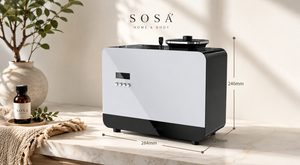
Vaayu (₹11,999) takes over the connected common areas.
Straight answer
Should every bedroom have its own ultrasonic diffuser?
1. Every bedroom that is genuinely slept in — yes. A closed door makes a separate air mass, so a bedroom gets nothing from a machine elsewhere in the house, however powerful.
2. The size is almost exact. Indian bedrooms run 110–160 sq ft; a
Sukoon covers 270–320 sq ft, so one unit on low is comfortably right with capacity to spare.
3. The real reason is autonomy. A central system gives a house one opinion. One machine per bedroom gives each person their own scent, their own timer, their own switch — which is what people actually want from their own room.
4. Not spare rooms. A guest room used twice a year wants airing and a
reed diffuser from ₹749, not ₹1,899 of hardware you will be rinsing for nobody.
5. Past about four machines in total, change technology. Keep bedroom Sukoons and put the connected common areas on a
Vaayu at ₹11,999.
A portion of every order supports girl-child education through Nanhi Kali.
TL;DR: every bedroom actually slept in, at ₹1,899 each — and the argument is autonomy rather than coverage. Spare rooms get a
reed diffuser from ₹749.

The unit of measurement
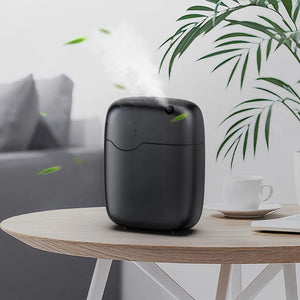
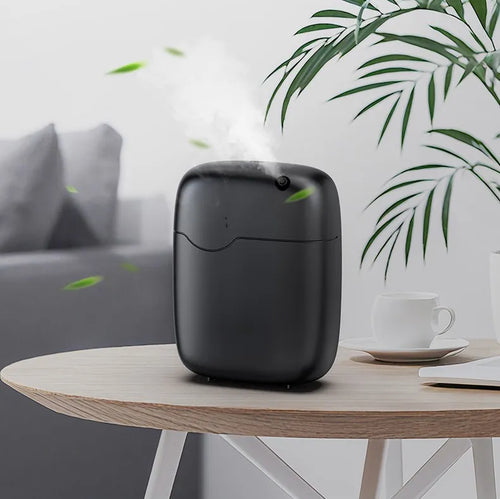
SOSA Sukoon ₹1,899
One 500ml ultrasonic diffuser covering 270–320 sq ft — which is one closed room in almost every Indian home. 16–18 hours per fill on low, remote, 2H/4H timers, and three 15ml
Hotel Collection scents of your choice included, so each machine you add also adds three fragrances.
The real argument is autonomy
If this were only about coverage, the answer would be more equivocal — you could argue for leaving doors open, or for one larger machine. But coverage is the smaller half of why bedrooms get their own machines, and the bigger half only becomes obvious in a house with more than one person in it.
1
THE AUTONOMY ARGUMENT
A house has one opinion; a bedroom should have its own
Whatever you run through the common areas is a decision made for everybody. That is right for a hallway and wrong for a bedroom, because a bedroom is the one room in a house that belongs to a specific person.
One Sukoon at ₹1,899 with three 15ml scents included lets them choose — and the choosing is most of the value, particularly for teenagers and for anyone who has strong views about what they sleep in.
2
THE COVERAGE ARGUMENT
The door is absolute
Fragrance does not travel through a closed door in any useful quantity. A bedroom with the door shut at night is genuinely a sealed volume, and no amount of output from a machine in the corridor will change that. This is why turning a central system up never solves a bedroom problem — it just makes the corridor unpleasant.
The size note: at 110–160 sq ft a bedroom is well inside one Sukoon's 270–320 sq ft rating, so run it on low with the 2H timer rather than steady. The capacity to spare is the point, not a waste.
3
THE SCHEDULE ARGUMENT
Bedrooms want to stop
Common areas run through the evening; a bedroom wants scent for the hour before sleep and nothing at three in the morning. The Sukoon's 2H and 4H auto-off timers do exactly this, and they are the reason a bedroom machine should be its own machine rather than a zone of something larger. A room that switches itself off is a room you never have to think about.
Which bedrooms qualify
The test is hours slept, not the label on the floor plan. Here is how the rooms in a typical Indian home actually sort.
Which rooms get a machine
By how the room is actually used
| Room |
Machine? |
What to buy |
Cost |
| Master bedroom ★ |
Yes |
Sukoon — the most-slept-in room in the house |
₹1,899 |
| Second bedroom, occupied daily |
Yes |
Sukoon — occupant picks their own scent |
₹1,899 |
| Child's or teenager's room |
Yes |
Sukoon on low with the 2H timer; let them choose the scent |
₹1,899 |
| Bedroom doubling as a study |
Yes, first |
Sukoon — this is where the hours are |
₹1,899 |
| Guest room, used occasionally |
No |
Reed diffuser, plus airing before arrivals |
from ₹749 |
| Box room, store, spare with a bed |
No |
Nothing — ventilation, not fragrance |
— |
Shop this guide
One per occupied bedroom, and the alternative
The SOSA principle
A bedroom machine is not about coverage. It is about whose room it is.
A central system gives a house one opinion. Bedrooms are the rooms that should be allowed to disagree with it.
Children's rooms and guest rooms
Children's rooms. The Sukoon is BPA-free ABS with cool mist and no heating element, and it shuts off automatically when the tank empties, which is the specification that matters here. Run it on low with the 2H timer so it stops rather than running all night, keep it out of reach and off the floor, and let the child pick the scent from the three that came with the machine — the choosing is genuinely most of why they will like it. Keep the scent clean and low in sweetness rather than sugary.
Guest rooms. The instinct is to make a guest room impressive, and the better instinct is to make it neutral. A guest should not sleep in somebody else's taste. If a guest room is used often enough to justify a machine, run the driest scent you own in it — the Westin-inspired (white tea, aloe, cedar) is the one I would pick every time. If it is used twice a year, a reed diffuser from ₹749 and an open window the morning before they arrive does more than any diffuser will.
And the ceiling. Once bedroom machines take your total past about four, the arithmetic changes — not because the rooms stopped needing them, but because four tanks is roughly where the routine breaks down. Keep the bedroom Sukoons, because that is where the autonomy argument lives, and move the connected common areas onto a Vaayu at ₹11,999, which is waterless, rated to 1000m³ and has nothing to fill.
Common areas are a decision you make for everyone. A bedroom is the one room that gets to disagree.
— Sonal Sahani, SOSA
The SOSA edit
Bedroom by bedroom, with the honest alternatives for the rooms that do not need a machine.
The SOSA edit
What each bedroom needs
| Room |
Buy |
How to run it |
Cost |
| Every occupied bedroom ★ |
One Sukoon each |
Low output, 2H timer, occupant's own scent |
₹1,899 each |
| Their scent choice |
Hotel Collection |
Three 15ml bottles come with each machine |
₹299 extra |
| Guest room, used often |
Sukoon |
Westin-inspired — the most neutral scent in the range |
₹1,899 |
| Guest room, used rarely |
Reed diffuser |
Passive; air the room the morning before arrivals |
from ₹749 |
| En-suite or dressing room |
Boond |
A small closed pocket; shares your Hotel Collection bottles |
₹899 |
| Past four machines total |
Vaayu |
Keep bedroom Sukoons; move common areas to waterless |
₹11,999 |
Honest notes for buyers: the Sukoon covers 270–320 sq ft, which is why a studio needs exactly one and a 3BHK needs three or a
Vaayu instead. Ultrasonic diffusers are water-based and add a little humidity to the room, which is a benefit in an AC-dry home and a consideration in a damp coastal one; they run SOSA's own water-based Hotel Collection fragrance and nothing else, because thicker essential and carrier oils clog the 2.4MHz misting plate. The Vaayu and the HVAC systems are waterless nebulisers running undiluted oil — a different technology, not a bigger Sukoon, and the better choice for long daily runs across connected space. Fragrance layers on top of clean air; it does not replace an extractor fan, an open window or a bin that gets emptied. The Hotel Collection scents are SOSA's own interpretations inspired by the world's finest hotels; SOSA is an independent Indian fragrance house, not affiliated with or endorsed by any hotel brand. A portion of every order supports girl-child education through Nanhi Kali.

More rooms, more moods
Hotel Collection from ₹299
Seven hotel-inspired water-based scents at ₹299 for 15ml, or ₹1,799 for the Pack of 7 — about ₹257 a bottle against ₹2,093 for seven singly. In a small home this is the upgrade that beats a second machine; in a large one it is what stops several rooms smelling identical.
A note from Sonal
The households where this works best are the ones where nobody had to agree. My own preference for a bedroom is quite austere and the people I live with think it is boring, and the point of one machine per bedroom is that we all get to be right.
Which is also why I will not sell you a machine for a room nobody sleeps in. A guest room used twice a year needs a window opened the morning before and a reed on the sill. The autonomy argument only applies where there is somebody whose room it is.
Everything is made and supported from Pune, and a part of every order funds girl-child education through Nanhi Kali. You get a home that smells like somewhere you chose; a girl gets a classroom. That equation has always felt right to me.
Frequently asked questions
Should every bedroom have its own diffuser?
Every bedroom genuinely slept in, yes — one
Sukoon at ₹1,899 each. A closed door makes a separate air mass, so a bedroom gets nothing from a machine elsewhere, and the stronger reason is that its occupant should choose their own scent.
Is a Sukoon too big for a small bedroom?
No. An Indian bedroom is typically 110–160 sq ft against the Sukoon's 270–320 sq ft rating, so run it on low with the 2H auto-off timer. The spare capacity means it reaches a steady level quickly and then stops, rather than running all night.
Is an ultrasonic diffuser safe in a child's room?
The
Sukoon is BPA-free ABS with cool mist and no heating element, and it shuts off automatically when the tank empties. Run it on low with the 2H timer, keep it off the floor and out of reach, and choose a clean, low-sweetness scent rather than a sugary one.
Should a guest bedroom have its own diffuser?
Only if it is used often. A guest should not sleep in someone else's taste, so if you do put a machine there, run the most neutral scent you own — Westin-inspired (white tea, aloe, cedar). A room used twice a year is better served by a
reed diffuser from ₹749 and an open window beforehand.
How many bedroom diffusers is too many?
None, in principle — but once your household total passes about four machines, four tanks becomes a routine most people abandon. Keep the bedroom Sukoons for the autonomy and move the connected common areas onto a
Vaayu at ₹11,999, which is waterless and has nothing to fill.
One per bedroom
Every bedroom that is slept in — because the person in it should choose
A Sukoon at ₹1,899 per occupied bedroom, each with three 15ml Hotel Collection scents of their choice. Spare rooms get a reed diffuser from ₹749 instead. A portion of every order supports girl-child education through Nanhi Kali.
See the SOSA Sukoon → Reed diffusers from ₹749
Continue the read
More from SOSA
Editorial standards & sources
About this guide: Written by Sonal Sahani, ISIPCA Versailles-trained founder and perfumer at SOSA Home & Body, on why bedroom diffusers are an argument about autonomy rather than about coverage.
Facts verified August 2026: SOSA Sukoon — 500ml tank, 2.4MHz ultrasonic cool mist, 270–320 sq ft coverage, 16–18 hours runtime on low and 9–12 on high, 30–50 ml/h mist output, 7-colour LED, remote and steady/2H/4H timers, BPA-free ABS with auto shut-off and overheat protection, ~17cm high — ₹1,899, including three 15ml Hotel Collection fragrances of your choice. Boond 300ml ₹899; Megh 6-litre ₹3,499. Hotel Collection water-based fragrance 15ml ₹299, 100ml ₹999, 300ml ₹1,799, Pack of 7 × 15ml ₹1,799; 100ml and 300ml refills from ₹999. Seven scents: The Ritz-Carlton-inspired (white tea, bergamot, cedar), Westin-inspired (white tea, aloe, cedar), 1 Hotels-inspired (cedarwood, vetiver, green leaves), The St. Regis-inspired (amber, violet, woods), Shangri-La-inspired (jasmine, green tea, white tea), Four Seasons-inspired (citrus, floral, sandalwood), W Hotels-inspired (citrus, pepper, amber). Waterless systems for larger and connected spaces: Vaayu ₹11,999 (up to 1000m³), Aangan ₹25,999 (8,000–10,000 sq ft), Meenar ₹38,500 (12,000–18,000 sq ft). The Hotel Collection scents are SOSA's own interpretations; SOSA is not affiliated with or endorsed by any hotel brand. Prices subject to change — see the live product pages.



 Vaayu · past four rooms₹11,999Shop →