


Kitchen Fragrance: The Complete Guide to a Fresh (Not Food-Smelling) Kitchen

Kitchen Fragrance: The Complete Guide to a Fresh (Not Food-Smelling) Kitchen

Home fragrance by an ISIPCA Versailles-trained perfumer · reed, ultrasonic & waterlessReed diffusers from ₹749 · Sukoon ₹1,799 · SOSA Vaayu ₹11,999A portion funds girl-child education
★ SOSA home scenting
The room that feeds everyone and then holds the smell of it long after — and the clean, lemon-bright air that should be waiting there by morning instead
★ ★ ★ ★ ★
★★★★★
"After the chimney does its job, a Morning Freshness reed on the far counter keeps the kitchen smelling lemon-clean the rest of the day. It never smells like the sabzi I made — just fresh."
Priya N. Pune
Morning Freshness reed · far counter
★★★★★
"I keep a Boond on the counter well away from the hob and switch it on after frying. Ten minutes and the oily-air smell lifts. I stopped expecting it to work while the pan's still going — that's the extractor's job."
Rohan D. Nagpur
Boond · counter away from hob
★★★★★
"Our kitchen opens straight into the dining area, so any smell used to travel. The Sukoon holds one clean citrus scent across both once I've aired it out — the whole space finally reads as one room, not a kitchen and a lounge."
Meera S. Bengaluru
Sukoon · open kitchen
★★★★★
"Open-plan flat in Mumbai humidity. The Vaayu on a timer keeps a light fresh scent across the whole floor from morning and adds no dampness at all — which mattered, because the kitchen already throws off enough steam."
Arjun K. Mumbai
SOSA Vaayu · open-plan floor
★★★★★
"My modular kitchen looks lovely but used to hold a stale food-and-cabinet smell. Cleaned out the bin and sink, then a lemon-mint reed on the counter — bright, not sweet. Exactly what a kitchen should smell of."
Lakshmi R. Chennai
Morning Freshness reed · modular kitchen
★★★★★
"After a big fish curry I run the exhaust, wipe down, take the scraps straight out — and then a Boond freshens the air. The reed and chimney do the work together. Nothing masks fish on its own, and I like that SOSA said so."
Kavya M. Kochi
Boond · after fish curry
★★★★★
"After the chimney does its job, a Morning Freshness reed on the far counter keeps the kitchen smelling lemon-clean the rest of the day. It never smells like the sabzi I made — just fresh."
Priya N. Pune
Morning Freshness reed · far counter
★★★★★
"I keep a Boond on the counter well away from the hob and switch it on after frying. Ten minutes and the oily-air smell lifts. I stopped expecting it to work while the pan's still going — that's the extractor's job."
Rohan D. Nagpur
Boond · counter away from hob
★★★★★
"Our kitchen opens straight into the dining area, so any smell used to travel. The Sukoon holds one clean citrus scent across both once I've aired it out — the whole space finally reads as one room, not a kitchen and a lounge."
Meera S. Bengaluru
Sukoon · open kitchen
★★★★★
"Open-plan flat in Mumbai humidity. The Vaayu on a timer keeps a light fresh scent across the whole floor from morning and adds no dampness at all — which mattered, because the kitchen already throws off enough steam."
Arjun K. Mumbai
SOSA Vaayu · open-plan floor
★★★★★
"My modular kitchen looks lovely but used to hold a stale food-and-cabinet smell. Cleaned out the bin and sink, then a lemon-mint reed on the counter — bright, not sweet. Exactly what a kitchen should smell of."
Lakshmi R. Chennai
Morning Freshness reed · modular kitchen
★★★★★
"After a big fish curry I run the exhaust, wipe down, take the scraps straight out — and then a Boond freshens the air. The reed and chimney do the work together. Nothing masks fish on its own, and I like that SOSA said so."
Kavya M. Kochi
Boond · after fish curry
Alcohol-free reed diffusers · water-based & waterless systems Made in Pune by an ISIPCA Versailles-trained perfumer A portion of every order funds girl-child education


Founder Diaries · Kitchen
By Sonal Sahani · ISIPCA Versailles12 min readUpdated August 2026

The kitchen is won at the extractor, not the diffuser. Clear the cooking first — chimney, lids, airflow, a wiped-down counter — and then lay a clean, fresh scent that never competes with food. No amount of fragrance masks last night's fish or this morning's fried air; extraction and cleaning do that. Once the air is genuinely clear, a light citrus or herbal scent, placed well away from the hob and run between cooking sessions, is what makes a kitchen read fresh rather than food-smelling.

Quick answers — read this first

How do I stop my kitchen smelling of food? Deal with it at source — run the chimney while you cook, use lids, take the bin out, wipe surfaces. Then lay a light, non-food scent. Fragrance never covers cooking; it crowns a kitchen you've already cleared.

Which scent? Clean and non-food — Morning Freshness (lemon-mint) is the hero, or Mountain Breeze for something quieter. Never sweet or gourmand over real food.

Which system, and where? A reed or a Boond on a far counter for most kitchens; a Sukoon or SOSA Vaayu for an open kitchen. Always away from the hob and heat.

The short version
Short answer: Extract and clean at source first — chimney, lids, bin, wiped surfaces. Then lay one clean, non-food scent (citrus, herbal or light wood) on a far counter, away from the hob, and run it between cooking sessions rather than over the pan.
The pick: A Morning Freshness reed (from ₹749) is the hero odour-cutter; a Boond (₹799) on a far counter; a Sukoon (₹1,799) or SOSA Vaayu (₹11,999) for an open kitchen.
SOSA Morning Freshness Malabar lemon and mint reed diffuser on a kitchen counter
The hero odour-cutter for kitchens
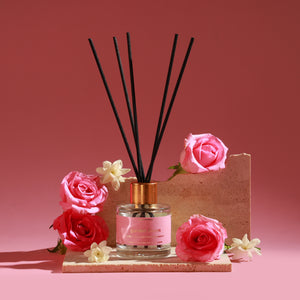
Morning Freshness — Malabar lemon & mint. Alcohol-free, passive, no heat. A clean citrus scent that reads as freshness itself, on a far counter away from the hob.
from ₹749 · View

The five-step kitchen method

How to fragrance a kitchen properly
Do these five things, in this order, and the kitchen will read fresh and clean — never of the food you cooked in it.

1. Extract while you cook. This is where the kitchen is genuinely won. Run the chimney or exhaust the moment the pan goes on, not after; cook with lids where you can; open a window to let steam and fumes leave. Most of what we call "cooking smell" is airborne oil and vapour that never needed to settle in the room at all — pulled out at source, it simply doesn't become a problem to solve later.

2. Clean the sources you can't extract. The lingering smell — the one still there next morning — comes from residue: oil that settled on surfaces, scraps in the bin, a damp cloth, a full sink, food left in the trash. Wipe the counters and hob after cooking, take the kitchen bin out often, keep the sink clear. Fragrance never masks any of this; it only sits on top of it, and the two together smell worse than either alone.

3. Choose a clean, non-food scent. A kitchen wants citrus, herbal or a light wood — a scent that reads as fresh, not as another food in the room. Lemon-mint is the natural choice because it's the smell of clean itself. Keep sweet and gourmand notes out: vanilla, coffee and dessert-like scents are lovely in a living room, but over real cooking they clash and make the air feel heavier, not cleaner.

4. Place it away from the hob. Put the scent on a far counter or shelf, well away from heat, open flame and direct splashes. Nothing goes near the cooktop — not a reed, and certainly not an electric diffuser. Away from the cooking zone, the scent freshens the air the room settles into rather than fighting the steam rising off a live pan.

5. Run it between cooking sessions. Scent works before and after, not during. Let a passive reed sit always-on to hold a clean baseline, and give the air a freshen once cooking is done and cleared. Trying to perfume over an active hob is a losing battle; freshening a cleared kitchen is effortless.

In one line: Extract at source, clean what's left, pick a clean non-food scent, keep it away from the hob, and run it between cooking sessions — not over the pan.

Three things that decide your scent

1
Extraction & source first
The extractor wins the kitchen, not the diffuser
SOSA Morning Freshness lemon and mint reed diffuser Morning Freshness reedfrom ₹749

Everything in a kitchen starts here, and it's the part people most want to skip. Cooking smell is airborne oil, steam and food vapour; if it isn't pulled out at source, it settles on surfaces and hangs in the air for hours. So the first tool is not a fragrance at all — it's the chimney or exhaust, run while you cook, plus lids, an open window and quick cleaning afterwards. This matters most for the strong offenders: deep-frying, fish, and heavy spice tempering fill a room fast. Only once the air is genuinely cleared does scent have a job to do — and then a clean citrus like Morning Freshness reads as freshness itself, cutting the flat, closed note a shut kitchen holds. Skip the extraction and even the best fragrance just layers over the smell.

Tip: Switch the chimney on before the oil heats, not after the smell appears — you're removing vapour at source, which is far easier than clearing a room that's already full of it.
2
Casting the scent
Clean and non-food, never sweet over cooking
SOSA Mountain Breeze pine, sage and cedar reed diffuser Mountain Breeze reedfrom ₹849

A kitchen scent has one rule the rest of the house doesn't: it must never smell like food. You already have the real thing in the room, and a fragrance that competes with it — sweet vanilla, warm coffee, anything gourmand — reads as clutter, two foods arguing. What works is a scent that says clean: citrus first, then herbal and light woods. Morning Freshness, a Malabar lemon-mint, is the natural hero because bright citrus is exactly what we associate with a scrubbed, aired kitchen. If you'd rather something quieter and less zesty, Mountain Breeze — pine, sage and cedar — gives a grounded, green-wood freshness that still stays firmly out of food territory. Save the coffee-vanilla casts for the living room, where there's no dinner for them to fight.

Tip: If you can name the scent as a food while standing in the kitchen, it's the wrong cast. Aim for "this room smells clean," never "this room smells of dessert."
3
Placement, heat & format
Away from the hob — and water-based vs waterless
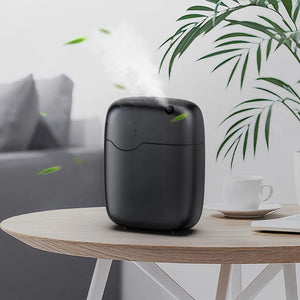
SOSA Boond 300ml mini ultrasonic diffuser Boond₹799

Where you put the scent matters as much as which scent it is. Everything goes on a far counter, away from the hob, open flame and direct heat — nothing near the cooktop, ever. Passive reed diffusers are the calmest fit for a kitchen: alcohol-free, no heat, no electricity, they just sit and freshen. If you want a quick burst after cooking, a small ultrasonic Boond on a counter away from splashes clears oily air in a few minutes. Format matters too. Ultrasonic diffusers add a little cool mist, which is fine in a dry-season kitchen but less ideal in a coastal city where the kitchen already throws off steam and humidity all day — there, a passive reed or a waterless Vaayu that nebulises oil with no added moisture is the calmer long-run choice.

Tip: In a humid coastal kitchen, lean on reeds and waterless machines rather than a mist diffuser running for hours — a steamy kitchen doesn't need more moisture added to it.
The kitchen zone map
Where scent belongs across a kitchen — and the one zone where nothing goes at all
Zone Level System
Over the hob / near heat & flame Nothing — ever Extractor / chimney only. Keep all diffusers well away from heat and open flame; no reed or machine near the cooktop
Far counter (away from cooking) Low, passive baseline Morning Freshness reed, or a Boond in short bursts after cooking
Open-kitchen boundary (kitchen/dining) Clear first, then hold Chimney + airflow to clear the drift, then a Sukoon to hold one clean scent across the shared air
Whole-room air (closed kitchen) Between cooking sessions A reed always-on for baseline, plus a Boond run once cooking is done and cleared
Small vs open-plan floor Size to the volume Reed or Boond for a small kitchen; Vaayu (or a large-tank Megh) for an open-plan whole floor
The systems I reach for
A reed on the far counter, a Boond for quick freshening, a Vaayu for an open floor
The SOSA principle
A kitchen should smell of clean, not of cooking — and clean is the extractor's work before it is the diffuser's.
Fragrance is the last step in a kitchen, never the first. Pull the cooking out at source, clean what settles, and only then lay a light citrus over cleared air. Do it in that order and a lemon-bright freshness reads as a well-kept kitchen. Do it backwards and you just get food and perfume, fighting.
The product ladder
From a far-counter reed to a scheduled open-floor machine — with honest notes
If your kitchen is… Reach for Honest note
Small or apartment-sized, wanting everyday freshness Morning Freshness reed (from ₹749) Passive, alcohol-free, no heat — the safest fit near food and the hero odour-cutter. Keep it on a far counter. Output is gentle by design, so it holds a clean baseline but won't clear an active cooking smell on its own — that's still the extractor's job.
Wanting a quick freshen right after cooking Boond (₹799) + Hotel Collection (from ₹299) Runs the water-based Hotel Collection. Lovely for a short burst once you've cleared and cleaned. Adds mild humidity, so keep it to bursts rather than all-day running in a steamy or coastal kitchen — and always away from the hob and splashes.
An open kitchen sharing air with living/dining Sukoon (₹1,799) The entry system for a room's worth of air — good for holding one clean scent across an open kitchen once it's aired. Adds mild humidity, so it's happiest in dry-season air or in shorter runs.
Open-plan whole floor, or run for hours in a humid city SOSA Vaayu (₹11,999) Waterless, no added humidity, app scheduling — the genuine upgrade for an open-plan kitchen-living floor, and the right pick when a coastal kitchen already carries steam. An investment, and overkill for a single small kitchen.
A very large kitchen-diner or a villa / commercial kitchen Megh (₹3,499) or ducted Aangan (₹25,999) Megh's 6 L tank suits long runs in a big open space; Aangan ducts scent evenly across a whole villa floor. Step-ups for genuinely large layouts, not ordinary flats — and none of it replaces proper kitchen extraction.
Whatever you choose, the order doesn't change: extractor and cleaning first, clean non-food scent second, always away from the hob. A ₹749 reed on a cleared counter beats a big machine running over a kitchen you never aired.
SOSA Boond 300ml mini ultrasonic cool-mist diffuser
Quick freshen, far counter
Boond Ultrasonic Diffuser ₹799
A compact 300ml diffuser that runs the water-based Hotel Collection. Sit it on a counter away from the hob and splashes, switch it on once you've cleared and cleaned, and it lifts oily, after-cooking air in a few minutes. Best in short bursts rather than all-day running in a steamy kitchen.
SOSA Vaayu waterless cold-air scent machine with app scheduling
Open-plan + scheduling
SOSA Vaayu Waterless Machine ₹11,999
Nebulises oil with no added humidity, covers up to 1000 m³, and schedules from an app — so one clean signature holds across an open kitchen-living floor and is already there before you walk in. The one I recommend for open-plan layouts and for humid coastal homes, where a steamy kitchen shouldn't have more moisture added to it.
SS
ISIPCA
Versailles
A note from Sonal

People come to a fragrance house expecting me to sell them a smell for every problem. In the kitchen, the honest answer is that the most important tool isn't ours at all — it's the chimney above your hob. I learned this in my own kitchen in Pune, cooking the kind of food that fills a room: tempering, frying, the occasional fish. For a while I tried to scent my way out of it, and all I got was lemon layered over oil, which is worse than either. The day I started running the exhaust from the first minute and taking the bin out straight after, the smell simply stopped being there — and then a reed on the far counter had something clean to work with.

That's the principle I build our kitchen advice around: the kitchen is won at the extractor, not the diffuser. Fragrance never masks last night's fish or this morning's oil — extraction and cleaning do. Once the air is genuinely clear, I want a scent that says clean, never one that pretends to be another dish. At SOSA I point people towards a citrus like Morning Freshness, kept low, well away from the hob, run between cooking rather than over it. It's less than they expect me to sell them, and it's the truth.

A portion of every SOSA order funds girl-child education through Nanhi Kali — something I'm quietly proud carries into every room we help you keep fresh.

Kitchen fragrance FAQ

How do I make my kitchen smell good without it smelling of food?
Clear the cooking at source first — run the chimney or exhaust while you cook, use lids, take scraps and the bin out, and wipe down surfaces. Fragrance never masks last night's fish or oil; extraction and cleaning do. Once the air is genuinely clean, lay a light, non-food scent like Morning Freshness (Malabar lemon and mint) on a far counter, away from the hob. Run it between cooking sessions rather than over the pan, and the kitchen reads fresh and clean rather than of food.
What is the best scent for a kitchen?
A clean, non-food scent that never competes with cooking — citrus, herbal or a light wood. Morning Freshness (Malabar lemon and mint) is the natural hero for a kitchen because it reads as freshness itself and cuts a closed, stale note. Mountain Breeze (pine, sage and cedar) works if you prefer something quieter and grounding. Avoid sweet or gourmand scents in a kitchen — vanilla and coffee smell lovely elsewhere, but over real food they clash and can make the air feel heavier.
Where should I put a diffuser in the kitchen?
On a far counter, well away from the hob, any open flame and direct heat, and away from where you do wet prep. Never place a diffuser over or beside the cooktop. A reed diffuser is happiest tucked on a counter or shelf a good distance from cooking; an ultrasonic Boond or Sukoon should sit away from splashes and heat. Keep the scent between cooking sessions rather than running it directly into the steam and fumes of an active hob.
Can fragrance get rid of last night's fish or fried-food smell?
No — and this is the honest heart of kitchen scenting. Fragrance never removes fish, fried oil or strong spice odour; it only sits on top of it, and the two smells together are usually worse than either alone. The smell comes from airborne oil and food residue settled on surfaces, so it's cleared by extraction, airflow and cleaning — running the exhaust, wiping down, taking scraps out, washing up. Once the source is genuinely dealt with, a clean citrus scent freshens the cleared air.
Is it safe to run a diffuser in the kitchen near the hob?
Keep any diffuser well away from heat and open flame — never near or above the hob. SOSA reed diffusers are alcohol-free and passive, with no heat and no electricity, which makes them the calmest choice for a kitchen, but even a reed belongs on a far counter, not beside the cooktop. Electric ultrasonic diffusers like Boond and Sukoon should sit away from the hob, splashes and direct heat. The rule is simple: nothing goes near the flame.
Keep it fresh, not food-smelling
Extract first, then a clean citrus on the far counter, away from the hob.
Start with a Morning Freshness reed for an everyday clean baseline, add a Boond for a quick freshen after cooking, or let SOSA Vaayu hold one light scent across an open-plan kitchen-living floor on a schedule. Clear the cooking, then crown the cleared air — never the other way round.
Shop Morning Freshness from ₹749 All home scenting
The kitchen fragrance cluster
Keep reading — the rest of the kitchen, problem by problem and question by question
About this guide
Written by Sonal Sahani, founder of SOSA Home & Body and a perfumer trained at ISIPCA, Versailles. The SOSA Hotel Collection are our own independent interpretations inspired by the character of the world's finest hotels; SOSA is not affiliated with or endorsed by any hotel brand. A portion of every order funds girl-child education through Nanhi Kali. Prices and availability are current at the time of writing and subject to change.
Back to blog