
 Evening Walks ₹379
  Everyday Beautiful Mug ₹474
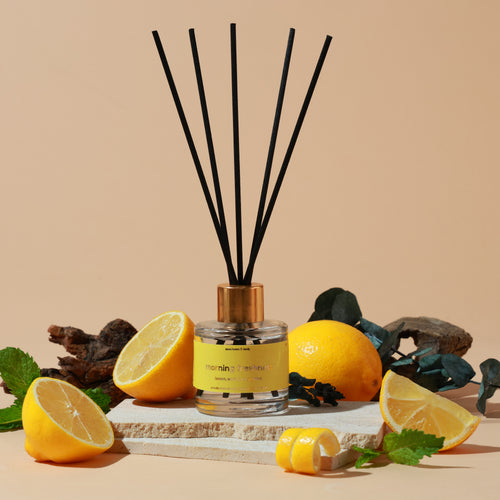
  Morning Freshness ₹749
  Garden Bloom ₹799
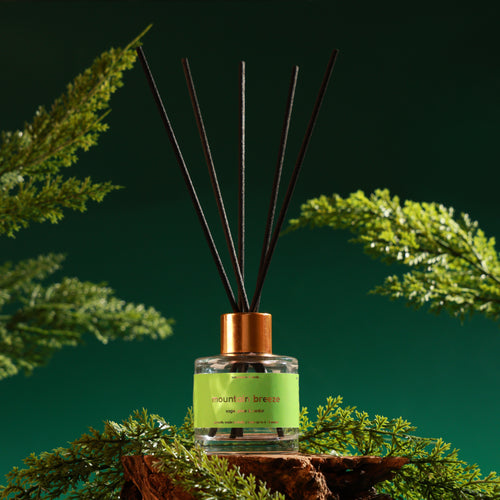
  Mountain Breeze ₹849
The two fail conditions. Anything personalised — a name, an inscription, a card left inside, a monogram. And anything from inside the same circle, however unopened it is. The second one is the failure that lasts for years.
The hidden third failure. Passing on something incomplete. Wax melts at ₹474 need a burner that is not included; the 15ml Hotel Collection at ₹299 needs an ultrasonic machine. Handing on something the recipient cannot use is worse than handing on nothing.
Never pass a pile downward. Regifting unwanted items to house help, a driver or building staff is the worst version of the practice. Cash first, and anything you give alongside should be something you chose.
2. Yes, if it is genuinely unused and complete. Nothing missing, nothing damaged in storage, no dust, no faded box from six months on a windowsill. If it is edible and you cannot personally vouch for how it has been stored or how old it is, the answer is no — that is a category where being wrong matters more than being embarrassed.
3. Yes, if it comes from outside their circle. The original giver and the new recipient must have no realistic route to comparing notes. Same building, same office, same family group, same friendship group: all of those are one circle, and at Diwali the circles are dense and overlapping.
4. No, if it is personalised in any way. A name, an inscription, a monogram, a card still tucked inside the box, a note on the packaging. People forget the card. The card is what gets found.
5. No, inside the same circle, however sealed it is. This is the failure with no recovery. Recognition is instantaneous, it is remembered for years, and no explanation offered afterwards ever improves it.
6. And no if the thing is incomplete. Wax melts at ₹474 require a burner that is not supplied; the 15ml Hotel Collection at ₹299 requires an ultrasonic machine such as a Boond at ₹899 or a Sukoon at ₹1,899. Passing on something that needs a second purchase hands over a small problem rather than a gift.
7. Never pass an unwanted pile downward. To house help, a driver, a guard, building staff. Cash is flexible and it is what most people would choose; anything you add alongside should be something you chose deliberately, not something you were trying to clear.
Everything is composed and handmade in small batches in Pune, and a portion of every order supports girl-child education through Nanhi Kali.
Part one — the conditions, pass and fail
Regifting has a bad name because the version people picture is the careless one. Done with three checks it is unremarkable, and it is considerably better for everyone than a cupboard of sealed boxes slowly ageing. The checks are not about the value of the item. They are about traceability, completeness and taste risk.
 Wax melts₹474 · burner not includedPersonalisation is the obvious one and it is missed constantly, because the giveaway is rarely on the outside. It is the card slipped inside the box, the compliments slip with a name on it, the note taped under the lid. Check inside before you re-wrap anything. The circle failure is the serious one. Diwali gifting is local and dense: what arrived at your door most likely came from your building, your office, your street or your extended family, and those are exactly the groups you are about to give into. Sealing protects you from nothing here. Recognition is instant and permanent. When in doubt about the map, assume the worst, because at Diwali the assumption is usually correct — everybody in a circle is buying in the same fortnight from a small number of shops.
Part two — the six-test screen
Run each item in the pile through these six. It takes about a minute per object and it removes the guesswork entirely. No prices appear here for anything outside our own range — the screen is about provenance and completeness, and what a thing cost has no bearing on either.
| The test | It passes if | It fails if | What the test protects |
|---|---|---|---|
| 1. The circle ★ | Original giver and new recipient share no building, office, family or friendship group | Any overlap at all, however distant | The only failure here that lasts for years |
| 2. The seal | Packaging never opened; shrink-wrap intact | Opened and reclosed, or resealed by you | The recipient's confidence in what they have been handed |
| 3. The inside of the box | No card, no compliments slip, no name anywhere | Anything written, engraved or addressed | The commonest oversight, because it is not visible outside |
| 4. Condition and completeness | Undamaged, dust-free, nothing missing, not sun-faded | Stored badly, incomplete, or edible with unknown age | Whether it is a gift at all, or just an object |
| 5. Does it work on its own | Nothing further has to be bought, owned or lit | Needs a burner, a machine or a habit they may not have | The recipient's evening. An unusable gift is a small chore |
| 6. Why you are passing it on | It genuinely suits them better than it suits you | You disliked it and are hoping they will not | You from repeating a taste bet you already lost once |
| The honest caveat: there is one direction in which regifting should not travel at all, whatever the screen says. Passing an unwanted pile down to the people who work for you — house help, a driver, a guard, building staff — treats a gift as disposal, and it is visible for exactly what it is. Cash is flexible, it is the established convention, and it is what most people in that position would choose. Anything given alongside it should be something you selected on purpose, at whatever scale you can manage, and never something you were trying to clear off a shelf. | |||
 Evening Walks · complete on its own₹379Shop →
  Everyday Beautiful Mug · no flame, no fragrance risk₹474Shop →
  Garden Bloom · widest agreement when guessing₹799Shop →
Part three — what to do with the pile instead
The pile exists for a structural reason rather than a personal one. Everyone in a circle buys in the same fortnight, from a small number of shops, in the same two or three categories, which guarantees that a normal household receives more of the same thing than it can use. That is a distribution problem, not a failure of anybody's taste, and it is worth saying because guilt is what makes people either hoard the boxes or push them on carelessly. Neither is necessary. The three good destinations are, in order: keep the sealed items as spares for unexpected visitors, use inside your own household anything you will actually use, and pass on — carefully, screened — only what genuinely suits somebody else better than it suits you.
The spare-shelf destination is the most underrated. Two or three sealed items kept where you can reach them turn next year's doorway emergency into a non-event, and the rule that makes it work is that you would be content to keep them if nobody comes. That rule also happens to screen the pile for you: the items you would be glad to keep are the ones worth keeping, and the ones you would not are the ones you should stop trying to place on somebody's list. An object nobody in the chain wants does not become wanted by moving house. If what is left over is genuinely unwanted by everybody, giving it away outside the gifting economy altogether is a better end than a fourth wrapping.
And then there is the case for simply buying something. I am aware of the position I am arguing from, so let me put the arithmetic rather than the sentiment: the entire regifting question is usually being asked about two or three names, and two or three names can be solved for less than most people expect. 2 × ₹799 = ₹1,598, or 3 × ₹379 = ₹1,137. Free shipping starts at ₹499, so a small consolidated order clears the line while individual ₹379 purchases do not. Set against an item that fails the circle test, that is a very cheap way of never thinking about it again — and the thing you buy has the property most regifted objects lack, which is that it works out of the box and finishes on a stated schedule rather than joining somebody else's cupboard.
Part four — the verdict, item by item
Seven things that turn up in a real Diwali pile, and what I would do with each. No rupee figure appears for anything outside our range; the verdict does not depend on what a thing cost.
| What is in the pile | Regift? | The reason | What to do instead |
|---|---|---|---|
| A sealed item from a colleague, going to a relative in another city ★ | Yes | Sealed, unused, and the two circles cannot touch | Nothing. Hand it over without a speech |
| Anything at all from a neighbour, going to another neighbour | No, and not ever | One circle. Recognition is instant and permanent | Buy: Evening Walks candle ₹379 or a mug ₹474 |
| A box with a compliments slip still inside | No | The card is what gets found, usually while it is being opened | Keep it, or remove the slip and keep it anyway |
| An edible item you cannot date or vouch for | No | Storage and age are unknown, and this is not the category to guess in | Give something that does not carry a spoilage clock at all |
| Wax melts with no burner, or a 15ml machine refill | Only to someone you know owns the hardware | Incomplete gifts hand over a task, not a present | Keep it until you meet the right person; give a 50ml ₹749 instead |
| A fragrance you personally disliked | Only if you know their taste, which you probably do not | You are repeating a bet you already lost once | Buy on breadth: Garden Bloom ₹799, or Mountain Breeze ₹849 for anyone anti-floral |
| Several sealed items and no obvious recipient | Do not force them onto the list | A gift chosen by elimination is visible as one | Keep two or three as spares for unexpected visitors |
Versailles
People assume a perfumer must find regifting offensive. I do not. What I find sad is the cupboard — the sealed boxes that sit for two years and are eventually thrown away unopened, which is the outcome nobody in the chain wanted and everybody paid for. Something moving on to a person who will use it is a better ending than that, provided it moves honestly.
The one that does bother me is the incomplete gift, because it is the failure people cannot see coming. Fragrance is unusually prone to it. A melt needs a burner, a machine fragrance needs a machine, and a bottle of the wrong kind of oil in the wrong kind of device is a mess rather than a mistake. If you take one thing from this page, take the habit of asking whether the item works on the day it is opened, with nothing else bought.
And the direction rule. Do not pass a pile down to the people who work in your home. Cash first, always, because it is flexible and it is what most people would choose; and if you want to add something, choose it deliberately, at whatever size you can manage. That is the part of this subject I would defend hardest, and it has nothing to do with what we sell.
Frequently asked questions
- Caught with nothing to give — the doorway, and the spare shelf that prevents it.
- What not to gift for Diwali — things that create work or need a second purchase.
- Giving everyone the same gift and how much to spend.
- The Diwali gifting etiquette guide — the whole subject in one page.
- Brand: the SOSA founder story.
SOSA range & prices used in this guide (verified from the live store, 27 August 2026): Reed diffusers — alcohol-free, phthalate-free, paraben-free, IFRA-compliant compositions on a heat-stable coconut-derived (CCT) carrier, in a refillable glass bottle with six fibre reeds; 50ml lasts 6–8 weeks, 130ml lasts 14–18 weeks. Morning Freshness 50ml ₹749 · 130ml ₹1,249; Garden Bloom ₹799 · ₹1,299; Evening Calm ₹799 · ₹1,299; Fresh Brew ₹849 · ₹1,349; Mountain Breeze ₹849 · ₹1,349. Duo sets: Day & Night ₹1,498, Fresh & Grounded ₹1,548, Warmth & Bloom ₹1,598 (2 × 50ml); ₹2,498–₹2,598 (2 × 130ml). Oil-only refills 300ml ₹2,399 · 500ml ₹3,499 (vessel and reeds not included). The least expensive SOSA reed diffuser is ₹749 — no reed diffuser exists below that price in any size. Below it: scented jar candles from ₹379 (roughly 15–18 hours), Sandalwood or Smoked Oudh jar candle ₹449, wax melts ₹474 (a burner is needed and is not included), ceramic mugs ₹474, ribbed and face mugs and taper candles ₹569, Amber Rose candle ₹599, ceramic trinket dish ₹664, candle two-pack ₹664 (roughly 30–36 hours). Machines: Boond 300ml ₹899 · Sukoon 500ml ₹1,899 · Megh 6L ₹3,499 (~215 sq ft, a runtime and humidity machine rather than a coverage upgrade) · waterless Vaayu ₹11,999 · Safar car and travel diffuser ₹3,999. The water-based Hotel Collection (15ml ₹299 · 100ml ₹999 · 300ml ₹1,799) is a fragrance for an ultrasonic machine, not a standalone gift. SOSA publishes no bulk or corporate gifting terms — there is no discount slab, no minimum order quantity, no stated GST-invoicing arrangement, no custom branding service and no published lead time — and SOSA sells no gift card, gift hamper, gift box or curated gift set. Larger orders should be discussed with SOSA directly through the contact page before committing. Gift wrapping, gift notes, direct-to-recipient shipping and delivery timing are unconfirmed — check at checkout rather than assuming them; no delivery date is promised anywhere in this guide. Per-head and total costs shown are arithmetic on the listed prices, not quotations. Fragrance adds scent to a room; it does not clean air, remove cooking or smoke smells, or change how anyone feels. Fragrance oil is flammable — keep any diffuser away from diyas, candles and open flame. Composed and handmade in small batches in Pune, India; tested through 45°C summer heat and 85% monsoon humidity. Free shipping above ₹499. A portion of every order supports girl-child education through Nanhi Kali. Prices subject to change — see the live product pages.