


The scent: dry and clean, not sweet. 1 Hotels-inspired Forest Suite or Westin-inspired White Tea Serenity. Sweet and gourmand scents read as food and merge with dinner.
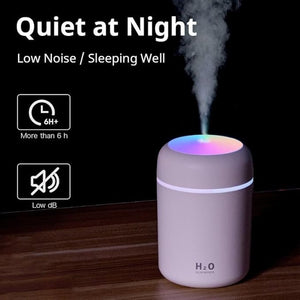
The machine: a Sukoon at ₹1,899 at the far end of the room from the hob — placement does more here than power.
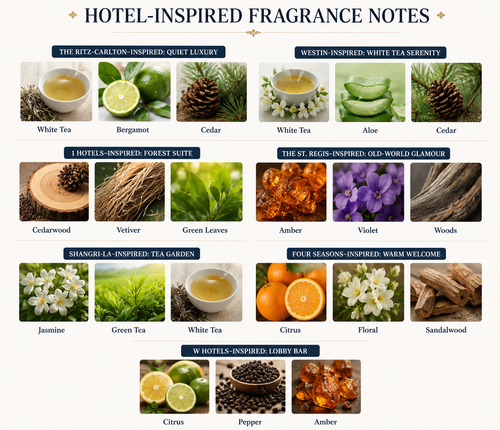
2. Choose a dry scent, not a sweet one. This is the single biggest fragrance decision in an open-kitchen flat. 1 Hotels-inspired Forest Suite and Westin-inspired White Tea Serenity are dry, green and cool — they read as air rather than as food. Sweet, vanillic and gourmand scents share a register with cooking and blend into it.
3. Put the machine at the other end of the room. Not on the counter, not on the fridge, not on the shelf beside the hob. The far wall, ideally near the window, about a metre off the floor. In a studio that distance is only a few metres, but it is the difference between fragrance meeting cooking air and fragrance replacing it.
4. Fewer drops, not more. Three to four per tank. Turning the dose up to fight a smell is how the fried-onion-and-jasmine problem is created. If the room still reads of dinner, the fix is ventilation, not concentration.
5. Deal with the sources, not just the air. A studio has nowhere to hide a bin, a wet cloth or last night's pan. Fragrance sits on top of those; it does not remove them. Clear them first and the diffuser has something clean to work with.
Made in India, composed by an ISIPCA Versailles-trained perfumer — and a portion of every order supports girl-child education through Nanhi Kali.
Why fragrance over frying smells worse than frying alone
There is a common assumption that odours cover each other in proportion to strength — that a strong enough fragrance will simply win. Olfactively that is not how it works. Two odours present at the same time are not perceived as the stronger one; they are perceived as a new, third smell, and the brain is very good at noticing that something in it does not belong. Fragrance over frying does not read as fragrance. It reads as fragrance-and-frying, and it is more objectionable than frying was on its own, because cooking smell in a kitchen is expected and jasmine over hot oil is not. This is why people who turn the drops up after a heavy dinner usually end up opening every window an hour later.
The second half of the problem is that cooking odour is not only in the air, it is on things. Hot oil aerosolises and settles — on curtains, on upholstery, on the bedding that in a studio is four steps from the hob. Air-borne odour clears in twenty minutes with a window open; deposited odour does not, and a diffuser running into a room full of it is scenting a surface problem rather than an air problem. Which is why the honest routine starts with mechanics and only then becomes a fragrance question: extractor while the pan is hot, window open, ten more minutes after you switch the hob off. Only once the air has genuinely turned over does the diffuser have a clean room to work in — and then three drops will do what eight could not.
The three decisions
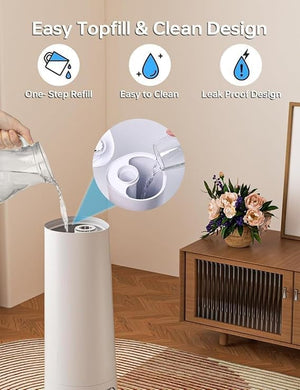
 SOSA Sukoon₹1,899Switch the extractor on before the pan gets hot, not after the smell arrives — an extractor catches aerosol at the source and does almost nothing once it has spread across the room. Open a window on the opposite side if you have one, so there is a path for air to follow. Leave both running for ten minutes after you finish, then wait another ten or twenty before starting the Sukoon. The 2H and 4H timers exist for exactly this: start it when you sit down to eat and it stops itself rather than running until morning.
The routine, hour by hour
A real evening in a studio, in order. The only thing being asked of the diffuser is that it works on air that has already been changed — which is when three or four drops are enough.
| When | What is happening | Diffuser | Ventilation |
|---|---|---|---|
| Before the pan is hot | Aerosol has not started yet | Off | Extractor on, window open |
| While cooking | Hot oil is putting odour into the air and onto surfaces | Off — this is the mistake | Extractor on high, window open |
| First 10 min after ★ | Residual aerosol still airborne | Still off | Both still running |
| 20–30 min after | Air has turned over; surfaces settled | Start it — 3–4 drops of 1 Hotels-inspired Forest Suite | Window can close |
| Evening, sitting | The room you actually want | Running on the 4H timer | Normal |
| Overnight | You are asleep and cannot smell it | Off — the timer has ended it | Normal |
| Note: if you cook heavily every day, run a 100ml bottle (₹999) rather than 15mls — a nightly post-cooking hour gets through fragrance faster than an occasional evening does, and 100ml is better value than three 15mls at ₹299 each. | |||
Forest Suite & White Tea SerenityFrom ₹299Shop →  Sukoon · the studio machine₹1,899Shop →
 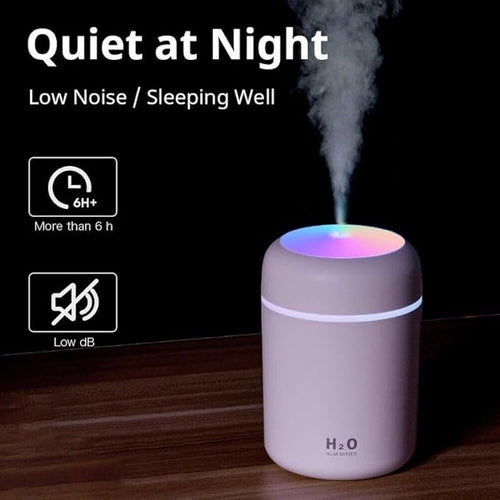 Boond · small studios₹899Shop →
Placement, drops and schedule around an open kitchen
Placement is a distance problem before it is a height problem. Put the machine at the furthest point in the flat from the hob — usually the window wall or the corner by the bed — and about a metre off the floor on a console, a shelf or a chest of drawers. In a studio that may only be four or five metres of separation, but it changes which air the mist meets first. Do not put it on the kitchen counter to "catch the smell at source"; that puts fragrance directly into the plume you are trying to remove and guarantees the blended third smell. Keep it out of the extractor's pull as well, or you will vent the fragrance you just paid for straight out of the building, and out of the direct path of a fan or split AC.
Drops go down, not up, in a cooking-adjacent room. Three to four per tank in a Sukoon, two to three in a Boond. The instinct to add more is the instinct to compete, and competing is the failure mode this whole piece is about. There is a second reason to be sparing: a studio has no reset room. In a flat with doors you can over-scent the living room and retreat to a bedroom that smells of nothing; here the bed is in the same volume, so anything too strong follows you to sleep.
The schedule that works is short and late. Start twenty to thirty minutes after cooking ends, run for two to four hours, stop before you sleep — the Sukoon's 2H and 4H timers do this without you thinking about it. Running a diffuser continuously in a studio is the commonest waste: you go nose-blind within twenty minutes, so the flat smells of nothing to you and strongly to anyone arriving, and a bottle empties in weeks. Rinse the tank whenever you change scent, because in one air space there is nowhere to escape a muddied blend, and use filtered water in hard-water cities. Never substitute raw essential or carrier oils — they are too viscous to atomise and will foul the machine.
What the cooking-proof setup costs
Nothing here is expensive, because the expensive part of this problem is a habit rather than a product. The one thing worth spending on is fragrance volume if you cook every day.
| Setup | What you get | Covers | Total |
|---|---|---|---|
| The cheap start | Boond ₹899 + one 15ml of 1 Hotels-inspired Forest Suite ₹299 | Up to 150 sq ft | ₹1,198 |
| The right one ★ | Sukoon ₹1,899 — includes 3 × 15ml, so pick two dry scents and one for guests | 270–320 sq ft | ₹1,899 |
| If you cook daily | Sukoon ₹1,899 + a 100ml refill ₹999 | 270–320 sq ft | ₹2,898 |
| The long haul | Sukoon ₹1,899 + a 300ml bottle ₹1,799 (~₹6/ml) | 270–320 sq ft | ₹3,698 |
| Try all seven | Sukoon ₹1,899 + Pack of 7 (7 × 15ml) ₹1,799 | 270–320 sq ft | ₹3,698 |
Versailles
I cooked in a studio for two years in Pune while I was setting SOSA up, and I got this wrong for most of the first one. I ran the diffuser hardest exactly when the flat smelled worst, which felt logical and was precisely backwards. What I ended up with was a flat that smelled of neither one thing nor the other, and a bottle of something expensive disappearing in a fortnight.
The training I did at ISIPCA is largely about accords — how two materials placed together make a third thing that is not the sum of either. That principle does not stop at the edge of a bottle. Your room is an accord too, and cooking is one of the materials in it. Once I started thinking about my flat that way, the answer was obvious: you do not add a material to hide a material, you remove one and then add the other.
So: ventilate hard while the pan is hot, wait twenty minutes, then three drops of something dry and green in a machine standing at the far end of the room. That is the whole method, and it costs nothing beyond what you already have. A portion of every order funds a girl's classroom through Nanhi Kali.
Frequently asked questions
- Where to place a diffuser in a studio apartment — the placement physics in one room.
- Best Hotel Collection fragrance for a studio apartment — one scent for sleeping and living.
- Complete diffuser buying guide for studios and 1RKs — the whole decision in one place.
- Boond vs Sukoon for a studio apartment — the head-to-head, with the real totals.
- Brand: the SOSA founder story.
SOSA products & prices (verified August 2026): Hotel Collection water-based ultrasonic diffuser fragrance 15ml ₹299 · 100ml ₹999 · 300ml ₹1,799 · Pack of 7 (15ml, all fragrances) ₹1,799; refills 100ml from ₹999. Seven scents: The Ritz-Carlton-inspired (white tea · bergamot · cedar), Westin-inspired (white tea · aloe · cedar), 1 Hotels-inspired (cedarwood · vetiver · green leaves), The St. Regis-inspired (amber · violet · woods), Shangri-La-inspired (jasmine · green tea · white tea), Four Seasons-inspired (citrus · floral · sandalwood), W Hotels-inspired (citrus · pepper · amber). Diffusers: Boond 300ml ₹899 · Sukoon 500ml ₹1,899 · Megh 6L ₹3,499. Water-based, phthalate-free, composed to IFRA standards for home diffusion; 3–6 drops per tank. Made in India, Pune. The Hotel Collection scents are SOSA's own interpretations inspired by the world's finest hotels; all hotel names are trademarks of their respective owners and are used only to describe the scent style — SOSA is an independent Indian fragrance house, not affiliated with or endorsed by any hotel brand. Prices and availability subject to change — see the live product pages.