
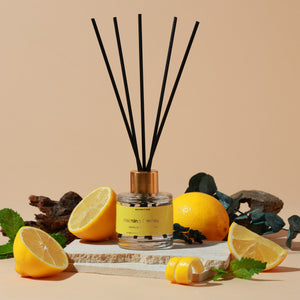
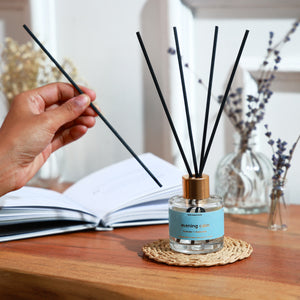
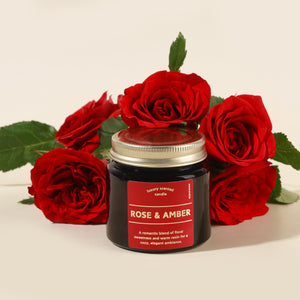
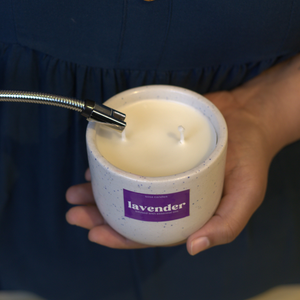
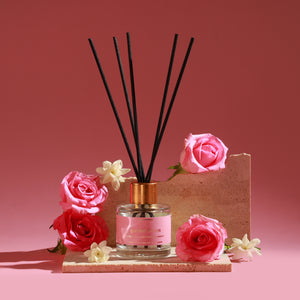
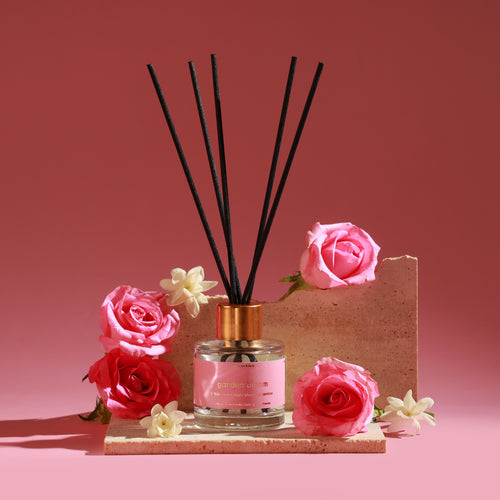
The stated default: if you drew somebody you do not know and they left the form blank, buy something for a room — a candle from ₹379 or a reed diffuser from ₹749. Publish that sentence so nobody has to ask.
The other four mechanisms: the organiser as a one-question broker · preferred name and pronunciation collected in the same form · a table handover rather than a round · permission, in writing, to give something plainly good rather than meaningful.
What not to do: a wishlist, a public profile sheet, or pairing people only within teams.
1. The three-line form, collected with the sign-up. Three optional questions, one line each, in the same form people use to say yes. A room you spend time in, whether you drive, or whether you work from home. Anything you would rather not receive. One thing you are into. Each answer goes to exactly one person — the colleague who draws that name — and nowhere else. This is the whole page in one mechanism: it converts a guess into a brief without asking anybody to write a wishlist.
2. A stated default for anybody who draws a stranger. Publish the sentence, do not leave people to infer it: if you have drawn somebody you do not know and they have not filled the form in, buy something for a room — a candle, a reed diffuser, a good mug — and consider the matter closed. Half the anxiety in a draw of strangers is not about the gift, it is about whether there is a right answer the giver is failing to find. Tell them there is one and that it is easy.
3. The organiser as a broker for exactly one question. A giver can send you one question about their recipient — does she drive, is he the one with the new flat — and you ask somebody on that person's team and relay the answer. The giver stays anonymous, the recipient is not approached, and the surprise survives. Cap it at one question per giver so it does not become your December.
4. Preferred name and pronunciation, in the same form. On a floor of new joiners, a card addressed to a shortened version of somebody's name that only their old team used, or a name mispronounced out loud at the handover, is a small and entirely avoidable unkindness. One field.
5. A table handover, not a round. Gifts placed on a table before the hour, each with a name tag, collected by the recipient. A round where each person hands theirs over and says something is pleasant among friends and excruciating among strangers, and it takes about ninety seconds a head.
6. Written permission to give something plainly good rather than meaningful. One line in the announcement: nobody is expected to find something personal for somebody they have not met. Good and useful is the target. This removes more pressure than anything else you can write.
7. Draw across the whole floor, not within teams. Pairing inside teams looks like a kindness and is the opposite: it guarantees that the people who already know each other have an easy draw and the new joiners are pooled together with no information at all. A floor-wide draw plus the three-line form is better for everybody.

The three-line form, and why every line of it is optional
The instinct when people do not know each other is to collect more information, and that instinct produces the thing that always fails: a profile sheet. A form with eight fields asking about hobbies, favourite colours, coffee order and shoe size gets a forty per cent response rate, embarrasses the people who fill it in earnestly, and leaves the giver with a document to interpret rather than a fact to act on. Three lines, all optional, each answerable in four words, gets a much higher response and produces something a giver can actually use. The second line is the most valuable and the one most organisers leave out, and the third is the one that produces the gifts people remember. If you are also setting the cap and the calendar, the organiser's manual has the sequence this form sits inside.
Line two: anything you would rather not receive. This is the most valuable line on the form and it costs the participant four words. It catches food allergies, diabetes, diets, religious observance, alcohol, fragrance sensitivity and the person who already owns three candles — and it catches all of them without requiring anybody to disclose a medical fact or a religious practice to a colleague. That framing matters: a question asking about allergies forces a disclosure, while a question asking what you would rather not receive lets somebody write no food please and keep the reason to themselves. Some people react badly to fragrance, and an office is exactly where you will not know. That is one more argument for a reed diffuser over a personal perfume: a reed goes home with them and gets placed, or not, in a room of their choosing. Nobody has to wear anything, and nobody has to explain why they are not wearing it.
There are two rules about this line and both matter. It is optional, and the form has to say so in the same breath as the question, because somebody who has nothing they want to share should be able to skip it without it reading as unfriendliness. And the answer goes to one person only. A shared sheet of everybody's interests is a different thing entirely: it becomes a document people read about each other, it pressures the blanks, and it quietly tells forty people which of their colleagues wrote something interesting.
What you will find, if your floor is like most, is that around two-thirds fill in all three lines, almost everybody fills in line one, and the third who skip line three are not a problem because the published default already covers them.
The name. Collect preferred name and, if you want to be properly thoughtful about a floor of new joiners, a one-line pronunciation. A card addressed to the wrong short form of somebody's name, or a name said wrongly out loud in front of forty people, is a small avoidable unkindness and it is the kind that gets remembered.
The table. Gifts on a table before the hour, name tags, collected. A round in which each giver hands theirs over and says a few words is the single worst format for a floor of strangers, because it asks both people to perform a relationship that does not exist yet, in front of an audience. If leadership wants a round, split the floor into groups of eight for the handover.
The permission. One sentence in the announcement: nobody is expected to find something personal for a colleague they have not met, and good and useful is the target rather than meaningful. The page for somebody who has met their recipient twice is the version to send to anybody who replies saying they are stuck.
Seven mechanisms, and what each one fixes
Each row is a specific failure that happens on a floor of new joiners and the mechanism that removes it. Everything here costs nothing except the spare pile, and everything here has to be set up before the draw rather than after it.
| Mechanism | What it fixes | How to do it | When |
|---|---|---|---|
| 1. The three-line form ★ | The giver has no information and the usual advice is to guess | Three optional one-line questions in the sign-up: a room or a car, anything you would rather not receive, one thing you are into. Each answer to one person only | Before the draw |
| 2. A published default answer | The giver worries there is a correct answer they are failing to find | One sentence: if you drew somebody you do not know, buy something for a room and consider it closed. Name a price band | With the draw |
| 3. The organiser as broker | The giver messages the recipient directly and the secret ends | One question per giver, asked through you, answered by somebody on that person's team in four words | After the draw |
| 4. Preferred name and pronunciation | A card addressed to the wrong short form, or a name said wrongly in front of the floor | One field in the same sign-up form, passed to the giver with the name | Before the draw |
| 5. A table handover | Two strangers made to perform a relationship in front of an audience | Gifts placed before the hour with name tags, collected by recipients. Split a large floor into eights if leadership wants a round | Published with the draw |
| 6. Written permission to be ordinary | Givers treating meaningful as the target and good as a failure | One line: nobody is expected to find something personal for somebody they have not met | In the announcement |
| 7. A floor-wide draw, not within teams | New joiners pooled together with no information while old hands get easy draws | Draw across everybody who opted in. The form supplies what team knowledge would have | At the draw |
| Never | A public profile sheet, a wishlist, a shared interests document, or publishing who drew whom | Nobody. Each one pressures the people who left it blank | — |

The default answer, the broker and the handover, at length
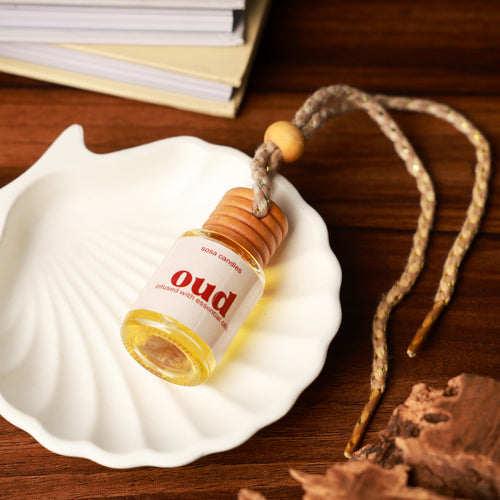
The published default is the cheapest thing on this page and the one I would fight for hardest. What a giver on a floor of strangers is actually experiencing is not indecision, it is the suspicion that there is a correct answer which a better colleague would have found, and that their failure to find it will be visible on a table in front of forty people. An organiser can delete that in one sentence. Write it into the announcement and repeat it in the message that carries the drawn name: if you do not know this person and they have left the form blank, buy something for a room they spend time in, and that is a complete answer rather than a consolation. Then name a price so nobody has to calibrate: a candle at ₹379, a car perfume at ₹449, an alcohol-free reed diffuser at ₹749 if the cap reaches it. The reason that category is the right default is structural: the object goes into the recipient's home rather than onto their body, so there is no taste guess, no gender guess, nothing to be worn in front of colleagues, and nothing that implies the giver formed a view of them. Anything personal — fragrance worn on skin, clothing, jewellery, anything sized — is the wrong register for a near-stranger, and that holds in both directions of seniority: something personal to a senior person reads as ingratiating, and to a new joiner as over-familiar.
The broker is the mechanism that surprises organisers, because it sounds like extra work and is actually load-shedding. Without it, a giver who wants one fact will either guess, or message their recipient directly, and the second of those ends the secret for a gift that had not even been bought yet. With it, you receive a handful of four-word questions — does she drive, has he just moved, is she the one with the dog — ask somebody who sits near that person, and relay. Cap it at one question per giver and say so when you publish it, because the alternative is twenty people treating you as a research service in the week before a party. One organiser I know runs this through a shared inbox and told me she answered eleven questions for a floor of ninety, which is about twenty minutes of work in exchange for eleven gifts that landed. The handover sits in the same category of small structural kindness. Metro addresses usually see two to four working days, and the rest of India longer. A Secret Santa exchange tomorrow morning is not a delivery problem any online order can solve, and no page here will pretend otherwise: if it is tomorrow, buy locally, or tell the organiser you will hand it over on the Monday.
There is one more thing worth saying because it is the part nobody writes down. On a floor where half the people joined this year, Secret Santa is not really a gift exchange — it is the first occasion on which many of those people will be asked to do something social in front of each other, and the gift is the least important part of it. Which means the organiser's job is to lower the stakes rather than raise them. A table handover instead of a round lowers them. A stated default lowers them. An invisible opt-out lowers them. Permission to give something plainly useful lowers them. A wishlist, a public profile sheet, a round of speeches and a cap of ₹1,500 all raise them, and each of those four is something a well-meaning organiser does because it looks like effort. If you are choosing between spending an hour making the gift suggestions better and spending ten minutes making the format easier, spend the ten minutes. The category list covers the suggestions well enough, and whether a company should offer fragrance options at all deals with the case where leadership wants to centralise the buying.
The SOSA edit
What line one of the form converts into, in practice. Each row is an answer somebody might give in four words and the gift it makes obvious, which is the whole value of collecting it. The bottom row is the one the form is designed to prevent.
| What they wrote | What that makes obvious | Why it is right | Price |
|---|---|---|---|
| Blank — they skipped it ★ | A candle. The published default, and a complete answer | Goes in a room, not on a person. No taste guess, no gender guess, nothing to wear in front of the office | ₹379–₹449 |
| I work from home | Morning Freshness reed diffuser or Evening Calm reed diffuser | It sits in the room they cannot leave all day, which makes it the most genuinely useful thing on this table | ₹749 / ₹799 |
| I drive in every day | A car perfume, Oud car perfume or the car perfume range | A daily object in a space nobody else buys for them, and obviously useful | ₹449–₹509 |
| Just moved into a new flat | A candle, or the ceramic jar candle if the cap reaches it | A new home is the one case where almost any household object is unambiguously welcome | ₹379–₹949 |
| I collect perfume | An attar — Adaa attar, Ameeri attar, Mastani attar or Nawaab attar | The single case where personal fragrance is correct, because the giver is no longer guessing. The fragrance guide has the detail | ₹379–₹399 |
| Not on the list at any price | A personal perfume, clothing, jewellery or anything sized, for somebody who wrote nothing | Never. They must then wear it or not wear it, and both are awkward in an office | — |
Versailles
The best Secret Santa story I know came out of four words on a form. A woman in Bengaluru had written growing chillies on a balcony as her one line, and the colleague who drew her — somebody who had never spoken to her — bought seeds, a small terracotta pot and a bag of compost for about ₹400, which is the kind of gift nobody can produce by thinking harder. He told me afterwards that he had been dreading the draw because he had joined six weeks earlier and recognised about nine faces on a floor of seventy. Four words from somebody he had never met solved his entire problem, and the organiser who collected them did it in one optional field.
I hear the other version of that story more often, and it always has the same shape. Somebody comes to me in the second week of December with a name, a cap and nothing else, having already decided that a candle is a cop-out, and asks me for something that will look like they thought about it. What they need is not a cleverer product; it is somebody to tell them that a candle is not a cop-out, that nobody on a floor of new joiners is expected to produce a meaningful gift for a stranger, and that the gift which reads as thoughtful here is simply one that is obviously useful and obviously not intrusive. I say that about three hundred times a December and it would be more efficient for everybody if it were in the announcement.
Which is why I think the organiser's leverage here is enormous and almost entirely unused. Three optional lines in a sign-up form and one sentence giving people permission to be ordinary will do more for a floor of strangers than any amount of shopping advice, including mine. Everything is made and supported from Pune, and a part of every order funds girl-child education through Nanhi Kali. Somebody gets a gift that was actually thought about; a girl gets a classroom. That equation has always felt right to me.
Frequently asked questions
- How to organise Secret Santa at the office — the six decisions this form sits inside.
- How to choose a Secret Santa gift for a coworker you have only met a few times — the version to send to anybody who replies saying they are stuck.
- Secret Santa gift ideas HR can share with employees — the categories to circulate once the form is in.
- What should I gift my coworker for Secret Santa? — the long answer by relationship, budget and lifestyle.
- Brand: the SOSA founder story.