


Could Scent Become Part of a Luxury Realtor's Standard Property-Staging Checklist?

Could Scent Become Part of a Luxury Realtor's Standard Property-Staging Checklist?

★ Twenty listings a month · a signature scent, a staging line item, and the arithmetic behind bothVaayu ₹11,999 · Aangan ₹25,999 · Sukoon ₹1,899 · free shipping above ₹499A portion funds girl-child education
★ SOSA · property viewings & premium presentation
The machine is a fixed cost that spreads across every viewing you will ever do. Once you have said that, there is not much more to the economics
★ ★ ★ ★ ★
★★★★★
"A recognisable scent across my office and my listings has done more for how the business feels than any rebrand."
Aarti Deshmukh Brokerage, Mumbai
Signature across both
★★★★★
"Twenty viewings a month. Divided out, it is a rounding error against what I already spend on photography."
Sameer Hegde High volume, Bengaluru
Against photography
★★★★★
"It sits on the staging checklist between styling and final clean, which is exactly where it belongs."
Ipsita Barua Staging, Kolkata
On the checklist
★★★★★
"One machine moved between six listings. Two minutes to set up, two minutes to collect."
Devang Mehta Portfolio, Ahmedabad
Two minutes each way
★★★★★
"Asked whether every listing should smell different. Was told the opposite and given a good reason for it."
Nisha Kalra Luxury resale, Gurgaon
One scent, not many
★★★★★
"What I appreciated was being told it is presentation and not persuasion. No claims about what it does to a price."
Rohan Bhattacharya Advisory, Delhi
Honest framing
★★★★★
"A recognisable scent across my office and my listings has done more for how the business feels than any rebrand."
Aarti Deshmukh Brokerage, Mumbai
Signature across both
★★★★★
"Twenty viewings a month. Divided out, it is a rounding error against what I already spend on photography."
Sameer Hegde High volume, Bengaluru
Against photography
★★★★★
"It sits on the staging checklist between styling and final clean, which is exactly where it belongs."
Ipsita Barua Staging, Kolkata
On the checklist
★★★★★
"One machine moved between six listings. Two minutes to set up, two minutes to collect."
Devang Mehta Portfolio, Ahmedabad
Two minutes each way
★★★★★
"Asked whether every listing should smell different. Was told the opposite and given a good reason for it."
Nisha Kalra Luxury resale, Gurgaon
One scent, not many
★★★★★
"What I appreciated was being told it is presentation and not persuasion. No claims about what it does to a price."
Rohan Bhattacharya Advisory, Delhi
Honest framing
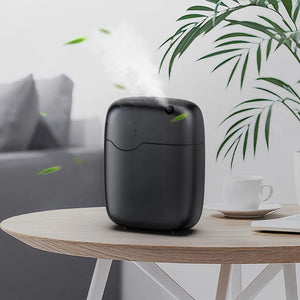
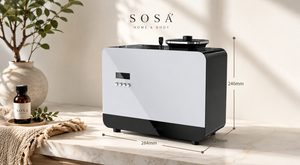
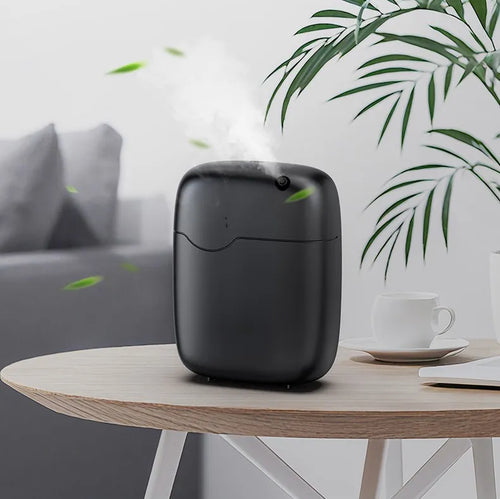
Vaayu: waterless cold-air nebulisation · no water, no heat, no dampness · under 38 dB 1000 m³ (≈2,000–3,000 sq ft) · 400ml tank ≈75 days · app + 1h/4h/8h/24h timers · key-lock 0.9 kg and smaller than a shoebox — one machine can serve a whole portfolio of listings


Founder Diaries · The Business Case · Branding, Repeat Listings & Economics
By Sonal Sahani · ISIPCA Versailles 11 min read Updated September 2026
It can, and the reason to put it on a written checklist has nothing to do with fragrance. Viewings do not go wrong because a realtor made a bad decision. They go wrong because something was omitted — a bathroom nobody ran the tap in, a bulb that had gone in the corridor, a window that was never opened. Omissions are what checklists exist to catch, and the items they catch first are always the invisible ones, which is precisely the category smell belongs to. What follows is the full pre-viewing sequence I would run, with scent in its correct position near the end rather than promoted to the top of the page because we sell it.
Quick answers — read this first
Yes — and near the end of the list, not the beginning. A working sequence: at 48 hours, access confirmed, clean booked, defect inspection done and the disclosure decision made. At 24 hours, property opened and cross-ventilated, every drain trap filled, AC filter checked, bulbs matched, surfaces cleared.

On the day: clean completed, staging set, blinds at matched heights, temperature on, taps run. At two hours, the machine on low. At thirty minutes, walk in from the lift and adjust downwards.

Why a list rather than intention: viewings fail by omission rather than by error, and the items skipped are the ones nobody can see. Scent is roughly item nineteen of twenty — and with 1h/4h/8h/24h timers it is the one item that completes itself.
The short answer
Short answer: yes. Scent belongs on a standard property-staging checklist, positioned near the end — after the defect inspection, the airing, the drain traps, the cleaning, the staging and the lighting. A checklist works because viewings fail by omission rather than by mistake, and the omitted items are almost always the ones that cannot be seen.
The sequence: T-48h access, clean booked, defects inspected and the disclosure decision taken; T-24h opened and cross-ventilated, every drain trap filled, AC filter checked, bulbs matched, surfaces cleared; morning of, clean done, staging set, blinds matched, temperature on, taps run; T-2h the Vaayu on low; T-30m walk in from the lift and adjust down.
Shop: the Vaayu at ₹11,999 covers up to 1000 m³ with Bluetooth and 1h/4h/8h/24h timers, under-38 dB running, auto-stop, a key-lock and four hotel-inspired scents. A reed diffuser from ₹749 belongs on a monthly list rather than a pre-viewing one, since it needs 24 to 72 hours. Free shipping above ₹499.
Straight answer
Should scent be part of a luxury realtor's standard property-staging checklist?
1. Start the checklist 48 hours out, and start it with the defect inspection. Confirm access, book the clean, and walk the property specifically looking for anything that is a fault rather than a smell. If you find damp, a leak, a drain problem or smoke damage, the decision at that point is to fix it or disclose it. Nothing further down this list is a substitute for that.

2. At 24 hours, open the property properly. Windows on opposite walls for cross-ventilation, water down every drain trap in the flat including the ones behind the washing machine and on the balcony, the air conditioning filter checked, every bulb matched in colour temperature and working, surfaces cleared.

3. On the morning of, finish the visible work. Clean completed and signed off, staging in place, blinds set at matched heights across the whole flat, temperature on early enough to have arrived, and every tap in the property run for thirty seconds.

4. At two hours, switch the machine on at a low setting. The Vaayu reaches a working level well inside that window, and a property that has already arrived reads as a property rather than as a preparation.

5. At thirty minutes, walk in from the lift as a buyer would, and adjust downwards. This is the only step that cannot be delegated and the only one that catches what you have stopped noticing.

6. Where scent sits: roughly item nineteen of twenty, and the only item that completes itself. With scheduling, it is the one line on the sheet that gets done whether or not you are in the building.

A portion of every order supports girl-child education through Nanhi Kali.
TL;DR: yes, near the end of the list rather than the top. The sequence that works is 48 hours for access and defects, 24 hours for airing and drain traps, the morning for cleaning and staging, two hours for the machine on low, and thirty minutes for a walk-in from the lift — with scent at about item nineteen of twenty.
SOSA Vaayu · Bluetooth scheduling
The checklist item that completes itself
SOSA Vaayu · Bluetooth scheduling ₹11,999
Almost everything on a pre-viewing checklist requires you to be standing in the property to do it. This one does not: set 1h, 4h, 8h or 24h from the app, or schedule it the night before, and the item marks itself off while you are in traffic. That is why it sits at the two-hour mark rather than at the thirty-minute mark — it is the one line you can afford to complete early, and completing it early is exactly what the fragrance needs anyway. Waterless cold-air nebulisation, no heat and no residue, under 38 dB, up to 1000 m³, a 400ml tank good for about 75 days of running, auto-stop and a key-lock.

Why a list beats intention

Every realtor I have met already knows every item on the checklist below. That is not the problem the sheet solves. The problem is that preparing a property is a sequence of about twenty small actions carried out across three days by two or three different people, under interruption, and human memory is extremely reliable about the conspicuous ones and extremely unreliable about the rest. Nobody forgets to unlock the door. People forget the guest bathroom on the far side of the flat that nobody has run water in since March, and that single omission produces a smell at the exact moment a buyer opens the door to look at the fittings.

1
THE FAILURE MODE
Viewings go wrong by omission, and omissions cluster in the things you cannot see
If you keep a mental list of viewings that did not go as well as they should have, and interrogate them honestly, very few will turn out to have been caused by a wrong decision. Almost all of them will be something that was simply not done: a corridor bulb of a different colour temperature from the rest, a balcony drain that had dried out, the air conditioning switched on twenty minutes before rather than two hours, one set of blinds two inches lower than the others down a wall of five windows. None of those are judgement failures. They are gaps, and gaps are what a written sheet is for. The second thing worth noticing is where the gaps cluster. They cluster in the items with no visual evidence of having been skipped. An unmade bed announces itself from the doorway. A dry drain trap announces itself only through smell, thirty seconds after somebody has entered the bathroom, by which time you are in the corridor talking about carpet parking. Everything a person cannot see when they scan a room is at a higher risk of omission, and that set is short and specific: air, water in traps, temperature, the colour of light, and smell. Those five are the reason to write the list down. Everything else on it you would probably have done anyway.
2
THE ORDER
The sheet is a sequence, not a set, and the order carries most of its value
The second thing a checklist gives you that intention does not is order, and in property preparation the order is not cosmetic. Cross-ventilation has to happen before cleaning, because a clean flat that is then aired for two hours has had its cleaning products carried out of the windows, whereas a flat aired first and cleaned second arrives at the viewing smelling of the clean. Drain traps have to be filled early enough that the water has settled rather than being poured while a buyer is parking. The air conditioning has to be started long enough ahead that the property has reached temperature and the structure itself has cooled, which in a closed marble-floored flat takes considerably longer than the thermostat suggests. And fragrance goes last for the plainest reason of all: it is the only item that adds something to the air rather than removing something from it, and adding before removing is how you end up with two smells instead of none. That is the sequence the whole of this cluster is built on — source, then ventilation, then humidity, then fabrics, then cleaning, then airflow, and only then fragrance. A checklist that puts the machine at 24 hours and the windows at two is not a checklist with the items in a different order. It is a checklist that will produce a worse property.
3
WHERE SCENT SITS
Item nineteen of twenty, and the only one that finishes itself
So let me be direct about the position of our own product on this sheet, because a page that put it at the top would not be worth your time. Fragrance is roughly item nineteen out of twenty. Eighteen things matter more, most of them cost nothing, and if you have done only the first eighteen your property will show well. If you have done only the nineteenth it will not, and it will show worse than if you had done nothing at all, because a scented flat with a dry trap in the guest bathroom is a flat that smells of two things. That is the honest ranking and I would rather print it than have you discover it. What earns the item its place is a different property entirely: it is the only line on the sheet that runs itself. Every other action requires a person standing in the property at the moment it is performed. This one can be scheduled — 1h, 4h, 8h or 24h from the app, or armed the evening before — so it completes while you are in traffic or in another building, and it holds its level under 38 dB without supervision until you arrive. On a sheet where the constraint is your own time and physical presence, an item that removes itself from the sequence is worth more than its position suggests. That is the whole of the argument for it, and I am not going to extend it into anything about what it does to a sale.
The way I would phrase the rule on the sheet itself: if items one to eighteen are not complete, do not switch item nineteen on. A property that is not ready does not become ready by smelling of something.

The full pre-viewing checklist

This is the sheet, in order, with the reason each line exists and a note on how often it actually gets skipped. Copy it, cut it, add your own building-specific lines. The fourth column is the one to read first, because it tells you where your own version is most likely to be leaking.

The standard sheet
A pre-viewing checklist for a premium listing, in order
When The item Why it is on the sheet Skipped often?
T-48h ★ Access confirmed, clean booked, defect inspection walked, disclosure decision taken Everything below assumes the property is sound. If it is not, this is where that gets handled honestly rather than covered The inspection, constantly. It is the most important line here
T-24h Windows opened on opposite walls, flat cross-ventilated for at least two hours Air that has been standing takes on the building. Nothing you buy replaces moving it Sometimes, and always on a listing you have shown before
T-24h Water poured down every drain trap — kitchen, all bathrooms, balcony, utility, behind the machine A dry trap is an open pipe to the building's stack, and it is the single most common bad smell in a vacant flat Very often. The balcony and utility ones almost always
T-24h Air conditioning filters checked and cleaned; bulbs matched in colour temperature and all working A dirty filter redistributes what it collected; mismatched bulbs make good rooms look uneven Bulbs frequently. Filters nearly always
T-24h Surfaces cleared, cupboards emptied of anything left behind, bins removed from the property entirely A bin liner in a vacant flat is a smell with a two-day head start Occasionally, and expensively
Morning of Deep clean completed and inspected; staging set; blinds at matched heights; temperature on This is the visible work, and the only part of the list that is genuinely hard to forget Rarely — but blind heights, constantly
Morning of Every tap in the property run for thirty seconds, including the ones you never use Standing water in a rarely used line is a smell, and running it is free Often
T-2h The Vaayu placed in the entrance zone, low setting, controls locked, or armed the night before A property that reached its level early reads as itself. One still climbing reads as a preparation Not if it is scheduled, which is the point of it
T-30m Walk in from the lift as a stranger. Adjust the fragrance downwards. Never upwards You stopped smelling the flat two hours ago. This step is the correction for that The most skipped item on the whole sheet
Shop this guide
The fragrance lines of the sheet
The SOSA principle
Nothing on this list is difficult. The difficulty is that there are twenty of them, spread over three days, across two or three people. That is precisely the shape of problem a written sheet solves and good intentions do not.
The items that get skipped are the ones with no visual evidence of having been skipped: air, water in traps, temperature, the colour of the light, and smell.

Running the sheet, and the item that completes itself

Start with how the sheet is actually used, because a checklist that lives in a drawer is a document rather than a process. The version that survives is one page, printed or in a shared checklist app, with a name against each line and a tick that somebody has to make — and critically, it is filled in by whoever does the work rather than by you afterwards. A sheet you complete from memory in the car on the way home is a record of your confidence, not of the property. Assign the T-24h block to whoever holds the keys, the morning block to the cleaning supervisor, and keep the T-30m walk-in for yourself, always, because it is the only line that requires a nose that has not been in the flat all morning. On the fragrance line specifically: the setting is the part to write down, not just the tick. Record the intensity you used, because in three weeks you will show the same flat again and the useful information is not that you scented it but that low was slightly too much for that hall. With a key-lock on the machine, a setting you wrote down is a setting that is still there when you return.

Then the timing of the fragrance item, which is where most people place it wrongly. Two hours is the target, and the reason is not that it takes two hours to work — a nebulising machine reaches a working level within minutes — it is that you want the property to have finished arriving before anybody is in it. A level that is stable reads as a characteristic of the building. A level that is still climbing while a buyer stands in the hall reads as an event, and people are surprisingly good at telling the difference without being able to say why. Thirty minutes is too late and yesterday is too early. If you cannot get to the property at T-2h, this is the item to schedule rather than the item to skip: arm it the evening before with a 1h, 4h, 8h or 24h timer, or set it from the app on the way. Position matters as much as time — three or four metres inside the entrance, at waist height or above, out of the direct throw of a vent and never in the doorway itself, where it produces a band of fragrance at the threshold and nothing beyond. And keep the setting low. Every adjustment I have ever made at T-30m has been downwards, and a checklist that tells you to turn it up is a checklist written by somebody who has stopped smelling their own listings.

Then the two lines that belong on a different sheet, and the sentence that governs the whole document. A reed diffuser from ₹749 is not a pre-viewing item, because it takes 24 to 72 hours to reach its working level — it belongs on a monthly maintenance list for a property that has been on the market since March and gets opened twenty times. Morning Freshness is Malabar lemon, peppermint and eucalyptus from ₹749; Mountain Breeze is Himalayan pine, sage and cedar from ₹849. Set once, inspected rather than operated. A candle belongs on no vacant-property sheet at all: it needs attending and putting out, and an unattended flame in an empty flat is an insurance question rather than a staging one. The ultrasonic machines — the Sukoon at ₹1,899, the Boond at ₹899, the Megh at ₹3,499 — are water-based and add 30 to 50 ml of water an hour, which is fine in your own occupied office and wrong in a closed flat in monsoon. And we do not make a room spray for the home; the sprays in our range are car perfumes, and a spray would in any case be a twenty-minute product on a three-hour sheet. The line that outranks every other line on the document: if the T-48h inspection found damp, a leak, a drain fault or smoke damage, the checklist stops there. Find it, fix it or disclose it. A material defect is not a preparation item, and no part of this sheet is designed to get you past one.

An unmade bed announces itself from the doorway. A dry drain trap announces itself thirty seconds after a buyer has walked into the guest bathroom, and by then you are in the corridor.
— Sonal Sahani, SOSA

The SOSA edit

In buying order for the fragrance lines of a staging checklist, which are two lines out of twenty and should be bought in that spirit. The last row is the item people expect to find on a sheet like this and should not.

The SOSA edit
The fragrance items on a staging sheet, in buying order
Buy What it is Where it sits on the sheet Price
1. SOSA Vaayu Waterless, 1000 m³, 1h/4h/8h/24h scheduling, under 38 dB, auto-stop, key-lock, 0.9 kg The T-2h line. The only item on the sheet that can complete itself while you are elsewhere ₹11,999
2. One house scent A single composition, used at the same setting in every listing Immediately. Write the setting on the sheet alongside the tick, not just the tick ₹299
3. A reed diffuser Alcohol-free, 24–72 hours to establish, no power needed On the monthly sheet for a long-listed property, not on the pre-viewing one. Different timescale entirely from ₹749
4. SOSA Sukoon 500ml ultrasonic, 270–320 sq ft, steady/2H/4H timers, three 15ml scents included For your own office, which deserves its own short sheet. Water-based, so not for a closed vacant flat ₹1,899
5. SOSA Aangan Up to 3,000 m³, 800ml, HVAC or standalone, programmable schedules Only where the sheet covers a sales gallery or clubhouse rather than an apartment ₹25,999
Not on the sheet: a candle in a vacant flat An unattended flame in a property nobody is standing in Printed rather than implied. It is an insurance question, and it has no place on a staging checklist
Honest notes for buyers: fragrance is the last step in preparing a property, never the first, and it must never be used to cover a defect. Damp, a leak, drains, smoke or anything structural is a material fact about a property: find it, fix it or disclose it. Scent a listing that is genuinely sound. On the machines: the Vaayu at ₹11,999 is waterless cold-air nebulisation — no water, no heat and no dampness — covering up to 1000m³ or roughly 2,000–3,000 sq ft, with a 400ml tank lasting about 75 days, Bluetooth app control, 1h/4h/8h/24h timers, under-38dB running, auto-stop and a key-lock, at 0.9 kg and smaller than a shoebox, so one machine can serve a whole portfolio. The Aangan at ₹25,999 covers up to 3,000m³ for sales galleries and clubhouses. The ultrasonic Sukoon, Boond and Megh are water-based and add 30–50 ml of water an hour to the air, which makes them the wrong choice for a closed or humid vacant property. A reed diffuser needs 24–72 hours to establish, so it suits a listing shown over months rather than a viewing tomorrow. A candle must be attended and put out, which rules it out of an unoccupied property. SOSA does not make a room spray for the home; the sprays in the range are car perfumes. The Hotel Collection scents are SOSA's own interpretations inspired by the world's finest hotels; SOSA is an independent Indian fragrance house, not affiliated with or endorsed by any hotel brand. A portion of every order supports girl-child education through Nanhi Kali.
SOSA reed diffusers · alcohol-free
For the listing that has been on the market since March
SOSA reed diffusers · alcohol-free from ₹749
A reed takes 24 to 72 hours to reach its working level, which makes it useless for a viewing tomorrow and sensible for a property that will be opened twenty times over five months. On a checklist it belongs in a different column entirely: not a pre-viewing item but a monthly one, set once and inspected rather than operated. Morning Freshness is Malabar lemon, peppermint and eucalyptus from ₹749; Mountain Breeze is Himalayan pine, sage and cedar from ₹849; Evening Calm is Himalayan lavender and chamomile from ₹799. A separate alcohol-free line with its own scents, so it is not another size of the diffuser oil.
SS
ISIPCA
Versailles
A note from Sonal

I have written a great many checklists, mostly for production rather than for property, and the same thing is true of all of them. The value is never in the clever items. It is in the dull ones that everybody knows and somebody, on a Thursday, does not do. In your trade the dull ones are water down a trap and a window opened the day before, and I would put both of them above anything we manufacture without any discomfort at all. A flat that has been aired and has water in its pipes smells like a flat. That is most of the job, and it costs nothing.

Where I would defend our own line on the sheet is narrower than a brochure would put it. It is item nineteen, it comes after eighteen things that matter more, and its distinction is not that it is powerful but that it is the only one that gets done without you. When you are running three viewings in a morning across two suburbs, an item that finishes itself at eleven while you are in a lift somewhere else is worth having. That is the sensible claim. Anything larger than that would be me writing about property instead of about fragrance, and I have no standing to do it.

Everything is made and supported from Pune, and a part of every order funds girl-child education through Nanhi Kali. You get a space that smells like somewhere considered; a girl gets a classroom. That equation has always felt right to me.

Frequently asked questions

Where should scent go on a property-staging checklist?
Near the end — roughly item nineteen of twenty. It goes after the defect inspection, the airing, the drain traps, the cleaning, the staging and the lighting, at about two hours before the viewing. Fragrance adds to the air rather than clearing it, so it must come after everything that clears.
Why does a written checklist matter if I already know what to do?
Because viewings fail by omission rather than by mistake, and omissions cluster in the items with no visual evidence: air, water in traps, temperature, the colour of light, and smell. Nobody forgets to unlock the door. People forget the balcony drain that has dried out.
What is the most commonly skipped item on a pre-viewing checklist?
The final walk-in. Thirty minutes before the appointment, come in from the lift as a stranger would and adjust downwards. You stopped noticing the property two hours earlier, and this is the only step that corrects for that. Drain traps and air conditioning filters are close behind.
Do I need to be at the property to switch the diffuser on?
No, which is why it earns its place. The Vaayu at ₹11,999 has Bluetooth control and 1h, 4h, 8h and 24h timers, so the two-hour item can be armed the evening before or set from the app. It runs under 38 dB with auto-stop and a key-lock while nobody is in the building.
Should a reed diffuser be on the pre-viewing checklist?
Not on the pre-viewing one. A reed needs 24 to 72 hours to reach its working level, so it belongs on a monthly maintenance sheet for a property that has been listed for months and is opened repeatedly. From ₹749, alcohol-free, and it needs no power at all.
Item nineteen of twenty
Eighteen things matter moreand one of them completes itself
The Vaayu is ₹11,999 for up to 1000 m³, with a 400ml tank lasting about 75 days, Bluetooth control and 1h/4h/8h/24h timers, adjustable intensity, under-38 dB running, auto-stop and a key-lock. Reed diffusers from ₹749 need 24 to 72 hours and belong on a monthly sheet. The Sukoon is ₹1,899 for an office. Free shipping above ₹499, and a portion of every order supports girl-child education through Nanhi Kali.
See the Vaayu · ₹11,999 Shop reed diffusers →
Continue the read
More from SOSA
Editorial standards & sources
About this guide: Written by Sonal Sahani, ISIPCA Versailles-trained founder and perfumer at SOSA Home & Body, on how fragrance fits into a standard property-staging checklist for a premium listing, the full pre-viewing sequence from the 48-hour defect inspection through to the thirty-minute walk-in, why checklists catch omissions rather than mistakes and why the omitted items are always the invisible ones, and why scent sits at roughly item nineteen of twenty.

Facts verified August 2026: Product facts used in this guide. SOSA Vaayu ₹11,999: waterless cold-air nebulising diffuser, atomises undiluted fragrance oil to a dry residue-free nano-mist, coverage up to 1000m³ (approximately 2,000–3,000 sq ft), 400ml refillable tank lasting up to about 75 days per fill, Bluetooth app plus onboard control, 1h/4h/8h/24h timer scheduling, adjustable intensity, under 38 dB, DC 12V/1A at 5W, 165 × 80.5 × 215 mm and 0.9 kg, freestanding or wall/HVAC mounted, auto-stop and key-lock, CE, RoHS and SGS certified, supplied with four hotel-inspired fragrances. SOSA Aangan ₹25,999: HVAC-connected or standalone commercial nebulising diffuser, coverage up to 3,000m³ (roughly 8,000–10,000 sq ft), 800ml reservoir, metal body, programmable schedules, under 42 dB. Ultrasonic machines are water-based and consume 30–50 ml of water an hour: Sukoon ₹1,899 (500ml, 270–320 sq ft, 16–18 hours on low, 3–6 drops per tank, steady/2H/4H timers, three 15ml Hotel Collection scents included), Boond ₹899 (300ml), Megh ₹3,499 (6 litres). Hotel Collection water-based fragrance 15ml ₹299, 100ml ₹999, 300ml ₹1,799, Pack of 7 at 15ml ₹1,799 against ₹2,093 bought singly; the Vaayu and Aangan take their own undiluted oil rather than these water-based bottles. Reed diffusers (separate alcohol-free line) from ₹749, requiring 24–72 hours to reach their working level. Scented candles from ₹379, scenting a room in roughly 15–20 minutes but requiring attendance. Free shipping above ₹499. Timings: a nebulising diffuser reaches a working level within minutes and a stated viewing level well inside two hours. This guide makes no claim that fragrance affects a property's price, offer level or time on market; it is presentation, in the same category as photography, styling and lighting. Fragrance must never be used to conceal a material defect. SOSA is not affiliated with or endorsed by any hotel brand. Prices subject to change — see the live product pages.
Back to blog