



The room-type checklist: an attached bathroom with a drain nobody uses; an external or shared wall carrying seepage; the only room with an air-conditioner that is never serviced; the room kept shut while the rest of the flat is open; the room with the wardrobe, the bookshelf or the carpet; a room over or beside a shaft, a kitchen or a neighbour's bathroom.
Four free tests: shut the door for two hours and read the room on entering; walk it low, at knee height and floor level; note whether it is worse after rain, after a shower, or after the flat has been shut; and compare the room with its mirror on another floor if you can reach one.
The honest part: a room-specific smell is a locating problem, and fragrance in that room removes the only signal you are following.
2. That leaves two possibilities and only two. Either the source is an object or a fitting inside the room, or it is in the building fabric touching the room — a wall shared with a bathroom or a shaft, a floor over somebody else's ceiling, a duct, a window facing a drive or a bin store.
3. Start with the drain, because it is the most common and the cheapest to eliminate. If the room has an attached bathroom, a floor drain or a basin nobody uses, pour a mug of water down each of them. The U-bend water seal that keeps sewer gas out evaporates in roughly two to four weeks of disuse. This takes a minute and works within ten.
4. Then ask what is unique about that room. Not what is wrong with it — what only it has. The only air-conditioner. The only carpet. The only wardrobe. The only external wall on the weather side. The only room whose door stays shut. A room-specific smell has a room-specific cause almost by definition.
5. Then run the shut-door test. Close it for two hours, go and do something else, and walk back in. Read the first four seconds and then stop, because after that your nose has adapted and the measurement is over.
6. Do not scent that room until you have found it. Fragrance in the one place carrying information removes the information. It is the only genuinely counterproductive thing you can do at this stage.
A portion of every order supports girl-child education through Nanhi Kali.
A smell that stops at a door has not travelled
Begin with why the boundary is evidence rather than a curiosity. Odour behaves like anything else carried in air: it disperses, and dispersal dilutes. Every metre a molecule travels, every doorway it passes through and every cubic metre of clean air it mixes with reduces the concentration reaching a nose. So a smell strong enough to be obvious in one room and absent in the corridor two steps away has not come from the far end of the flat, because there is no mechanism by which it would arrive stronger at the end of its journey than at the start. It is being produced locally and it is being contained locally, usually by a door that stays shut and a room with a lower air-change rate than the rooms around it. That second half matters as much as the first: a small room with one door and no cross-draught can hold a level several times higher than an identical source would produce in an open sitting room, which is why the same quantity of the same problem is invisible in one place and intolerable in another.
The checklist, by what kind of room it is
What to check first depends less on the smell than on which room it is, because rooms fail in characteristic ways. Find the row that matches, work down the second column, and use the third to confirm before you spend anything. Every test here is free and most of them take under ten minutes.
| The room | Check first | The free test | What it points at |
|---|---|---|---|
| Any room with an attached or adjacent bathroom ★ | Every floor drain, basin and shower nobody uses — the U-bend seal evaporates in two to four weeks | A mug of water down each, then re-enter after ten minutes | The most common single cause of a sharp, faintly sulphurous smell in one room. Free, and it works immediately |
| The only room with an air-conditioner | The filter, then the coil. Biofilm forms on a cold wet evaporator and is delivered on start-up | Stand at the vent for the first minute after switching on. If it is worst then and fades, it is the unit | A filter wash every two to four weeks in season; a coil service if the first minute keeps returning |
| A room on an external or shared wall | Seepage without a visible mark — plaster can carry moisture and smell earthy while staying dry to touch | Is it worse two days after rain, and does it fade over the following week | Water in the fabric. A repair rather than a purchase, and never a room for a cool-mist diffuser |
| A room kept shut while the flat is open | Nothing is wrong with it. It has no air exchange and is holding its own ordinary off-gassing | Leave the door open for three days and see whether the complaint survives | The commonest false alarm in this group. Guest rooms, spare rooms and studies almost all fail here first |
| The room with the wardrobe, bookshelf or carpet | Enclosed volumes and deep pile. Clothes put away not quite dry, books in monsoon, a rug never lifted | Open the wardrobe, put your nose inside, then lift a corner of the rug and smell the floor under it | Fabric and paper are the memory of a room. Airing, sunlight and a vacuum with an upholstery head, not fragrance |
| A room over or beside a shaft, kitchen or neighbour's bathroom | What is on the other side of each wall, and what the window opens onto | Does it arrive at fixed times — a neighbour's shower, a restaurant's service, a bin collection | Somebody else's schedule. A society conversation, and worth logging times and dates before you have it |
| A ground-floor or north-facing room | Moisture from the slab, and a room that never gets sun or a through-draught | Compare it with the same room on a higher floor if you can get into one | If the mirror room is fine, it is your room. If it is the same, it is the building |

Four tests that cost nothing
The first is the shut-door test, and it exists to solve a problem you cannot solve by trying harder: you cannot smell your own home. Olfactory receptors adapt, a constant smell stops being reported within minutes, and in your own flat the adaptation is close to total within about a fortnight — which is why you can stand in the room in question and honestly not know whether it is bad today. The fix is to manufacture a fresh arrival. Close the door for two hours, go out of the flat entirely if you can, and then walk straight into that room without stopping anywhere else. Read the first four seconds and then stop, because after that the measurement has expired and anything further you think you perceive is memory. Do it at the same time on three consecutive days, write down one line each time, and you have a record rather than an impression. If somebody else is in the flat, use them: send them in cold and ask what it reminds them of rather than whether it smells bad, because the second question gets you politeness and the first gets you a category. Sour, sharp, earthy, sweetish, chemical and dirty-towel are all different families of cause, and the word an unprepared visitor reaches for is often more diagnostic than anything you would have said yourself.
The second is to walk the room low, which almost nobody does and which finds things. Your nose lives at five and a half feet and most sources do not. Get down to knee height and then to floor level and move slowly along the skirting, into the corners, under the bed, behind the headboard, under the wardrobe and behind the door where it opens back against the wall. Floor drains, damp rising in a wall, a rug over a slab, something under a bed and anything that has been dropped behind furniture all live in the bottom two feet of a room, and a smell that gets stronger as you go down has just told you which half of the room to search. The third test is correlation, and it is the one that costs three days rather than three minutes. Note whether the room is worse after rain, after somebody has showered, after the flat has been shut for a day, after cooking, or at a fixed hour regardless of any of it. Rain implicates water in the fabric. Showers implicate the shaft or a shared wall. Closure implicates air exchange and the room's own contents. Cooking implicates a path you did not know existed, usually a duct or a gap above a false ceiling. A fixed hour with no domestic explanation implicates somebody else's building. The fourth is comparison: if you can get into the same flat on another floor, stand in the same room in it. If that room is fine, the cause is yours and it is portable. If that room is the same, the cause is the building's and your neighbours have it too, which changes both the fix and who pays for it.
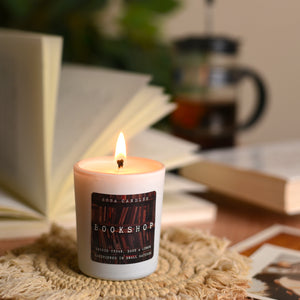
Then the free fixes, which in this group are unusually likely to work outright, and finally the fragrance question. Pour a mug of water down every drain in that room, including the shower nobody uses and the floor trap under the washbasin, and repeat it weekly if the room stays unused. Take the air-conditioner filter out, wash it, dry it and put it back, and do that every two to four weeks in season. Open every enclosed volume in the room — wardrobe, chest, drawers, the space under the bed — and leave them standing open for a weekend with the window ajar, because those are the volumes with no exchange at all and they are where a room keeps what it has been given. Wash what is washable, put a rug or a cushion in two hours of sun, and lift anything that has been sitting flat on the floor for a year. Only when the room reads clean on the shut-door test three days running is there a fragrance decision to make, and at that point it is a small one. A single room is not a job for a large machine: a Boond at ₹899 runs the same water-based Hotel Collection bottles as anything bigger at the same three to six drops per tank, and a reed diffuser from ₹749 asks nothing of you at all beyond turning the sticks occasionally, though it needs 24 to 72 hours to establish. Morning Freshness is Malabar lemon, peppermint and eucalyptus from ₹749, Evening Calm is Himalayan lavender and chamomile from ₹799, Mountain Breeze is Himalayan pine, sage and cedar from ₹849. Two things I would rule out for this particular case: do not put a cool-mist ultrasonic into a room you suspect of damp, because it adds 30 to 50 millilitres of water an hour to the exact problem you are trying to remove; and there is no room or linen spray in the SOSA range for the home, the sprays being car perfumes. A candle from ₹379 is the honest same-day option if the room is already clean and somebody is arriving in an hour.
The SOSA edit
The order for one room out of several. Everything above the line is free and settles most of these cases; everything below it belongs to the week after the diagnosis rather than the week of it. The last row is the product people go looking for and will not find here.
| Step | What it is | When it is the answer | Cost |
|---|---|---|---|
| 1. Every drain in the room ★ | A mug of water down each floor trap, basin and unused shower — the seal evaporates in two to four weeks | First, and especially if the smell is sharp rather than musty. It works within ten minutes or it is not the cause | ₹0 |
| 2. The door open for three days | Removing the enclosure rather than the source, to find out whether there was a source | For any spare room, guest room, study or store. The commonest false alarm in this whole group | ₹0 |
| 3. The AC filter, the enclosed volumes, the low walk | Filter out and washed; wardrobe and drawers open for a weekend; a slow pass at knee and floor level | When the room is in daily use and the drain was not it. Most sources live in the bottom two feet or behind a closed door | ₹0 |
| 4. The correlation log | Three days of one line each — rain, showers, closure, cooking, or a fixed hour | When the first three found nothing. This is what separates a repair from a purchase and yours from the building's | ₹0 |
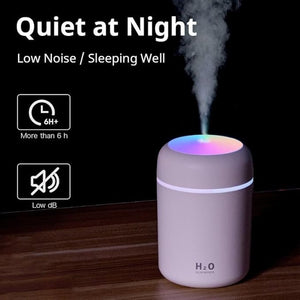
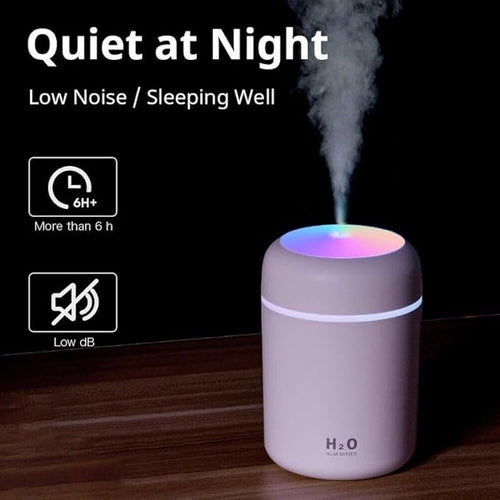
| 5. Boond with a 15ml scent | 300ml ultrasonic for a single room, three to six drops per tank, per tank rather than per litre | After the room reads clean three days running. To bring one room up to the level of the rest, not to mask it | ₹899 + ₹299 |
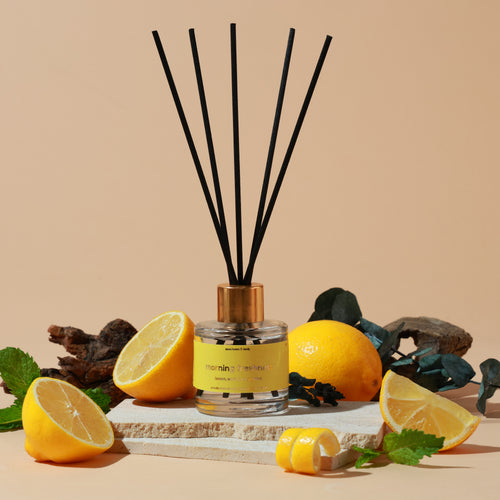
| 6. A reed diffuser | Alcohol-free, unplugged, one level for months once established; 24–72 hours to get there | For a room nobody thinks to switch anything on in. Morning Freshness ₹749, Evening Calm ₹799, Mountain Breeze ₹849 | from ₹749 |
| Not the answer here: any scenting at all, before the diagnosis | And no cool-mist machine in a room you suspect of damp — it adds 30–50 ml of water an hour | Printed rather than implied. SOSA makes no room or linen spray for the home in any case | — |
Versailles
Of all the letters I get, the one-bad-room letter is the one I most enjoy answering, because the writer almost always thinks they have described a hopeless situation and they have in fact described a solved one. They have narrowed a hundred and twenty square metres down to twelve and they do not realise that is the hard part of the work. The reply is usually four questions rather than a recommendation: is there a drain in there nobody uses, is that the only room with an air-conditioner, what is on the other side of each wall, and is it worse after rain. About half the time one of those four is the answer, and the correspondence ends with somebody having spent nothing.
The part I have to push back on is the instinct to make the room bearable while looking. I understand it completely and it is the one thing that reliably prevents the diagnosis, because the smell is the instrument and covering it is switching the instrument off. Give it a fortnight of being unpleasant and honest rather than a year of being pleasant and unexplained. Then, once the room is genuinely clean, bring it up to the rest of the flat with something small — a ₹899 machine or a reed at ₹749 — because a flat where one room smells different from the others is a flat that reads as unfinished even when nothing is wrong with it.
Everything is made and supported from Pune, and a part of every order funds girl-child education through Nanhi Kali. You get a home that smells like somewhere you chose; a girl gets a classroom. That equation has always felt right to me.
Frequently asked questions
- What a dried-out drain trap is — the single most common cause of a one-room smell.
- Why a guest room smells musty even though it is perfectly clean — the closed-door case.
- My house smells and I cannot find the source — the full hunt, when the boundary is not this clear.
- Why does my house smell like this? The complete diagnostic guide — every symptom, mapped.
- Brand: the SOSA founder story.
Facts verified August 2026: Diagnostic facts used in this guide: a closed room accumulates what it cannot exchange, so cross-ventilation needs two openings rather than one; a drain's U-bend water seal evaporates in roughly two to four weeks of disuse and then admits sewer gas, which is corrected by pouring water down the drain; microbial growth in fabric and on surfaces accelerates above about 60% relative humidity, and Indian monsoon indoor humidity commonly runs 80–95%, which is the one situation where ventilating on a wet day can import moisture rather than remove it; an air-conditioner's cold, wet evaporator coil and filter grow biofilm that is blown into the room on start-up; textiles adsorb cooking aerosol and body oils and re-release them for weeks; and olfactory adaptation makes a constant household smell undetectable to its residents within about a fortnight while visitors still perceive it. Timings: a scented candle scents a normal room in roughly 15–20 minutes, a Sukoon ultrasonic diffuser reaches a steady level in about 20 minutes from cold, and a reed diffuser needs roughly 24–72 hours. SOSA products and prices: Sukoon 500ml ₹1,899 (270–320 sq ft, 16–18h on low, 9–12h high, 30–50 ml/h, 2.4MHz cool mist, remote, steady/2H/4H timers, BPA-free, auto shut-off, includes three 15ml Hotel Collection scents of your choice); Boond 300ml ₹899; Megh 6-litre ₹3,499; waterless Vaayu ₹11,999 (up to 1000m³); Aangan ₹25,999. Hotel Collection water-based fragrance 15ml ₹299, 100ml ₹999, 300ml ₹1,799, Pack of 7 at 15ml ₹1,799; dose 3–6 drops per tank. Reed diffusers (separate alcohol-free line): Morning Freshness from ₹749, Garden Bloom and Evening Calm from ₹799, Fresh Brew and Mountain Breeze from ₹849; 130ml from ₹1,249; duos from ₹1,498; 300ml refills ₹2,399. Scented candles: Bookshop 80g ₹379, Amber Rose 130g ₹599 and 220g ₹799, Smoked Oudh 130g ₹449, ceramic jar candles ₹949, Pure Calm wax melt set ₹854. Free shipping above ₹499. SOSA does not make a room or linen spray for the home. The Hotel Collection scents are SOSA's own interpretations; SOSA is not affiliated with or endorsed by any hotel brand. Prices subject to change — see the live product pages.