


What Small Environmental Details Make a Luxury Property Viewing Feel More Premium?

What Small Environmental Details Make a Luxury Property Viewing Feel More Premium?

★ The first sixty seconds · lift doors open, front door opens, and the property is being judgedVaayu ₹11,999 · Aangan ₹25,999 · Sukoon ₹1,899 · free shipping above ₹499A portion funds girl-child education
★ SOSA · property viewings & premium presentation
A property that has already reached its level reads as part of the building. A property still climbing while the buyer is in it reads as something being done to them
★ ★ ★ ★ ★
★★★★★
"Lighting, temperature, silence, scent. I had three of the four and thought I was thorough. The fourth was the cheapest of them."
Aditya Nair Penthouses, South Mumbai
The fourth layer
★★★★★
"The instruction was to walk in from the lift myself, thirty minutes before, and adjust downwards. I now do that at every viewing."
Meera Kapoor Premium resale, Bandra
Walk it as a buyer
★★★★★
"Two identical flats on the same floor. One felt considered and one felt like a listing. Nothing in the brochure explains that difference."
Sanjay Deshpande Luxury apartments, Pune
Same floor, different feel
★★★★★
"The timer is the part I use most. It comes on at eleven, the viewing is at one, and I have not thought about it once."
Ritu Bansal HNI clients, Gurgaon
Vaayu · 4h timer
★★★★★
"Under 38 dB matters more than it sounds. In an empty flat you can hear everything, and the machine is not one of the things you hear."
Nikhil Prabhu Empty listings, Hyderabad
Silent in an empty flat
★★★★★
"I stopped trying to create a wow moment and started trying to remove every reason to hesitate. Different brief, better viewings."
Tanya Sethi Luxury villas, Goa
Removed the hesitation
★★★★★
"Lighting, temperature, silence, scent. I had three of the four and thought I was thorough. The fourth was the cheapest of them."
Aditya Nair Penthouses, South Mumbai
The fourth layer
★★★★★
"The instruction was to walk in from the lift myself, thirty minutes before, and adjust downwards. I now do that at every viewing."
Meera Kapoor Premium resale, Bandra
Walk it as a buyer
★★★★★
"Two identical flats on the same floor. One felt considered and one felt like a listing. Nothing in the brochure explains that difference."
Sanjay Deshpande Luxury apartments, Pune
Same floor, different feel
★★★★★
"The timer is the part I use most. It comes on at eleven, the viewing is at one, and I have not thought about it once."
Ritu Bansal HNI clients, Gurgaon
Vaayu · 4h timer
★★★★★
"Under 38 dB matters more than it sounds. In an empty flat you can hear everything, and the machine is not one of the things you hear."
Nikhil Prabhu Empty listings, Hyderabad
Silent in an empty flat
★★★★★
"I stopped trying to create a wow moment and started trying to remove every reason to hesitate. Different brief, better viewings."
Tanya Sethi Luxury villas, Goa
Removed the hesitation
Vaayu: waterless cold-air nebulisation · no water, no heat, no dampness · under 38 dB 1000 m³ (≈2,000–3,000 sq ft) · 400ml tank ≈75 days · app + 1h/4h/8h/24h timers · key-lock 0.9 kg and smaller than a shoebox — one machine can serve a whole portfolio of listings


Founder Diaries · Property Viewings · The First Sixty Seconds
By Sonal Sahani · ISIPCA Versailles 11 min read Updated September 2026
This is a list page, and it is going to be more specific than is strictly comfortable, because the agents who are good at this are all slightly obsessive and the ones who are not tend to think the difference is money. It is not money. It is about ninety minutes, a bag of unglamorous items, and knowing that a buyer never notices any of these things individually — they notice them collectively, as an impression that the property is looked after, and they attribute that impression to the building rather than to you. Which is the whole point, and the reason it is worth doing properly.
Quick answers — read this first
Outside the door: the lift lobby light, the landing, the doormat, and a front door already open before the buyer reaches it rather than fumbled with in front of them.

Inside: shoes and slippers arranged rather than piled; every switch known so nobody fumbles; taps run for ten seconds so the first water is not stagnant; toilet lids down; curtains and blinds at matched heights; no cardboard, no cleaning products in sight, no bin bags; the air-conditioning remote where you can find it; windows cleaned, because a dirty pane reads as a dark room; hinges oiled so nothing creaks.

The invisible one: a mug of water down every drain trap, including the ones in bathrooms nobody uses. A dry trap is the commonest bad smell in a vacant flat and the cheapest to remove.

Then fragrance, as the last detail of the same category: the Vaayu at ₹11,999, waterless and under 38 dB, on low from two hours out.
The short answer
Short answer: about twenty small things, none of which the buyer will notice on its own. Clean glass, matched curtain heights, arranged footwear, filled drain traps, lids down, no cardboard or cleaning products in view, oiled hinges, taps already run, and a front door that opens smoothly the first time. Collectively they read as care, and care is attributed to the property.
The order to do them in: the day before — air the flat, fill every drain trap, clean the windows, oil the hinges, remove all packaging. On the day, ninety minutes out — surfaces, footwear, curtains, lids, remotes, taps, the lobby outside the door, and the diffuser on low.
Shop: the Vaayu at ₹11,999 is waterless, covers up to 1000 m³ or roughly 2,000–3,000 sq ft, holds 400ml for about 75 days, runs under 38 dB, takes 1h/4h/8h/24h timers with app control, has auto-stop and a key-lock, weighs 0.9 kg and ships with four hotel-inspired scents. A reed diffuser from ₹749 suits a listing shown over months. Free shipping above ₹499.
Straight answer
What small environmental details make a luxury property viewing feel more premium?
1. Start outside your own front door. The lift lobby light, the landing, whether somebody else's shoe rack is on the common floor, the doormat, the state of the door itself. You control almost none of it and you can improve some of it, and a buyer does not separate the building from the flat.

2. Have the door already open, or open it on the first attempt. An agent working a stiff lock in front of a buyer has begun the viewing with a fault in the property. Arrive early, unlock, prop it, and greet them from inside a lit hall.

3. Learn the switches before the buyer arrives. Somebody patting a wall in a dark bedroom while apologising is the single most avoidable moment in this job. Walk the flat, learn which plate does what, and then never fumble.

4. Then the list, none of which is noticed alone. Footwear arranged rather than piled. Taps run for ten seconds so the first water is clear. Toilet lids down. Curtains and blinds at matched heights across a wall. No cardboard, no cleaning products in sight, no bin bags. Remotes where you can find them. Windows cleaned. Hinges oiled.

5. And the invisible one, which does the most work: fill every drain trap. A mug of water down each floor drain, basin, shower and unused bathroom, the day before and again on the day. A dried-out trap is a direct opening into a sewer line and it is the most common bad smell in a vacant flat.

6. Fragrance is the last detail in exactly the same category as the others. The Vaayu at ₹11,999 on low from two hours out, at a level nobody names. And if the property has a smell with a cause rather than a smell from neglect — damp, a leak, smoke — that is a material fact. Find it, fix it or disclose it.

A portion of every order supports girl-child education through Nanhi Kali.
TL;DR: about twenty small things, and the buyer will not consciously register a single one of them: the lobby outside the door, a door that opens first time, switches you already know, arranged footwear, taps run for ten seconds, lids down, matched curtain heights, no cardboard or cleaning products in view, clean glass, oiled hinges, and every drain trap filled. Together they read as care, and the buyer credits the property rather than the agent. The Vaayu at ₹11,999 is the last item on the same list.
SOSA Vaayu · 0.9 kg, key-lock
The item in the bag that stays behind and then comes back
SOSA Vaayu · 0.9 kg, key-lock ₹11,999
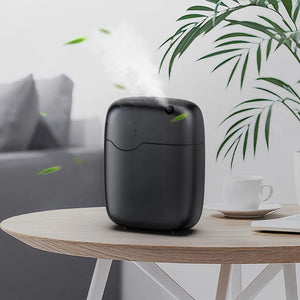
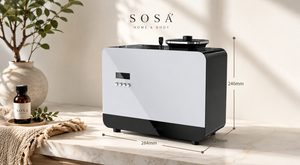
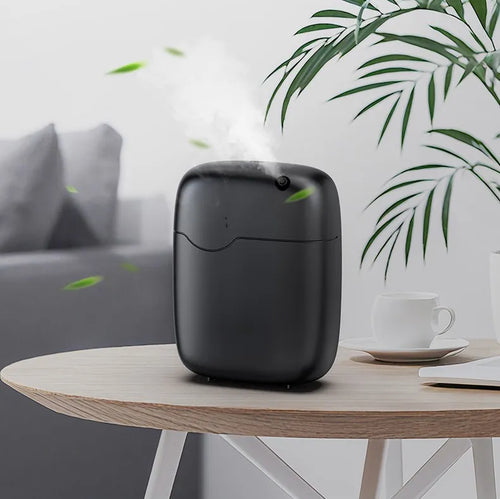
Waterless cold-air nebulisation with no water, heat, dampness or residue, covering up to 1000 m³ or roughly 2,000–3,000 sq ft, a 400ml tank lasting about 75 days, 1h/4h/8h/24h timers, auto-stop and a key-lock. At 0.9 kg and 165 × 80.5 × 215 mm it is smaller than a shoebox, which is why it belongs in the same bag as the microfibre cloth and the spare bulbs rather than in a single listing. Two minutes to set up, two minutes to collect, and the key-lock means it can be left running in a vacant flat between Saturday viewings without anybody turning it up. Under 38 dB, so it is not one of the sounds in an empty room. Four hotel-inspired scents included.

The list, from the lift lobby inwards

The reason this list is worth writing down rather than trusting to instinct is that almost every item on it is invisible when it is right and only visible when it is wrong. Nobody has ever walked into a flat and thought: what excellent hinges. They have certainly walked into one and heard a bedroom door creak, and that sound went somewhere. So the whole discipline is asymmetric — no credit for getting it right, a small debit for each one you miss, and the debits accumulate into an impression the buyer will describe with a word like tired.

1
OUTSIDE
The lift lobby, the landing, and the last three metres
The viewing starts before your door, in a stretch of building you do not own and cannot renovate, and most agents simply walk it without seeing it. Go and look at it properly at the hour of the viewing: the lift lobby light, whether the lift itself is clean, the landing, the fire door, the meter cupboard standing open, somebody's shoe rack or drying rack on the common floor, the bin left outside a neighbour's door, the state of the common corridor paint. Some of that you can improve with a polite word to the society office or the housekeeping staff a day ahead, and a surprising amount of it can be improved with a five-hundred-rupee conversation about getting the corridor mopped and the lobby bulb replaced before Saturday. What cannot be changed should at least be known, because walking a buyer into something you have clearly not noticed is worse than walking them into something you acknowledge lightly and move past. Then the last three metres. The doormat should be clean or absent — a filthy mat is worse than a bare threshold — and the door itself should open on the first attempt, which means arriving early enough to have unlocked it already. An agent working a stiff latch while a family stands behind them has opened the viewing with a demonstration of a fault, and it is the first thing about the property the buyer has learned. If the lock is genuinely stiff, oil the cylinder the day before. If the door swings into a dark hall, the hall light is on before they arrive.
2
INSIDE
The dozen things nobody notices individually
Now the flat, in the order you will meet them. Footwear: in an occupied property, shoes and slippers arranged in a row or put away rather than piled at the door, because a heap of footwear is the first thing in the buyer's eyeline and it is the clearest signal of a house being lived in rather than a property being sold. Switches: walk the whole flat before the viewing and learn which plate operates which fitting, because somebody patting a wall in a dark bedroom while apologising is the most avoidable moment in this job — label them in pencil on the back of a plate if you must. Taps: run every one for ten seconds so the first water a buyer sees is clear rather than the brown half-second a flat gives you after two weeks. Lids down on every toilet, and seats down, without exception. Curtains and blinds pulled to matched heights across a wall, since three blinds at three heights makes a good elevation look untidy in a way nobody can name. Nothing in sight that belongs to the process of selling or cleaning: no cardboard, no packing material, no bucket, no bottle of floor cleaner on a counter, no bin bag anywhere, no ladder, no paint tin left in a bathroom. Remotes for air conditioning and fans in one known place, so you are not opening drawers in front of a buyer. Windows cleaned inside and out where it is safe to do so, and this is not a cosmetic point — a dirty pane cuts light and the room behind it reads as darker and smaller, so glass is a lighting job rather than a cleaning one. Hinges oiled on every internal door and every wardrobe, because a creak is a sound in a silent flat and silence is what you spent the morning arranging.
3
WHY IT WORKS
Invisible individually, and attributed to the property collectively
Now the part that explains why the list is worth ninety minutes. None of these details is noticed on its own, and that is not a weakness of the method — it is how the method works. What a buyer forms in a well-prepared flat is a single undifferentiated impression of care, and because they cannot trace it to any specific cause, they attribute it to the property rather than to the person showing it. That attribution is the entire commercial value of the exercise. A gesture they can identify gets credited to you and discounted as effort; twenty invisible details get credited to the building and read as quality. It is the only form of staging I know of that a sophisticated buyer cannot see through, because there is nothing to see through. The inverse matters at least as much, and it is why I would rather you did eighteen of these than fourteen. A single visible failure changes the buyer's mode from receiving to inspecting. They hear the wardrobe creak, and thirty seconds later they are opening the next wardrobe deliberately. They see the bin bag by the kitchen door, and now they are looking under the sink. Once a buyer has switched into inspection they find more, because any property inspected closely enough yields faults, and the faults they find after they have started looking get weighted more heavily than the same faults disclosed calmly by you. So the argument for the boring list is not that it impresses anybody. It is that it keeps the buyer in the mode where they are experiencing the flat, for as long as possible.
The way I would put it to an agent who thinks this is fussy: you are not trying to collect twenty small credits. You are trying to avoid handing over the one small debit that turns a buyer from a guest into an inspector, and you cannot know in advance which of the twenty it would have been.

The details, and the ninety minutes they take

Every item, what it costs, when it should be done and what it prevents. The first row is the one that does the most work and is the least visible, which is a fair summary of this whole page. Almost everything here is free; the two rows with prices sit at the bottom because they belong at the end of the list rather than at the start of it.

The detail pass
Twelve details, when to do them, and what each one prevents
Detail What it prevents When Cost
Fill every drain trap ★ The commonest bad smell in a vacant flat. A dried trap is an open line to the drain, and no fragrance survives it A mug of water down each one the day before, and again on the day ₹0
Clean the glass A dark room. A dirty pane cuts daylight, so window cleaning is a lighting job rather than a cosmetic one The day before, inside and out where it is safe A cleaner, or an hour
Oil the hinges and the lock A creak in a silent flat, and an agent fighting a latch in front of the buyer The day before, on every internal and wardrobe door ₹0, plus a small can
Learn every switch The dark-bedroom fumble, which is the most avoidable moment in a viewing On your own walk-through before the buyer arrives ₹0
Run the taps ten seconds The brown half-second a flat gives you after two weeks closed, in front of the buyer T-30, every tap and shower ₹0
Lids down, curtains matched An elevation that reads as untidy without anybody being able to say why T-30, room by room ₹0
Remove cardboard, cleaners, bin bags The visible machinery of selling and cleaning, which breaks the impression instantly The day before, and check again at T-30 ₹0
Vaayu on low A flat that smells of a closed flat, and a level that is still climbing when they arrive From about two hours out, on the 4h timer ₹11,999
Reeds for a long listing Nothing at all on a deadline — they need 24 to 72 hours to establish Set once, for a flat shown over months from ₹749
Shop this guide
The last two items on the list
The SOSA principle
A buyer never notices a filled drain trap, a matched blind or an oiled hinge. They notice all twenty at once, as an impression of careand because they cannot trace it to anything, they credit the property rather than you.
Which is why a list beats a gesture. The gesture is attributed to the agent and discounted; the list is attributed to the building and read as quality.

The pass itself, the kit, and the last detail

The pass takes about ninety minutes for a two- or three-bedroom flat and it splits into two visits rather than one. The day before: open the property with windows on opposite walls for at least twenty minutes, fill every drain trap in the flat including the bathrooms nobody uses, clean the glass, oil the hinges and the lock, and remove every piece of cardboard, packaging, cleaning equipment and rubbish from the premises entirely. Removing things is the part people short-cut by putting them in a cupboard, and buyers open cupboards. Then on the day, ninety minutes out: air conditioning first, then surfaces, then the ordered work — footwear, curtains and blinds to matched heights, lids down, remotes gathered, taps run, switches learned, and finally the walk from the front door as though you had never been in the building. Carry a kit, because half of what you will find is fixable in thirty seconds if you have the item and not fixable at all if you do not. Mine, in a canvas bag that lives in the car: two microfibre cloths and a small bottle of glass cleaner, a packet of matched spare bulbs, a small screwdriver, a can of light machine oil, a roll of bin bags for what you are taking away rather than leaving, a pack of paper hand towels for the bathrooms, a mug for the drain traps, and the diffuser. It costs perhaps ₹1,500 to assemble apart from the machine, and it converts a list of complaints into a list of completed jobs. The hour-by-hour viewing timetable is where the pass sits inside the rest of the day.

Then the last detail, which is the one I make. Fragrance belongs at the end of this list and in exactly the same category as the rest of it: something a buyer should never identify, working entirely in the background, contributing to an impression rather than making a statement. The Vaayu at ₹11,999 is the machine for it in a property being sold. Waterless cold-air nebulisation means undiluted oil atomised to a dry nano-mist with no water, no heat and no residue — which matters here because every other item on this list is about a property being dry, clean and free of marks, and a water-based ultrasonic putting 30 to 50 ml of water an hour into a closed flat is working against you. Up to 1000 m³ or roughly 2,000–3,000 sq ft, 400ml lasting about 75 days so you fill it when you take the listing, under 38 dB in a flat where you have just spent an hour removing sounds, auto-stop and a key-lock so it can sit in a vacant property between viewings, and 0.9 kg in a form smaller than a shoebox, so it lives in the same bag as the cloths and the bulbs. Run it on low, in the entrance zone, from about two hours out, using Quiet Luxury — white tea, bergamot and cedar — and set the level from outside rather than from inside, because after an hour in the flat you have adapted and your instinct will be to turn it up. For a single room in an occupied property the Sukoon at ₹1,899 is proportionate. For a listing shown repeatedly over months rather than once this Saturday, a reed diffuser from ₹749 set and left is the more sensible product, provided you set it three days out.

Two constraints and a limit. The first constraint: a candle is not on this list. A Bookshop candle at ₹379 or an Amber Rose candle at ₹599 will scent a room in fifteen to twenty minutes and both are lovely in an occupied home where somebody is present, but an unattended flame in a vacant flat is an insurance problem and a liability rather than a staging decision, and I would rather say that plainly than sell you one. The second: SOSA does not make a room spray for the home — the sprays in the range are car perfumes — and a spray would in any case peak within minutes and be gone before the buyer reached the second bedroom, which is precisely the failure mode this list exists to avoid. And the limit, which governs everything above it: this is a list for a property that is sound. If the flat has damp, a leak, a drain with a structural fault, smoke damage or anything else with a cause, none of the twenty details applies, because you are no longer preparing a property — you are covering a material fact about it. Find it, fix it or disclose it. A buyer who discovers at the survey stage what they could not smell at the viewing does not conclude that you were thorough, and in a market where the same fifty people transact with each other for twenty years, that is not a commercial risk worth taking for one sale. The list works because it is honest work made invisible. It stops working the moment it is used to hide something.

No buyer has ever admired a hinge. Every buyer has heard one, and the sound went somewhere.
— Sonal Sahani, SOSA

The SOSA edit

The kit and the two products, in the order you would actually acquire them. Almost all of the value on this page is in the first row and it costs nothing, which is worth printing at the top of a table on a shop's own website. The last row is the item people expect to find here and which does not exist.

The SOSA edit
The detail pass, in buying order
Buy What it is When it earns its place Price
1. The ninety-minute pass ★ Airing, filled drain traps, clean glass, oiled hinges, matched curtains, arranged footwear, everything removed rather than hidden Every viewing, before anything is bought. Almost the whole of this page, at no cost at all ₹0
2. The viewing kit Two microfibre cloths, glass cleaner, matched spare bulbs, a screwdriver, machine oil, bin bags, paper hand towels, a mug The first time you find a dead bulb at T-20 with no spare in the car. Roughly ₹1,500 to assemble about ₹1,500
3. SOSA Vaayu Waterless, up to 1000 m³, 400ml for about 75 days, app and timers, under 38 dB, auto-stop, key-lock, 0.9 kg The last detail on the list. Waterless because everything else here is about a property being dry and unmarked ₹11,999
4. Quiet Luxury White tea, bergamot and cedar — cool, dry, and composed to be unremarkable The level is set from outside the flat, not from inside it. Four hotel-inspired scents ship with the Vaayu from ₹299
5. Reed diffusers Alcohol-free and passive, 24 to 72 hours to establish, no power and nothing to collect A listing you will show every fortnight for six months. Wrong for a viewing tomorrow from ₹749
Not on this list: an unattended candle A candle scents a room in 15–20 minutes but must be attended and put out Occupied properties with somebody present only. In a vacant flat it is an insurance problem, and we will say so from ₹379
Honest notes for buyers: fragrance is the last step in preparing a property, never the first, and it must never be used to cover a defect. Damp, a leak, drains, smoke or anything structural is a material fact about a property: find it, fix it or disclose it. Scent a listing that is genuinely sound. On the machines: the Vaayu at ₹11,999 is waterless cold-air nebulisation — no water, no heat and no dampness — covering up to 1000m³ or roughly 2,000–3,000 sq ft, with a 400ml tank lasting about 75 days, Bluetooth app control, 1h/4h/8h/24h timers, under-38dB running, auto-stop and a key-lock, at 0.9 kg and smaller than a shoebox, so one machine can serve a whole portfolio. The Aangan at ₹25,999 covers up to 3,000m³ for sales galleries and clubhouses. The ultrasonic Sukoon, Boond and Megh are water-based and add 30–50 ml of water an hour to the air, which makes them the wrong choice for a closed or humid vacant property. A reed diffuser needs 24–72 hours to establish, so it suits a listing shown over months rather than a viewing tomorrow. A candle must be attended and put out, which rules it out of an unoccupied property. SOSA does not make a room spray for the home; the sprays in the range are car perfumes. The Hotel Collection scents are SOSA's own interpretations inspired by the world's finest hotels; SOSA is an independent Indian fragrance house, not affiliated with or endorsed by any hotel brand. A portion of every order supports girl-child education through Nanhi Kali.
SOSA reed diffusers · alcohol-free
For the listing that will be shown for six months, not tomorrow
SOSA reed diffusers · alcohol-free from ₹749
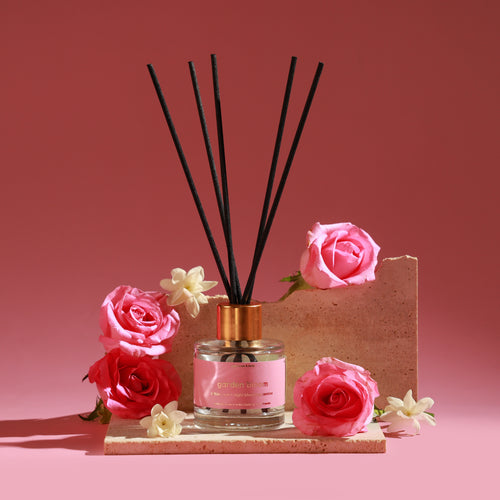
A passive alcohol-free reed diffuser needs 24 to 72 hours to reach its working level, which makes it the wrong product for a viewing tomorrow and a genuinely good one for a flat you will be showing every other weekend until spring. Set once, no power, nothing to switch on, nothing to collect — the same category of detail as a filled drain trap, in that it works entirely in the background and is never the thing anybody notices. Morning Freshness from ₹749 is Malabar lemon, peppermint and eucalyptus; Mountain Breeze from ₹849 is Himalayan pine, sage and cedar. A separate line with its own scents, so reed oil never goes into a machine and machine oil never goes into reeds.
SS
ISIPCA
Versailles
A note from Sonal

I once spent a morning in an empty three-bedroom flat in Powai with an agent who was, by some distance, the most thorough person I have worked with in this industry. She did not do anything impressive. She ran every tap for ten seconds, put a mug of water down four drains including one in a bathroom that had never been used, adjusted three blinds so they were level, and oiled two hinges — and the flat at eleven o'clock was a different property from the flat at nine, in a way neither of us could have photographed. The buyers that afternoon said it felt well kept. It had been vacant for five months.

That is the whole argument, and it is why my machine goes at the bottom of the list rather than the top. Fragrance in a property being sold is the last item in a category of invisible work, and it earns its place only if it behaves like the other items — noticed collectively, never individually, and credited to the building. If somebody comments on the scent I would count that as a failure of dosing rather than a compliment. What I want is for a buyer to walk out of a flat that has been shut for five months and describe it as well kept, without one specific thing they could point at, and for every part of that impression to be true.

Everything is made and supported from Pune, and a part of every order funds girl-child education through Nanhi Kali. You get a space that smells like somewhere considered; a girl gets a classroom. That equation has always felt right to me.

Frequently asked questions

What small details actually make a property viewing feel premium?
About twenty invisible ones: filled drain traps, clean glass, oiled hinges, matched curtain heights, arranged footwear, lids down, taps already run, switches you know, no cardboard or cleaning products in sight, and a door that opens first time. None registers alone; together they read as care.
Why does filling the drain traps matter so much in an empty flat?
Because a trap that has dried out is a direct opening into the drain line, and it is the most common bad smell in a vacant property. A mug of water down every floor drain, basin, shower and unused bathroom the day before and again on the day costs nothing and removes the problem at source.
Should I clean the windows before a property viewing?
Yes, and treat it as a lighting job rather than a cosmetic one. A dirty pane cuts daylight, so the room behind it reads as darker and smaller than it is. Inside and out where it is safe, the day before rather than in the last half hour.
Do buyers really notice things like curtain heights or a creaking hinge?
Not individually, and that is the point. They form one undifferentiated impression and attribute it to the property. The risk runs the other way: a single visible failure switches a buyer from experiencing the flat to inspecting it, and an inspected property always yields more faults.
Where does fragrance sit in a detail checklist like this?
Last, and in the same category as the rest — background work the buyer should never identify. The Vaayu at ₹11,999 on low from about two hours out, waterless so it adds no moisture to a closed flat, under 38 dB, with a key-lock for a vacant property between viewings.
Twenty invisible details
Nobody notices one of themeverybody notices all of them
The Vaayu is ₹11,999 — waterless cold-air nebulisation with no water, heat or dampness, up to 1000 m³ or roughly 2,000–3,000 sq ft, a 400ml tank lasting about 75 days, Bluetooth app control with 1h/4h/8h/24h timers, under 38 dB, auto-stop, a key-lock and 0.9 kg, so one machine can serve a whole portfolio of listings. Reed diffusers from ₹749 for a listing shown over months, and the Sukoon at ₹1,899 for a single occupied room. Free shipping above ₹499, and a portion of every order supports girl-child education through Nanhi Kali.
See the Vaayu · ₹11,999 See the reed diffusers →
Continue the read
More from SOSA
Editorial standards & sources
About this guide: Written by Sonal Sahani, ISIPCA Versailles-trained founder and perfumer at SOSA Home & Body, on the twenty small environmental details that make a luxury property viewing read as considered — from the lift lobby and a door that opens first time to filled drain traps, clean glass, oiled hinges and matched blind heights — why none of them is noticed individually, why the buyer attributes the resulting impression to the property rather than to the agent, and where fragrance sits as the last item on the same list.

Facts verified August 2026: Product facts used in this guide. SOSA Vaayu ₹11,999: waterless cold-air nebulising diffuser, atomises undiluted fragrance oil to a dry residue-free nano-mist, coverage up to 1000m³ (approximately 2,000–3,000 sq ft), 400ml refillable tank lasting up to about 75 days per fill, Bluetooth app plus onboard control, 1h/4h/8h/24h timer scheduling, adjustable intensity, under 38 dB, DC 12V/1A at 5W, 165 × 80.5 × 215 mm and 0.9 kg, freestanding or wall/HVAC mounted, auto-stop and key-lock, CE, RoHS and SGS certified, supplied with four hotel-inspired fragrances. SOSA Aangan ₹25,999: HVAC-connected or standalone commercial nebulising diffuser, coverage up to 3,000m³ (roughly 8,000–10,000 sq ft), 800ml reservoir, metal body, programmable schedules, under 42 dB. Ultrasonic machines are water-based and consume 30–50 ml of water an hour: Sukoon ₹1,899 (500ml, 270–320 sq ft, 16–18 hours on low, 3–6 drops per tank, steady/2H/4H timers, three 15ml Hotel Collection scents included), Boond ₹899 (300ml), Megh ₹3,499 (6 litres). Hotel Collection water-based fragrance 15ml ₹299, 100ml ₹999, 300ml ₹1,799, Pack of 7 at 15ml ₹1,799 against ₹2,093 bought singly; the Vaayu and Aangan take their own undiluted oil rather than these water-based bottles. Reed diffusers (separate alcohol-free line) from ₹749, requiring 24–72 hours to reach their working level. Scented candles from ₹379, scenting a room in roughly 15–20 minutes but requiring attendance. Free shipping above ₹499. Timings: a nebulising diffuser reaches a working level within minutes and a stated viewing level well inside two hours. This guide makes no claim that fragrance affects a property's price, offer level or time on market; it is presentation, in the same category as photography, styling and lighting. Fragrance must never be used to conceal a material defect. SOSA is not affiliated with or endorsed by any hotel brand. Prices subject to change — see the live product pages.
ブログに戻る