
Why ₹500 and not ₹400: free shipping starts above ₹499. A ₹400 cap means a ₹399 gift plus a courier charge, so the giver pays more than the cap and the recipient receives less than it. A ₹500 cap crosses the line.
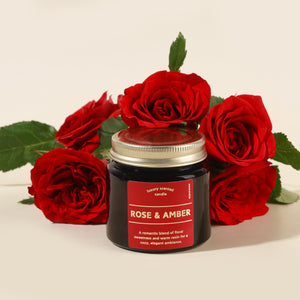
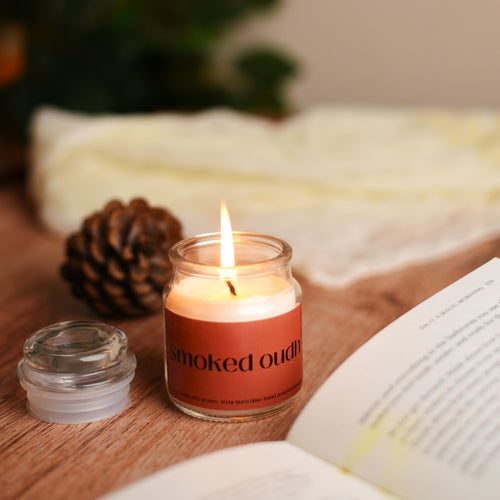
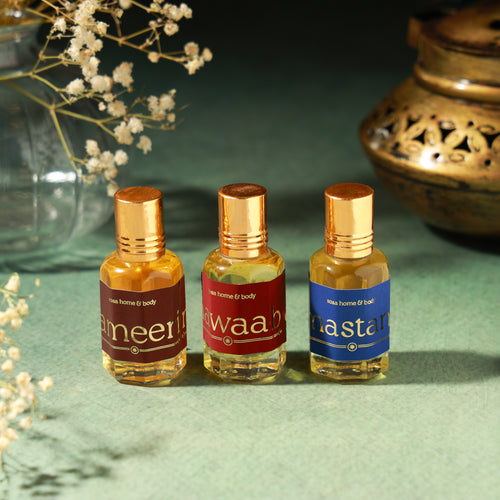
What each tier buys: ₹300 — almost nothing that reads as a gift · ₹500 — a candle at ₹379 or ₹449, a 3ml attar at ₹379 to ₹399, a car perfume at ₹449 to ₹499 · ₹750 — the cheapest reed diffuser at ₹749, which is the safest gift on this list · ₹1,000 — any reed from ₹749 to ₹849, a Boond diffuser at ₹899, a ceramic jar candle at ₹949 · ₹1,500 — the attar trio at ₹1,055 or a 12ml attar at ₹1,149 to ₹1,199.
The wording matters as much as the number: up to, not of.
1. ₹500 is the first cap that clears the free-shipping line. Free shipping starts above ₹499. Under a ₹400 cap, a giver buying a ₹399 candle online pays a courier charge on top, so the giver spends more than the cap while the recipient receives less than it. Under a ₹500 cap the same giver spends ₹500 and all of it is gift. That single line is worth more than any amount of discussion about generosity, and it is why I would never set a cap at ₹400 or ₹450.
2. Below ₹400 the market stops offering real gifts. In my own range, one item sits under ₹300 — a 15ml Hotel Collection fragrance at ₹299 — and it is only useful to somebody who already owns a diffuser. Everything else begins at ₹379. That is not special pleading for my price list; check any category you like and you will find the same cliff. A ₹300 cap does not buy a smaller version of a good gift, it buys a different and worse class of object.
3. Above ₹1,000 a cap becomes regressive. A ₹1,500 cap is immaterial to somebody on a senior salary and a visible amount to an intern, a trainee or anybody supporting a household on one income in the most expensive month of the year. They will pay it. They will not tell you it was difficult. If your leadership wants a high-value exchange, the honest version is for the company to fund it rather than for the cap to require it.
4. One cap, for everybody, regardless of grade. A cap that varies by level tells every participant which level they are on and makes the gift a payslip. If seniors want to give more, they can give more outside the draw and not inside it.
And then the part that is not a number at all: write up to ₹500 and add the sentence nobody is expected to spend the full amount. A cap published without that sentence is read as a target by about a third of any room, and a target is how one person spends ₹1,400 and resets everybody's expectations for next year.

What each cap actually buys, from ₹300 to ₹1,500
I am going to use my own prices here because they are the ones I can verify to the rupee, and because the shape of the curve is what matters rather than the specific objects. The important feature of it is that the curve is not smooth. There is almost nothing between ₹0 and ₹379, a dense band of genuinely good gifts between ₹379 and ₹509, a step at ₹749 where the safest gift category in office gifting becomes available, and then diminishing returns. That shape is why the choice is not really between ₹400 and ₹500 but between a cap that lands inside a dense band and a cap that lands in a gap. If you want the per-tier lists in a form your colleagues can read rather than your leadership, the budget guide is organised the same way around what each amount buys.
₹400 looks better and is worse than it looks, because of the courier. Free shipping starts above ₹499, so a ₹399 gift ordered online costs the giver the gift plus shipping — the giver breaks the cap and the recipient still gets the ₹399 item. The only way a ₹400 cap works cleanly is if everybody buys in person, which on a hybrid floor is not a plan. If leadership has handed you ₹300 or ₹400 and will not move, the ₹300 page is the honest version of what can be done inside it, and the answer is narrower than anybody wants.
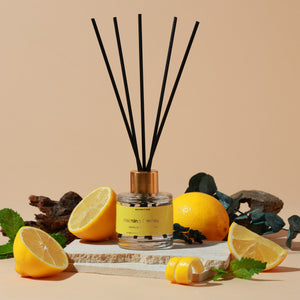
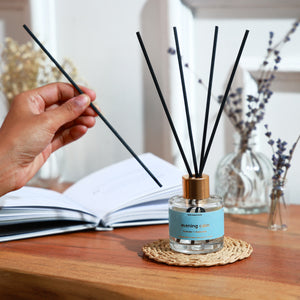
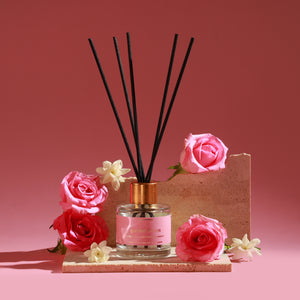
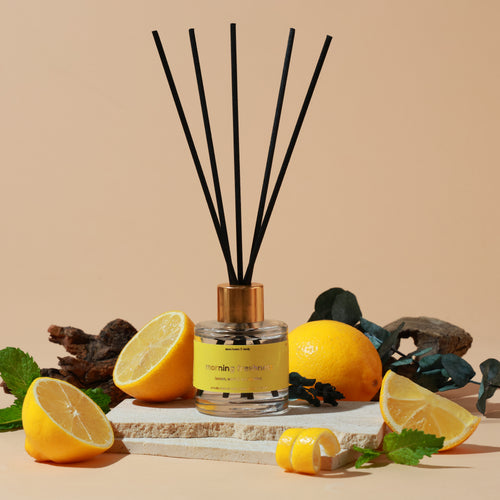
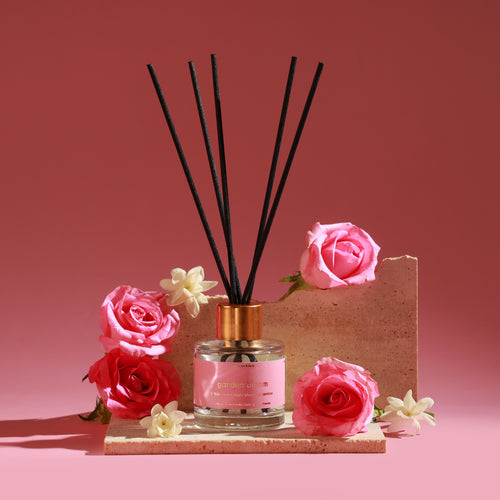
₹750 buys one specific thing that ₹500 does not, and it is the single safest gift in office Secret Santa: a reed diffuser. Morning Freshness reed diffuser is ₹749. A reed goes into a room rather than onto a person, which removes the taste guess, the gender guess and the intimacy in one move, and it cannot be wrong on somebody. If your floor is full of people who have never met — and that situation has its own page — a ₹750 cap is worth the extra ₹250 purely because it puts that category in reach of every giver. Reeds are alcohol-free and take 24 to 72 hours to reach their working level.
At ₹1,500 the best-looking gift in my range comes into reach: the attar trio at ₹1,055, three 3ml attars boxed, which looks like a considered present and is also the point at which I have to repeat the rule — personal fragrance is the wrong default for somebody you barely know. A 12ml attar is ₹1,149 to ₹1,199. Above ₹1,500 the range runs to a ₹1,598 reed duo, a Sukoon diffuser at ₹1,899 and a Safar waterless car diffuser at ₹3,999, and almost no office cap reaches them, which is why most organisers should stop at ₹1,000.
Every common cap, with the arithmetic
Six caps, what each one buys from a verified price list, what tends to go wrong inside it, and whether I would set it. The only column that matters to your leadership is the last one; the only column that matters to your colleagues is the second.
| Cap | What it buys | What goes wrong | Verdict |
|---|---|---|---|
| ₹300 | One item in the range: a 15ml Hotel Collection fragrance at ₹299, which needs a diffuser they may not own | People hunt for an exception, fail, and buy a mug. Ninety people at ₹290 is ₹26,000 spent on near-misses | No |
| ₹400 | A Bookshop candle at ₹379, a 3ml attar at ₹379 to ₹399 | Free shipping starts above ₹499, so an online order costs the giver more than the cap and the recipient still gets the ₹379 item | No — the courier eats it |
| ₹500 ★ | Candles ₹379 and ₹449 · 3ml attars ₹379 to ₹399 · car perfumes ₹449, ₹479, ₹489, ₹499 · the densest band in the market | Very little. The main risk is the word of instead of up to | Yes — the default |
| ₹750 | Everything above, plus Morning Freshness reed diffuser at ₹749 — the safest category in office gifting | Nothing, except that it is 50 per cent more money for a gift that is safer rather than bigger | Yes, if the floor are strangers |
| ₹1,000 | Any reed ₹749 to ₹849 · Boond diffuser ₹899 · car combo ₹899 · ceramic jar candle ₹949 | Comfortable, but the extra ₹250 buys size rather than suitability | Yes for a senior team |
| ₹1,500 | The attar trio at ₹1,055 · 12ml attars ₹1,149 to ₹1,199 | Starts to be a visible amount for anybody on a stipend, and nobody in that position will say so | Only with an easy opt-out |
| Above ₹1,500 | A ₹1,598 reed duo, Sukoon diffuser at ₹1,899, Safar waterless car diffuser at ₹3,999 | This is no longer Secret Santa; it is a gifting programme, and it should be funded by the company rather than by the participants | Fund it or drop it |
| A tier per grade | ₹500 for the team, ₹1,500 for the leadership, in the same draw | Every participant learns which tier they are in, and the gift becomes a payslip | Never |
Too low, too high, and why the wording does half the work
The case against a low cap is not that it is mean, it is that it is wasteful. A cap of ₹200 or ₹300 does not reduce what the office spends; it redirects the same money into a class of object that nobody keeps. Ninety people at ₹290 is a little over ₹26,000, and if most of it buys novelty mugs, keyrings and desk toys then the office has spent ₹26,000 on landfill and a morning of polite faces. The same ninety people at ₹500 spend ₹45,000 and a meaningful share of it buys something that gets used for months. I am aware how convenient that argument is for somebody selling things at ₹379 and above, so test it against any category you like: at ₹250 you are looking at the bottom of every shelf, and at ₹500 you are looking at the normal entry price of a real product. If your leadership's instinct is to keep the cap low out of consideration for junior staff, the better instrument is the opt-out rather than the cap — a ₹500 cap with a genuinely invisible way to decline is kinder than a ₹250 cap that everybody has to take part in.
The case against a high cap is the one organisers underweight, because the people it affects are structurally unlikely to raise it. A ₹1,500 cap in a room that contains both a director and a first-year analyst is not one rule applied to two people; it is a flat charge levied in the month when rent, travel home and family obligations all land at once. The analyst will pay it, will not mention it, and will possibly borrow to do so. That is a real outcome and it is worth more than the marginal improvement in gift quality between ₹1,000 and ₹1,500. If the team genuinely wants a higher-value exchange, there are two honest routes: the company funds the difference and says so, or the draw splits into opt-in tiers with no visibility between them. What does not work is a single high cap plus an assumption that anybody struggling will speak up. Some people react badly to fragrance, and an office is exactly where you will not know. That is one more argument for a reed diffuser over a personal perfume: a reed goes home with them and gets placed, or not, in a room of their choosing. Nobody has to wear anything, and nobody has to explain why they are not wearing it.
And then the wording, which does about half the work of the number. A cap published as ₹500 per person is read as an instruction by a third of any room. A cap published as up to ₹500, and nobody is expected to spend the full amount is read as a ceiling by almost everybody. Add one more line if you can: that a smaller gift in the right category beats a larger gift in the wrong one, which is both true and the single most useful thing a participant can be told. The three sentences together take fifteen seconds to write and they prevent the specific failure where one person spends three times the cap, the recipient feels indebted, and the following year's organiser inherits a norm nobody chose. For the full operating manual around the cap — the draw, the addresses, the handover and the opt-out — the organiser's page has the whole sequence, and the specific case for ₹500 is the one to send to whoever has to approve it.
The SOSA edit
The six caps as a recommendation table for whoever has to sign off on the number, with what I would actually set and the reason in a form that survives a budget meeting. The free-shipping line at ₹499 appears twice because it genuinely decides two of the rows.
| Cap | Set it when | What the giver can actually do | Verdict |
|---|---|---|---|
| ₹500 ★ | Almost always. The default for an Indian office of any size | Four categories in reach — candle ₹379 or ₹449, 3ml attar ₹379 to ₹399, car perfume ₹449 to ₹499 — and the whole cap reaches the recipient because shipping is free above ₹499 | Yes |
| ₹750 | The floor is largely strangers and you want the safest category available to everybody | Adds Morning Freshness reed diffuser at ₹749. A reed goes in a room rather than on a person, so no taste guess and no gender guess | Yes |
| ₹1,000 | A smaller, more senior team that has asked for it and can carry it without anybody noticing | Any reed ₹749 to ₹849, Boond diffuser ₹899, ceramic jar candle ₹949. Bigger rather than safer | Yes, with care |
| ₹1,500 | Only with a genuinely invisible opt-out, and only if no stipend-level staff are in the draw | The attar trio at ₹1,055 or a 12ml attar at ₹1,149 to ₹1,199 | Reluctantly |
| ₹300 or ₹400 | When leadership will not move. Then say plainly what is possible inside it | At ₹400, a candle at ₹379 plus a courier charge the giver pays on top. The honest ₹300 answer is narrow | No |
| Not on the list at any price | A different cap per grade, a published spend, or a cap with no opt-out behind it | Nothing. Each one converts a party into a visible ranking | — |
Versailles
The reason I can write this page with actual numbers is unglamorous: I set the prices, so I know exactly where the cliffs are. There is a real cliff at about ₹375 in home fragrance, below which you are buying a fragrance-adjacent object rather than a fragrance, and I have never found a way to make anything good below it that I would be willing to put my name on. That is not a universal law of retail, but every category I have looked at has a version of the same cliff, and an office cap set below somebody else's cliff produces the same disappointed drawer.
The free-shipping line is the part organisers almost never factor in and it is worth ₹80 or so per gift. I set ours above ₹499 for ordinary commercial reasons, and the consequence I did not anticipate is that it makes a ₹400 office cap actively irrational: the giver pays the courier, the recipient does not see it, and everybody has obeyed a cap that nobody actually met. Multiply that by ninety participants and an organiser has quietly spent ₹7,000 of other people's money on logistics. Moving the number to ₹500 makes it disappear.
I would rather an office set ₹500 and stuck to it than set ₹1,000 and left a few people quietly working out whether they could afford to join in. The arithmetic I actually care about in this cluster is not the price list, it is that one. Everything is made and supported from Pune, and a part of every order funds girl-child education through Nanhi Kali. Somebody gets a gift that was actually thought about; a girl gets a classroom. That equation has always felt right to me.
Frequently asked questions
- Should companies set a ₹500 Secret Santa limit? — the same argument compressed into one recommendation you can forward.
- How to organise Secret Santa at the office — the six decisions the cap sits inside.
- Best office Secret Santa fragrance gifts by budget — the same tiers, written for participants rather than for HR.
- Best office Secret Santa gifts under ₹500 — what the recommended cap actually buys.
- Brand: the SOSA founder story.