
The arithmetic: free shipping starts above ₹499. At a ₹400 cap, a ₹399 gift plus delivery costs the giver more than ₹400 and the recipient still receives a ₹399 item. At ₹500 the giver spends ₹500 and all of it is gift. Across ninety participants that difference is several thousand rupees of other people's money spent on logistics.
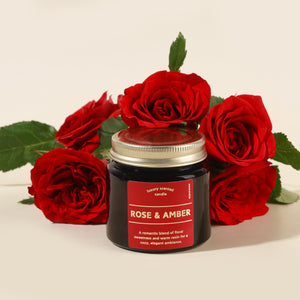
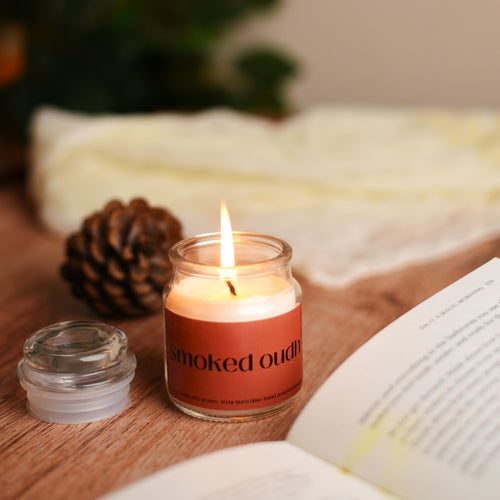
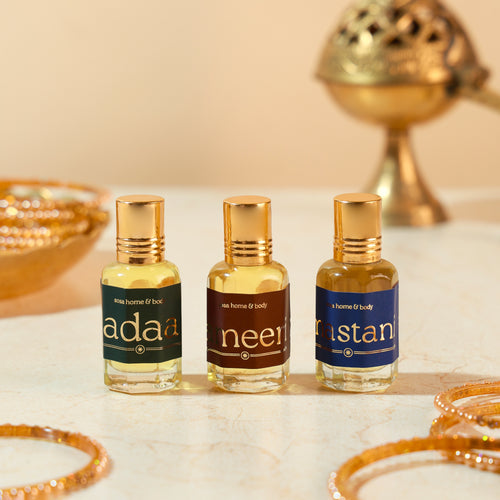
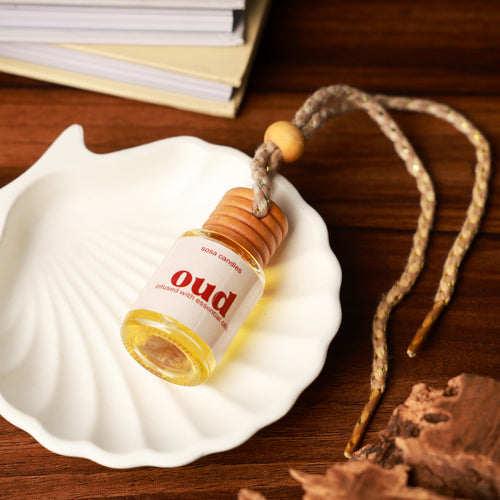
What ₹500 buys: Bookshop candle ₹379 · Smoked Oudh candle ₹449 · 3ml attars ₹379 to ₹399 · car perfumes ₹449, ₹479, ₹489, ₹499. Four categories, not one.
The wording: write up to ₹500, not ₹500, and add that nobody is expected to spend the full amount. A cap is a limit, not a target.
When ₹500 is wrong: a small senior team that has asked for more, where ₹750 or ₹1,000 is fine; and a team including people on stipends, where ₹500 still needs an invisible opt-out behind it.
1. ₹500 is the first cap above the free-shipping line. Free delivery starts above ₹499. Under a ₹400 cap, a giver buying online pays for the gift and then pays a courier charge on top, which means the giver breaks the cap and the recipient still receives only the ₹399 item. Under a ₹500 cap, the same giver spends ₹500 and every rupee of it is gift. The extra ₹100 of headroom is worth about ₹180 of delivered value. Across a floor of ninety, a ₹400 cap quietly spends several thousand rupees of your colleagues' money on logistics that nobody sees.
2. ₹500 is the lowest cap with more than one category in it. At ₹500 a giver can choose between a candle at ₹379 or ₹449, a 3ml attar at ₹379 to ₹399, and a car perfume at ₹449 through ₹499. Four categories means a giver who knows almost nothing about their recipient still has a defensible answer. At ₹300 there is effectively one option, and a cap with one option is a cap that produces mugs.
3. ₹500 is low enough that nobody is squeezed. This is the half of the argument that gets left out. A cap is a flat charge in the most expensive month of the year, and it lands on an intern and a director identically. ₹500 is an amount almost everybody in a professional office can absorb without thinking about it, which is precisely what you want from a party. ₹1,500 is not, and the people for whom it is not will pay it rather than tell you.
4. It is a round number people do not negotiate. A trivial point that matters in practice: ₹500 is understood instantly, needs no explanation and generates no replies. ₹450 and ₹600 both generate replies.
And then the condition, which is not optional: it has to be published as a limit rather than a target. Up to ₹500 per person. Nobody is expected to spend the full amount, and a well-chosen ₹250 gift is the point of the exercise rather than a failure. Those two sentences are the difference between a cap that protects people and a cap that instructs them.

Why ₹500 and not ₹400, in numbers
The ₹400 cap is the one I would argue hardest against, and not because ₹100 is a large amount of money. It is because a ₹400 cap produces an outcome in which every participant spends more than the cap and every recipient receives less than it, which is the opposite of what a cap is for. The mechanism is the delivery threshold, and it exists at almost every online retailer at some number between ₹399 and ₹999 — ours is ₹499, which I set for ordinary commercial reasons and which has the unintended effect of making ₹400 an irrational office cap. Work it through once and you will not set ₹400 again. The full set of caps, from ₹300 to ₹1,500, is laid out with the same arithmetic if you need to defend a different number.
Multiply it. Ninety participants, most of them ordering online because a third of the floor is hybrid and half of them are not going to a shop in December. Call it sixty online orders below the threshold. That is roughly ₹4,800 of your colleagues' money spent on couriers, in exchange for nothing, as a direct result of a cap chosen to be considerate.
There is a second-order effect too, and it is the one that produces complaints. A giver who notices the delivery charge at checkout will often add something to cross the threshold — which means they have now spent ₹520 against a ₹400 cap and bought two items where one was asked for. The cap has not restrained them; it has confused them. A giver who does not notice simply pays it. Either way the ₹400 cap has failed at the one thing a cap is supposed to do, which is make the spend predictable.
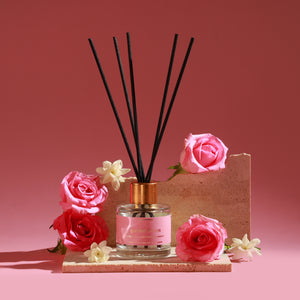
The second thing ₹500 buys is choice, which matters more than it sounds. Inside ₹500 there are four distinct categories: a candle at ₹379 or ₹449, a 3ml attar at ₹379 to ₹399, a car perfume at ₹449 to ₹499, and a 15ml Hotel Collection fragrance at ₹299 for somebody who already owns a diffuser. A giver who knows one fact about their recipient — do they drive, do they work from home — can act on it. At ₹300 there is one option and the fact is useless. The ₹500 ideas page is the version to forward to participants.
The third thing, and the reason I would not go higher by default, is that ₹500 is an amount almost nobody in a professional office has to budget for. That is the whole point of a cap: not to make the gifts equal, but to make participation costless enough that nobody is doing arithmetic about whether they can join in. A cap that requires anybody to do that arithmetic has stopped being a party.
Then add the sentence that does the real work: nobody is expected to spend the full amount, and a well-chosen ₹250 gift is the point of this rather than a failure. Without it, the giver who finds a genuinely good ₹300 thing will often add a second item to reach the cap, which produces a bundle rather than a gift. With it, you have told the room that judgement is the thing being asked for rather than spend.
The failure a limit protects against is specific: one person spends ₹1,400 against a ₹500 cap, their recipient opens it in front of everybody, feels indebted rather than pleased, and the following year's organiser inherits ₹1,400 as the norm. You cannot police this with rules — an organiser inspecting receipts has turned a party into a compliance exercise — but you can almost entirely prevent it with wording. And behind the wording, keep the opt-out: a cap of any size needs a way to decline that costs nobody anything socially, which is the one mechanism that makes a cap humane rather than merely fair. The organiser's manual has how to run it.
₹400, ₹500, ₹750 and ₹1,000 side by side
The same giver, the same online order, four caps. The column that decides the argument is the third one, because it is the only column where the money leaves the room without anybody receiving anything for it.
| Cap | What the giver can buy | Lost to delivery | Verdict |
|---|---|---|---|
| ₹300 | A 15ml Hotel Collection fragrance at ₹299, and only useful if they own a diffuser | Charged — the order is far below ₹499 | No. One option is not a choice |
| ₹400 | Bookshop candle ₹379 · 3ml attars ₹379 to ₹399 | Charged. The giver exceeds the cap and the recipient still gets the ₹379 item | No — the courier takes the saving |
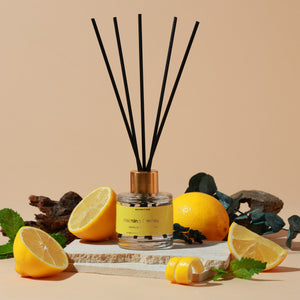
| ₹500 ★ | Candles ₹379 and ₹449 · 3ml attars ₹379 to ₹399 · car perfumes ₹449, ₹479, ₹489, ₹499 — four categories | Nothing. Free shipping starts above ₹499 | Yes — set this |
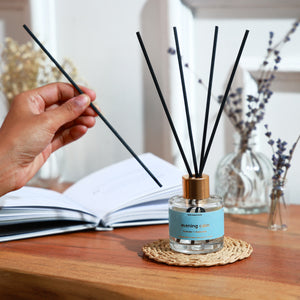
| ₹750 | Everything above, plus Morning Freshness reed diffuser at ₹749, the safest single gift in office draws | Nothing | Yes if the floor are strangers |
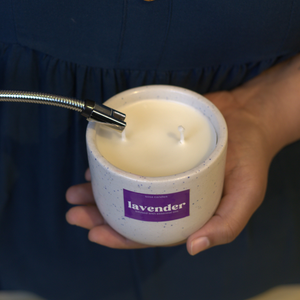
| ₹1,000 | Any reed ₹749 to ₹849 · Boond diffuser ₹899 · ceramic jar candle ₹949 | Nothing | Fine for a senior team |
| ₹1,500 | The attar trio at ₹1,055 · 12ml attars ₹1,149 to ₹1,199 | Nothing, but it is now a visible amount for anybody on a stipend | Only with an easy opt-out |
| ₹500 written as a target | The same four categories, plus a second item added to reach the number | Nothing, but the gift becomes a bundle | Write up to instead |
| Different caps by grade | Nothing worth having. Every participant learns which tier they are on | — | Never |
A limit rather than a target, and when ₹500 is the wrong number
I want to be straight about the two cases where ₹500 is not my answer, because a recommendation with no exceptions is not a recommendation. The first is a small, uniformly senior team — eight people, all on comparable salaries, who have said they want to spend more. There ₹750 or ₹1,000 is sensible and the only thing I would add is that ₹750 buys one specific category that ₹500 does not, which is an alcohol-free reed diffuser at ₹749, and that category is the safest gift in office draws because it goes in a room rather than on a person. The second case is the reverse: a team that includes interns, trainees or anybody on a stipend. There ₹500 is still the right cap, but it is not sufficient on its own — it needs a genuinely invisible opt-out behind it, because ₹500 in the third week of December is not the same amount of money to everybody in the room, and the person for whom it is difficult is structurally the least able to say so. A cap is a fairness instrument and an opt-out is a kindness instrument, and you need both.
The case I would refuse is a cap above ₹1,000 set by a leadership team who are not the people paying it. It is easy to argue for ₹1,500 in a room where everybody earns enough for ₹1,500 to be invisible, and the argument is always that it produces better gifts. It does not: gift quality in an office draw is almost entirely a function of category choice, which is free. A ₹1,500 reed diffuser is not more likely to be liked than a ₹749 one; it is larger. What a high cap does reliably produce is a small number of people quietly working out whether they can afford to take part in a party, which is a strange thing for an employer to have engineered. If the organisation genuinely wants a higher-value exchange, the honest version is for the company to fund the difference and say so — whether a company should offer gift options centrally goes into how that works without it becoming a procurement exercise.
And then the mechanics, because a cap is only as good as the message it arrives in. Publish the number, the word up to, the sentence about not being expected to spend it all, the exchange date, the handover method and the order-by date in one message. Metro addresses usually see two to four working days, and the rest of India longer. A Secret Santa exchange tomorrow morning is not a delivery problem any online order can solve, and no page here will pretend otherwise: if it is tomorrow, buy locally, or tell the organiser you will hand it over on the Monday. Two more small things. Say that the cap is the same for everybody regardless of grade, because somebody will ask and the answer should already be written down. And do not ask anybody to show what they spent: a cap enforced by inspection is worse than a cap that is occasionally exceeded, and the wording prevents nearly all of it anyway. If you take one thing from this page, take the arithmetic — ₹500 because free shipping starts above ₹499 — and if you take two, take the word.
The SOSA edit
What a ₹500 cap has in it, by what the giver knows about their recipient. This is the table that answers the question organisers get asked immediately after they publish the number, which is whether ₹500 is actually enough.
| What the giver knows | What fits under ₹500 | Why | Price |
|---|---|---|---|
| Nothing at all ★ | Bookshop candle or Smoked Oudh candle | Goes in a room rather than on a person. No taste guess, no gender guess, nothing anybody has to wear in front of the office | ₹379 / ₹449 |
| They drive in | A car perfume — jasmine ₹449, sandalwood ₹479, icy mint ₹489, lemon ₹499 | A daily object in a space nobody else buys for them, and obviously useful | ₹449–₹499 |
| They already own a diffuser | A 15ml Hotel Collection fragrance fragrance | The one thing under ₹300 that is genuinely useful, and only to somebody who owns the machine | ₹299 |
| They collect perfume and say so | Adaa attar ₹379, Ameeri attar ₹385, Mastani attar ₹389 or Nawaab attar ₹399 | The single case where personal fragrance is correct, because the giver is not guessing | ₹379–₹399 |
| The cap is ₹750 instead | Morning Freshness reed diffuser | ₹250 more buys the safest category in office gifting, which is worth it on a floor of strangers. That situation has its own page | ₹749 |
| Not on the list at any price | Two items bundled to reach the cap, or a personal perfume for a near-stranger | Never. A cap is a limit, and a bundle is what happens when somebody reads it as a target | — |

Versailles
I set our free-shipping threshold above ₹499 in the first year, for the dull reason that it is roughly where an order starts covering its own courier cost. What I did not anticipate is how often I would end up explaining it to somebody buying an office gift against a ₹400 cap, who had found something at ₹379, reached the checkout, seen the delivery charge and been genuinely annoyed — correctly, because they had been given a cap that could not be met online. That conversation happens several times every December and it is always the organiser's number that caused it, not the shop.
The second thing I have learned from the other side of a counter is how literally people read a cap. I have watched somebody with a ₹500 limit find a candle at ₹379, decide it looked insufficient against the number they had been given, and add a second item to reach ₹499 — ending up with a bundle that was worse than the single thing they had chosen first. That is not a shopper making a mistake, it is an announcement that said ₹500 where it should have said up to ₹500. The fix costs one word and it is the single cheapest improvement available to anybody running a draw.
So: yes to ₹500, mostly for a reason about couriers rather than a reason about generosity, and only if the word in front of it is up to. I am conscious that recommending a number which happens to sit just above my own shipping threshold looks self-serving, which is why the arithmetic is on the page in full — check it against whoever you buy from and set your cap just above their line instead. Everything is made and supported from Pune, and a part of every order funds girl-child education through Nanhi Kali. Somebody gets a gift that was actually thought about; a girl gets a classroom. That equation has always felt right to me.
Frequently asked questions
- What should HR set as an office Secret Santa budget? — every cap from ₹300 to ₹1,500 with the same arithmetic.
- Best office Secret Santa gifts under ₹500 — what the recommended cap actually buys, for participants.
- Best office Secret Santa gifts under ₹300 — the honest version of a cap nobody should set.
- How to organise Secret Santa at the office — the five decisions that sit around the number.
- Brand: the SOSA founder story.