




2. Yes — extraction run time should extend through monsoon and summer. Both higher humidity and higher heat increase the demand on a kitchen's extraction system; a schedule set for a mild season under-serves the room in the harder ones.
3. Yes — airing and upholstery attention should increase specifically during monsoon. Trapped moisture produces a mustiness that ordinary cleaning and extraction alone don't fully address, so monsoon calls for its own added step, not just more of the usual routine.
4. No — the fragrance itself should not change with the seasons. A signature register earns its name by being the same thing every time a customer encounters it; a fragrance that rotates by season is not a signature, it's a variable, and it stops doing the one job a signature scent has.
5. The two answers aren't in tension — they're two different systems. Odour-control operations respond to what temperature and humidity are doing to the room's sources; fragrance is a fixed, small addition in two zones that was never meant to track the weather in the first place.
Change the calendar, not the scent — cleaning, extraction and airing should flex with the seasons, while the fragrance in the washroom or entrance stays exactly as it is, all year.
Why operations and fragrance need different answers
Odour-control operations exist to manage sources — drains, grease traps, upholstery, ventilation — and those sources genuinely behave differently by season, because temperature and humidity change how fast they release compounds and how long those compounds linger. A cleaning and extraction schedule that ignores this is set up to fail in exactly the months it's needed most, which is why the operational side of this question has an unambiguous yes. A fixed, year-round schedule is really a schedule tuned to one season and simply reused for the other two, whether or not anyone intended it that way.
Fragrance is a different kind of thing entirely. It isn't managing a source; it's a small, deliberate addition to one or two zones — usually a washroom, sometimes a genuinely separated entrance — and its entire value depends on a customer encountering the same thing each time. A fragrance that changes with the season isn't offering a more attuned experience; it's simply less recognisable, which is the opposite of what a signature scent is meant to achieve. A regular who notices the washroom fragrance has changed since their last visit isn't experiencing seasonal sophistication — they're noticing that the one fixed point in the room has stopped being fixed.
Conflating the two questions is the mistake worth avoiding here. An owner who notices their café smells different in July than in December is right to look at their cleaning and extraction schedule — but wrong if that observation leads them to also start rotating the washroom fragrance. The two systems are solving different problems, on different timescales, and answering them the same way misses what each one is actually for. Treating them as one combined question is also how a fragrance budget quietly grows each year without ever fixing the underlying source problem it was never designed to solve.
The three things worth changing by season
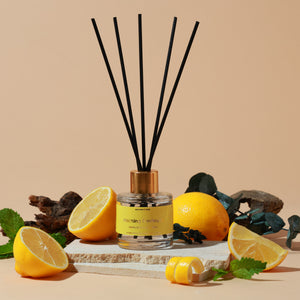
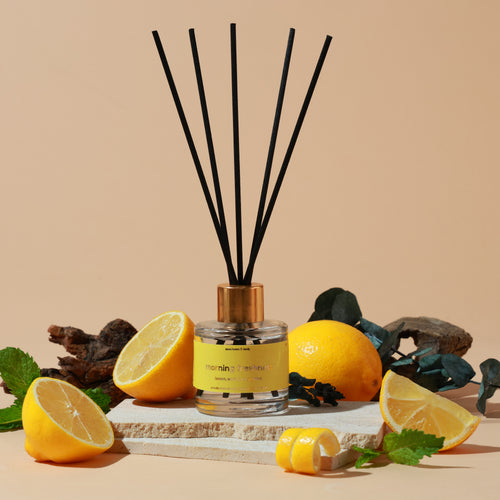
 Morning Freshness₹749A schedule built around an average month will under-serve summer and over-serve winter; matching it to what the season actually demands is the honest fix.
What changes, and what stays fixed
Everything in the left-hand column below flexes by season. Nothing in the fragrance column does.
| Element | Changes by season? | What drives the change | Fragrance affected? |
| Cleaning and maintenance cadence | Yes — tighter in summer | Heat accelerates release from drains, grease and materials | No |
| Extraction run time | Yes — longer in summer and monsoon | Higher heat and higher humidity both increase the extraction workload | No |
| Airing and upholstery attention | Yes — a specific monsoon addition | Trapped moisture produces a mustiness other seasons don't | No |
| Washroom and entrance fragrance register | No — stays constant | A signature scent's value depends on being the same thing every time | N/A — this is the fixed element |
| Fragrance refill interval | Sometimes — may shorten slightly in a badly ventilated space during summer | Heat increases evaporation from a reed diffuser, not the register itself | Only the timing, never the scent |
| A café that changes its fragrance by season has usually confused the operational question with the fragrance one — the two systems answer to different drivers and don't need to move together. | |||
Morning Freshness · constant register₹749Shop →  Sukoon · constant register, larger room₹1,899Shop →
  Vaayu · adjustable run windows, same tank₹11,999Shop →
How to build a seasonal maintenance calendar
Never build a single, year-round cleaning and extraction schedule and assume it serves every season equally — the same interval that comfortably manages a Chennai or Mumbai café in December is very likely inadequate by May, and applying it unchanged simply means the schedule quietly under-serves the café for a stretch of every year.
Sometimes the right response is as simple as a shorter gap between drain and grease-trap cleaning in the hottest months, or an added airing and upholstery step through monsoon — both belong on an operational calendar, not a fragrance one, and both are worth writing down rather than left to memory or habit.
Usually, the fragrance side of the plan needs no seasonal calendar at all — a 50ml reed diffuser at six reeds in Mountain Breeze or Morning Freshness covers the same room, at the same scale, in every season a café operates through, which is exactly the point of choosing a fixed, dependable register in the first place.
What to buy, if anything
One purchase, kept constant, with the maintenance calendar doing the seasonal work around it.
| Route | Premises | Why | What it costs |
| No fragrance, seasonal maintenance calendar | Dining room, counter and any area near food service, every season | This is where seasonal odour changes actually originate, and where they should be addressed | ₹0 — a scheduling change |
| Reed diffuser, Mountain Breeze or Morning Freshness, unchanged all year | A washroom under 150 sq ft | Consistency is the value; there's no seasonal upgrade to make here | ₹749–₹849 |
| Reed diffuser, 130ml, unchanged all year | A larger washroom, 150–270 sq ft | Longer runtime, same register, same logic | ₹1,249–₹1,349 |
| Sukoon ultrasonic, unchanged all year | A washroom suite or small retail corner, 270–320 sq ft | Steady coverage that doesn't need a seasonal swap | ₹1,899 |
| Vaayu, adjustable run windows, same fragrance | A multi-zone café that wants scheduling flexibility across seasons | Lets hours and intensity flex without ever changing what's in the tank | ₹11,999 per unit |
I'm often asked whether SOSA sells a 'monsoon fragrance' or a seasonal rotation, and my answer is always the same: no, and I'd advise against building one even informally. A signature scent's entire job is to be recognisable, and a fragrance that changes by season stops doing that job the moment it starts rotating. I've seen owners try a lighter citrus for summer and a warmer note for winter with good intentions, and the result is almost always a regular customer asking, politely, what happened to the washroom.
What I do encourage, strongly, is building an actual seasonal calendar — just not a fragrance one. Cleaning cadence, extraction runtime, and a monsoon-specific airing step are all worth writing down and adjusting deliberately, because the sources they're managing genuinely do behave differently across the year. I'd rather hand an owner a maintenance checklist with three seasonal variants than a second or third fragrance to rotate through.
The two conversations get tangled more often than owners expect, usually because both start from the same honest observation — 'the café smells different in July.' My job is to separate them: that observation is almost always a cue to check the maintenance calendar, and almost never a cue to change what's in the washroom diffuser. Once that separation is clear, most owners find the seasonal question was never really about fragrance at all.
Questions about seasonal odour-control strategy
- Why Does My Café Smell Different in Summer, Monsoon and Winter? — the mechanism behind the question this page answers.
- How Do Chennai's Heat and Humidity Affect Café Odours? — one sustained climate, examined in detail.
- Exhaust, Grease, Drains, Upholstery, HVAC, Humidity or Fragrance — What Should I Fix First if My Café Smells Bad? — the same fix-source-first logic, applied generally.
- Why Does My Café Smell Musty During Monsoon? — the specific monsoon mechanism this page's calendar responds to.
- Brand: the SOSA founder story.
SOSA products & prices (verified September 2026): Reed diffusers 50ml ₹749–₹849 (to 150 sq ft, 6–8 weeks at six reeds) · 130ml ₹1,249–₹1,349 (above 150 sq ft, 14–18 weeks) · reed refill 300ml ₹2,399. Ultrasonic: Boond ₹899 (~150 sq ft) · Sukoon ₹1,899 (270–320 sq ft, ships with three 15ml Hotel Collection fragrances) · Megh ₹3,499 (6L tank, ~100 hrs runtime, ~215 sq ft — a runtime machine, not a coverage upgrade). Waterless cold-air: Safar ₹3,999 (no published coverage figure) · Vaayu ₹11,999 (up to 1000 m³, roughly 2,000–3,000 sq ft; 400ml tank lasting about 90+ days; app and onboard control, 1h/4h/8h/24h run windows, adjustable intensity, key-lock, under 38 dB, freestanding or wall/HVAC mount, 5W, CE/RoHS/SGS) · Aangan ₹25,999 (8,000–10,000 sq ft). Hotel Collection water-based fragrance 15ml ₹299 · 100ml ₹999 · 300ml ₹1,799 is for ultrasonic machines; reed oil and Hotel Collection are not interchangeable. Reed diffusers are alcohol-free, phthalate-free, paraben-free, IFRA-compliant and low VOC, handmade in small batches in Pune. Every purchase funds a girl's education through Nanhi Kali. Prices and availability subject to change — see the live product pages.