


Should a Luxury Realtor Develop Their Own Signature Scent?

Should a Luxury Realtor Develop Their Own Signature Scent?

★ Twenty listings a month · a signature scent, a staging line item, and the arithmetic behind bothVaayu ₹11,999 · Aangan ₹25,999 · Sukoon ₹1,899 · free shipping above ₹499A portion funds girl-child education
★ SOSA · property viewings & premium presentation
The machine is a fixed cost that spreads across every viewing you will ever do. Once you have said that, there is not much more to the economics
★ ★ ★ ★ ★
★★★★★
"A recognisable scent across my office and my listings has done more for how the business feels than any rebrand."
Aarti Deshmukh Brokerage, Mumbai
Signature across both
★★★★★
"Twenty viewings a month. Divided out, it is a rounding error against what I already spend on photography."
Sameer Hegde High volume, Bengaluru
Against photography
★★★★★
"It sits on the staging checklist between styling and final clean, which is exactly where it belongs."
Ipsita Barua Staging, Kolkata
On the checklist
★★★★★
"One machine moved between six listings. Two minutes to set up, two minutes to collect."
Devang Mehta Portfolio, Ahmedabad
Two minutes each way
★★★★★
"Asked whether every listing should smell different. Was told the opposite and given a good reason for it."
Nisha Kalra Luxury resale, Gurgaon
One scent, not many
★★★★★
"What I appreciated was being told it is presentation and not persuasion. No claims about what it does to a price."
Rohan Bhattacharya Advisory, Delhi
Honest framing
★★★★★
"A recognisable scent across my office and my listings has done more for how the business feels than any rebrand."
Aarti Deshmukh Brokerage, Mumbai
Signature across both
★★★★★
"Twenty viewings a month. Divided out, it is a rounding error against what I already spend on photography."
Sameer Hegde High volume, Bengaluru
Against photography
★★★★★
"It sits on the staging checklist between styling and final clean, which is exactly where it belongs."
Ipsita Barua Staging, Kolkata
On the checklist
★★★★★
"One machine moved between six listings. Two minutes to set up, two minutes to collect."
Devang Mehta Portfolio, Ahmedabad
Two minutes each way
★★★★★
"Asked whether every listing should smell different. Was told the opposite and given a good reason for it."
Nisha Kalra Luxury resale, Gurgaon
One scent, not many
★★★★★
"What I appreciated was being told it is presentation and not persuasion. No claims about what it does to a price."
Rohan Bhattacharya Advisory, Delhi
Honest framing
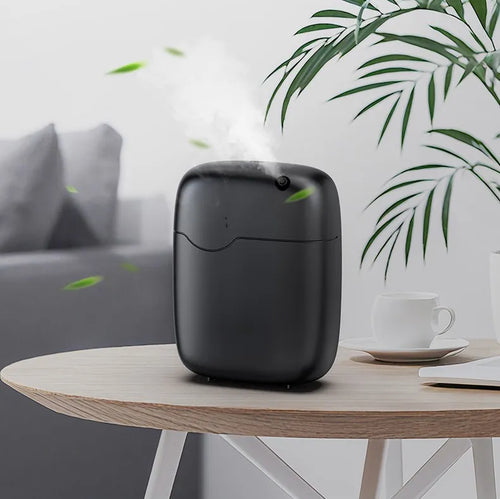
Vaayu: waterless cold-air nebulisation · no water, no heat, no dampness · under 38 dB 1000 m³ (≈2,000–3,000 sq ft) · 400ml tank ≈75 days · app + 1h/4h/8h/24h timers · key-lock 0.9 kg and smaller than a shoebox — one machine can serve a whole portfolio of listings


Founder Diaries · The Business Case · Branding, Repeat Listings & Economics
By Sonal Sahani · ISIPCA Versailles 11 min read Updated September 2026
There are two questions inside this one, and they cost about forty times different amounts. Choosing a signature means picking one existing composition and refusing to change it for years. Commissioning a signature means paying a perfumer to create something that exists nowhere else, which is a development project with minimum quantities and a lead time measured in months. Almost everybody asking this wants the first and is picturing the second, and the gap between them is the reason this page exists. The first is a ₹299 bottle and a decision you then have to keep. The second is a business case most brokerages will never honestly clear.
Quick answers — read this first
Choosing a signature: pick one existing composition, run it in your office and in the listings you prepare, and do not change it. A 15ml bottle is ₹299. This is the right answer for nearly every brokerage in the country.

Commissioning a bespoke scent: a perfumer creates something exclusive to your firm. Real development time, real minimum quantities, real cost, and it only makes sense at a scale most firms never reach. SOSA does not offer this service.

What a signature needs to work: repetition, consistency, then time — in that order. There is no shortcut past the third one.

What it does not do: it does not communicate a message about your firm, and most people will never consciously notice it. Both of those are fine. Neither is a failure.
The short answer
Short answer: develop a signature in the sense of choosing one and holding it, which costs ₹299 and some discipline. Do not commission a bespoke composition unless your firm is at a scale where minimum quantities and months of development are a rounding error, which for a brokerage is a much higher bar than it sounds.
The pick: the Ritz-Carlton-inspired Quiet Luxury (white tea, bergamot, cedar, ₹299) as the default signature; the Westin-inspired White Tea Serenity (₹299) if your rooms are small; the 1 Hotels-inspired Forest Suite (cedarwood, vetiver, green leaves, ₹299) if your office runs warm. Then run it through a Vaayu at ₹11,999 so the level is identical every day without anybody managing it.
Shop: Hotel Collection at ₹299 for 15ml, ₹999 for 100ml and ₹1,799 for 300ml; the Pack of 7 at 15ml is ₹1,799 against ₹2,093 singly. The Vaayu is ₹11,999 for up to 1000 m³ with app scheduling, 1h/4h/8h/24h timers, under-38 dB running, auto-stop and a key-lock. The Sukoon is ₹1,899 for one room. Free shipping above ₹499.
Straight answer
Should a luxury realtor develop their own signature scent?
1. Decide which of the two things you actually mean. Choosing a signature is selecting one existing composition and using only that one. Commissioning a signature is paying a perfumer to make something exclusive to you. The first is a shopping decision, the second is a manufacturing project, and conflating them is how firms end up with a quotation they did not expect.

2. For almost everybody, choose rather than commission. A 15ml bottle at ₹299 and the refusal to keep trying new ones gets you every practical benefit a signature has. Nothing about recognition requires exclusivity — it requires sameness.

3. Understand what commissioning involves before you enquire. A brief, several submissions over months, revisions, then a minimum production quantity measured in litres rather than millilitres, plus bottling, labelling and storage of a fragrance nobody else will ever buy. It is a real undertaking and it is priced like one.

4. Then hold it, which is the part that fails. Repetition first, consistency second, time third. A composition changed twice in a year is not a signature, it is a preference, and nobody will ever connect it to you.

5. Run it through something that does not depend on anybody remembering. A Vaayu at ₹11,999 holds an identical level on a schedule across up to 1000 m³, waterless and under 38 dB. A Sukoon at ₹1,899 does one room. The machine is what makes consistency an arrangement rather than a resolution.

6. And know what it will not do. It will not say anything about your firm's values, and most clients will never consciously register it. A signature is a background that becomes familiar, not a message that gets read.

A portion of every order supports girl-child education through Nanhi Kali.

TL;DR: choose a signature rather than commission one. Picking a single existing composition at ₹299 and refusing to change it for three years gets you everything recognition actually depends on; a bespoke development means months, minimum quantities in litres and a scale most brokerages never reach. A signature works through repetition, consistency and time, in that order, and it communicates nothing — which is fine.
The Ritz-Carlton-inspired · Quiet Luxury
What choosing a signature actually costs
The Ritz-Carlton-inspired · Quiet Luxury ₹299 / 15ml
White tea, bergamot and cedar — and the point of putting it here is the price. Choosing a signature is a ₹299 decision followed by three years of not changing your mind, and the ₹299 is emphatically the easy half. Nothing about a signature requires the composition to be unique to you; it requires it to be the same one every time, in your office and in the listings you prepare, for long enough that repetition does the work. ₹299 for 15ml, ₹999 for 100ml and ₹1,799 for 300ml in the water-based bottles for ultrasonics; the Vaayu and Aangan run their own undiluted oil and arrive with four hotel-inspired scents to choose between.

Two questions wearing one sentence

I get this question by email perhaps twice a month and the first thing I do is ask which version of it is being asked, because the two answers point in opposite directions. One version is a choice between compositions that already exist, and its whole difficulty is behavioural: can you use one bottle for three years without getting bored of it. The other version is a procurement decision about having a fragrance manufactured to your own brief, and its whole difficulty is arithmetic. A firm that asks the first question and gets an answer to the second concludes that signature scents are a thing for developers with marketing departments, and drops an idea that would have cost them ₹299. A firm that asks the second and gets an answer to the first ends up mildly insulted. So the distinction is not pedantry. It is the page.

1
CHOOSING
One composition, held — and the ₹299 is the easy part
Take the first version properly, because it is the one that applies to you. Choosing a signature means that your office, your meeting room and the listings you personally prepare all run the same composition, at appropriate levels, indefinitely — and that you stop shopping. That is genuinely the whole specification. It does not require the scent to be unique, it does not require anybody's permission, and it does not require a budget line worth discussing. A 15ml bottle of the Ritz-Carlton-inspired Quiet Luxury is ₹299; three of them across a year is less than most firms spend on a single set of printed brochures. What it does require is a temperament that most people in this business do not naturally have, because a realtor's instinct is to keep improving the presentation and a signature is improved by being left alone. I have watched firms change composition in March because a client mentioned liking something else, again in July because a new range arrived, and again in November because the office had stopped being able to smell the old one — which is not a fault in the scent, it is a fault in the nose, and it is the single most common reason a signature gets abandoned three weeks before it would have started working. Pick the least interesting composition you can tolerate. Interesting is what you get tired of.
2
COMMISSIONING
A brief, months of submissions, and a minimum measured in litres
Now the second version, described honestly rather than dangled. Having a fragrance created for your firm is a development project: you write or are helped to write a brief, a perfumer produces submissions, you react to them, they are revised, and the whole cycle repeats — in months rather than weeks, because each round has to be made, shipped and lived with before anybody can sensibly judge it. Then, when you have something you like, it has to be manufactured, and this is where most enquiries end. Fragrance is made in batches, and the minimum batch is set by what is worth a manufacturer's time — a quantity measured in litres rather than in the millilitres a brokerage actually uses. A firm running two or three diffusers is consuming a very small volume of oil a year, so a minimum order is not a supply, it is a decade of supply, bought at once, stored somewhere, and paid for before the first bottle is opened. Add bottling, labelling, and the fact that a bespoke composition has no resale and no alternative use if you decide in year two that you got the brief wrong. I am not going to print a figure, because it varies with the brief, the materials, the perfumer and the quantity, and a made-up number would be worse than none. What I will say plainly is the shape of it: this is a decision that makes sense for an organisation with many premises and a marketing budget that already contains projects like it, and it does not make sense for a brokerage with an office and a portfolio. SOSA does not offer this service, which means I have nothing to gain from telling you either way.
3
WHAT IT NEEDS
Repetition, consistency, time — and the things it will not do
Then the mechanism, which is worth understanding because it explains why exclusivity is beside the point. A scent becomes yours in somebody's mind because they met it in your context more than once and did not meet it anywhere else that mattered. Repetition is the active ingredient; consistency is what makes repetition possible; time is the cost. Note the order. Repetition comes first because two encounters do almost nothing and eight do a great deal. Consistency comes second because a composition that varies is not being repeated at all. Time comes third because it is the one input you cannot buy more of, and it is measured in transactions rather than in weeks — a client who signs in six months has met your office perhaps five times, and that is a small number to build anything on. Which leads to the two disappointments I would rather you have now. First, a signature does not communicate a message. It cannot say that your firm is discreet, or established, or good with international buyers; scent carries familiarity, not semantics, and anybody selling you a fragrance that expresses your brand values is selling you a story about a molecule. Second, most people will never consciously notice it. They will not remark on it, they will not ask, and if you ask them afterwards they will not be able to describe it. That is not the signature failing. That is what a background is, and the alternative — a fragrance clients can describe in the car — is the failure state, not the goal.
The test I would apply before spending anything at all on this: can you name the composition your office has run for the last twelve months, and has it been the same one throughout. If the answer is no, your problem is not which scent to develop. It is that you have not yet held one.

Choosing against commissioning, line by line

The two versions of the question set side by side on the things that actually differ. The last column is the one to read first — it is who each version genuinely suits, rather than who could be persuaded into it. I have left the cost of a bespoke development as a range of magnitude rather than a number, because any specific figure would be invented.

Two different projects
Choosing a signature against commissioning one
Choosing an existing composition Commissioning a bespoke scent Who it suits
What you decide ★ Which of a finished set you will use for years A brief, then several rounds of submissions and revisions Choosing suits essentially every brokerage. Start here and stay here
Lead time The delivery time of a ₹299 bottle Months, because each submission has to be made, sent and lived with Anybody with a listing to prepare this quarter is choosing, not commissioning
Minimum quantity 15ml, which is weeks of a small machine A production batch measured in litres, not millilitres A firm consuming litres a year. A brokerage with two machines is not that firm
Exclusivity None. Somebody else may run the same composition Genuine — it exists nowhere else Exclusivity matters to a developer with a hundred premises and to almost nobody else
What makes it work Repetition and refusing to change it Repetition and refusing to change it. Identical The mechanism does not care whether the scent is unique, which is the whole point
If you change your mind ₹299 spent, a rinsed tank, move on A batch with no resale value and no alternative use The asymmetry of the two mistakes is the real argument
Where SOSA sits A finished range of seven, from ₹299 Not offered. We do not do bespoke development Said plainly so you know what this page is and is not selling
Shop this guide
A signature, in three products
The SOSA principle
A signature is not made of a scent. It is made of the number of times a scent has been met in the same place. Which means the expensive half of the project is not the bottle — it is three years of not changing your mind.
₹299 buys the composition. Nothing on the market buys the repetition, and the repetition is the part that does the work.

Repetition, consistency, time — and what a signature does not do

Start with what to pick, because the brief for a signature is narrower than most people expect and it is not the brief for a scent you love. You are choosing something that has to be tolerable on its two hundredth exposure, not impressive on its first, and those two requirements pull in opposite directions. The Ritz-Carlton-inspired Quiet Luxury at ₹299 — white tea, bergamot and cedar — is the default for exactly that reason: cool, dry, faintly citric, with no material sticking out of it that anybody can form an opinion about. The Westin-inspired White Tea Serenity at ₹299 is the lightest of the seven and suits a small office or a firm whose clients sit rather than walk. The 1 Hotels-inspired Forest Suite at ₹299 — cedarwood, vetiver and green leaves — is the driest, and it is the one I would choose for a warm office or a floor above a restaurant. What I would avoid as a signature is anything heavily floral or anything a client might recognise as a specific perfume, because a firm whose office smells like a well-known fragrance has borrowed somebody's personality by accident. Buy the 15ml at ₹299 before the 300ml 300ml refill at ₹1,799; the small bottle is a decision and the large one is a supply, and committing to a supply before you have lived with the decision is the wrong order.

Then the machinery of consistency, which is where a signature is actually won or lost. Consistency cannot rest on anybody remembering to do something, because in a working brokerage it will not survive a busy fortnight. That is the whole argument for a scheduled machine over a bottle somebody sprays or a reed somebody replaces. A Vaayu at ₹11,999 covers up to 1000 m³, holds an intensity setting you chose once, and runs on Bluetooth scheduling with 1h/4h/8h/24h timers, so the office is at the same level at nine on a Tuesday in February as it is at nine on a Thursday in September, without a single person on the team having a task about it. It is waterless cold-air nebulisation, so nothing damp reaches paper or drawings, it runs under 38 dB, it has auto-stop and a key-lock, and at 0.9 kg it goes into a car boot when you want the same composition in a listing. If your office is genuinely one room of 270 to 320 sq ft, the Sukoon at ₹1,899 is the honest machine and it includes three 15ml Hotel Collection scents — but it is an ultrasonic, so it adds 30 to 50 ml of water an hour to the air, which is a consideration in a sealed cabin in August. The Aangan at ₹25,999 covers up to 3,000 m³ and belongs in a sales gallery or a clubhouse, not in a brokerage office, and I would rather say so than sell one.

Then the three things that will make you want to abandon this, so that you recognise them when they arrive. The first is your own nose. Within a fortnight you will not be able to smell your own office, because a nose reports change and discards constants, and the instinct that produces is to turn the machine up or to change the bottle. Resist both. Ask two people who have walked in from outside, ask them to be truthful rather than polite, and act on their answer instead of yours. The second is the anniversary feeling — the sense at about month nine that a scent you have run all year is stale and the firm needs something new. It is stale to you and to nobody else; a client who has visited three times has not had enough exposures for staleness to be possible. The third is a compliment, which sounds like success and is usually the warning. If clients regularly mention the fragrance, the level is too high — a signature is supposed to be the condition of the room, not an item in it. Turn it down and the compliments stop, which is the correct outcome. And underneath all three, the principle this whole cluster runs on and that a branding page has no exemption from: a scent in a property you are showing should leave the buyer noticing the property. A signature is a discipline about your own premises. It is never a reason to make a listing smell of you.

Exclusivity is what people think a signature is made of. Repetition is what it is actually made of, and repetition is free.
— Sonal Sahani, SOSA

The SOSA edit

In buying order for a firm deciding to hold one composition rather than commission one. The last row is the service this page has been asked about and that we do not provide, printed rather than implied so that nobody enquires and is disappointed.

The SOSA edit
Choosing and holding a signature, in buying order
Buy What it is When it earns its place Price
1. One 15ml bottle The Ritz-Carlton-inspired Quiet Luxury — white tea, bergamot and cedar, the default signature First, and then for three years. Interesting is what you get tired of ₹299
2. Vaayu Waterless, up to 1000 m³, app scheduling, 1h/4h/8h/24h timers, under 38 dB, key-lock, 0.9 kg As soon as consistency has to survive a busy fortnight without anybody remembering it ₹11,999
3. Sukoon 500ml ultrasonic for 270–320 sq ft, three 15ml scents included, steady/2H/4H timers If your office is one room. Water-based, so think twice in a sealed cabin in monsoon ₹1,899
4. 300ml refill The supply size, at about ₹6 per millilitre against roughly ₹20 at 15ml Second, never first — once the composition has stopped being a decision ₹1,799
5. Pack of 7 at 15ml All seven at ₹1,799 against ₹2,093 bought singly, a saving of ₹294 Only if you genuinely cannot choose. Buying seven is the opposite of a signature ₹1,799
Not offered: bespoke development SOSA does not create house-exclusive compositions for brokerages Printed rather than implied. There is no brief-and-submission process here to enquire about
Honest notes for buyers: fragrance is the last step in preparing a property, never the first, and it must never be used to cover a defect. Damp, a leak, drains, smoke or anything structural is a material fact about a property: find it, fix it or disclose it. Scent a listing that is genuinely sound. On the machines: the Vaayu at ₹11,999 is waterless cold-air nebulisation — no water, no heat and no dampness — covering up to 1000m³ or roughly 2,000–3,000 sq ft, with a 400ml tank lasting about 75 days, Bluetooth app control, 1h/4h/8h/24h timers, under-38dB running, auto-stop and a key-lock, at 0.9 kg and smaller than a shoebox, so one machine can serve a whole portfolio. The Aangan at ₹25,999 covers up to 3,000m³ for sales galleries and clubhouses. The ultrasonic Sukoon, Boond and Megh are water-based and add 30–50 ml of water an hour to the air, which makes them the wrong choice for a closed or humid vacant property. A reed diffuser needs 24–72 hours to establish, so it suits a listing shown over months rather than a viewing tomorrow. A candle must be attended and put out, which rules it out of an unoccupied property. SOSA does not make a room spray for the home; the sprays in the range are car perfumes. The Hotel Collection scents are SOSA's own interpretations inspired by the world's finest hotels; SOSA is an independent Indian fragrance house, not affiliated with or endorsed by any hotel brand. A portion of every order supports girl-child education through Nanhi Kali.
SOSA Vaayu · waterless, timed, portable
What we sell, and the service we do not offer
SOSA Vaayu · waterless, timed, portable ₹11,999
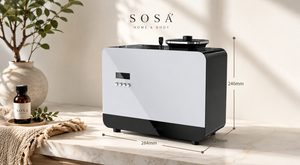
I should be direct about the boundary. SOSA does not run a bespoke development service for brokerages: there is no brief-and-submission process here, no house-exclusive composition, and this page is not a soft approach to selling you one. What exists is a finished range and a machine to run it through — waterless cold-air nebulisation with no water, no heat and no dampness, up to 1000 m³ or roughly 2,000 to 3,000 sq ft, a 400ml tank lasting about 75 days of continuous running, Bluetooth with 1h/4h/8h/24h scheduling, under 38 dB, auto-stop, a key-lock, 0.9 kg and smaller than a shoebox.
SS
ISIPCA
Versailles
A note from Sonal

I trained at ISIPCA and I have written briefs and sat through submissions, so I want to be careful not to make bespoke development sound either glamorous or trivial. It is neither. It is a long, unglamorous, iterative process in which most of the work is deciding what you actually meant by a word like clean, and most of the cost sits in a minimum quantity that has nothing to do with how much fragrance you will use. When a brokerage asks me about it I usually find that what they want is not a molecule nobody else has. It is for their clients to walk into their office and feel that somebody has been running the place carefully for a long time. Those are different projects, and only one of them needs a perfumer.

So my advice is unfashionable and it is what I would tell a friend. Buy one bottle at ₹299, put it on a machine that runs itself, and then be boring about it for three years. The firms whose offices I remember are not the ones with the most distinctive scent — they are the ones where the fourth visit smelled like the first. That is achievable this week, at a cost you will not notice, and it is the entire benefit anybody is really asking for when they use the word signature.

Everything is made and supported from Pune, and a part of every order funds girl-child education through Nanhi Kali. You get a space that smells like somewhere considered; a girl gets a classroom. That equation has always felt right to me.

Frequently asked questions

Should a luxury realtor develop their own signature scent?
Choose one rather than develop one. Picking a single existing composition — the Ritz-Carlton-inspired Quiet Luxury at ₹299 is the default — and holding it for years gives you everything a signature actually depends on. Commissioning a bespoke composition means months of development and a minimum production quantity in litres, which suits organisations far larger than a brokerage.
Does SOSA create a custom fragrance for a brokerage?
No. There is no bespoke development service here, no brief-and-submission process and no house-exclusive composition. What exists is a finished range of seven hotel-inspired scents from ₹299 and the machines to run them through. I would rather print that than have you enquire and be disappointed.
How long before a signature scent starts being recognised?
Longer than most people expect, and it is measured in encounters rather than months. A client who signs in half a year may have visited your office four or five times, which is a small number. The composition has to stay identical throughout, which is why changing it twice in a year means starting again at zero.
Will clients notice our signature scent?
Most will not consciously notice it, and that is the correct outcome. A scent that clients remark on is running too high and has become an item in the room rather than the condition of it. Turn it down. A background that nobody can describe is doing its job.
Can a signature scent express what our firm stands for?
No, and I would not let anybody sell you that. Scent carries familiarity, not meaning — it cannot say that a firm is discreet or established or good with international buyers. What it can do is be the same every time somebody walks in, which is a smaller claim and a true one.
One composition, held
₹299 buys the decisionthree years of keeping it does the rest
The Hotel Collection is ₹299 for 15ml, ₹999 for 100ml and ₹1,799 for 300ml; the Pack of 7 at 15ml is ₹1,799 against ₹2,093 bought singly. The Vaayu is ₹11,999 for up to 1000 m³ with Bluetooth scheduling, 1h/4h/8h/24h timers, under-38 dB running, auto-stop, a key-lock and four hotel-inspired scents included; the Sukoon is ₹1,899 for a single room. Free shipping above ₹499, and a portion of every order supports girl-child education through Nanhi Kali.
Shop the seven scents → See the Vaayu · ₹11,999
Continue the read
More from SOSA
Editorial standards & sources
About this guide: Written by Sonal Sahani, ISIPCA Versailles-trained founder and perfumer at SOSA Home & Body, on the difference between choosing a signature scent and commissioning one, what a bespoke fragrance development actually involves in development time and minimum quantity, why exclusivity is not the mechanism by which a signature works, and why repetition, consistency and time — in that order — are what a brokerage should actually be buying.

Facts verified August 2026: Product facts used in this guide. SOSA Vaayu ₹11,999: waterless cold-air nebulising diffuser, atomises undiluted fragrance oil to a dry residue-free nano-mist, coverage up to 1000m³ (approximately 2,000–3,000 sq ft), 400ml refillable tank lasting up to about 75 days per fill, Bluetooth app plus onboard control, 1h/4h/8h/24h timer scheduling, adjustable intensity, under 38 dB, DC 12V/1A at 5W, 165 × 80.5 × 215 mm and 0.9 kg, freestanding or wall/HVAC mounted, auto-stop and key-lock, CE, RoHS and SGS certified, supplied with four hotel-inspired fragrances. SOSA Aangan ₹25,999: HVAC-connected or standalone commercial nebulising diffuser, coverage up to 3,000m³ (roughly 8,000–10,000 sq ft), 800ml reservoir, metal body, programmable schedules, under 42 dB. Ultrasonic machines are water-based and consume 30–50 ml of water an hour: Sukoon ₹1,899 (500ml, 270–320 sq ft, 16–18 hours on low, 3–6 drops per tank, steady/2H/4H timers, three 15ml Hotel Collection scents included), Boond ₹899 (300ml), Megh ₹3,499 (6 litres). Hotel Collection water-based fragrance 15ml ₹299, 100ml ₹999, 300ml ₹1,799, Pack of 7 at 15ml ₹1,799 against ₹2,093 bought singly; the Vaayu and Aangan take their own undiluted oil rather than these water-based bottles. Reed diffusers (separate alcohol-free line) from ₹749, requiring 24–72 hours to reach their working level. Scented candles from ₹379, scenting a room in roughly 15–20 minutes but requiring attendance. Free shipping above ₹499. Timings: a nebulising diffuser reaches a working level within minutes and a stated viewing level well inside two hours. This guide makes no claim that fragrance affects a property's price, offer level or time on market; it is presentation, in the same category as photography, styling and lighting. Fragrance must never be used to conceal a material defect. SOSA is not affiliated with or endorsed by any hotel brand. Prices subject to change — see the live product pages.
ブログに戻る