
- The direct answer
- Why a reed's short reach is the design, not a defect
- The three questions that confirm the diagnosis
- Compare what changes reach and what does not
- Fixing this without breaking the zoning doctrine
- What to buy instead, and where it fits
- A note from Sonal
- Questions clinic owners ask about reach
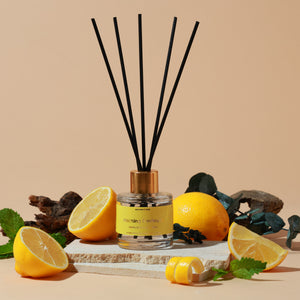
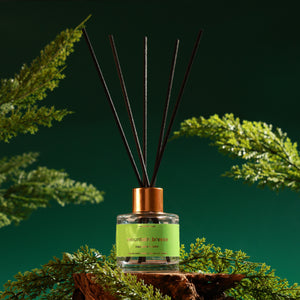
2. A different fragrance changes the smell, not the reach. Morning Freshness and Mountain Breeze evaporate through the identical capillary process as Evening Calm or Fresh Brew — switching which oil is in the reeds does nothing to the physics that limits how far any of them travels.
3. More reed bottles create more small zones, not one larger one. Adding a second or third reed extends coverage to wherever each bottle sits, but the gaps between them remain exactly as unscented as before — this multiplies close-range zones rather than solving the reach problem.
4. A reception noticed only up close is a reed working correctly, not a reed failing. The bottle-level intensity a nearby patient notices is the reed doing its job; the absence of that intensity across the rest of reception is the same mechanism doing its job too — both are the expected result of passive capillary diffusion.
5. An active diffusion method is the actual fix, because it moves scent using the room's own air rather than relying on evaporation alone. Vaayu's cold-air nebulising carries fragrance on the room's airflow rather than waiting for it to evaporate outward, which is the mechanism difference that produces reach a reed was never built to have.
The diagnosis is the diffusion method, not the oil — no fragrance swap or extra bottle changes a reed's passive, short-range physics, and an active method such as Vaayu is the honest fix for a reception that needs to be noticed further than arm's length.
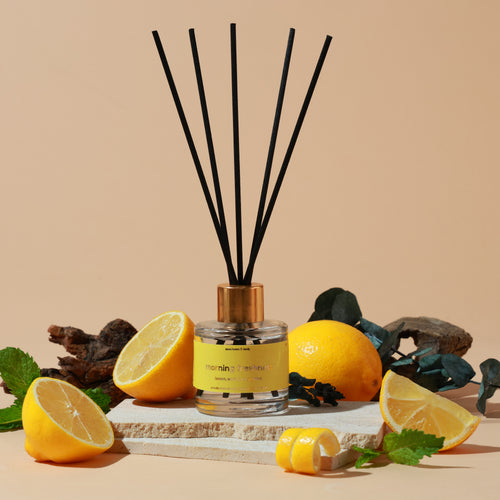
Why a reed's short reach is the design, not a defect
A reed diffuser has no fan, no pump and no moving part of any kind. Oil climbs six fibre reeds by capillary action and evaporates from their exposed surface into the surrounding air — that is the entire mechanism, and it has exactly one direction of travel: outward from the bottle, getting weaker with every additional foot of distance. There is nothing in that process that reaches across a reception the size most orthopaedic clinics have.
This is why 'barely noticed unless patients sit nearby' is not a symptom of anything gone wrong — it is a precise description of how a reed is supposed to behave. Concentration is always highest at the source and falls with distance, in every reed, with every fragrance, in every clinic that has ever used one. A reed creates a fragrant zone, not a fragranced room, and that is the mechanism's design, not a flaw specific to one bottle or one register.
The mistake this diagnosis corrects is assuming the fragrance itself is the variable that needs adjusting. It is not. Two reeds sitting side by side with different oils inside them will have identical reach, because reach is a function of the capillary mechanism, not of what is being diffused through it. Fixing a reach problem by changing the oil is solving for the wrong variable entirely.
The three questions that confirm the diagnosis
 Vaayu₹11,999If patients seated close to the reed notice it clearly and comfortably, the reed itself is functioning correctly — the complaint is specifically about the rest of reception, which is a reach question, not an intensity or fragrance-quality question.
Comparing what changes reach and what does not
Every row is a change a clinic might reasonably try, checked against whether it actually changes a reed's reach.
| Change tried | Does it change reach? | Why | What it costs |
| Swap the reed's fragrance | No | Every reed fragrance evaporates through the same capillary process, at the same rate of falloff with distance | ₹749–₹1,349, no reach gained |
| Add a second or third reed bottle | No, not in the way expected | Creates additional small zones rather than extending one — the gaps between bottles stay unscented | ₹749–₹1,349 per bottle |
| Move the existing reed to a more central spot | Marginally | Repositions where the strongest zone sits, but does not extend how far that zone reaches | No cost |
| Switch to an active diffusion method (Vaayu) | Yes | Moves scent using the room's own airflow rather than relying on evaporation outward from a fixed point — the actual mechanism difference that produces real reach | ₹11,999 |
| Reach is a property of the diffusion mechanism, not of the fragrance inside it — this is true for every SOSA reed register without exception. | |||
 Vaayu · active diffusion, real reach₹11,999Shop →
 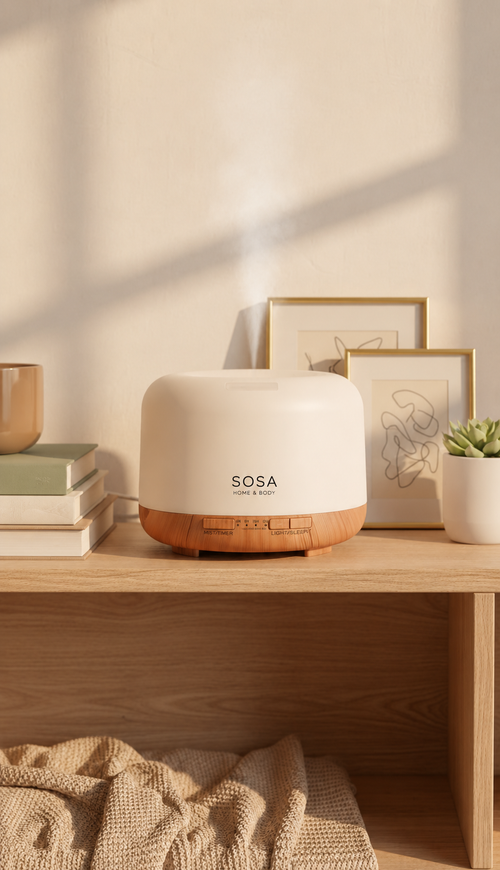 Sukoon · moved air, one zone₹1,899Shop → Morning Freshness reed · proportionate at close range₹749Shop →
Fixing this without breaking the zoning doctrine
Switching to an active diffusion method solves the reach problem, but it does not change this cluster's zoning doctrine — reception and the corridor still get scented, and consultation and treatment rooms still stay unscented, regardless of which mechanism is doing the diffusing. A wider reach in reception is not a reason to extend scent into rooms that were never meant to carry it.
Set intensity carefully once reach improves, because a method that actually fills a reception evenly will be noticed by every patient in it, not just the ones seated nearest the source — which is a different calibration question from the one a reed ever presented. Low and steady remains the right target; it simply now has to hold across the whole room rather than just the seats closest to the bottle.
Where the reception genuinely is small enough that a reed's close-range reach already covers the whole space, this diagnosis does not apply, and no mechanism change is needed — the honest first step is always to confirm whether the complaint is really about reach across a larger area, or about a reception small enough that the existing reed should already be doing the job.
What to buy instead, and where it fits
Every route below is matched to how much of the reception actually needs to be reached, once the mechanism, not the fragrance, is confirmed as the problem.
| Route | Best suited to | Why | What it costs |
| Vaayu, wall or duct mounted | A reception noticed only by patients seated near the current reed | Active cold-air diffusion moves scent through the room's own airflow, producing reach a reed cannot | ₹11,999 |
| Sukoon, placed centrally | A smaller, self-contained reception where full-room reach is still needed but at a lower cost | Ultrasonic mist moves air across one zone, a genuine step up in reach from a reed | ₹1,899 |
| Reed, left in place | A reception small enough that its current close-range reach already covers the seating | No mechanism change needed if the space genuinely matches the reed's design reach | ₹749–₹1,349 |
| Avoid: swapping the reed's fragrance to fix a reach complaint | Any reception with this exact complaint | Changes what is smelled up close, not how far it travels | — |
| Avoid: adding a second or third reed bottle to fix a reach complaint | Any reception with this exact complaint | Creates more small zones rather than one larger one | — |
I get this exact complaint often enough that I now ask one question before anything else: does the reed smell right to someone sitting right next to it? Almost always the answer is yes — which tells me immediately that the fragrance is fine and the mechanism is the actual subject of the conversation.
Clinics have tried, before calling me, nearly every fragrance-level fix available: a different register, a second bottle, moving the existing one to a more central table. None of it changes the reach, because none of it changes the fact that a reed relies entirely on evaporation with no air movement behind it. I would rather explain that mechanism plainly than sell a second reed bottle that will not solve the problem either.
The clinics that end up satisfied are the ones willing to accept that the diagnosis is a mechanism change, not a fragrance change — moving to an active method is a bigger decision than buying another bottle, but it is the one that actually addresses what they described to me in the first place.
Questions clinic owners ask about reach
- Why Are Multiple Reed Diffusers Still Barely Noticeable Across My Large Clinic? — the same mechanism diagnosis applied to several reed bottles at once.
- When Does an Orthopaedic Clinic Need an Active Waterless Scent Machine Like SOSA Vaayu? — the layout signals that point toward the mechanism change this post recommends.
- My Reed Diffuser Works in the Doctor's Cabin but Not the Waiting Area — Why? — the same physics explained through a different room-pair comparison.
- Reed Diffuser vs Automatic Scent Machine for an Orthopaedic Waiting Room — the fuller comparison between the two mechanisms behind this diagnosis.
- Brand: the SOSA founder story.
SOSA products & prices (verified September 2026): Reed diffusers 50ml ₹749–₹849 (to 150 sq ft, 6–8 weeks at six reeds) · 130ml ₹1,249–₹1,349 (above 150 sq ft, 14–18 weeks) · reed refill 300ml ₹2,399. Ultrasonic: Boond ₹899 (~150 sq ft) · Sukoon ₹1,899 (270–320 sq ft, ships with three 15ml Hotel Collection fragrances) · Megh ₹3,499 (6L tank, ~100 hrs runtime, ~215 sq ft — a runtime machine, not a coverage upgrade). Waterless cold-air: Safar ₹3,999 (no published coverage figure) · Vaayu ₹11,999 (up to 1000 m³, roughly 2,000–3,000 sq ft; 400ml tank lasting about 90+ days; app and onboard control, 1h/4h/8h/24h run windows, adjustable intensity, key-lock, under 38 dB, freestanding or wall/HVAC mount, 5W, CE/RoHS/SGS) · Aangan ₹25,999 (8,000–10,000 sq ft). Hotel Collection water-based fragrance 15ml ₹299 · 100ml ₹999 · 300ml ₹1,799 is for ultrasonic machines; reed oil and Hotel Collection are not interchangeable. Reed diffusers are alcohol-free, phthalate-free, paraben-free, IFRA-compliant and low VOC, handmade in small batches in Pune. Every purchase funds a girl's education through Nanhi Kali. Prices and availability subject to change — see the live product pages.