
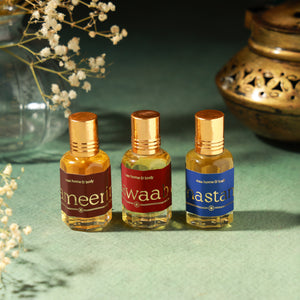
- The direct answer
- Why there's no cedar here, and what actually stands in for it
- The three things that decide whether Nawaab reads dry enough for you
- How the four attars compare on dryness
- How to wear Nawaab if dryness is the whole point
- What to buy, and what this substitution doesn't pretend to be
- A note from Sonal
- Questions from cedar-leaning readers
2. The closest real match is Nawaab, and the reason is sandalwood, not a coincidence. Nawaab is built on white royal oud, Mysore sandalwood and Kashmir saffron. Sandalwood and cedar are different wood families — sandalwood is creamier and rounder even at its driest — but Mysore sandalwood is the driest, least sweet expression of wood this range has, which is the quality doing the actual work when a cedar lover reaches for it.
3. What carries over is dryness and restraint, not the specific cedar smell itself. Cedar's pencil-shaving sharpness and sandalwood's rounded dryness are not the same event on skin. What they share is an absence of sweetness and an absence of floral softness — the two things a cedar lover is usually avoiding, whatever the exact wood turns out to be.
4. The saffron in Nawaab is doing something cedar never would, and it's worth knowing before you buy. Kashmir saffron adds a warm, faintly spiced thread that a pure dry-wood lover should expect and weigh — it keeps Nawaab from reading as flat or one-note, but it also means Nawaab is not a wood in isolation the way a single-note cedar oil would be.
5. Ameeri and Mastani are not the answer here, even though both are woody-adjacent. Both build their woods under rose — Taif rose over sandalwood in Ameeri, Damask rose and jasmine over oudh in Mastani. A reader chasing cedar's dryness should expect the floral layer to be the first thing they notice in either, not the last.
There is no cedar in this range, and Nawaab doesn't pretend otherwise — it earns the recommendation on dryness and restraint, in a different wood family, honestly labelled as such.

Why there's no cedar here, and what actually stands in for it
Cedar in Western perfumery is usually cedrol or a synthetic cedar isolate — a specific, sharp, almost pencil-case dryness that reads as a wood on its own, without needing anything else in the formula to carry it. Attar perfumery, in India and across the Gulf, was never built around that ingredient. It was built around sandalwood, oud, rose and saffron — a different palette entirely, developed for oil rather than alcohol, and shaped by what those materials do when they sit on skin for hours instead of evaporating off it in minutes. Neither tradition is a lesser version of the other; they simply never solved for the same note.
That's the honest reason SOSA's range has no cedar attar, and it's worth saying in exactly those words rather than quietly pointing at the driest bottle and hoping the reader doesn't ask. What the range does have, in Nawaab, is Mysore sandalwood — a wood that shares cedar's core appeal of dryness and restraint without sharing its molecule. Mysore sandalwood is rounder and creamier at the edges even at its most restrained; it never goes as flat and pencil-sharp as cedrol does. If that's the specific texture you love about cedar, Nawaab will get you close on the emotional register and not on the literal smell — and it's more honest to say that plainly than to let a customer assume more.
The saffron matters here too, and it's worth being upfront about it rather than letting it surprise anyone after the bottle arrives. Kashmir saffron threads a warm, faintly spiced note through Nawaab that a single-note cedar oil simply doesn't have. It keeps the attar from reading as one flat plane of wood, which most readers actually prefer once they wear it — but a purist chasing cedar in complete isolation should know going in that Nawaab is never going to be that, and no amount of careful marketing changes what's actually in the bottle.
The three things that decide whether Nawaab reads dry enough for you
 Nawaab₹399There is no vanilla, no amber-sweetness and no fruit anywhere in Nawaab's formula — the sandalwood and oud sit dry from the first minute to the last, which is the single quality most cedar lovers are actually protecting when they say they want a dry wood.
How the four attars compare on dryness
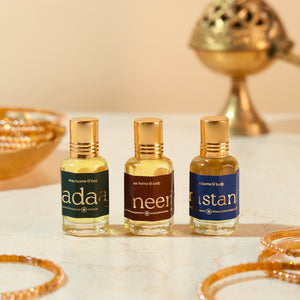
None of the four is cedar. What varies sharply between them is how close each one sits to the dry, non-sweet register a cedar lover is actually asking for.
| Attar | Lead notes | Reads dry or floral first? | Verdict for a cedar lover |
| Nawaab | White royal oud, Mysore sandalwood, Kashmir saffron | Dry, with a warm saffron thread | Closest honest match — recommended |
| Ameeri | Taif rose, Indian sandalwood, Persian saffron, soft oudh | Floral first, wood underneath | Only if rose is acceptable alongside the wood |
| Mastani | Night-blooming jasmine, Damask rose, oudh | Floral and resinous, not dry | Not a match for a dry-wood preference |
| Adaa | Bergamot, green cardamom, jasmine sambac, white musk | Fresh and green, not woody at all | Wrong family entirely for this reader |
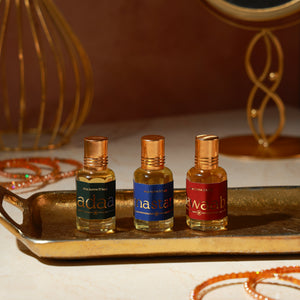
| Attar Trio | Ameeri, Nawaab and Mastani together, one size each | Lets you compare directly | Sensible only if dryness alone hasn't fully sold you yet |
Nawaab · Mysore sandalwood, saffron, white oud₹399Shop → 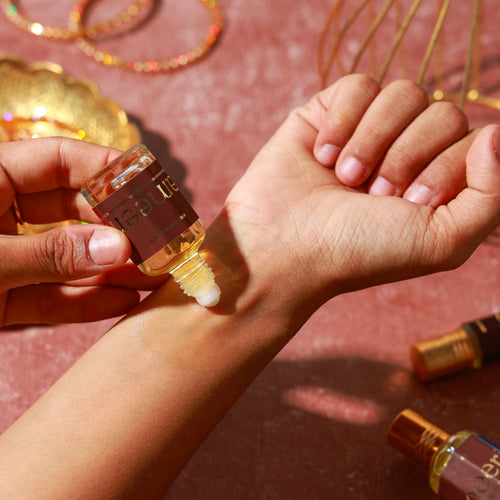 Ameeri · sandalwood under Taif rose₹385Shop →
 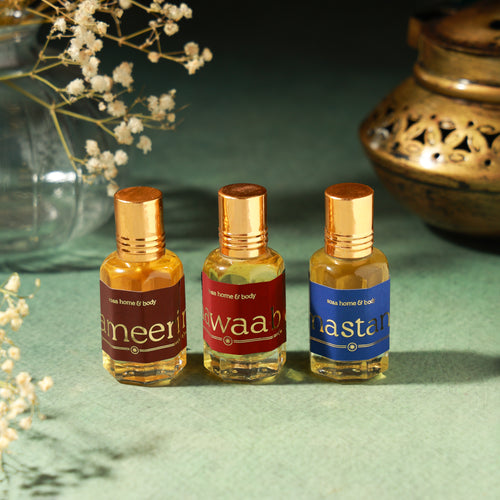 Trio · all three woody-leaning attars₹1,055Shop →
How to wear Nawaab if dryness is the whole point
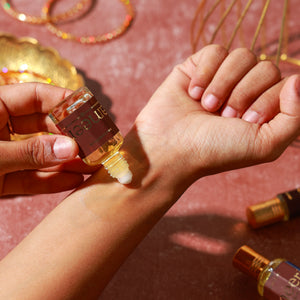
Start with a single pass on one pulse point, not two or three, especially on a first wear. Oil concentrates whatever you apply exactly where you apply it, so a light first application lets you judge the saffron and the oud on their own terms before deciding how much wood you actually want on a given day.
If the saffron reads warmer than you'd like once it's settled, apply to a single wrist rather than both, and let the other wrist carry nothing — this keeps the dry-wood character dominant without doubling the warmth alongside it. Reapplying later in the day, rather than applying more at once, keeps the register closer to what you tested first.
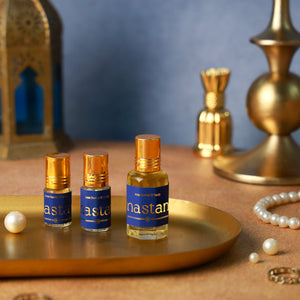
A 3 ml bottle at ₹399 is the right way to find out whether Mysore sandalwood satisfies the specific craving cedar leaves you with, before spending on a 6 ml or 12 ml. This is a genuinely different wood than the one you're used to, and it deserves a proper trial rather than a guess at full size.
What to buy, and what this substitution doesn't pretend to be
Matched first to how strictly you need the wood to stay dry, and second to how you feel about saffron and oud sharing the frame with it.
| Route | Best for | Why | What it costs |
| Nawaab, 3 ml | A first trial of the closest match to cedar's dryness | Mysore sandalwood and Kashmir saffron, with no sweetness anywhere in the formula | ₹399 |
| Nawaab, 6 ml or 12 ml | Once the 3 ml has confirmed the saffron and oud work for you | The same dry register, sized for daily use rather than a trial | ₹699 / ₹1,199 |
| Ameeri, 3 ml | A reader who can accept rose alongside sandalwood | Softer and rounder than Nawaab, still built on real sandalwood underneath the rose | ₹385 |
| Attar Trio, 3 ml set | Comparing Nawaab against the range's other woody-leaning options directly | One size each of Ameeri, Nawaab and Mastani, side by side | ₹1,055 |
| Skip entirely | A reader who wants cedar and only cedar, with nothing else in the formula | No attar in this range isolates a single wood note the way a cedar oil does — that's worth knowing before any purchase | No purchase |
I get this question more than most people would expect, usually from someone holding a cedar-heavy bottle and asking, almost apologetically, whether attar has anything like it. My honest answer is no, not literally — and I'd rather say that in the first sentence than let someone spend on Nawaab expecting cedar and feel misled when what arrives is sandalwood and saffron instead.
What I can say with confidence is that Nawaab earns its place in this conversation on its own terms. Mysore sandalwood, dried right down with Kashmir saffron and a light hand of white royal oud, is the least sweet, least floral thing in our entire range. If what you love about cedar is the absence of sugar and softness rather than the specific molecule, Nawaab will make sense to you within the first few minutes on skin.
I trained in a tradition that treats sandalwood and cedar as cousins, not twins — related by the dryness they share, distinct in everything else. I'd rather hand you that distinction honestly than build a whole recommendation on pretending they're the same wood, because you'll know within a week of wearing it whether I told you the truth.
Questions from cedar-leaning readers
- I Love Woody Perfumes — Which Attar Should I Buy? — the wider entry point this post narrows down for a specifically dry, cedar-leaning taste.
- Which Perfume Oil Should I Try If Sandalwood Is My Favourite Perfume Note? — a closer look at the same Mysore sandalwood this post leans on.
- I Love Dry Woody Perfumes but Hate Oud — Which Attar Would Suit Me? — the honest limit of Nawaab's dryness, for a reader who wants the wood without the oud.
- Which SOSA Attar Should a Woody-Fragrance Lover Try? — this series's full verdict across all four attars.
- Brand: the SOSA founder story.
SOSA attars & prices (verified September 2026): All four are alcohol-free roll-on attars in 3 ml, 6 ml and 12 ml. Adaa (bergamot, green cardamom, jasmine sambac, white musk) ₹379 · ₹669 · ₹1,149. Ameeri (Taif rose, Indian sandalwood, Persian saffron, soft oudh) ₹385 · ₹679 · ₹1,165. Mastani (night-blooming jasmine, Damask rose, oudh) ₹389 · ₹685 · ₹1,179. Nawaab (white royal oud, Mysore sandalwood, Kashmir saffron) ₹399 · ₹699 · ₹1,199. The Ameeri + Nawaab + Mastani trio is ₹1,055 · ₹1,859 · ₹3,189. Prices are the live store prices at the time of writing.