
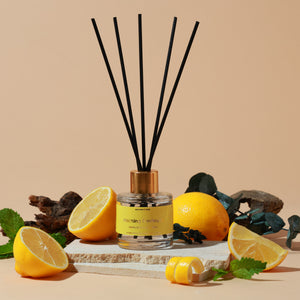
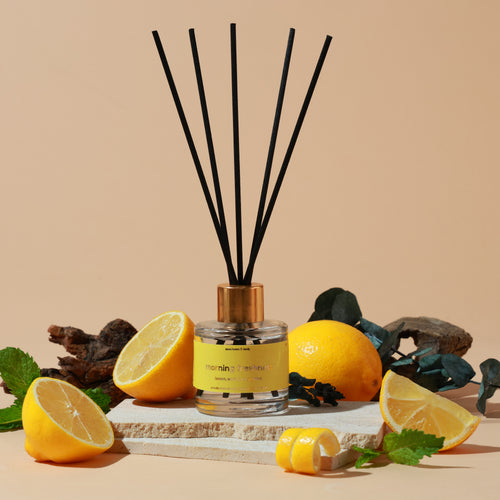
 Morning Freshness ₹1,249
 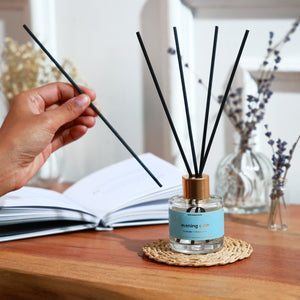 Evening Calm ₹799
 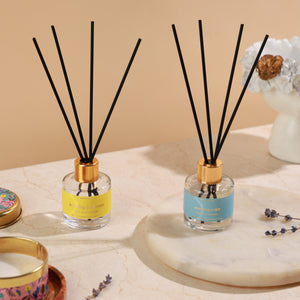 Day & Night duo ₹1,498
  Sukoon ₹1,899
 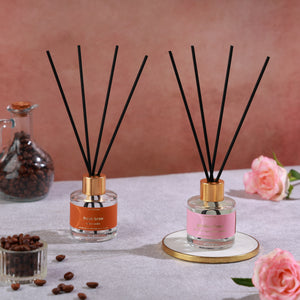 Oil refill 300ml ₹2,399
Why: a 2BHK is not one room. Count closed air spaces — the doors you shut, plus one for the open zone. Most 2BHKs have four or five. Output per bottle is fixed, so the only way to raise the total in a flat is another source. A Sukoon at ₹1,899 raises it in one room and leaves ₹101.
Cost per scented room-week: ₹1,998 buys 14–18 weeks in one room plus 6–8 in another — 20 to 26 room-weeks, which is roughly ₹77–₹100 each. The Day & Night duo at ₹1,498 gives 12–16 room-weeks, roughly ₹94–₹125.
Buy the Sukoon later, and for a different reason. The trigger for a machine is control — scent on demand, timed, off when you want it — never strength, and never coverage across a whole flat. If you want the flat to smell of something while you are out, reeds are already the right answer.
2. The reason is that your flat is four or five air spaces, not one. Count the doors you close, then add one for the open zone. In a typical 2BHK that is bedroom one, bedroom two, one or two bathrooms and the living-dining-kitchen zone. Output per bottle is fixed and a machine's coverage is fixed too — the only way to raise the total fragrance in a flat is to add a source. ₹2,000 buys two sources, or one machine.
3. But you only need to serve two of those spaces today. Buy per place you stop moving. The open zone is where you and anyone visiting spend waking hours and where the front door opens; the main bedroom is where you spend the other eight. The second bedroom, if it is genuinely unused, is money evaporating behind a closed door, and the bathrooms can wait for a ₹749 bottle at two reeds later in the year.
4. The Sukoon at ₹1,899 is not a worse product; it is a different job. 270–320 sq ft, 500ml, 16–18 hours on low, remote, steady/2H/4H timers, three 15ml Hotel Collection scents in the box. Every one of those specifications is about one room and about control. None of them is about a 2BHK. It would leave you ₹101 and a bedroom that smells of nothing.
5. Size buys duration, not reach. At six reeds a 130ml projects exactly as far as a 50ml — it simply keeps doing it for 14–18 weeks instead of 6–8. That is why the 130ml goes in the room you will never want to think about, and the smaller bottle goes where you will happily change it more often.
6. Dose per room, then check adjacency. Six reeds in the open zone, three or four in a closed bedroom because a shut room accumulates, and two in a bathroom whenever you get to one. If you use different scents in adjoining spaces they must sit within one step on the axis bright → dry → soft → full → warm; a door that genuinely closes buys one more step. Using one scent throughout, as I have recommended, sidesteps the question entirely.
7. Cost per scented room-week is the number that compares them. ₹1,998 buys 14–18 weeks in one room and 6–8 in another: 20 to 26 room-weeks, or roughly ₹77–₹100 each. A Day & Night duo at ₹1,498 buys 12–16 room-weeks, roughly ₹94–₹125. I will not quote a per-week figure for the Sukoon, because how much fragrance it uses depends entirely on how many hours a day you run it, and inventing that number would be dishonest.
8. Buy the machine later, when the trigger is control. If a year from now you want the living room scented for two hours before people arrive and neutral the rest of the time, that is precisely what a Sukoon is for and ₹1,899 is well spent. Wanting a flat that smells of something while you are out is the opposite requirement, and you already own the right tool for it.
Everything is composed and handmade in small batches in Pune, tested through 45°C summer heat and 85% monsoon humidity, and a portion of every order supports girl-child education through Nanhi Kali.
Part one — the method, in five steps
Every honest answer in home fragrance runs through the same five questions in the same order, and skipping any of them is how people end up with three bottles in the wrong rooms or a machine in a flat that needed a bottle. Count the closed air spaces. Choose the format. Set the dose. Check adjacency. Then compare cost per scented week. Notice that price appears last. Almost every buying mistake I see comes from starting there.
It also explains why the same ₹2,000 answers differently in different flats. A studio with one door is one air space and wants one bottle; a 2BHK with a long passage is four or five and wants two sources placed deliberately.
 Sukoon₹1,899 · 270–320 sq ftThis is the only format question worth asking and it takes one sentence to answer. If you want the flat to smell of something when you walk in after work, you want presence, and a reed diffuser is the tool. If you want a room to smell of something at a chosen moment and of nothing the rest of the time, you want control, and a machine is the tool. A reed diffuser is constant, passive and deliberately low: no fan, no heat, no switch, working at the same level at three in the morning as at eight in the evening. A Sukoon is the opposite by design — 270–320 sq ft, 16–18 hours on low from a 500ml tank, timers and a remote so that you decide when it runs. There is a moisture difference too, and in a humid month it can decide the whole question: an ultrasonic works by aerosolising water and therefore adds some to the room, while a reed diffuser adds none at all. It does not reduce humidity either — it is neutral, not corrective.
Part two — the ₹2,000 fork, costed
Six ways to spend it, with the arithmetic shown. Room-weeks means exactly what it says: one room, scented, for one week. A bottle in a room for eight weeks is eight room-weeks; two bottles in two rooms for eight weeks each is sixteen. It is a crude unit and it is the only one that compares a passive bottle with a machine without inventing numbers about either.
| What you spend it on | Rooms reached | Room-weeks before you spend again | Cost per scented room-week | What you give up |
|---|---|---|---|---|
| 130ml ₹1,249 + 50ml ₹749 = ₹1,998 ★ | Two — the open zone and the main bedroom | 14–18 plus 6–8 = 20 to 26 | Roughly ₹77–₹100 | One scent throughout, and no on-off control |
| Day & Night duo ₹1,498, 2 × 50ml | Two, with two different scents | 6–8 twice = 12 to 16 | Roughly ₹94–₹125 | Duration. You reorder both bottles sooner |
| One 130ml ₹1,249 only | One, for a long time | 14–18 | Roughly ₹69–₹89 — the cheapest per week | The entire rest of the flat, which was the question |
| Sukoon ₹1,899, 270–320 sq ft | One, and only while it is running | Depends wholly on hours run per day | No honest figure exists — I will not invent one | Coverage, and being able to ignore it |
| Boond ₹899 + 50ml ₹749 = ₹1,648 | Two, one passive and one on demand | 6–8 from the bottle; the machine on your schedule | Mixed — not directly comparable | Neither room gets the long unattended run |
| Megh 6L ₹3,499 | One, at about 215 sq ft | ~100 hours a fill, which is runtime, not reach | Over budget by ₹1,499 before any fragrance | Everything. It covers less than a Sukoon |
| The honest caveat: room-weeks reward presence and take no account of intensity at a chosen moment, which is the one thing a machine does that a bottle cannot. If what you want is a living room that is distinctly scented for two hours before guests arrive, the ₹1,899 Sukoon wins a comparison this table cannot express, and no number of reed bottles substitutes for it. The table answers the question you asked — a whole 2BHK on ₹2,000 — and it answers it clearly. It does not claim to answer every question. | ||||
Morning Freshness · 130ml for the zone, 50ml for the bedroom₹1,249Shop → 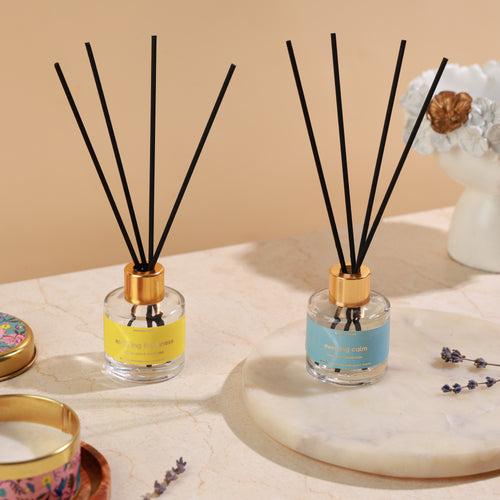 Day & Night duo · if you want two scents instead₹1,498Shop →
  Sukoon · for the day control is the point₹1,899Shop →
Part three — when the answer is not a SOSA product
Before you spend anything, there is a version of this question where the honest answer is to buy nothing yet, and it is common enough in 2BHKs that I would be careless not to put it first. If part of the reason you are shopping is that the flat smells of something you would rather it did not — last night's cooking still in the curtains, a bathroom off the passage, a cupboard that has gone stale, a corner that smells musty — then fragrance is not the tool, and adding it will make the flat worse rather than better. A reed diffuser adds a scent alongside whatever is already in the air. It removes nothing, neutralises nothing, masks nothing and cleans nothing. Layered onto an existing smell it produces a third smell nobody designed, usually less pleasant than what you started with. The order that works is always the same and its first three steps are free: find the source, deal with it, ventilate or extract properly, and only then add fragrance.
The sharpest version of that is damp. If a musty smell in a 2BHK returns a day or two after a proper clean, the room is telling you that something is still wet — a seepage line behind a wardrobe, a window frame that lets water track in, a bathroom with no working extraction, a wall that shares a face with a service duct. That is a building and ventilation problem, and SOSA sells no dehumidifier, no air purifier and nothing whatever that addresses damp. I will not diagnose it and I will not sell you a ₹1,249 bottle as a partial answer to it. Deal with the water first; the bottle will do a far better job in a room where nothing competes with it. Cooking is the same argument in a shorter timeframe: never diffuse over live cooking — chimney on, window open ten minutes, close up, wait half an hour.
There is a second and much happier way this question resolves without a purchase, which is that you already own the answer and have put it in the wrong place. Airflow is the single most common reason a perfectly good bottle reads as weak in an Indian flat, and it has two opposite failure modes. Dead air means nothing distributes; a strong draught means everything is carried away faster than the reeds release it. A bottle on a windowsill, next to an AC vent or in a corridor with cross-ventilation is emptying weeks early and filling the room least — the worst of both. The correct spot is unglamorous: waist-to-chest height, clear space around it, near a doorway where people pass but out of the path of the air, out of direct sun. Before you spend ₹1,998, move what you have, flip all six reeds and close the room for an hour. The free fixes come before the paid ones, every time.
Finally, there is the case where the honest answer is a machine and I would tell you so plainly even though this page recommends bottles. If your open living-dining zone is genuinely more than about 250 to 300 square feet of connected volume — a wide living room running into a dining area with the kitchen open onto both, or a flat with high ceilings, because you are scenting cubic metres rather than floor area — then a reed diffuser is being asked to do something it cannot, and adding a third bottle is throwing money at physics. That is the honest ceiling of the format, and past it a Sukoon at ₹1,899 and its 270–320 sq ft is the right instrument. What is not is a Megh at ₹3,499, however its six-litre tank looks on a listing page: it runs about 100 hours a fill and covers roughly 215 sq ft, less than the Sukoon. A runtime and humidity machine, never a coverage upgrade, and the most water of anything I sell. And a waterless Vaayu at ₹11,999 is a commercial machine for lobbies and showrooms; in a 2BHK it is absurd, and I would rather say so than take the order.
Part four — what to buy, and what to leave
Eight versions of the same ₹2,000, sorted by what your flat and your habits actually are. Every total is arithmetic on the listed prices. Two rows spend less than your ceiling on purpose, and one spends nothing at all.
| Which 2BHK is yours | What I would buy | Total, and what is left of ₹2,000 | The honest caveat |
|---|---|---|---|
| Standard 2BHK, open living-dining, one bedroom in real use ★ | Morning Freshness 130ml in the zone at six reeds + 50ml of the same in the bedroom at three or four | ₹1,249 + ₹749 = ₹1,998 · ₹2 left | One scent throughout. That is the price of fitting a 130ml inside ₹2,000 |
| You want two different scents more than you want duration | Day & Night duo — Morning Freshness in the zone, Evening Calm in the bedroom | ₹1,498 · ₹502 left | Two steps apart on the axis, so keep the bedroom door shut at night |
| Both bedrooms genuinely occupied | Three 50ml — Morning Freshness, Evening Calm, Mountain Breeze | ₹749 + ₹799 + ₹849 = ₹2,397 · ₹397 over | Over your ceiling. Buy two now and the third in seven weeks |
| Open zone bigger than roughly 250–300 sq ft of connected volume | Sukoon for the zone, and the bedroom waits | ₹1,899 · ₹101 left | The format's honest ceiling. It adds moisture and needs switching on |
| You want both formats from the start | Boond in the bedroom for evenings + a 50ml in the zone | ₹899 + ₹749 = ₹1,648 · ₹352 left | ~150 sq ft and about six hours a fill. Neither room gets a long run |
| You are already on your second or third bottle of one scent | An oil-only refill into the glass you own | ₹2,399 / 300ml ≈ 8–11 months · above ₹2,000 | About ₹7–8 per ml against ₹15–17. No vessel, no reeds included |
| Second bedroom shut and unused | Nothing for that room. Put both bottles where you actually sit | ₹0 for it | A bottle behind a closed door evaporates on schedule for nobody |
| The flat smells musty and it returns after cleaning | Nothing from us yet. Find what is still wet and deal with it | ₹0 today | A moisture problem. No fragrance answers it and we sell nothing that does |
Versailles
This is the question I am asked more than any other, in one form or another, and for a long time I gave a worse answer than the one above. I used to talk about scents. The useful answer is almost never about which fragrance; it is about how many separate volumes of air a home contains and where a person actually stops moving. A flat is a set of rooms with doors, and fragrance obeys doors far more obediently than it obeys intentions.
The reason I will recommend two ₹749-to-₹1,249 bottles over a ₹1,899 machine to someone with ₹2,000 is not modesty about the machine. The Sukoon is the product I am proudest of on the electrical side and I would defend every number on its page. It is that the two products answer different sentences. Yours contained the word entire, and no single device I make covers an entire 2BHK — not the Sukoon, and certainly not the Megh, which people reach for because six litres sounds like more flat and covers less room than the machine below it.
We are phthalate-free on a heat-stable coconut-derived carrier, and that decision costs us the first week of every bottle. A phthalate solvent pushes fragrance hard off a reed and wins on day one, then degrades in Indian heat and turns acrid by about week six. Ours opens smaller and holds a longer, flatter plateau, and the plateau is the product. I say it in every guide because it explains the one complaint I take seriously — that a SOSA bottle is quieter than expected at the start. Composed and handmade in small batches in Pune, tested through 45°C summer heat and 85% monsoon humidity, and a part of every order funds a girl's classroom through Nanhi Kali.
Frequently asked questions
- By city: ₹1,500 for a Mumbai 2BHK, a sealed air-conditioned Gurgaon flat, ₹2,000 in Bengaluru and a Hyderabad flat with the AC on only in the evening.
- By layout: great cross-ventilation and no scent, the long passage and two bedrooms, one used.
- By complaint: when to stop fixing and upgrade, how to tell it is still working and how long before it settles.
- By money and by scent: a realistic monthly budget for a 2BHK, when a Sukoon becomes cheaper, three rooms, three scents, ₹1,000 and something to forget about, 30 days in a powder room and a signature scent for a home.
- Brand: the SOSA founder story.
SOSA range, specifications and prices used in this guide (verified from the live store, 27 August 2026): Reed diffusers — alcohol-free, phthalate-free, paraben-free and IFRA-compliant compositions on a heat-stable coconut-derived (CCT) carrier, low-VOC, in a refillable glass bottle with six fibre reeds; flip weekly. 50ml lasts 6–8 weeks and 130ml lasts 14–18 weeks; there is no 100ml reed diffuser size. Morning Freshness (Malabar lemon · peppermint · Nilgiri eucalyptus) 50ml ₹749 · 130ml ₹1,249; Garden Bloom (British rose · night-blooming jasmine) ₹799 · ₹1,299; Evening Calm (Kashmir lavender · chamomile) ₹799 · ₹1,299; Fresh Brew (Coorg coffee · Kerala vanilla) ₹849 · ₹1,349; Mountain Breeze (Himalayan pine · sage · Indian cedar) ₹849 · ₹1,349. Duo sets ₹1,498–₹1,598 for 2 × 50ml and ₹2,498–₹2,598 for 2 × 130ml. Oil-only refills 300ml ₹2,399 · 500ml ₹3,499 — the glass vessel and reeds are not included, and replacement reeds are not sold as a separate product. Machines: Boond 300ml ₹899 (~150 sq ft, about 6 hours a fill) · Sukoon 500ml ₹1,899 (270–320 sq ft, 16–18 hours on low, three 15ml fragrances included) · Megh 6L ₹3,499 (~215 sq ft — a runtime and humidity machine that covers less than a Sukoon, never a coverage upgrade) · waterless Vaayu ₹11,999 · Safar ₹3,999 (a car and travel product) · Aangan ₹25,999 · Meenar ₹38,500. The water-based Hotel Collection for ultrasonic machines (15ml ₹299 · 100ml ₹999 · 300ml ₹1,799 · pack of seven 15ml ₹1,799) cannot be used in a reed bottle or a Vaayu. Below ₹749: jar candles ₹379, Sandalwood or Smoked Oudh candle ₹449, wax melts ₹474 (a burner is required and not included), mugs ₹474, bubble and taper candles ₹569, Amber Rose candle ₹599, ceramic trinket dish and candle two-pack ₹664. A reed diffuser adds fragrance to a room. It does not clean, purify or filter air, remove or neutralise cooking, damp or smoke smells, reduce humidity, or change how anyone feels. A reed diffuser adds no moisture to the air; ultrasonic machines work by aerosolising water and therefore do. A persistent musty smell indicates moisture that needs finding and drying, and SOSA sells no dehumidifier or air purifier. Ventilate or extract first; add fragrance second. Evaporation rate rises with warmth and falls with humidity, and airflow carries scent away from the bottle — so performance varies with season, ventilation, ceiling height and room use; longevity figures are typical ranges, not guarantees. Not noticing a constant fragrance is ordinary olfactory adaptation; the reliable checks are leaving the room and returning, or asking someone who has just arrived. Strength figures are positions on SOSA’s own internal scale, not an industry standard. Fragrance oil is flammable — keep bottles away from open flame and out of direct sunlight, and out of reach of children and pets. Composed and handmade in small batches in Pune, India; tested through 45°C summer heat and 85% monsoon humidity. Free shipping above ₹499. A portion of every order supports girl-child education through Nanhi Kali. Prices subject to change — see the live product pages.