



Paler, more Scandinavian Japandi? The Westin-inspired White Tea Serenity.
The thing nobody tells you: the room is already woody, so the useful part of this scent is not the cedar — it is the vetiver and the green, which the room has none of.
2. Avoid anything with obvious perfumery in it. A sweet base, a big floral heart or an obviously constructed accord announces itself as an added product in a room whose entire premise is that its materials are what they appear to be. That is the mismatch people feel and cannot name.
3. The cedar is not the point — the vetiver is. A Japandi room already has wood in it and real timber has its own faint smell, so adding more wood gains you little. What the room genuinely lacks is the earthy, rooty, slightly green register that vetiver and green leaves supply.
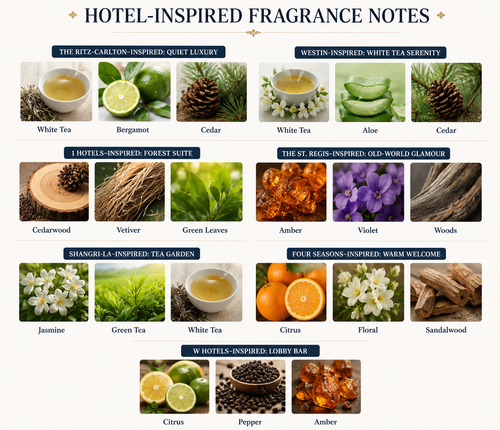
4. If your Japandi runs pale and Scandinavian: Westin-inspired. White Tea Serenity — white tea, aloe and cedar. Where the palette is bleached oak, white plaster and a great deal of daylight, this is lighter on its feet than Forest Suite and does not weigh the room down.
5. Untreated wood and water do not mix. This style loves raw and oiled timber, which is the worst possible surface to stand an ultrasonic machine on. Settling mist can leave a bloom or a ring — use a slate tile, a ceramic dish or a tray.
Made in India, composed by an ISIPCA Versailles-trained perfumer — and a portion of every order supports girl-child education through Nanhi Kali.
Japandi rooms are made of things that still smell like themselves
Take an inventory of an actual Japandi room rather than the mood board. Oak or ash left oiled or unfinished rather than lacquered. Paper in the light fittings and sometimes in the screens. Linen at the window and on the bed. Wool underfoot. A clay or stoneware vessel, an unglazed pot, a rush or seagrass mat, a slab of plaster or limewash on the wall. Every one of those materials carries a faint odour of its own — timber off-gasses gently for years, paper has a dry papery smell, linen and wool their own quiet character, and unglazed clay smells distinctly of clay when the air is damp. The room is not odourless. It has a low, honest, material smell, and the style's whole argument is that things should look and feel like what they are.
So the failure mode in a Japandi home is not warmth or coolness — it is legibility as a product. Bring in a fragrance with an obvious perfumery structure, a sweetened base or a constructed floral heart, and it does not blend into that material smell; it sits on top of it, instantly identifiable as a thing that was bought and added. In a maximalist room nobody would notice. Here the room has been stripped back precisely so that materials read clearly — and the fragrance reads clearly too. That is why Forest Suite wins: cedarwood, vetiver and green leaves is closer to a list of substances than to a perfume. Note the useful subtlety, though — because the room already has wood in it, the cedar is the least valuable part of the blend. The vetiver and the green are doing the work.
The three decisions in a Japandi room
 Hotel CollectionFrom ₹299The two halves of Japandi pull in different directions and most homes lean one way. The Japanese-leaning version — darker timber, low furniture, paper, deep shadow, very little on the walls — is grounded and wants 1 Hotels-inspired Forest Suite, whose dryness suits a room that is comfortable being dim. The Scandinavian-leaning version — bleached oak, white walls, sheepskin, an enormous amount of daylight — is lighter and often does better with Westin-inspired White Tea Serenity. If the joinery is properly finished and the room reads polished rather than raw, The Ritz-Carlton-inspired Quiet Luxury bridges the two. Judge by how dark the timber is and how much light the room gets, which are the two variables that actually change the answer.
The Japandi palette
Judged on whether the scent reads as a material or as a perfume, which is the only test that matters in this style. Test a 15ml at ₹299 in your own room before committing — your timber, your light and your textiles will change the result more than the note list suggests.
| Scent | Notes | Character | Best for |
|---|---|---|---|
|
1 Hotels-inspired ★ Forest Suite |
Cedarwood · vetiver · green leaves | Dry, rooty, green — reads as substance | Oak, clay, paper, linen and rush Japandi; darker Japanese-leaning rooms |
|
Westin-inspired White Tea Serenity |
White tea · aloe · cedar | Cool, transparent, near-weightless | Pale Scandinavian-leaning Japandi — bleached oak, white plaster, big windows |
|
The Ritz-Carlton-inspired Quiet Luxury |
White tea · bergamot · cedar | Polished, cool, quietly composed | A more finished Japandi with lacquered joinery and stone |
|
Shangri-La-inspired Tea Garden |
Jasmine · green tea · white tea | Green-floral, garden-like | Japandi with a courtyard, planting or a lot of indoor greenery |
| Not in this family, for reference: The St. Regis-inspired Old-World Glamour is plush and powdery and reads as decoration in a room built on plain materials; Four Seasons-inspired Warm Welcome is warm and creamy, which suits a furnished traditional room better; W Hotels-inspired Lobby Bar is bold and spiced and is the furthest thing in the range from this style. See all seven. | |||
Hotel Collection · the matchFrom ₹299Shop →  Sukoon · 270–320 sq ft₹1,899Shop →
 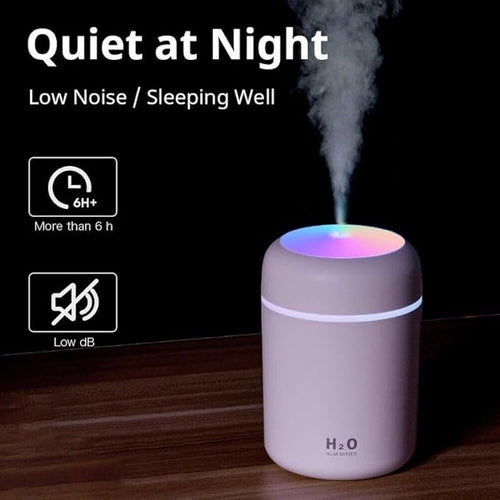 Boond · a low bedroom₹899Shop →
Dose, placement, and a caution worth taking seriously
Use 3 to 4 drops in a Sukoon for a normally textured Japandi living room or bedroom, and resist the instinct to go higher because the room looks empty. Linen curtains, a wool rug and a rush mat between them absorb a surprising amount and return it over the evening, so a dose set for a genuinely bare room will accumulate here and feel heavy within a week. If you have a hard timber floor, no curtains and almost no textile, then yes — 5 drops and shorter runs.
Place it low-ish but not on the floor. Japandi furniture sits low, which is genuinely helpful: a shelf or a bench at roughly waist height puts the plume where people actually are, rather than sending it over their heads. Keep a clear foot around the machine so the mist can rise and disperse, keep it away from paper shades and screens — damp paper cockles and stains and does not recover — and out of the direct throw of a fan or an air conditioner, which in an open Japandi plan will move the entire output into one corner within minutes.
The caution matters more in this style than in almost any other, because Japandi deliberately uses unlacquered surfaces: ultrasonic mist is water, and raw or oiled timber absorbs it. A machine standing directly on an unfinished oak shelf can raise the grain and leave a pale bloom or a ring, and none of that comes out easily. Use a slate tile, ceramic dish or metal tray under it, keep the plume away from art, leather and upholstery, and use filtered water in hard-water cities.
What to buy
In a style defined by its materials, the sensible table is a materials table. Find your own surfaces in the left-hand column, read the dose off the middle, and buy from the right.
| Material in the room | What it does to scent | Dose | What to buy |
|---|---|---|---|
|
Oiled or unfinished oak ★ Floors, joinery, low furniture |
Faintly woody of its own; absorbs very little | 4 drops | Forest Suite 15ml ₹299 to test |
|
Linen and wool Curtains, rug, throws, upholstered bed |
Real absorption — holds and re-releases for hours | 3–4 drops | Sukoon ₹1,899 · 270–320 sq ft |
|
Paper and rush Shades, screens, seagrass and tatami-style mats |
Porous and mildly absorbent — and damaged by damp | 3 drops | Keep the plume clear · use a tray |
|
Clay, plaster, limewash Vessels, walls, unglazed ceramics |
Slightly porous; carries its own earthy smell | 4 drops | 100ml ₹999 once you are sure |
|
Bare timber floor, no curtains The genuinely spare version |
Nothing to hold it — disperses fast, short tail | 5 drops | Boond ₹899 for a small low-ceilinged room |
Versailles
The Japandi homes I have visited have one thing in common that photographs never capture: they already smell of something. Not strongly, and not of anything you would call a fragrance — but oak, linen, paper and clay each have a quiet odour, and a room made mostly of those has a low background note that is part of why it feels calm.
That is why so many good fragrances fail here. The problem is not that they are too warm or too sweet; it is that they are audibly manufactured, and they land on top of a room that has spent a lot of effort looking unmanufactured. The scent that works has to sound like one more material rather than like a purchase.
The other thing I would say, slightly against my own interest: do not expect the cedar to do much in a room that is already full of wood. Buy the 15ml at ₹299, live with it for a week, and notice whether what you are enjoying is the vetiver and the green rather than the wood — it usually is. A portion of every order funds a girl's classroom through Nanhi Kali.
Frequently asked questions
- Best home fragrance for Scandinavian interiors — the other half of Japandi, on its own.
- Best fragrance for a minimalist home — restraint without the warmth.
- Best home fragrance for a wood-heavy interior — when more wood is the wrong answer.
- Which fragrance matches your interior style? — the full selector.
- Brand: the SOSA founder story.
SOSA products & prices (verified August 2026): Hotel Collection water-based ultrasonic diffuser fragrance 15ml ₹299 · 100ml ₹999 · 300ml ₹1,799 · Pack of 7 (15ml, all fragrances) ₹1,799; refills 100ml from ₹999. Seven scents: The Ritz-Carlton-inspired (white tea · bergamot · cedar), Westin-inspired (white tea · aloe · cedar), 1 Hotels-inspired (cedarwood · vetiver · green leaves), The St. Regis-inspired (amber · violet · woods), Shangri-La-inspired (jasmine · green tea · white tea), Four Seasons-inspired (citrus · floral · sandalwood), W Hotels-inspired (citrus · pepper · amber). Diffusers: Boond 300ml ₹899 · Sukoon 500ml ₹1,899 · Megh 6L ₹3,499. Water-based, phthalate-free, composed to IFRA standards for home diffusion; 3–6 drops per tank. Made in India, Pune. The Hotel Collection scents are SOSA's own interpretations inspired by the world's finest hotels; all hotel names are trademarks of their respective owners and are used only to describe the scent style — SOSA is an independent Indian fragrance house, not affiliated with or endorsed by any hotel brand. Prices and availability subject to change — see the live product pages.