

- The direct answer
- Why air pressure, not distance, decides where smell goes
- The three things that actually determine kitchen pressure
- Patterns that point to a pressure problem
- What to do about it, honestly
- What this costs, and who should look at it
- A note from Sonal
- Questions about kitchen smell reaching the seating area
2. When extraction is under-sized for the kitchen's air supply, that balance reverses. If more air is arriving or leaking into the kitchen than the extraction system is removing, the surplus has to go somewhere, and it typically pushes outward through the nearest gap — often the doorway to the seating area.
3. An incorrectly routed make-up air path causes the same reversal. Make-up air is meant to replace what the kitchen extraction removes, from a source and route a ventilation contractor specifies deliberately — when it's routed or sized incorrectly, it can overwhelm the extraction rather than balancing it.
4. Distance from the kitchen matters far less than most owners assume. A seating area some distance from the kitchen can still smell strongly of cooking if the pressure imbalance is large enough, while a seating area right next to a correctly balanced kitchen can smell of very little at all.
5. This is a ventilation contractor's question, not a fragrance one. Diagnosing and correcting an extraction-versus-supply imbalance requires measuring actual airflow, which sits entirely outside what any fragrance product does or can do.
Kitchen smell in the seating area is usually a pressure problem before it's anything else — the kitchen is pushing air outward instead of pulling it in, and that's a ventilation question, not a scenting one.
Why air pressure, not distance, decides where smell goes
Air moves from areas of higher pressure to areas of lower pressure, and it carries whatever is suspended in it along the way. A well-designed commercial kitchen is deliberately held at slightly negative pressure relative to the spaces around it, meaning its extraction is removing marginally more air than is being supplied to it. The result is a small, constant inward draw — air moves from the dining room into the kitchen through any gap, doorway or pass, not the other way round, and cooking smell stays contained where it's produced.
That balance depends on two things staying matched: how much air the extraction system removes, and how much air is supplied or allowed to enter as make-up air to replace it. If extraction is under-sized for the kitchen's actual air supply — a common outcome when a kitchen's equipment or menu has grown since the ventilation was first specified — or if the make-up air path itself is routed or sized incorrectly, the kitchen tips into positive pressure instead. Air, and the smell in it, then moves outward through whatever opening offers the least resistance, which is very often the doorway or pass into the seating area.
This is exactly why distance from the kitchen is a weaker predictor of the problem than most owners expect. A seating area at the far end of the café can still receive a steady drift of cooking smell if the pressure imbalance is significant enough to push air a genuine distance through the building, while a seating area immediately next to a correctly balanced kitchen may notice very little, because the air at that boundary is moving inward rather than out. The imbalance, not the floor plan, is doing the work.
The three things that actually determine kitchen pressure
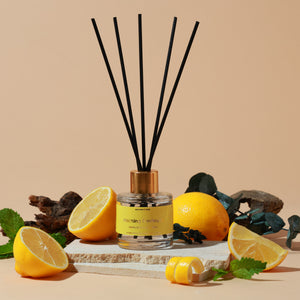
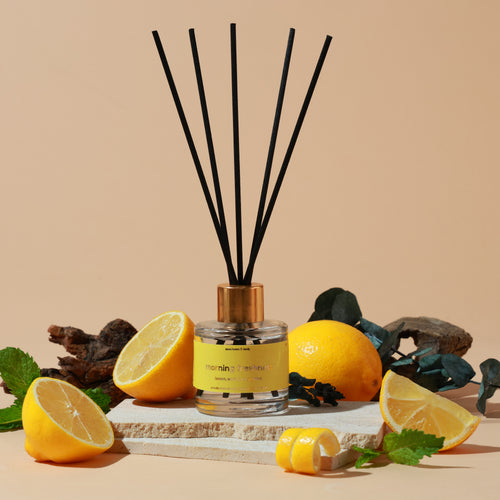
 Morning Freshness₹749A hood or extraction system that was correctly specified for the kitchen's original equipment and menu can fall behind if cooking equipment, covers or opening hours have grown since then, without anyone revisiting the original sizing.
Patterns that point to a pressure problem
The specific way kitchen smell shows up in the seating area is a reasonably reliable signal of whether pressure, rather than something else, is the actual cause.
| What's noticed | Likely cause | What actually addresses it | Where fragrance fits |
| A noticeable draught or air movement felt at the kitchen doorway, moving toward the seating area | Positive pressure in the kitchen relative to the dining room | A ventilation contractor's extraction-versus-supply assessment | Not the dining room, at any point |
| Smell reaches a seating area some distance from the kitchen, more than expected for the layout | A significant pressure imbalance pushing air a real distance | The same assessment, treated with urgency given the imbalance's size | Not fragrance |
| Smell is worse when a pass window or service door is left open | A specific gap acting as the escape route for an existing imbalance | Addressing the imbalance itself — closing the gap alone usually just shifts where it escapes | Not fragrance |
| Smell has increased gradually since the kitchen added equipment or extended hours | Extraction sized for an earlier, lighter kitchen load, now under-specified | A capacity review matched to the kitchen's current, not original, output | Not fragrance |
| A washroom or entrance smells fine and unrelated to any of the above | A separate, genuinely distinct zone | Its own ventilation check, on its own terms | A fragrance decision, made independently |
| Fragrance has already been placed near the kitchen doorway to counter the smell | Air is still moving in the wrong direction regardless of what's added to it | Remove the fragrance and have the pressure balance assessed — nothing else corrects the direction air is moving in |
Morning Freshness · a washroom, unrelated to this problem₹749Shop →  Sukoon · a larger washroom suite₹1,899Shop →
  Vaayu · washrooms across a chain₹11,999Shop →
What to do about it, honestly
Never place a diffuser or any fragrance near a kitchen doorway or pass to counter smell moving into the seating area — air moving in the wrong direction keeps moving in the wrong direction regardless of what's introduced into it, and a diffuser near food preparation or service isn't a placement this cluster ever recommends anyway.
Sometimes the fix is narrow — a single door that's stopped sealing properly, or a pass window habitually left open during service — and closing that one specific gap, once the underlying pressure balance is otherwise sound, resolves the complaint.
Usually, for a persistent or worsening pattern, the honest step is a ventilation contractor's assessment of extraction capacity against make-up air supply, particularly if the kitchen's equipment or hours have changed since the ventilation was originally specified — that assessment, not a fragrance decision, is what actually restores the inward draw a kitchen depends on.
What this costs, and who should look at it
Entirely a ventilation-contractor question at the source — no fragrance route belongs anywhere in this table.
| Route | Premises | Why | What it costs |
| Have a ventilation contractor assess extraction capacity against make-up air supply | Any café where kitchen smell reaches the seating area | Identifies whether the kitchen has lost negative pressure, and why | Assessed by a ventilation contractor, not a fragrance purchase |
| Review extraction sizing against the kitchen's current equipment and hours, not its original specification | A kitchen that's added equipment or extended service since it was fitted out | Matches capacity to current, not historic, output | Assessed by the same ventilation contractor |
| Address specific gaps — doors, pass windows — only after the pressure balance is confirmed sound | A single identifiable gap acting as an escape route | Closes the actual path, once the underlying imbalance isn't the real cause | A maintenance fix, unrelated to fragrance |
| Confirm the washroom or entrance is a genuinely separate zone before considering fragrance | Any zone being considered for scent at all | Establishes the zone is unrelated to the kitchen's pressure question | No purchase — an assessment |
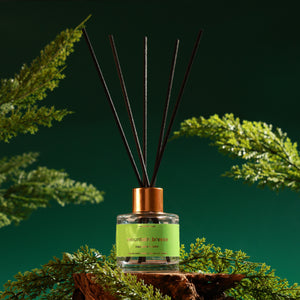
| Reed diffuser, Morning Freshness or Mountain Breeze, for the washroom or entrance only | A genuinely separate washroom or vestibule | The one point in this problem where a modest fragrance is honestly appropriate | ₹749–₹849 |
Café owners often describe this to me as a placement problem — the kitchen's simply too close to the seating, or the doorway's in the wrong spot — and ask which diffuser would help hold the line at that doorway. I always say the same thing: no diffuser holds a line against moving air, and placing one near a kitchen doorway isn't something this cluster would recommend even if it could.
What's actually happening, almost every time, is that the kitchen has lost the negative pressure it's meant to sit at relative to the dining room — extraction weaker than the air arriving, or a make-up air path that was never quite right. That's a measurable, correctable thing, and it's a ventilation contractor's job, not mine.
I'd rather point an owner toward that conversation directly than sell a machine that would sit near a kitchen doorway doing nothing about the actual direction the air is moving. Once the pressure balance is genuinely restored, the seating area usually needs no fragrance intervention for this specific problem at all.
Questions about kitchen smell reaching the seating area
- How Do I Remove Fried-Food Smell From a Café Without Covering It With Perfume? — the extraction-capacity side of the same kitchen problem.
- Can Poor Exhaust Make a Café Smell Bad Even if the Space Is Clean? — a closer look at exhaust as a root cause on its own.
- How Do Central AC and Kitchen Exhaust Affect Fragrance Distribution in a Café? — how this pressure question interacts with the café's wider HVAC system.
- Exhaust, Grease, Drains, Upholstery, HVAC, Humidity or Fragrance: What Should I Fix First if My Café Smells Bad? — the full order-of-operations this diagnosis sits inside.
- Brand: the SOSA founder story.
SOSA products & prices (verified September 2026): Reed diffusers 50ml ₹749–₹849 (to 150 sq ft, 6–8 weeks at six reeds) · 130ml ₹1,249–₹1,349 (above 150 sq ft, 14–18 weeks) · reed refill 300ml ₹2,399. Ultrasonic: Boond ₹899 (~150 sq ft) · Sukoon ₹1,899 (270–320 sq ft, ships with three 15ml Hotel Collection fragrances) · Megh ₹3,499 (6L tank, ~100 hrs runtime, ~215 sq ft — a runtime machine, not a coverage upgrade). Waterless cold-air: Safar ₹3,999 (no published coverage figure) · Vaayu ₹11,999 (up to 1000 m³, roughly 2,000–3,000 sq ft; 400ml tank lasting about 90+ days; app and onboard control, 1h/4h/8h/24h run windows, adjustable intensity, key-lock, under 38 dB, freestanding or wall/HVAC mount, 5W, CE/RoHS/SGS) · Aangan ₹25,999 (8,000–10,000 sq ft). Hotel Collection water-based fragrance 15ml ₹299 · 100ml ₹999 · 300ml ₹1,799 is for ultrasonic machines; reed oil and Hotel Collection are not interchangeable. Reed diffusers are alcohol-free, phthalate-free, paraben-free, IFRA-compliant and low VOC, handmade in small batches in Pune. Every purchase funds a girl's education through Nanhi Kali. Prices and availability subject to change — see the live product pages.