

- The direct answer
- Why these layouts can't hold a fragrance level
- The three tests that tell you which side you're on
- Café types and the honest verdict for each
- The three-zone rule, and where it stops applying entirely
- What to buy — including 'nothing', honestly
- A note from Sonal
- Questions from owners expecting to be sold something
2. Small single-room coffee bars should avoid it too. Every square foot in a single-room layout sits within reach of the coffee counter; there is no genuinely separate non-dining zone left to put a diffuser in, whatever the floor plan says.
3. Roasteries should avoid it, regardless of size. Roasting is itself a powerful, continuously changing aroma process, not a finished product with a stable smell — anything added competes with a moving target, and consistent dosing against that is not a realistic goal.
4. Any café without a genuine physical air boundary anywhere should avoid it, whatever its overall size. No door that closes and stays closed, no distinct air volume, means no zone passes even the 'sometimes' test in this cluster's zone rule — square footage alone doesn't create a boundary.
5. A washroom that opens directly off the dining room with no door is still, for fragrance purposes, the dining room. Labelling a space 'the washroom' doesn't exempt it from the boundary test — the air has to actually be separated, not just the function.
Vaayu has no role in any of these five situations. The honest answer for all of them is not to buy equipment at all — from SOSA or anyone else — until a genuine boundary exists somewhere in the building.
Why these layouts genuinely can't hold a fragrance level
An open or semi-open café front removes the one thing every fragrance decision in this cluster depends on: a boundary. Without a door, a lobby or a distinct arrival volume, the air inside the café and the air outside it are constantly exchanging, at a rate no diffuser is built to compete with. A machine can be scheduled and adjusted; it cannot out-run open air, and turning the intensity up to compensate only makes the fragrance more identifiable at the moments it does reach a customer, which is the opposite of the goal.
A small single-room coffee bar fails the same test from the inside rather than the outside. There is no room in the building that isn't within reach of the coffee counter's air, because there is only one room. Calling a corner of it 'the entrance' or 'near the door' doesn't create a second air volume — it's still the same air the coffee is made in.
A roastery adds a third, distinct problem: the roasting process itself is a large, continuously changing aroma, shifting by batch, by bean and by roast profile, all day. It isn't a fixed backdrop a fragrance could be dosed against consistently — it's a moving one, which makes the entire premise of a stable, complementary fragrance level unworkable before the boundary question is even asked. Even a roastery with a genuinely separated retail counter usually finds roasting air reaches further into the building than the floor plan suggests, simply because the process runs for hours at a time.
The three tests that tell you which side of this you're on
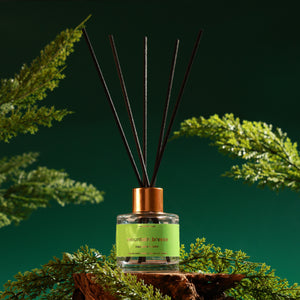
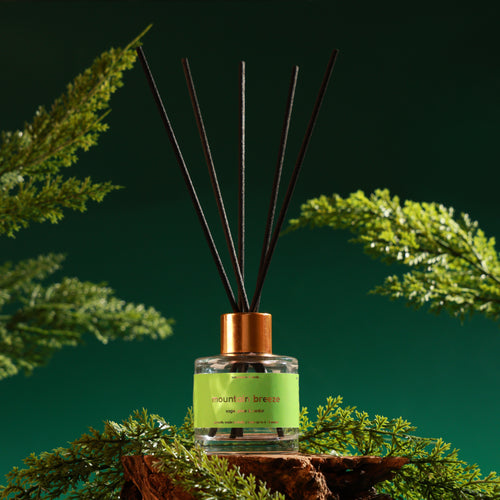
 Mountain Breeze₹849Walk every internal threshold and check, physically — not from memory or the floor plan. If nothing closes and stays closed anywhere, the whole café is one air volume and none of it qualifies for fragrance, however many rooms it's divided into on paper.
Café types and the honest verdict for each
Most café types in this table get the same answer, and it isn't the one an equipment guide is expected to give.
| Café type | Verdict | Why | What it costs |
| Open-fronted or semi-open café | Buy nothing | No boundary exists between inside and outside air at any point | ₹0 |
| Small single-room coffee bar | Buy nothing | Every part of the room shares the same air as the coffee counter | ₹0 |
| Roastery, any footprint | Buy nothing | The roasting process is itself a large, continuously changing aroma | ₹0 |
| Café with one genuine boundary (washroom or entrance) | Reed or Sukoon, that zone only | A real door and a distinct air volume make the one qualifying room genuinely workable | ₹749–₹1,899 |
| Larger café or chain with several genuine boundaries | Vaayu, zoned | Multiple qualifying rooms justify scheduled, zoned coverage across all of them | ₹11,999 |
| Three of these five outcomes end with the reader buying nothing — that's not a gap in this guide, it's the honest result of applying the boundary test to how most cafés are actually built. | |||
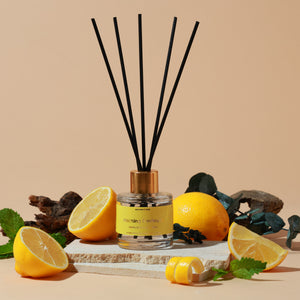
Mountain Breeze · one genuine washroom₹849Shop →  Sukoon · one genuine separated entrance₹1,899Shop →
  Vaayu · several genuine boundaries together₹11,999Shop →
The three-zone rule, and where it stops applying entirely
Never scent the dining room, counter, bar, tasting area or seating — this part of the rule applies everywhere, including every café type on this page. It is not the part that changes for an open-fronted café or a roastery; it was already the answer for the room that matters most.
Sometimes a genuinely separated entrance can carry fragrance — but for the café types this page is about, that 'sometimes' resolves to no, because the boundary the word depends on simply isn't there. An open front has no second door to speak of; a single-room bar has no second room.
Usually washrooms and retail sections are the genuine opportunity in this cluster — but only where they exist as separated rooms in the first place. A washroom without its own door is not exempt from the boundary test just because of what it's called; treat it exactly as you'd treat any other unseparated space, which is to say, leave it unscented.
What to buy — including 'nothing', stated honestly
The first row of this table is the right answer for a larger share of readers than any other single row in this cluster.
| Route | Premises | Why | What it costs |
| No fragrance equipment at all | Open-fronted, semi-open, single-room, a roastery, or any café with no physical boundary anywhere | There is no zone in this layout where fragrance avoids competing with the coffee aroma | ₹0 |
| Reed diffuser, Mountain Breeze, one washroom | A single genuinely separated washroom, under 300 sq ft | A real door and a distinct air volume make this one room workable on its own | ₹749–₹849 |
| Sukoon ultrasonic, one separated entrance | A single genuinely separated entrance, 300–750 sq ft | Timers hold a level in a space that actually has a boundary to hold it against | ₹1,899 |
| Vaayu, zoned, two or more genuine boundaries | A larger café with a washroom and a separated entrance, or a chain | Scheduled coverage across every room that genuinely qualifies, and none that doesn't | ₹11,999 |
| Aangan, HVAC-integrated, several genuine boundaries | Above roughly 3,000 sq ft, a large café or chain with multiple genuinely separated non-dining zones | Distributes through existing ducting, confined to the rooms that actually pass the boundary test | ₹25,999 |
I've walked into more than one site visit, been shown a genuinely lovely café, and had to tell the owner there was nothing for me to sell them. No door anywhere closed on its own, the entrance was simply the front third of the dining room, and the washroom opened straight off the seating with no threshold between them at all. It's an odd thing to say when you sell scent machines for a living, but the honest answer was still the honest answer.
It's not a comfortable thing to say out loud when someone's expecting a recommendation. But selling a diffuser into a layout with no boundary doesn't produce a better café — it produces a second unmanaged smell in a room that was already fine on its own, and an owner who's spent money for nothing they can actually use.
I'd rather a café owner trust that when I do recommend equipment, it's because a real zone earned it — a door that closes, a room the coffee's aroma never reaches. That trust is worth more to this business than a sale into a space that was never going to hold a fragrance level in the first place.
Questions from owners expecting to be sold something
- Should a coffee shop use ambient fragrance at all? — the foundational yes/no question this page narrows further.
- How do open doors affect fragrance at a café entrance? — the mechanism behind the door test on this page.
- Should a coffee-roasting café ever use ambient fragrance? — the roastery case, worked through in full.
- Which areas of a café should be fragranced — and which shouldn't? — the zone map this page's exceptions are drawn from.
- Brand: the SOSA founder story.
SOSA products & prices (verified September 2026): Reed diffusers 50ml ₹749–₹849 (to 150 sq ft, 6–8 weeks at six reeds) · 130ml ₹1,249–₹1,349 (above 150 sq ft, 14–18 weeks) · reed refill 300ml ₹2,399. Ultrasonic: Boond ₹899 (~150 sq ft) · Sukoon ₹1,899 (270–320 sq ft, ships with three 15ml Hotel Collection fragrances) · Megh ₹3,499 (6L tank, ~100 hrs runtime, ~215 sq ft — a runtime machine, not a coverage upgrade). Waterless cold-air: Safar ₹3,999 (no published coverage figure) · Vaayu ₹11,999 (up to 1000 m³, roughly 2,000–3,000 sq ft; 400ml tank lasting about 90+ days; app and onboard control, 1h/4h/8h/24h run windows, adjustable intensity, key-lock, under 38 dB, freestanding or wall/HVAC mount, 5W, CE/RoHS/SGS) · Aangan ₹25,999 (8,000–10,000 sq ft). Hotel Collection water-based fragrance 15ml ₹299 · 100ml ₹999 · 300ml ₹1,799 is for ultrasonic machines; reed oil and Hotel Collection are not interchangeable. Reed diffusers are alcohol-free, phthalate-free, paraben-free, IFRA-compliant and low VOC, handmade in small batches in Pune. Every purchase funds a girl's education through Nanhi Kali. Prices and availability subject to change — see the live product pages.