


Something to drink is the second-best thing, and often the most welcome. Cold water on a hot afternoon is consumed on the spot and creates no carrying problem at all. If you want to offer food, offer it sealed and packaged and let them decide — never assume what anyone eats.
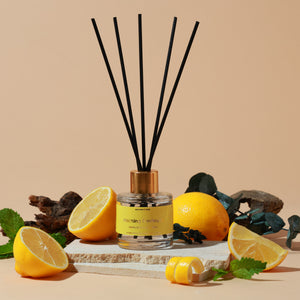
An object makes sense only for the regulars. The same milk delivery every morning, the newspaper vendor, the water-can supplier, the courier who has been on your route for three years. For those, a ₹379 jar candle or a ₹749 reed diffuser is a reasonable thing to hand over — and say plainly that it is glass.
Do not make them wait. Most delivery work is paid by the drop. Holding someone at your gate for four minutes while you find something costs them money, and it is the commonest way a well-meant Diwali gesture goes wrong.
2. Something cold to drink is the most immediately useful thing you can offer. The afternoons are hot and the work is physical. Water handed over at the door is consumed on the spot and creates no carrying problem whatsoever. If you want to offer food as well, offer it sealed and let the person decide for themselves — do not open a box and hand out pieces, and do not assume what anybody eats.
3. An object is for the regulars, and the regulars are usually two or three people. The milk delivery who has come at six every morning for years. The newspaper vendor. The water-can supplier. The security desk that takes your parcels. You know these people by sight, you will see them again next week, and a physical thing given to them is received as what it is. For everyone else, an object is a guess about a stranger.
4. If you do give an object, tell them it is glass. A jar candle and a reed diffuser bottle are both glass, both sealed, and both perfectly able to travel — but only if the person carrying them knows to put them somewhere sensible rather than under a stack of parcels. One sentence saves the gift.
5. Keep whatever you are giving beside the door. Do not send someone back to the lift while you look. Delivery work is largely paid per drop; the minutes you take are money out of the pocket of the person you were trying to thank. Have the envelopes and the boxes stacked and ready, and hand one over in ten seconds.
6. Do not build an obligation. A gift at this door should close cleanly. No request attached, no expectation of preferential treatment, no follow-up. The whole point of a small, immediate, unconditional gesture is that it leaves nothing hanging for either side.
7. Never assume the household it is going into. You do not know whether someone lives with family, alone, in a shared room, in this city at all, or whether they will be travelling. That is another reason cash outperforms objects here: it fits every one of those situations without you having to know which one applies.
Everything is composed and handmade in small batches in Pune, and a portion of every order supports girl-child education through Nanhi Kali.

Part one — the carrying problem decides everything
Every other gifting page on this site starts with the home the gift is going into. This one cannot, because between your door and that home there are six more hours of work, a bike, a bag already full of other people's parcels, and a commute at the end of it. The gift is not received at a doorstep; it is carried through a shift. Once you take that seriously, most of the usual Diwali gift categories fall out of the running immediately, and the ones that survive are the ones that weigh nothing or get consumed on the spot.
 Everyday Mug₹474 · ceramicA great deal of delivery work is paid per drop, with a clock running against the rider on every one of them. The friendly version of a Diwali gesture — wait one minute, I have something for you — is a cost the other person absorbs silently and cannot decline without looking rude. Preparation is the courtesy here, not enthusiasm. Keep envelopes made up and objects stacked by the door before the week starts, so that the whole interaction is ten seconds long. An Everyday Beautiful Mug at ₹474 is a good example of what works: it is boxed, it is flat-bottomed, it makes no assumption about anybody's home, and it can be handed over without explanation. What does not work is anything that requires a conversation at the door.
Part two — everyone who comes to your door, sorted
This is the whole cast, sorted by the two variables that actually decide the gift: whether you know the person, and whether they can carry anything. No price appears for any category outside our range — the argument here has nothing to do with what other things cost and everything to do with what the person in front of you can physically take away.
| Who arrives | Do you know them by sight | Can they carry an object | The honest first move | If you want to add something |
|---|---|---|---|---|
| Daily milk, newspaper, water cans ★ | Yes — the same person for years | Yes, on a cycle or a cart | Cash | A ₹749 reed diffuser or a ₹379 candle |
| App food riders | Almost never — a different person each time | Barely. An insulated bag, already full | Cash, or the tip option in the app | Cold water. Nothing that has to be carried |
| E-commerce couriers | Sometimes a familiar face on a fixed route | No — hands full, dozens of drops left | Cash, handed over in ten seconds | Only if it is the route regular you recognise |
| Gas cylinder delivery | Often yes, and the work is heavy | Yes, but they are already carrying a cylinder | Cash | Something to drink, at the moment of delivery |
| The building gate or parcel desk | Yes, every day | Yes — they are stationary and have a room | Cash, and coordinate with your neighbours | An Everyday Beautiful Mug ₹474 each |
| Laundry, tailoring, repairs — the pick-up trades | Yes, and you have their number | Yes, in a vehicle or on a cycle | Cash, or settle the account generously | A Sandalwood jar candle ₹449 |
| The honest caveat: nothing on this page is a substitute for the thing that actually helps, which is that these are jobs paid by the drop, in traffic, in heat, with the clock running. A Diwali gift does not change any of that and I am not going to suggest it does. What a small gesture at the door does is acknowledge a person you see all year and have never properly spoken to. That is worth doing on its own terms — and it is worth doing in the form that costs the recipient the least, which is usually cash and almost never an object chosen for a stranger. | ||||
 Cozy Corner · keep three by the door₹379Shop →
  Sandalwood jar · for the trades you know₹449Shop →
  Morning Freshness · for the daily regular₹749Shop →
Part three — the three ways this goes wrong
The first is the food assumption, and it is the most common. Somebody opens a large box at the door and starts handing out pieces to whoever arrives. It looks warm and it is meant warmly, and it puts every recipient in the position of accepting something they may not eat — for reasons of health, of habit, of observance, or simply because they are not hungry at four in the afternoon on their eleventh drop. Never assume what anyone eats. If food is what you want to give, give it sealed and packaged so the person can take it away and decide privately, and offer it rather than pressing it. Water, offered cold, has none of these problems and is very often the thing that is actually wanted.
The second is the wait. This one is invisible to the giver and expensive for the recipient. Delivery work in Indian cities is largely piece-rate: the earnings come from completed drops, so a four-minute pause at your door is not a pleasant break, it is a deduction. And it cannot be refused, because refusing a customer who is being kind is not a move anyone in that job can afford to make. The fix costs nothing: prepare in advance and hand it over in ten seconds. Envelopes made up, candles boxed and stacked, everything within arm's reach of the door. If you are not organised enough to do that, cash in a pocket is still faster than anything else and that is another argument for it.
The third is the obligation, and it is subtler. A gift given at a doorway to someone who serves your household can, if it is large or repeated or accompanied by a request, start to look like a retainer. That is not what you meant and it is not what most people would read into it, but the direction of the relationship makes it a live possibility and it is worth being deliberate about. Keep it small. Keep it unconditional. Do not attach a request to it — not now, not in a fortnight. And if you find yourself thinking about which of the people at your door is worth more, you have drifted from a courtesy into a calculation. The whole value of this gesture is that it closes cleanly and leaves nobody owing anybody anything.
Part four — what I would do at each door
Six doorstep situations and the different thing I would do at each. The arithmetic is shown where it matters; the reasoning is about carrying and time rather than about the object.
| The situation at your door | What I would do | What it costs | The carrying note |
|---|---|---|---|
| A rotating cast you cannot name ★ | Cash, or the tip option, plus cold water at the door | Whatever you decide — no object at all | Nothing to carry. This is the whole reason it works |
| Two or three genuine regulars | Cash first, then a jar candle each | 3 × ₹379 = ₹1,137 on top of the cash | Small, sealed, flat. Say that it is glass |
| One person who has come daily for years | Morning Freshness 50ml — brightest and least polarising in the range | ₹749, and it clears the ₹499 free-shipping line alone | Glass. Hand it over in a bag, not loose |
| The gate and parcel desk, four people | Coordinate with neighbours, then Everyday Beautiful Mugs | 4 × ₹474 = ₹1,896 | They have a duty room. Storage is not the constraint here |
| You want to give something edible | Sealed and packaged, offered rather than pressed | Not priced here — it is not our category | Let them take it away and decide in their own time |
| You have no cash and someone is at the door now | Water, and a genuine thank-you. Cash the next time they come | Nothing spent | Better than an improvised object they then have to carry |
Versailles
We ship a great deal of glass, which means I have spent more time than most people thinking about what happens to a parcel between a warehouse and a doorway. It is carried, stacked, re-stacked, put down on hot ground and picked up again, usually by somebody who is behind schedule. The people who do that work arrive at your door at the end of a long chain of small physical difficulties, and the last thing most of them need is one more object to look after.
So this is a page where the honest recommendation runs directly against the business. Cash is better than my candle for almost everybody who reaches your door. Water is better than my diffuser at four on a hot afternoon. I would rather write that down than sell three ₹379 candles to somebody who would have been better served by an envelope and a quick word.
Where an object does belong is with the two or three people who are genuinely constant in your week — and there I think a bottle of fragrance oil is a perfectly good thing to give, because it lasts six to eight weeks, it needs nothing bought to go with it, and it is not the fourth box of the same thing they were handed that day. Made in Pune in small batches, and a part of every order funds a girl's classroom through Nanhi Kali.
Frequently asked questions
- Cash or a gift? — the honest answer, and why the order is cash first.
- Your building's security guards and the society maintenance team.
- Gifts that aren't sweets nobody eats — what replaces the default without becoming a burden.
- The guide to the people you owe a gift — the whole obligation list, tier by tier.
- Brand: the SOSA founder story.
SOSA range & prices used in this guide (verified from the live store, 27 August 2026): Reed diffusers — alcohol-free, phthalate-free, paraben-free, IFRA-compliant compositions on a heat-stable coconut-derived (CCT) carrier, in a refillable glass bottle with six fibre reeds; 50ml lasts 6–8 weeks, 130ml lasts 14–18 weeks. Morning Freshness 50ml ₹749 · 130ml ₹1,249; Garden Bloom ₹799 · ₹1,299; Evening Calm ₹799 · ₹1,299; Fresh Brew ₹849 · ₹1,349; Mountain Breeze ₹849 · ₹1,349. Duo sets: Day & Night ₹1,498, Fresh & Grounded ₹1,548, Warmth & Bloom ₹1,598 (2 × 50ml); ₹2,498–₹2,598 (2 × 130ml). Oil-only refills 300ml ₹2,399 · 500ml ₹3,499 (vessel and reeds not included). The least expensive SOSA reed diffuser is ₹749 — no reed diffuser exists below that price in any size. Below it: scented jar candles from ₹379 (roughly 15–18 hours), Sandalwood or Smoked Oudh jar candle ₹449, wax melts ₹474 (a burner is needed and is not included), ceramic mugs ₹474, ribbed and face mugs and taper candles ₹569, Amber Rose candle ₹599, ceramic trinket dish ₹664, candle two-pack ₹664 (roughly 30–36 hours). Machines: Boond 300ml ₹899 · Sukoon 500ml ₹1,899 · Megh 6L ₹3,499 (~215 sq ft, a runtime and humidity machine rather than a coverage upgrade) · waterless Vaayu ₹11,999 · Safar car and travel diffuser ₹3,999. The water-based Hotel Collection (15ml ₹299 · 100ml ₹999 · 300ml ₹1,799) is a fragrance for an ultrasonic machine, not a standalone gift. SOSA publishes no bulk or corporate gifting terms — there is no discount slab, no minimum order quantity, no stated GST-invoicing arrangement, no custom branding service and no published lead time — and SOSA sells no gift card, gift hamper, gift box or curated gift set. Larger orders should be discussed with SOSA directly through the contact page before committing. Gift wrapping, gift notes, direct-to-recipient shipping and delivery timing are unconfirmed — check at checkout rather than assuming them; no delivery date is promised anywhere in this guide. Per-head and total costs shown are arithmetic on the listed prices, not quotations. Fragrance adds scent to a room; it does not clean air, remove cooking or smoke smells, or change how anyone feels. Fragrance oil is flammable — keep any diffuser away from diyas, candles and open flame. Composed and handmade in small batches in Pune, India; tested through 45°C summer heat and 85% monsoon humidity. Free shipping above ₹499. A portion of every order supports girl-child education through Nanhi Kali. Prices subject to change — see the live product pages.