


Where experiences fail: when the recipient cannot easily leave the house — new parents, carers, anyone unwell, anyone with no leave left — and when the "experience" is really an unscheduled obligation sitting in a drawer.
The object that behaves like one: something consumed over time, in a place, requiring no diary entry. A reed diffuser works from the day it arrives — 6–8 weeks on a 50ml from ₹749, 14–18 on a 130ml from ₹1,249 — and then it ends.
Do not: try to outbid an experience with a more expensive object. Different category, and the object loses.
2. Do not buy a voucher and call it an experience. A voucher is an intention transferred, with an expiry date and a small ongoing guilt attached. A large share of them are never redeemed. If you cannot book the specific thing, consider whether you should be giving the specific thing at all.
3. Check they can actually take it. This is the failure nobody plans for. New parents, people caring for a relative, anyone unwell, anyone with no leave and a punishing quarter — for them an experience is a logistics problem dressed as a treat, and it can land as a reminder of what they cannot do.
4. If an object is right, choose one that is lived through rather than owned. The test is whether it is consumed over time, in a place, with no scheduling. Good coffee for somebody who makes coffee every morning. A bath range that gets used up. Home fragrance, which is unusual in this group in that it needs nothing at all from the recipient — a 50ml works continuously for six to eight weeks and a 130ml for fourteen to eighteen.
5. Do not try to outbid an experience with a bigger object. If they said they prefer experiences and you respond with a more expensive thing, you have not answered them; you have raised the stakes on the wrong axis. Small and consumed beats large and permanent for this recipient, every time.
6. Consider the hybrid, honestly. An evening you host — you cook, you set the room, the house smells of something composed rather than of dinner — is an experience you produced, and it is the only case where an object and an experience are doing the same job at the same time.
Everything is composed and handmade in small batches in Pune, and a portion of every order supports girl-child education through Nanhi Kali.
Part one — why experiences win, and the two places they fail
The preference is not a fashion. People who ask for experiences have usually noticed something true: an evening remembered is still theirs in ten years, while an object bought at the same price has become part of the furniture within a fortnight and part of the problem within a decade. An experience produces memory and no residue. It is also, more often than not, shared — you are in it too, which means the gift and the relationship are the same event. Those are real advantages and I am not going to argue with them. What I will do is name the two failure modes, because they are common and they are rarely discussed by the people advocating experiences most loudly.
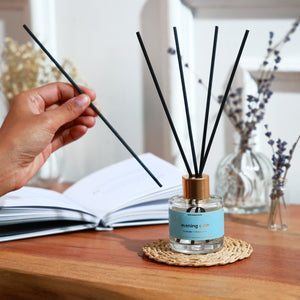
 Evening Calm₹799 · the softestA voucher, a coupon, a "we should do something" — these are experiences in name only. What has actually been transferred is a small administrative task with an expiry date, and the recipient now carries it around feeling faintly guilty until it lapses. An experience that has not been scheduled is not a gift, it is a liability with your name on it. The same applies to anything requiring travel they have not agreed to, an activity chosen from your interests rather than theirs, or a group event they will have to negotiate their way out of. If you cannot pick a date with them, the honest alternatives are to give something that requires nothing — a bottle at ₹799 that simply works — or to give nothing and offer your time when it is actually free.
Part two — what each gift actually asks of the recipient
The useful column here is the second one. Gifts are usually compared on what they cost the giver; this table compares them on what they cost the person receiving them, which is the number that decides whether a present is enjoyed or endured.
| The gift | What the recipient must do | When it happens | What is left afterwards | Who it fails |
|---|---|---|---|---|
| A booked meal on a named date ★ | Turn up | Once, on a date you both agreed | A memory, and nothing else | Anyone who cannot get out that evening |
| A voucher or coupon | Research, book, remember, redeem before it expires | Possibly never | Often a lapsed code and mild guilt | Most people, honestly |
| Tickets to a specific event | Be free on that exact evening; travel to it | Once, fixed | A memory, if the date held | Shift workers, carers, parents of small children |
| A class or course | Attend repeatedly, over weeks | Recurring, on a schedule | A skill, or a guilt about weeks four to eight | Anyone whose diary is not their own |
| A day of your time and labour | Let you in and accept help | Once, arranged by you | The task done, and goodwill | Almost nobody. Badly underused |
| A reed diffuser, 50ml or 130ml | Turn six reeds once a week; stand it on a tray | Continuously, from the day it arrives | A glass vessel to refill or recycle | Anyone scent-averse, or in a tiny sealed room |
| A permanent decorative object | Find it a place, keep it visible, never discard it | Forever, quietly | The object, indefinitely | Exactly the person this article is about |
| A Sukoon machine ₹1,899 | Fill it, clean it, switch it on, choose to use it | Whenever they decide | The device, plus its routine | Anyone who wanted one fewer thing to operate |
| The honest caveat: a reed diffuser is not an experience and I will not claim it is one. It produces no memory you can recount, nobody will describe it in ten years, and it does not include your company — which is most of what an experience actually delivers. What it shares with an experience is narrower and worth stating precisely: it is consumed rather than owned, it happens in a place over a period rather than sitting in one, and it demands almost nothing of the recipient. That makes it the closest object-shaped answer available when an experience is genuinely not possible. When one is possible, book it. | ||||
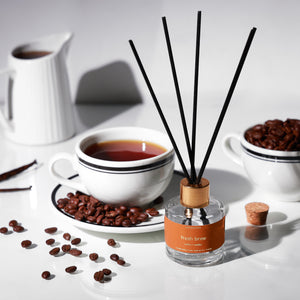
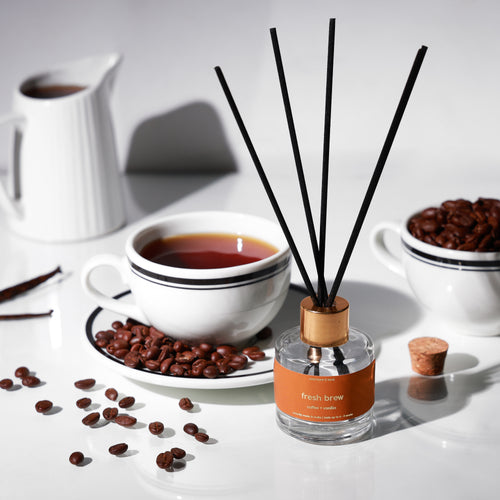
Fresh Brew · the warmest roomfrom ₹849Shop → 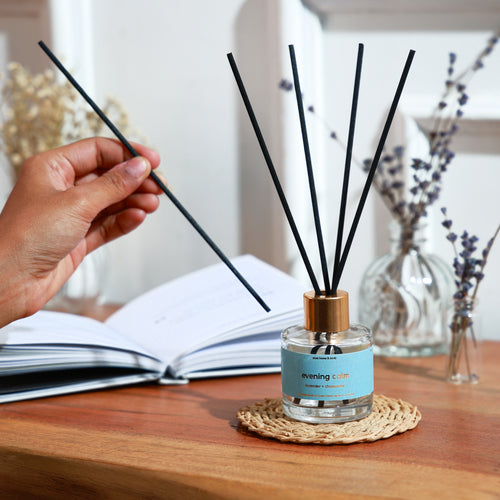 Evening Calm 130ml · 14–18 weeks₹1,299Shop →
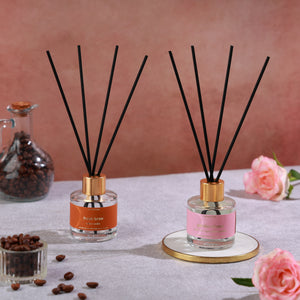
 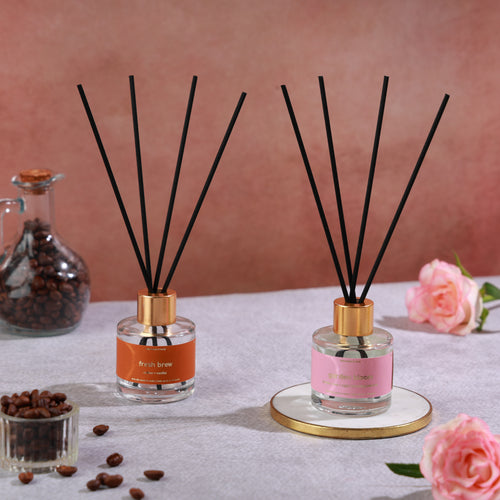 Warmth & Bloom duo · 2 × 50ml₹1,598Shop →
Part three — when to book rather than buy, and when not to give fragrance at all
Here is the recommendation I would give a friend, in the order I would give it. If the person can go out and you can arrange something specific, arrange it and buy nothing. A table booked on a named evening beats every product on this page and it is not close. If they cannot go out, or the distance makes anything you arrange feel abstract, then an object that works in their actual room is the honest substitute — not because it matches an experience, but because it is the only thing that reaches them where they are. And if what you really want is to give your company, give that: a day off spent doing something useful in their house is worth more than the sum of everything I sell, and it is available to anybody reading this.
The exclusions for home fragrance are not softened by any of the above. Do not give it to somebody who has said they dislike scented things; that is a stated preference and the whole premise of this article is taking stated preferences seriously. Do not give it into a household where anybody has a fragrance sensitivity, gets headaches, or is managing asthma — and note that this applies with particular force to people who are at home all day, which is exactly the recipient this article recommends it for. Skip it in a home with a newborn. Skip it for a very small sealed room, because a composition dosed for an ordinary living room becomes insistent in a studio or a single-window bedroom, and someone who is stuck indoors cannot escape it. Skip it if they already have a diffuser running happily. In each of those cases the answer is your time, a meal, or something for a different sense entirely.
Two more honest notes, both specific to this argument. First, do not reach for a machine because it sounds more like an event. An ultrasonic diffuser such as the Sukoon at ₹1,899 covers 270–320 sq ft, runs sixteen to eighteen hours on low, has a remote and timers and three 15ml Hotel Collection scents in the box — and it is a device that must be filled, cleaned and switched on, which is three more demands than the person in this article wanted. The Megh at ₹3,499 runs about a hundred hours a fill but covers only around 215 sq ft; it is a runtime machine, never a coverage upgrade. Second, on presentation: there is no SOSA gift card — so the "give them the choice" route does not exist here — and I cannot confirm what wrapping, gift-note or direct-to-recipient options are live at checkout. Verify rather than assume.
Part four — the experience-first edit
Ordered the way I would actually work through it: experiences first, objects only when the experience is not available. The prices in this table are ours; I have deliberately not put figures against the things I do not sell.
| Option | What to give | Price | Right when |
|---|---|---|---|
| Book it ★ | A meal, a concert, a class — reserved by you, on a named date | Not ours to price | They can get out and you can arrange something specific. The first answer |
| Give your time | A day of labour, a repair, driving, childminding, company | Free | Nearly always underrated, and impossible to buy |
| Host it | An evening you cook and set the room for | Your effort, plus a bottle if you like | The hybrid — an experience you produced, in a house you scented |
| An object that is lived through | One 50ml — Morning Freshness ₹749, Garden Bloom or Evening Calm ₹799, Fresh Brew or Mountain Breeze ₹849 | ₹749–₹849 | They cannot easily go out, or you are too far away to arrange anything |
| The same, for a whole season | One 130ml, 14–18 weeks | ₹1,249–₹1,349 | Someone housebound for a stretch — it works every hour of four months |
| Two rooms, two moods | A duo — Warmth & Bloom, Day & Night, Fresh & Grounded | ₹1,498–₹1,598 | A working half and a resting half of one home; 2 × 130ml ₹2,498–₹2,598 |
| Second year, nothing new | 300ml oil refill, 8–11 months — existing owners only | ₹2,399 | They already have the glass and reeds. About ₹7–8 per ml against ₹15–17 |
| Avoid | A voucher, or an object bought to outbid an experience | — | Never. One is a task; the other is answering a question they did not ask |
Versailles
The best gift I have been given as an adult was two days of somebody else's annual leave. A friend took them, came to Pune, and helped me pack up a workshop I was moving out of. There was no object involved at any point. I have never once wished it had been a parcel instead, and I think anybody being honest about the experiences-versus-things question has a story of that shape.
So when people ask me what to give an experiences person, my first answer is not a bottle. It is: book the thing, take the leave, turn up. What I will defend is the narrower claim. Fragrance is the only part of a home that behaves the way an experience does — it happens over time rather than sitting there, you pass through it rather than look at it, and then it is finished. That is why I make it, and it is also why I will not pretend it competes with a weekend away.
The person I most often think about when writing these pages is the one who cannot go anywhere — the new mother, the daughter caring for a parent, the person eight weeks into a recovery. An experience gift can be a small unkindness to them. Something that quietly changes the room they are in every hour of the day is not a substitute for a holiday, but it is real, and it is available. Everything is composed and handmade in small batches in Pune, and part of every order funds a girl's classroom through Nanhi Kali.
Frequently asked questions
- When they say "don't buy me anything" — how to tell which kind of no it is.
- Gifts for someone who doesn't want more stuff — why a consumable is not stuff.
- What do you gift a minimalist? — the three shapes a gift is allowed to take.
- The complete SOSA gift finder — by recipient, relationship, budget and room.
- Brand: the SOSA founder story.
SOSA reed diffuser range & prices (verified August 2026): alcohol-free, phthalate-free, paraben-free and IFRA-compliant compositions on a heat-stable coconut-derived (CCT) carrier, low-VOC, supplied in a refillable glass bottle with six fibre reeds; 50ml lasts 6–8 weeks and 130ml lasts 14–18 weeks. Morning Freshness (Malabar lemon · peppermint · Nilgiri eucalyptus) 50ml ₹749 · 130ml ₹1,249 · 9.0/10; Garden Bloom (British rose · night-blooming jasmine) 50ml ₹799 · 130ml ₹1,299 · 8.9/10; Evening Calm (Kashmir lavender · chamomile) 50ml ₹799 · 130ml ₹1,299 · 8.9/10; Fresh Brew (Coorg coffee · Kerala vanilla) 50ml ₹849 · 130ml ₹1,349 · 9.5/10; Mountain Breeze (Himalayan pine · sage · Indian cedar) 50ml ₹849 · 130ml ₹1,349 · 9.4/10. Reed diffuser refills are oil only — you reuse your own vessel and reeds: 300ml ₹2,399 (roughly 8–11 months) · 500ml ₹3,499 (roughly 14–18 months), about ₹7–8 per ml against ₹15–17 per ml for a 50ml bottle. Duo sets ₹1,498–₹1,598 for 2 × 50ml and ₹2,498–₹2,598 for 2 × 130ml. Strength figures are positions on SOSA’s own internal strength scale, not an industry standard. Replacement reeds are not sold as a separate SKU; SOSA guidance is to refresh reeds every few months. The reed line is separate from the water-based Hotel Collection for ultrasonic machines (15ml ₹299 · 100ml ₹999 · 300ml ₹1,799) and the two are not interchangeable. Diffusers: Boond 300ml ₹899 · Sukoon 500ml ₹1,899 · Megh 6L ₹3,499 · waterless Vaayu ₹11,999. Composed and handmade in small batches in Pune, India; tested through 45°C summer heat and 85% monsoon humidity. Free shipping above ₹499. A portion of every order supports girl-child education through Nanhi Kali. Prices subject to change — see the live product pages.