


Why: children cannot consent and their parents did not choose it; a small child's breathing height is the height a freestanding diffuser sits at, and cold-air mist falls rather than rises; a glass reed bottle at reach height is a spill and an ingestion risk; and a paediatric area has a real, identifiable smell source in the nappy bin and the sick bowl, which fragrance must not cover.
What to do instead: a lidded pedal bin with a timed liner change, a sick-bowl protocol, wipeable seating, extract in the change corner, a midday mop, and the paediatric corner sited away from the shared hall. All free. If you scent the adult side, put the Vaayu at ₹11,999 at the far end, wall-mounted and key-locked.
2. And the paediatric waiting area should be left alone too. This is the part people write to me about, usually hoping for a yes, and my answer has been the same for six years. It is the one zone on the public list that I take back off it.
3. Because nobody in that room chose it. A child cannot consent to what is put into the air they are breathing, and their parent did not choose your building — they were referred to it, or it was the nearest one open on a Sunday. Consent that is neither given nor available is a poor foundation for a presentation decision.
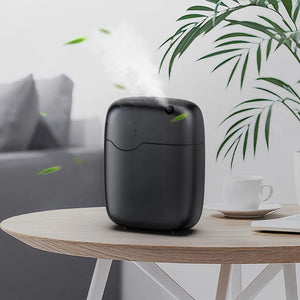
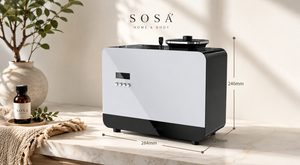
4. And because the physical geometry is against you. Small people sit on low chairs and play on the floor. A freestanding machine is 215 mm tall on whatever it stands on, and a cold-air mist falls rather than rises. You would be putting the highest concentration in the room at the breathing height of the person least able to say anything about it.
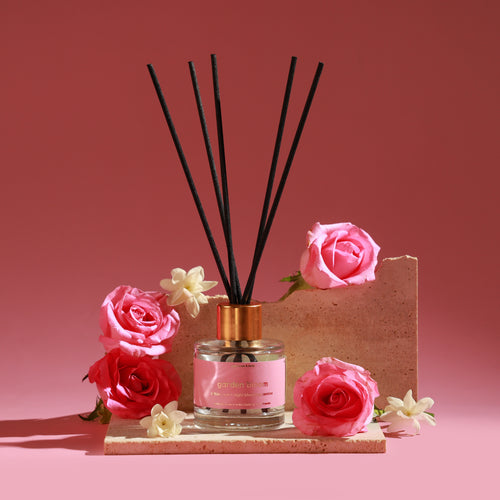
5. A reed diffuser is worse, not better, despite being alcohol-free. It is a glass bottle of fragrance oil with sticks in it, at reach height, in a room whose entire population is drawn to small objects on low tables. It tips, the oil goes across a floor children sit on, and swallowing it is a call to a poisons line rather than a small incident.
6. What that area actually needs is housekeeping, and all of it is free. A lidded pedal bin with liners changed at fixed times rather than when full, a sick-bowl protocol, wipeable seating, extract or a window at the nappy-change corner, and a midday mop. A paediatric waiting area has a real and identifiable smell source, and covering it would remove the signal that told housekeeping something was wrong.
A portion of every order supports girl-child education through Nanhi Kali.
Consent, and who actually chose this
Every other zone decision in this cluster is a judgement about a room. This one is a judgement about a person, and it is the only page in the group where I would give the same answer to a facility with a generous budget and one with none. A fragrance in a public area is a small imposition that adults accept in exchange for being somewhere that seems looked after, and the exchange works because an adult can notice it, name it, object to it or walk out of the building. A three-year-old can do none of those things. Nor can her mother, who is holding her, has been waiting fifty minutes, and did not pick your clinic out of a brochure. That asymmetry is the whole argument, and everything else on this page is supporting detail.
Ten things to do instead, all of them free
Everything below improves how a paediatric area smells, none of it involves buying a fragrance product, and the total cost of the list is a few schedule changes and one conversation with housekeeping. The right-hand column is what it actually costs, and the answer is nothing in eight of the ten cases.
| Do this | What is actually happening | Who owns it | Cost |
|---|---|---|---|
| 1. Lidded pedal bin, liner changed on a clock ★ | A nappy bin emptied when it looks full is the single commonest cause of a paediatric area that smells | Housekeeping, on a written schedule | ₹0 |
| 2. A sick-bowl protocol | The bowl and the cloth leave the building rather than going into the nearest bin in the room | Nursing and housekeeping jointly | ₹0 |
| 3. Wipeable seating, not fabric | Upholstery in a paediatric area absorbs what happens in the room and returns it on a warm afternoon | Whoever specifies furniture | At replacement |
| 4. Extract or an openable window at the change corner | Nappy changing in a corner with no extract puts the smell into the whole hall | Facilities | Often ₹0, or a fan |
| 5. A midday mop, not just morning and evening | Two cleans a day in a room with this occupancy is not enough, and the afternoon is when it shows | Housekeeping | ₹0 |
| 6. Separate the feeding corner from the nappy bin | Milk and nappies sharing a bin is a decision nobody made, and it is the worst combination in the building | Whoever laid out the corner | ₹0 |
| 7. Move the paediatric corner off the shared hall | Even a screen reduces how much of the hall receives it, and how much of it the children receive | Operations | ₹0 to a screen |
| 8. Count the occupancy against the extract | A small over-occupied corner with poor air change is the real cause of an area that is fine at nine and bad at four | Facilities and the AMC vendor | A balancing visit |
| 9. Shoes off on the play mat, mat cleaned daily | A play mat is a floor that children put their faces on. It should be cleaned like one | Housekeeping | ₹0 |
| 10. Nothing in the air at all | No diffuser, no reeds, no plug-in, no spray. It is the default and it is the right answer here | The facility, in writing | ₹0 |
If the paediatric corner shares a hall with everybody else
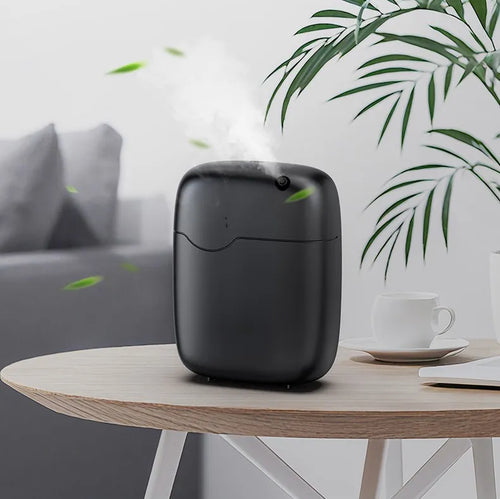
Most Indian polyclinics do not have a separate paediatric waiting room. They have one hall with a corner of it given over to children, and that is the case worth answering properly rather than idealising. The honest arrangement is a single machine at the adult end of the hall, wall-mounted well above reach, running on the lowest useful setting, with the paediatric corner treated as the far edge of the gradient rather than as a zone to be covered. That is not a compromise dressed up as a plan; it follows from the geometry. A cold-air mist falls, so the further the plume has to travel the more of it has already settled and diluted, and a corner eight or ten metres from a wall-mounted unit at low intensity receives very little. Put the Vaayu bracket at 1.8 to 2 metres on the adult-end wall, not on a table, and check the result by crouching down in the children's corner rather than standing in it — which is the only measurement on this page and the one nobody takes. If you can smell it clearly at a metre from the floor at that end of the hall, the machine is too high a setting or too close, and the fix is both. Whether children's and adults' waiting areas should be treated differently goes further into this, and the shared-hall page covers the volume arithmetic.
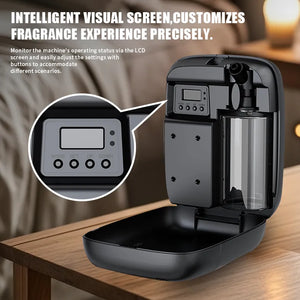
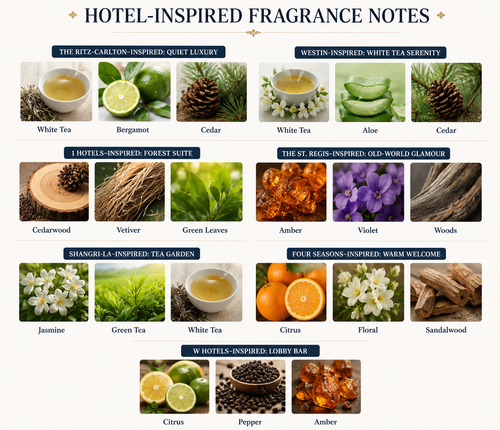
Then the specification points that matter in a hall with children in it, which are different from the ones that matter anywhere else. The key-lock first, and not because of the public: because of the bored nine-year-old. An unlocked machine within reach in a waiting hall will be turned up, opened, unplugged or knocked over before the month is out, and a locked one that is also 1.8 metres up a wall will not. Second, waterless. A 400ml sealed tank that atomises undiluted oil holds nothing that can spill if the unit is knocked, whereas a 500ml ultrasonic on a side table is half a litre of water waiting to go across a floor that children sit on, plus a daily emptying and drying job for a named person who in most clinics does not exist. The Sukoon at ₹1,899 and Boond at ₹899 are honest machines for an administrative cabin behind a door and wrong for a public hall with children in it. Third, the scent: the Westin-inspired White Tea Serenity, the lightest of the seven, chosen for how little of it travels rather than how much. Nothing sweet, nothing gourmand, nothing that smells like a product a child would want to taste, and nothing anybody in the room could name. Fourth, the hours: the Vaayu runs the opening hours on its app schedule or its onboard 1h, 4h, 8h and 24h timers and stops with the last appointment. Under 38 dB matters in a paediatric hall too, because these rooms are noisy enough already.
Then the two things that are worth saying plainly to a centre head, and the product limits. The first is that a paediatric area is where a facility is most tempted to use fragrance as a substitute for housekeeping, because the smells are genuinely unpleasant and the cleaning solution is genuinely inconvenient. Resist it. A nappy bin on a clock, a sick-bowl that leaves the building, a mop at midday and an extract fan that works will transform that area; a diffuser sitting on top of all four problems produces a room that smells of white tea and nappies, which is worse than a room that smells of nappies because it is also dishonest. And in a paediatric area the smell is frequently the first indication that something needs cleaning immediately rather than at four o'clock, so removing that signal has a real cost to the people working there. The second is that you can say all of this to parents and it reads as care rather than as stinginess. A sign that says the children's area is kept fragrance-free by choice will be read approvingly by exactly the parents you would otherwise have been apologising to, and there is a page on what to say to a patient who asks about fragrance. On the products, for completeness: the Vaayu and Aangan run their own undiluted oil rather than the water-based Hotel Collection bottles; the alcohol-free reed diffuser from ₹749 belongs in an administrative cabin behind a door and never within a child's reach; candles are not appropriate in a healthcare facility because an open flame is a fire-safety and insurance matter; and SOSA does not make a room spray, so a morning spray is not an option here either — nor should it be, since it would be gone before the ten o'clock queue.
The SOSA edit
In working order for the paediatric side of a multi-speciality clinic. Five of the six rows cost nothing, and the one product on the list is placed at the other end of the building. That is the honest shape of this page and I would rather print it than dress it up.
| Do this | What it is | When it earns its place | Cost |
|---|---|---|---|
| 1. Nothing in the paediatric area at all ★ | No diffuser, no reeds, no plug-in, no spray, in the clinical rooms or the waiting corner | Permanently. Children cannot consent and their parents did not choose it | ₹0 |
| 2. The nappy bin on a clock | Lidded, pedal-operated, liners changed at fixed times rather than when full, and more often in a warm hall | First, before anything else. It is the commonest single source | ₹0 |
| 3. A sick-bowl and floor protocol | The bowl and the cloth leave the building; the floor is cleaned with something that removes rather than perfumes | Second. Vomit in a paediatric area is routine, not exceptional | ₹0 |
| 4. Extract at the change corner and a midday mop | Nappy changing in a corner with no extract puts it into the whole hall; two cleans a day is not enough at this occupancy | Third. This is the fix for an area that is fine at nine and bad at four | ₹0 to a fan |
| 5. Vaayu at the adult end only, if you scent the hall | Waterless so nothing spills, key-locked, wall-mounted at 1.8–2m, lowest useful setting, opening hours only | Only in a shared hall, only at the far end, and only after rows two to four | ₹11,999 |
| Never here: reed diffuser or a candle | A glass bottle of oil at reach height is a spill and ingestion risk; an open flame in a clinic is a fire-safety matter | Reeds belong in an administrative cabin behind a door. Candles belong in a home | — |
Versailles
I have been asked for a yes on this one more often than on any other question in the cluster, usually by somebody who has just spent money making a children's corner look welcoming and wants the air to match. The conversation that changed how I answer it was with a paediatrician in Guwahati who pointed out that half the children in her waiting area on any given morning were nauseated, and that the ones who were not were mostly there for asthma. She was not making an argument about fragrance being harmful. She was making an argument about who was in the room, and it was unanswerable.
So I say no, and I say it early, and I lose the sale. What I offer instead is the list — the bin on a clock, the sick bowl that leaves the building, the wipeable chairs, the extract at the change corner, the mop at midday — and in every clinic that has actually done those five things the paediatric area has smelled better afterwards than any machine would have made it. It is not a generous gesture on my part. It is that a facility which is told plainly where not to put a machine will believe what it is told about where to put one, and a paediatric corner is the clearest case in the building.
Everything is made and supported from Pune, and a part of every order funds girl-child education through Nanhi Kali. You get a space that smells like somewhere looked after; a girl gets a classroom. That equation has always felt right to me.
Frequently asked questions
- Should children's and adults' waiting areas in a polyclinic be treated differently? — the shared-hall version of this question.
- Which areas of a medical centre should always be left fragrance-free? — the full exclusion list.
- Asthma, allergies and fragrance sensitivity: how should a medical centre decide where to scent? — the wider argument.
- Which departments in a multi-speciality clinic should be scented and which should not? — the whole zone map.
- Brand: the SOSA founder story.
Facts verified August 2026: Product facts used in this guide. SOSA Vaayu ₹11,999: waterless cold-air nebulising diffuser, atomises undiluted fragrance oil to a dry residue-free nano-mist with no water reservoir, coverage up to 1000m³ (approximately 2,000–3,000 sq ft), 400ml refillable tank lasting up to about 75 days per fill, Bluetooth app plus onboard control, 1h/4h/8h/24h timer scheduling, adjustable intensity, under 38 dB, DC 12V/1A at 5W, 165 × 80.5 × 215 mm and 0.9 kg, freestanding or wall or HVAC mounted, auto-stop and key-lock, CE, RoHS and SGS certified, supplied with four hotel-inspired fragrances. SOSA Aangan ₹25,999: HVAC-connected or standalone commercial nebulising diffuser, coverage up to 3,000m³ (roughly 8,000–10,000 sq ft), 800ml reservoir, metal body, programmable schedules, under 42 dB. Ultrasonic machines are water-based, hold standing water and consume 30–50 ml of water an hour: Sukoon ₹1,899 (500ml, 270–320 sq ft, 16–18 hours on low, 3–6 drops per tank, steady/2H/4H timers, three 15ml Hotel Collection scents included), Boond ₹899 (300ml), Megh ₹3,499 (6 litres). Hotel Collection water-based fragrance 15ml ₹299, 100ml ₹999, 300ml ₹1,799, Pack of 7 at 15ml ₹1,799 against ₹2,093 bought singly; the Vaayu and Aangan take their own undiluted oil rather than these water-based bottles. Alcohol-free reed diffusers from ₹749, requiring 24–72 hours to reach their working level. Free shipping above ₹499. Coverage arithmetic: cubic metres equal floor area in square feet divided by 10.76 and multiplied by ceiling height in metres, counting only the volumes that are actually scented. This guide makes no medical, therapeutic or clinical claim of any kind for fragrance: a diffuser does not purify, disinfect or clean air, and does not treat, calm or affect any patient or condition. Fragrance is housekeeping and presentation. Clinical areas should be left fragrance-free, and a persistent odour should be traced to its source and corrected rather than covered. SOSA is not affiliated with or endorsed by any hotel brand. Prices subject to change — see the live product pages.